
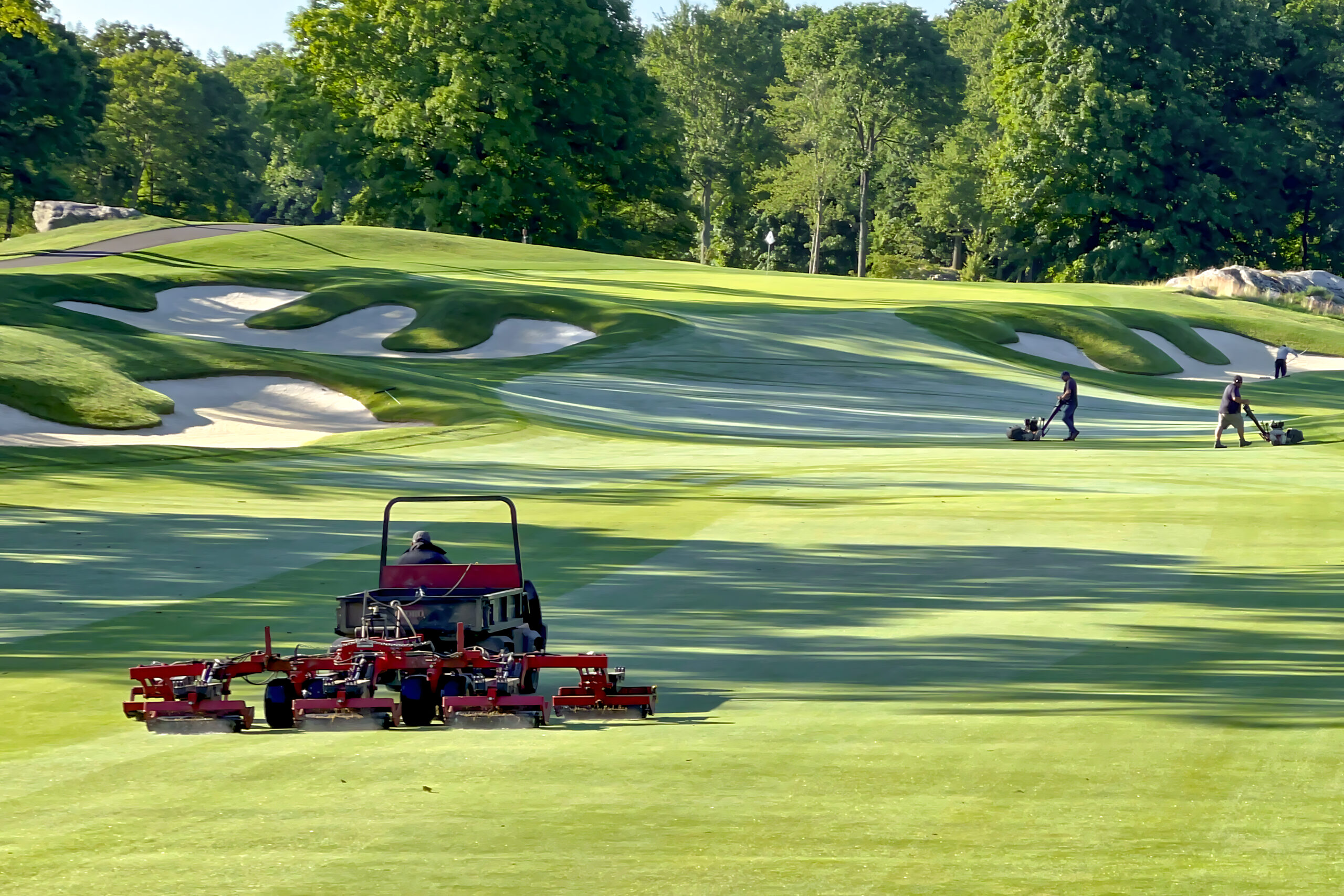
For most golf facilities, Saturday and Sunday represent peak revenue, peak visibility and peak scrutiny. Whether you manage a daily-fee property pushing more than 200 rounds per day or a private club where member expectations are uncompromising, the weekend is typically when people want the golf course performing at its peak. The challenge, of course, is that weekend maintenance windows are compressed and staffing levels are often reduced. So, how can I deliver maximum playability, presentation and consistency on the days that matter most to my facility with fewer labor hours and tighter tee sheets?
To me, this is not a question of how to do more, it’s about how to be more intentional with the time and resources available. In my experience, optimizing weekend conditions is not a Saturday and Sunday morning exercise. It is a seven-day-a-week strategy that culminates in a refined, efficient execution plan that is focused on weekend performance. The following are some strategies I have used at Fairview Country Club, located outside Greenwich, Connecticut, to get better results on the weekend. These approaches may require modest investment and changes in workflow, but I believe they are adaptable and scalable to courses across the spectrum of budgets and business models.
Start with agronomic positioning, not weekend reaction
Weekend performance is determined largely by how well the course is positioned by Thursday afternoon. If greens are flush with growth on Friday morning, you are already behind. If fairways are soft from a heavy irrigation cycle on Thursday night, you will spend Saturday wishing for firmness. If divots are filled on Monday, what do par-3 tees and fairway landing areas look like on Saturday and Sunday? My goal is to time labor and agronomic inputs so that weekend conditioning does not wane by Sunday.