
Skip to content
Toggle Menu
Toggle Search field visibility
Sign up here for our newsletter and you’ll never slice a drive again. Promise.

© 2026 National Club Golfer | 2 Arena Park, Tam Lane, LS17 9BF
Country: us Page generated at: Thursday, 19 March 2026 at 7:41:11 Greenwich Mean Time
Cameron Young uses highly forgiving golf clubs – should you? – National Club Golfer | National Club Golfer
Max Mcvittie
Even the most elite ball strikers opt for the more forgiving golf club from time-to-time, so why are amateurs still refusing to game them?
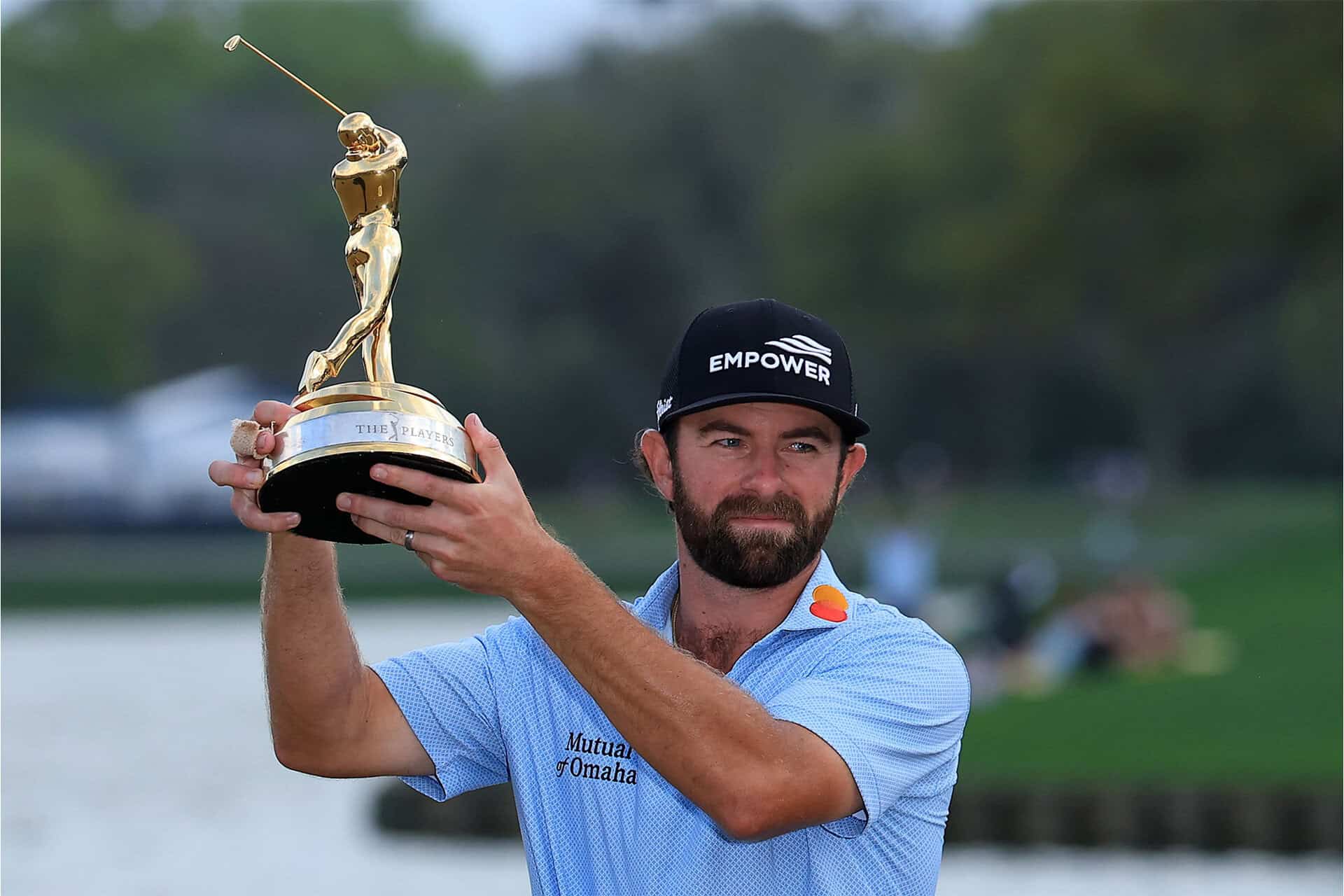 Table of Contents
Jump to:
Select a section…
The Players Championship saw Cameron Young cement his place as one of the hottest prospects in golf.
It looked as though his big breakthrough might not come after so many close calls. But the American finally got the job done to claim one of golf’s biggest prizes and he did it using some very forgiving golf clubs.
It was two opposing Ryder Cup stars that battled it out at TPC Sawgrass as the Players Championship drew to a close. But, this time it was the American who came out on top.
Matt Fitzpatrick bogeyed the 18th as Young picked up his second PGA Tour win.
But it was what Young had in his bag that caught our attention most.
Most of us think of thin blade irons and compact driver heads when it comes to tour professionals, but those days are long gone.
Now, a lot of them are gaming clubs that offer maximum forgiveness. Which begs the question as to when elite players are using more forgiving clubs to win the biggest prizes, why aren’t amateurs doing the same in their weekly medal?
Why Tour players use forgiving golf clubs
 GREENSBORO, NORTH CAROLINA – AUGUST 01: Cameron Young of the United States looks on from the 15th green alongside his caddie during the second round of the Wyndham Championship 2025 at Sedgefield Country Club on August 01, 2025 in Greensboro, North Carolina. (Photo by Johnnie Izquierdo/Getty Images)
Here at NCG, our equipment expert and PGA Professional Jack Backhouse described this is club to be an ‘absolute game-changer for golfers who need forgiveness, high launch, and exceptional ball speed off the deck’.
It is interesting that he chose to use a more forgiving fairway wood and hybrid combination rather than relying solely on long irons or driving irons.
This is considering the fact that Backhouse noted fairway woods have historically been some of the hardest clubs to fit for tour pros.
“I think they’re the hardest club to hit for any golfer,” he said.
 World Number One Scottie Scheffler and reigning FedEx Cup title holder putting their higher lofted fairway woods to use
Source: Getty Images
“They have the longest shaft and lowest amount of loft of any club used from the ground which means there is a huge opportunity for error.”
Backhouse went on to explain that he believes it is for this reason that five-woods, seven-woods and nine-woods are easier to hit.
He also points out that forgiving woods and hybrids can produce a higher launch and better decent angles. These are vital when hitting into firm greens which so many tour courses boast.
That goes a long way to explaining the influx of higher lofted fairway woods in the bags of golfers over recent times. It also partly the reason as to why a lot of tour pros go with the more forgiving options.
Nacho Elvira and Dan Bradbury, two winners on the DP World Tour this season, have both also put maximum forgiving fairway wood models in play. There is certainly a trend here.
Forget the stigma
It felt as though we went through a period in golf where people were choosing style over substance.
For a while, there seemed to be a stigma around choosing these easier to hit clubs over more player friendly options.
That doesn’t seem to be the case anymore.
It was only up until recently that grand-slam winner Rory McIlroy was gaming cavity back irons. This was something that was unthinkable 10 years ago.
In fact, advancements in golf club design means you no longer have to sacrifice looks or workability for forgiveness. Many modern players distance clubs incorporate the best of both world.
The Wilson 2026 Staff Model XB irons are great example of this. These are made to be more forgiving but designed to look as much like a blade as possible.

Plenty of golf club manufacturers are designing clubs that offer the added distance needed to compete of a professional level whilst retaining that forgiving nature so many demand now.
TaylorMade were one of the pioneers of this with the release of their P790 irons. They are the inventors of the player’s distance iron that still provides plenty of loft across the set.
Blended sets
Equally, a lot of players on tour adopt what’s called a blended set of irons. They recognise the importance of having a touch more assistance in their longer irons whilst retaining the control blades offer in the shorter irons.
It really is a mystery to me why amateurs are still choose clubs based on what they think they should play, rather than what actually helps them shoot lower scores.
Mallet putters
Mallet putters are a great example of this. It is a rare sight to see a blade putter on tour, with the overwhelming majority opting for a more forgiving mallet.
Blades look great. Low-spin drivers sound appealing. But if you’re not striking it consistently, they can cost you shots and lots of them.
Don’t forget to check out and like our YouTube channel – YOUR GOLF NCG – where you will find lots of hints, tips and equipment reviews.