
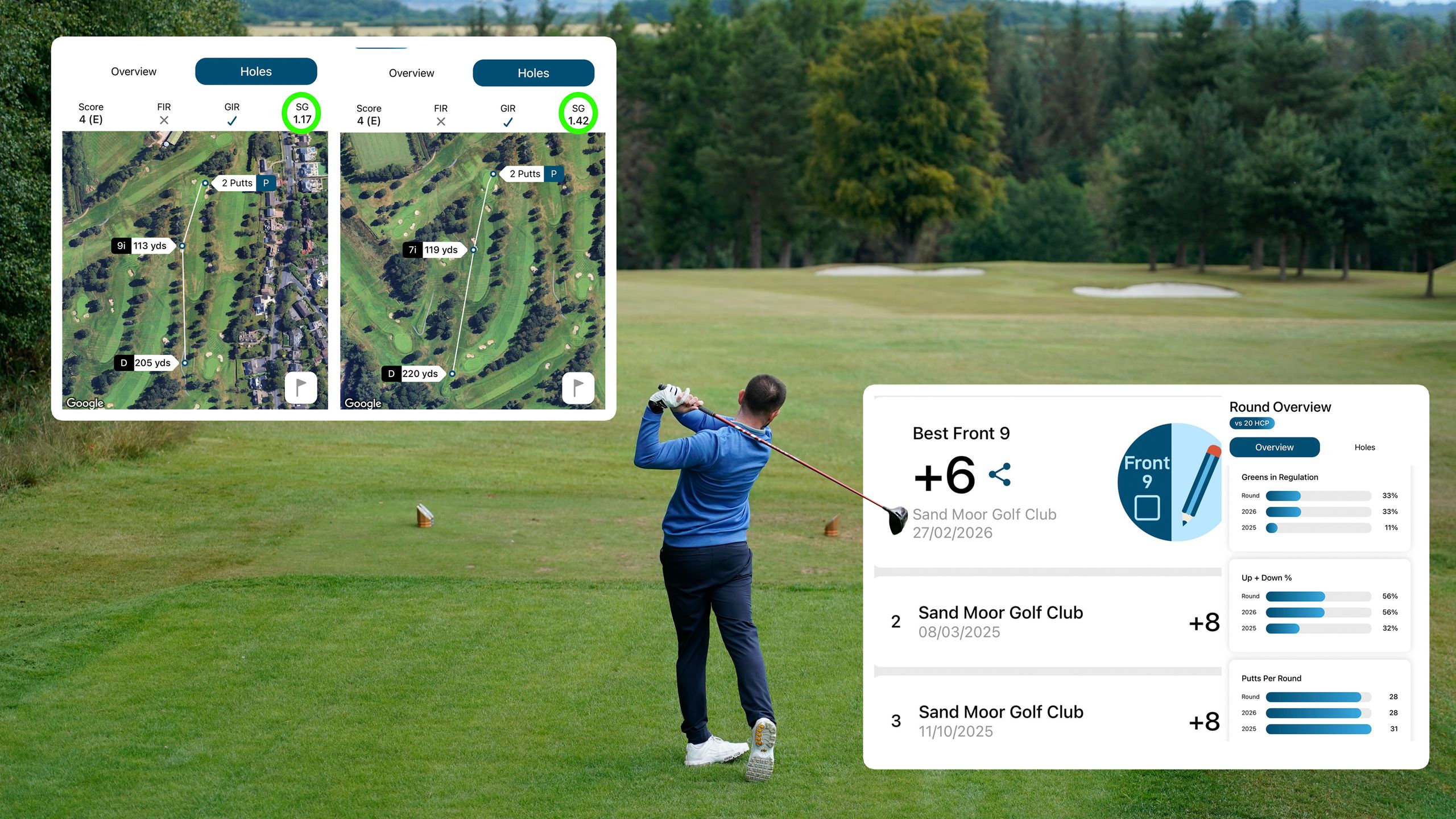
In December 2025 I decided to take my progress on the golf course seriously, enlisting the help of two experts as part of an intensive golf rebuild that aimed to help me finally shake the high-handicapper tag that has stuck to me since starting in the sport.
After weekly lessons with PGA Professional Alex James, and golf-specific training with fitness expert Mark Wilson, I started noticing green shoots of improvement like the ability to finally hit driver over 240 yards (as a 22-handicapper).
Article continues below
You may like
How Winter Golf Training Helped Me Shoot My Best Score
With the time constraints of family life, a busy work schedule and a significant commitment to this winter golf training plan, I could only manage 9-holes before work last week before work.
Still, after weeks away from the course due to adverse weather, I couldn’t wait to tee it up and learn a little more about how all of this hard work has shaped my game.
For reference, my previous best score on the front-nine at Sand Moor Golf Club was 8-over-par (gross), which I have previously shot twice.
For my handicap that’s three-under par, but in my most recent outing I smashed through that barrier with a gross score of six-over-par (five-under-par nett).
What to read next
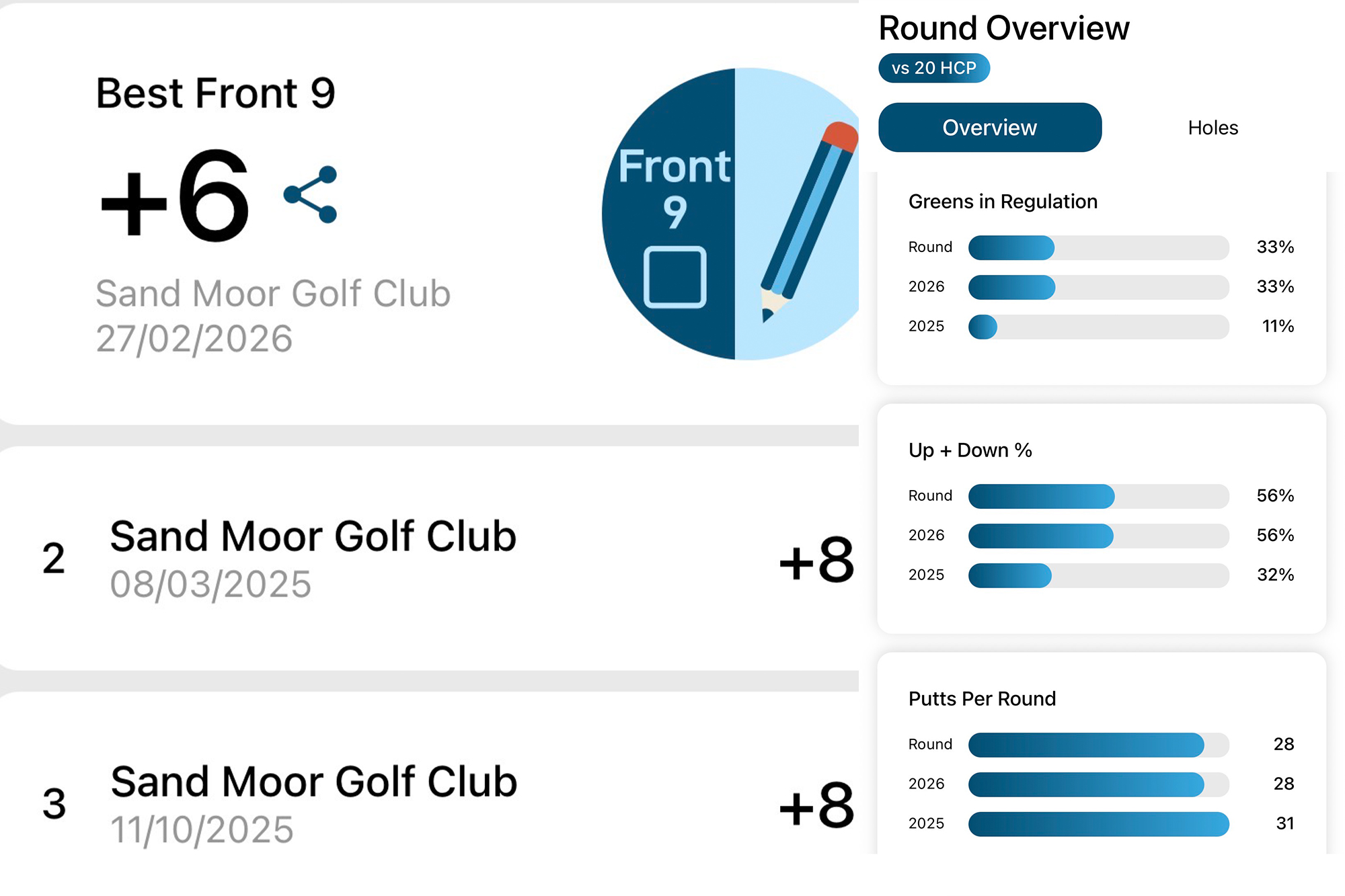
My most recent round of golf, and my first on my home course in 2026, saw gains in greens in regulation, up and down percentage and putting average when compared to 2025 averages
(Image credit: Shot Scope/Baz Plummer)
Four pars, four bogeys and one poor double-bogey on the tough par-3 8th meant that I scored 42.
I know it’s impossible to call whether I would or would not have continued that rate of scoring on the back-9 had I continued, but my best 18-hole score around Sand Moor is 95 (three times), so I would say I was on for potentially challenging that number.
According to my Shot Scope performance tracking data, I gained 4.30 strokes on the average 20-handicapper, with the highlights coming off the tee and on approach.
My two best holes, which were gross pars on the 5th and 7th at Sand Moor Golf Club, saw a 1.17 and 1.42 stroke gain on the average 20-handicapper. Interestingly, a marginal missed fairway to the left on both holes was rescued by a good approach shot and two-putts for a pair of par 4s.
My average driving distance was also up 11 yards, greens in regulation percentage tripled from 11% to 33% and my putting average was three strokes better than my 2025 average.
But, how did this happen? The key lies in the partnership between swing analysis/changes and fitness.
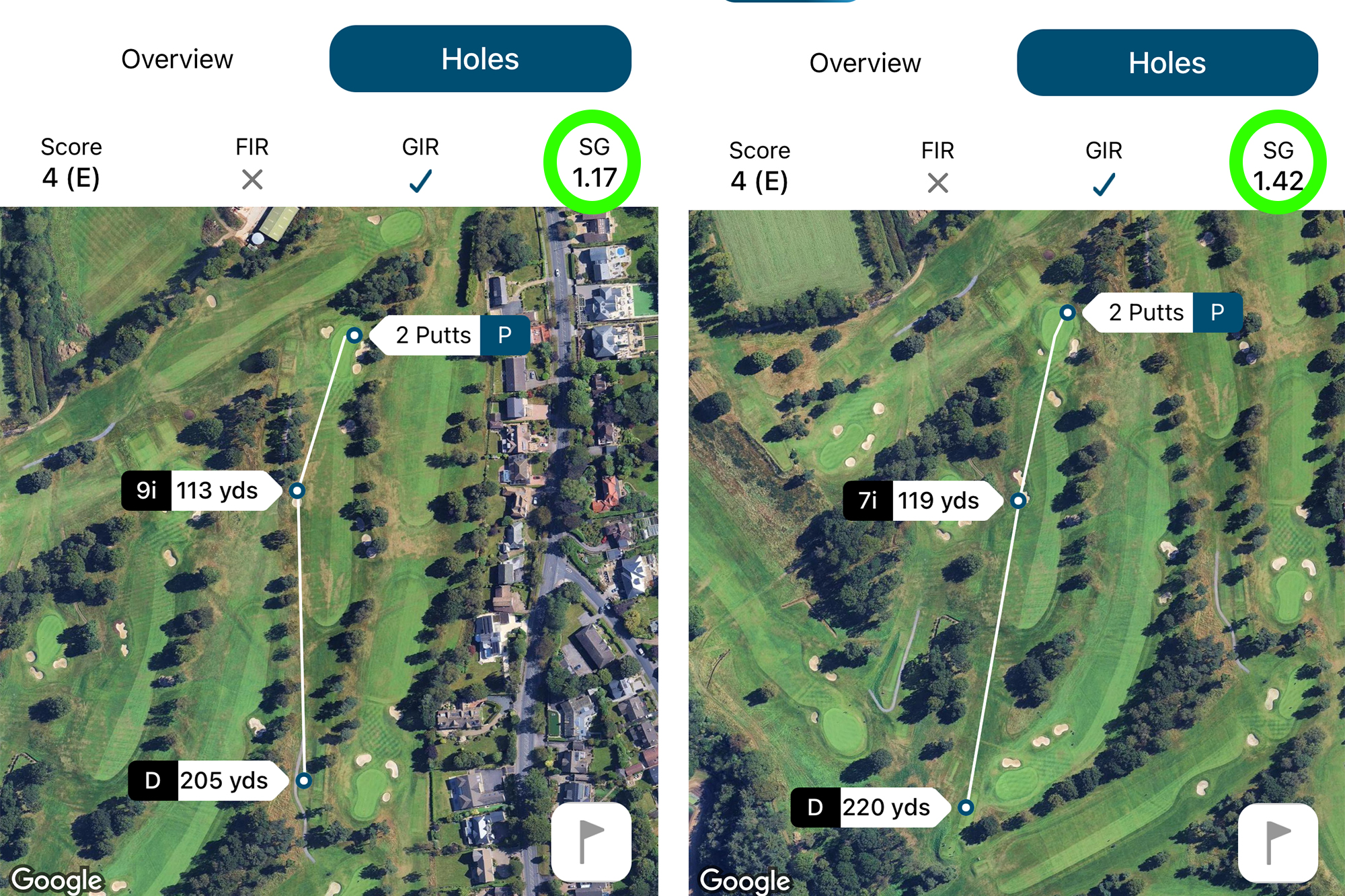
I gained more than a stroke on an average 20-handicapper, according to Shot Scope data, on the both the par-4 5th and 7th holes at Sand Moor Golf Club
(Image credit: Shot Scope/Baz Plummer)
What Does A Golf Improvement Plan Look Like?Baseline testing – Seek the expert analysis and advice of experts in two fields, a PGA Pro and a fitness specialist (ideally with a strong understanding of golf)Create a plan – Using the data from the baseline tests, which should highlight strengths and limitations of your golf game, create a personalised plan that covers fitness sessions in the gym, a series of lessons with a PGA pro and a timetable of practice (and playing) that you can realistically commit to.Put in the work – You must actually put in the hard yards. Getting all the right information then doing nothing about it is a waste of time and money. I committed to three gym sessions, one golf lesson and at least one practice session a week, but you must find your own timetable based on factors affecting your personal and work life.Assess and tweak – As you move through the plan, use temperature checks like competitive rounds of golf or repeating the baseline tests to measure progress. Use this information to tweak your plan in partnership with the experts that are supporting you.Accept it won’t be straightforward – While completing my improvement plan I fell ill for three weeks, had a couple of trips abroad and contended with one of the wettest winters I can recall for some time. Progress certainly wasn’t linear, but through perseverance, commitment and a little creativity you will see gains.Have a goal – Know what you want to achieve and constantly check yourself against that target. You might fall short, you might smash through it, either way this is a process that might continue beyond your initial program end date, but that’s golf. Stick to the process and you will play better golf in 2026.
Often amateur golfers will try to muddle through their on-course issues, or pop to see their local PGA pro for a one off lesson, but dedicating time and effort over the winter to a structured program can seriously pay off.
After taking part in a TPI screening at the start of my plan, which told me about some significant physical limitations that were preventing me from improving my golf swing, Mark set about creating a personalised plan to target these areas of weakness.
Through a blend of exercises that aimed to improve strength, mobility and flexibility, I was able to improve aspects like my rotation into my trail hip in the backswing and my ability to disassociate my shoulders from my hips.
This is information I would never have learned without seriously looking into the role that fitness has on improving your golf game, but fitness alone would not have been enough.
Alex put me through a set of baseline tests that similarly identified weaknesses in my game, which you can try for yourself too, but this information then informed the plan moving forward.
We set about working on key areas, but Alex also gave structure to my practice which is essential for those looking for long term improvement. After all, arriving to practice without a plan is one of the seven things you should never do at the driving range.
While my plan will look different to yours, and yours different to any other golfer, I can vouch for the impact the positive impact that a structured relationship between fitness and swing improvements can have on your game.