
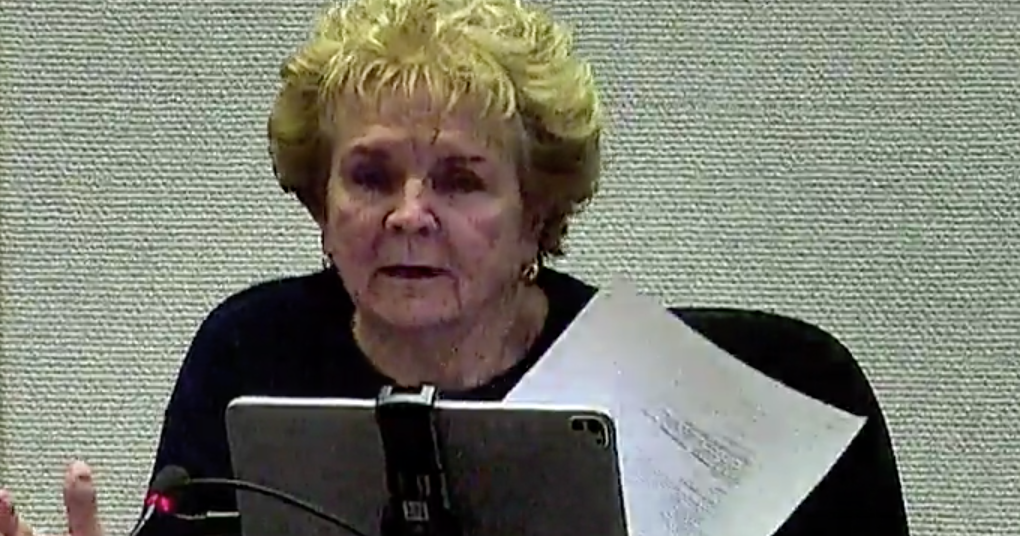
Kelowna city councillor Maxine DeHart will once again sit out discussion on a controversial local issue on Tuesday.
She will declare a conflict of interest on whether or not the city should proceed with a land swap with a developer that’s aimed, in part, at converting the Kelowna Springs golf course from private to municipal ownership.
DeHart says she’s in conflict because the owners of the Ramada Hotel, where she works, own two golf courses in Kelowna and she’s involved in efforts to sell them. She also says her employers own land adjacent to Kelowna Springs.
“Too many conflicts,” DeHart said Monday confirming she would once again leave council chambers on Tuesday when the controversial proposal finally came to council for a decision after years of uncertainty about the fate of Kelowna Springs.
The deal would see the city acquire ownership of the existing nine-hole golf course while rezoning adjacent Denciti-owned land for industrial purposes. The city would also transfer ownership of nine acres of city-owned land south of the UBC Okanagan campus to Denciti for future industrial purposes.
City bureaucrats cast the proposal as a reasonable effort to balance recreational and industrial needs. But critics variously describe the deal as overly generous and not restrictive enough.
Public interest in the issue, which dates back several years, has been considerable. To ensure everyone who wants to address council on the matter gets the chance to do so, the start time for Tuesday’s public hearing has been advanced to 3 p.m. The meeting is expected to last several hours.
There is no exhaustive set of all the prescribed circumstances in which a city councillor must declare a conflict of interest. The provincial Community Charter and the city’s Code of Conduct says a conflict must be declared when a councillor has a unique direct or indirect financial interest in a matter to be discussed.
But it’s generally up to councillors on how to interpret that direction.
“It can be left to a councillors’ discretion whether or not they feel they are in conflict. Or they can rely on advice from a lawyer,” Karen Needham, then the city’s deputy city clerk, said in 2012.
The grounds for a conflict can seem fuzzy. For example, councillors obviously vote on general municipal tax increases, even though they themselves in most cases are property owners. It’s not a conflict of interest, because the decision affects tens of thousands of people, not just councillors
On the other hand, a majority of councillors voted themselves a 35 per cent pay increase in 2024. Although they were the only ones affected by the proposal, none of them cited a conflict of interest. Previous councils have left the matter of pay raises to independent committees, with any subsequent changes approved by council only taking effect after the next municipal election.
Asked Monday if she had gotten legal advice on whether or not she’s in conflict of interest on the city’s proposed deal with Denciti, which would be at her expense rather than the city’s, DeHart responded: “I always go to our city clerks.”
City clerk Laura Bentley said: “Members of council sometimes seek advice about conflicts from myself or the city manager for them to make a decision for themselves It remains up to the council member to determine and declare (a conflict of interest).”
Don Henderson, among those who has taken a interest in the fate of Kelowna Springs for some years, said Monday he thought DeHart should participate in the council discussion because there are issues that go far beyond golf.
“I don’t believe she should declare a conflict of interest because there are other issues surrounding this property which are important to the city, flood plain being just one,” Henderson said. “Also, this could become a year-round park with lots of activity in the winter as well as a clubhouse for the community.”
DeHart has also consistently declared a conflict of interest on city discussions and votes on issues relating to short-term rentals because she and her husband own two downtown suites in buildings that had previously been zoned for short-term rentals and which are expected to again receive such zoning later this year.
There are currently about 430 legal short-term rentals in Kelowna and more than 2,100 additional units could be opened up for such use again this year.