

Which American city lays claim to the richest concentration of high-quality municipal golf?
On the strength of Bethpage State Park alone, New York is an immediate contender. Boston has its share. Chicago and Philadelphia can point to several standouts. Los Angeles makes a credible argument with the likes of Rancho Park and Griffith Park.
But when you factor in history, pedigree and sheer accessibility within a compact radius, another candidate rises to the top: San Francisco.
Don’t agree?
Tom Hsieh might like a word.
Hsieh is a San Francisco native and readily concedes a hometown bias. His parents were immigrants who fled Maoist China. Both developed a deep affection for the city. Hsieh’s father — also Tom — fell in love with golf and passed that passion on to his son.
The younger Hsieh learned the game at Gleneagles Golf Course, a nine-hole layout tucked into the hills of South San Francisco, overlooking the bay. Designed by Jack Fleming, a former protege of Alister Mackenzie who became San Francisco’s official golf caretaker, Gleneagles, which opened in 1962, is defined by quirky challenges and charm. Lee Trevino tried to conquer it twice, but couldn’t. The fairways are sloping. The greens are defiant and the wind is a near-constant off the nearby water.
As for the clubhouse, it’s a time-capsule. Other infrastructure is ancient, too; the course still relies on its original irrigation system. In the early 2000s, when Gleneagles’ longtime operator retired, the city put the course out for bid. There were no takers. Hsieh had no experience running a golf facility. But he stepped in anyway, assuming the lease to keep Gleneagles alive.
What followed was a wild ride, one that included more than a few existential crises for the course. Like many courses, Gleneages has benefited from the Covid boom. But its endurance owes a great deal to Hsieh.
His background helps explain his success. A former political consultant who worked on campaigns for the likes of former San Francisco mayor (and now California governor) Gavin Newsom, Hsieh understands the workings of the city and everything that muni golf is up against, from tight budgets to lingering stereotypes about the game.
For all of its popularity these days, golf still suffers from public blindspots. Remove those blinkers, Hsieh says, and its clear that San Francisco, a 7-by-7-mile city, is sitting on invaluable recreational assets that go widely under-appreciated.
Why the survival of this Alister MacKenzie muni means so much to golf
By:
Josh Sens
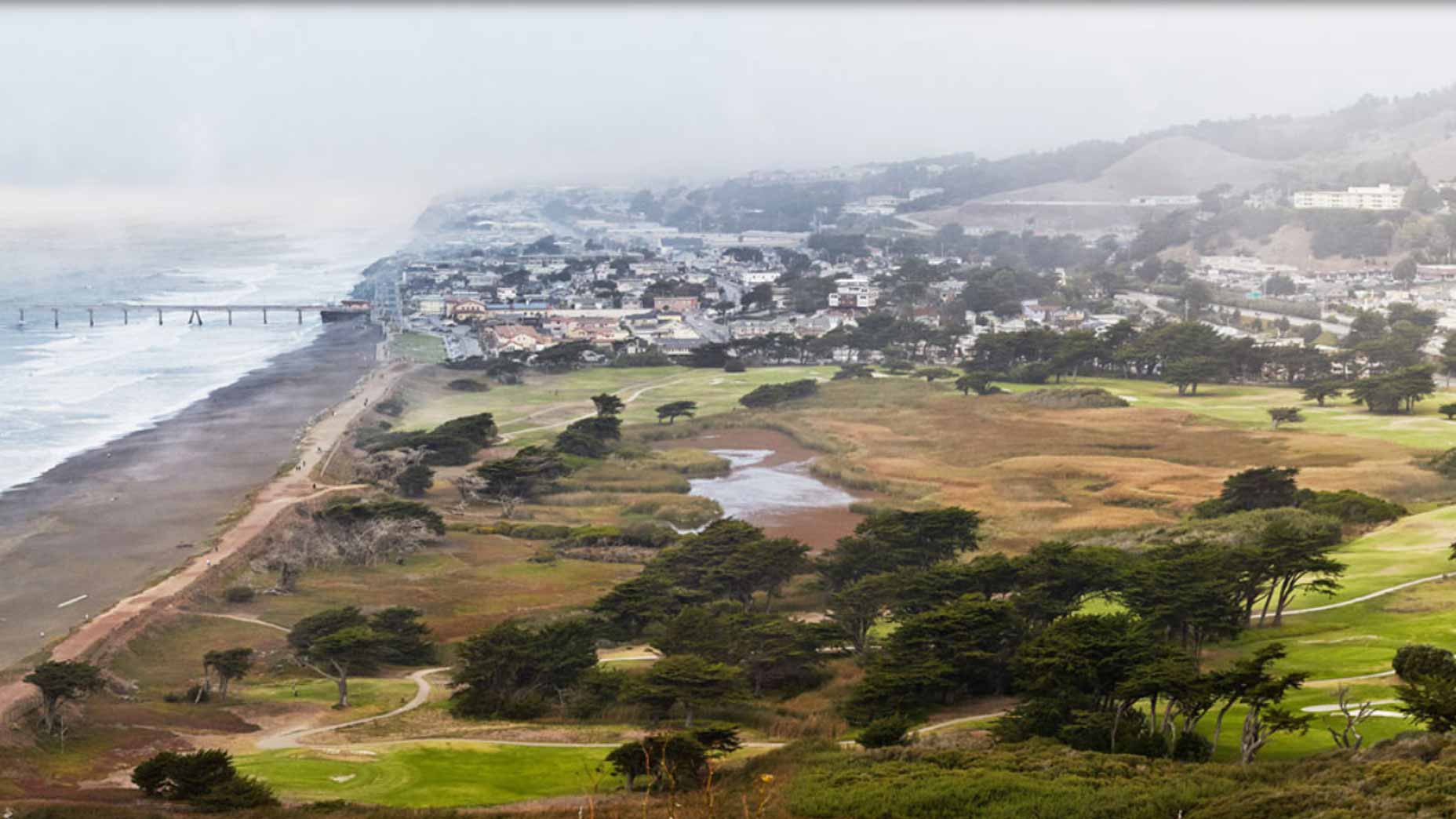
Under the parks and recreation department are six public layouts (technically, Sharp Park, the only seaside muni designed by Alister Mackenzie, sits just south of the city’s border, but it’s part of the fold). Over the past three decades, Hsieh notes, San Francisco voters have approved roughly a billion dollars in bond measures for parks. Not a dollar of that money, he says, has been earmarked for golf.
Hsieh hasn’t formally pitched the idea to city leaders, but he’d like to see San Francisco lean into what it already has and market itself as Golf City USA, a destination with premium public-access golf as a draw.
Tourists already flock to the city. Why not give them another reason? Think of it, Hsieh suggests, as a kind of Bandon Dunes for muni golf, except in the middle of one of the world’s great urban hubs.
That would require a robust investment to improve course conditions and amenities. But Hsiesh sees proof of concept at Harding Park and the Golden Gate Park Par-3 course, both of which have gone through renovations that helped propel them to national attention. The lesson is plain, Hsieh believes. Put TLC into courses, and the golfers will come.
He makes the full case, while telling the story of Gleneagles and his life in the game, in a recent appearance on the Destination Golf podcast. You can listen to that episode here.