
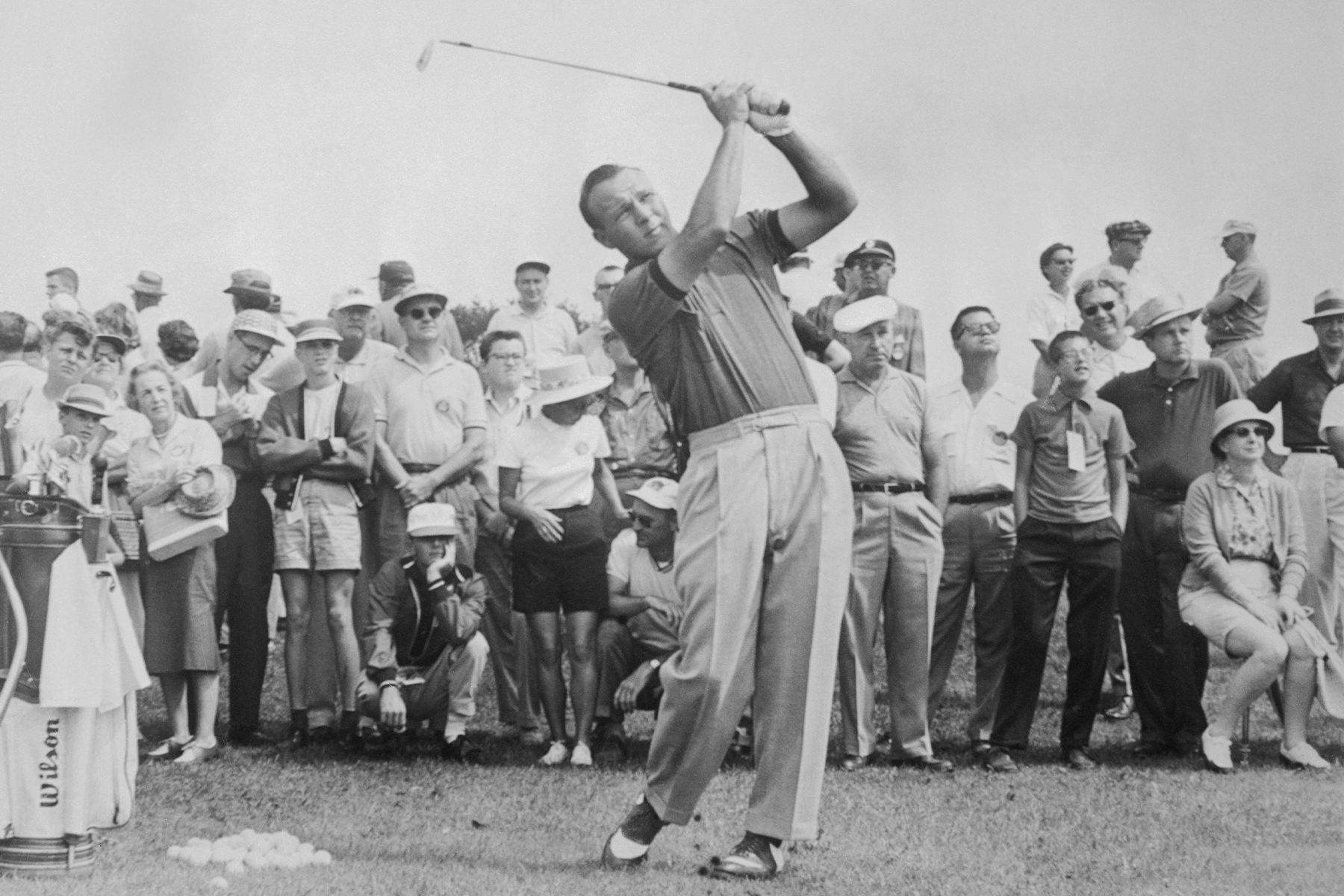
Arnold Palmer didn’t just win golf tournaments. He changed how we think about the game itself. And while The King left us in 2016, his wisdom still echoes through every driving range and putting green in America.
I’ve been teaching golf for over two decades, and I keep coming back to three pieces of advice from Arnie that have stood the test of time. These aren’t complicated swing theories or biomechanical deep dives. They’re simple, powerful truths that work just as well today as they did when Palmer was charging up leaderboards in the 1960s.
Swing Your Swing
This is the big one. The philosophy that defined Palmer’s entire approach to golf.
“Swing your swing. Not some idea of a swing. Not a swing you saw on TV. Not that swing you wish you had. No, swing your swing. Capable of greatness. Prized only by you. Perfect in its imperfection. Swing your swing. I know, I did.”
I wrote about this concept back in 2021 for PGA.com, and it’s only become more relevant as social media floods us with slow-motion swing videos and armchair experts telling us exactly how we should move the club. Palmer’s message cuts through all that noise.
Here’s what he understood: we’re all built differently. Different heights, different body types, different strengths and weaknesses. Some of us are flexible, some aren’t. Some have old injuries we’re working around. The idea that there’s one perfect swing that works for everyone is nonsense.
What matters is building a repeatable motion that fits your body and lets you score. Tony Finau has a unique swing. So does Jim Furyk. So did Lee Trevino. They all figured out what worked for them and owned it.
The modern game has actually circled back to this wisdom. We see more variety in swings on tour now than we did 20 years ago when everyone was chasing the same model. Today’s best players know how to control the clubface at impact and do it consistently. How they get there? That’s personal.
Your job isn’t to copy someone else’s swing. It’s to understand your own tendencies, know your ball flight patterns and groove something you can trust under pressure. That’s what Palmer did, and it worked out pretty well for him.
Own Your Grip
Palmer treated his grip like it was sacred. And for good reason.
His father, PGA Member Deacon Palmer, gave him a textbook grip when he was 3 years old and told him, “Don’t ever change it, boy.” Palmer never did. That grip became so perfect that the Arnold Palmer Cup trophy is modeled from a cast of his hands and grip. It’s a testament to how flawless his technique was.
The grip was linear perfection. Neither hand shaded weak or strong. The Vs of both hands aimed at his right ear. It was the envy of other players and became the model that instructors showed to students for decades.
Why does this matter for you? Because your grip is the only connection you have to the golf club. It’s the foundation everything else is built on. Palmer understood that a sound grip had to be something you owned completely so it would hold up when the pressure was on.
This is still true today. I see golfers all the time who tinker with their grip depending on what shot they’re hitting or how they’re feeling that day. That’s a recipe for inconsistency. Find a grip that works, commit to it and make it so automatic that you don’t have to think about it.
Turn Your Shoulders and Let It Happen
Palmer was famous for his powerful, aggressive swing. He kept his head still, turned his shoulders as far as they would go and finished with his hands high above his left shoulder.
But here’s the key insight: he emphasized that weight shift should be the result of a proper shoulder turn, not something you force. Let the pivot create the movement naturally.
This is huge for amateur golfers who get so focused on shifting their weight that they lose their turn. Or they slide instead of rotating. Palmer’s approach was simpler and more effective: make a full shoulder turn and let everything else follow.
When you turn your shoulders completely, your weight naturally moves to your back foot on the backswing. When you unwind through impact, it naturally shifts forward. You don’t have to manufacture it or think about it. The turn creates the shift.
This tip works today because it simplifies a complex movement. Instead of thinking about five different things, you focus on one: turn those shoulders. Everything else takes care of itself.
Why These Tips Still Matter
Palmer’s advice endures because it’s rooted in fundamentals that don’t change. Grips still matter. Shoulder turns still create power. And your swing still needs to be yours.
The game has evolved. Equipment is better. Courses are different. But the core truths Palmer understood? Those are timeless.
Swing your swing. Own your grip. Turn and let it happen: Simple wisdom from The King that still works today.