
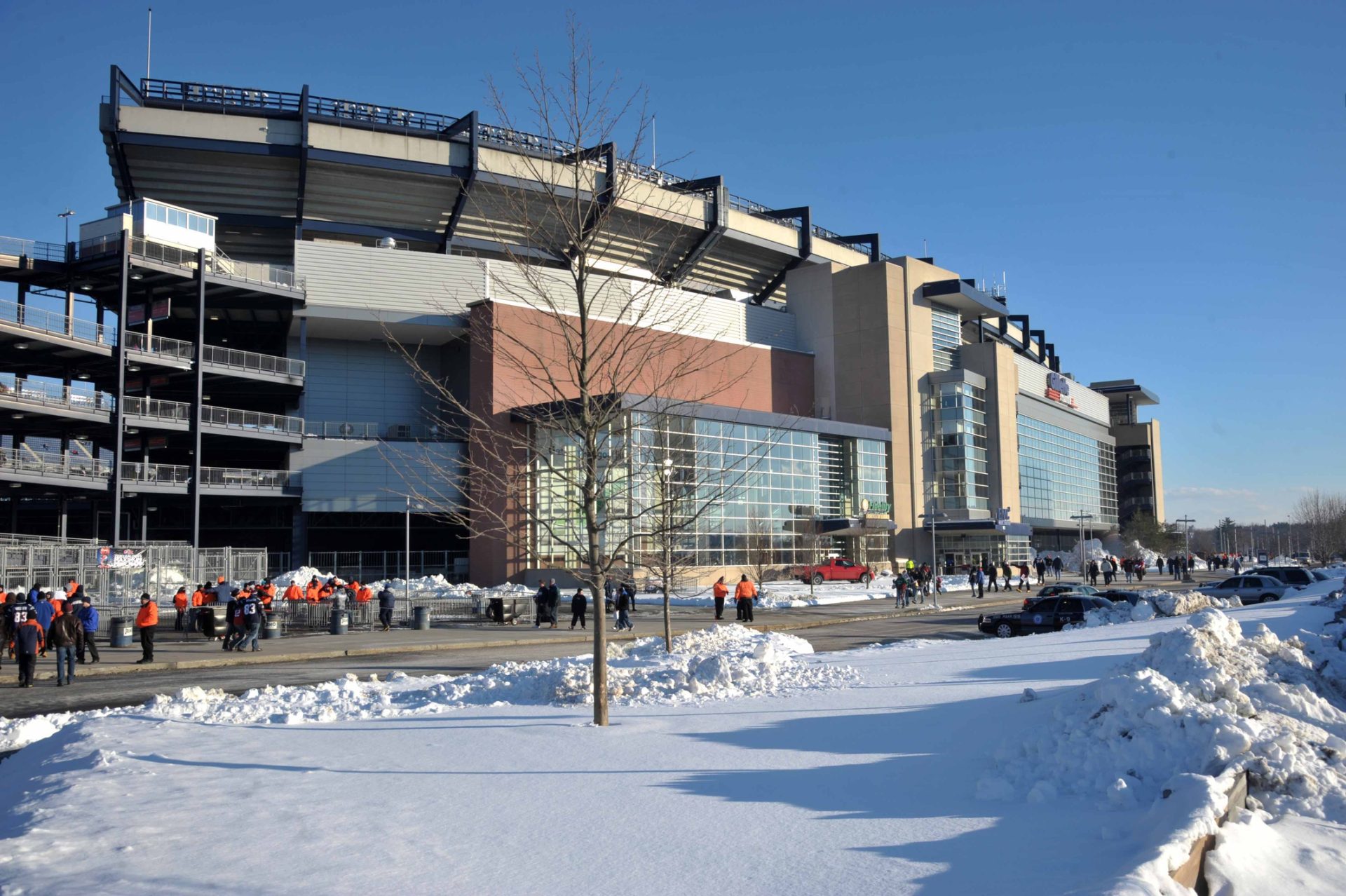
The small town of Foxborough, Mass. is still threatening to block the World Cup from coming to New England amid contentious funding discussions.
Local leaders held a heated meeting with World Cup organizers on Tuesday night, two weeks out from the town’s deadline to approve an entertainment license for FIFA that’s necessary to hold matches at the stadium. The town has refused to grant the license until it gets a commitment for $7.8 million worth of security at the stadium during the tournament. (The money, promised last summer, is held up by political and bureaucratic delays in the federal government.)
The roughly 19,000-person town insists that it did not sign an agreement to bring the World Cup to Massachusetts, and therefore should not be forced to foot the bill.
Representatives for Boston 26, the local World Cup host committee, gave the Foxborough Select Board answers about who would cover the funding, but the two groups disagreed about when it would be delivered and how it would be determined.
When the World Cup starts—100 days from Tuesday—Foxborough is scheduled to host seven matches including a quarterfinal at “Boston Stadium,” which will be the unbranded name of the NFL stadium owned by the Kraft Group.
Leaders on both sides are closing in on a March 17 deadline, when the Select Board will vote whether to approve FIFA’s license.
For the meeting’s first 17 minutes, it went smoothly. Lawyers for Boston 26 walked through a PowerPoint presentation and clarified who would cover the still-absent funding—a major point of debate at recent town meetings.
“The answer to your question, ‘Who is going to backstop this obligation if for whatever reason the federal grant money doesn’t come through?’, is Boston Soccer 2026,” said Gary Ronan of the law firm Goulston & Storrs. “It is willing to commit to backstop those obligations and to pay for everything, everything that the [police and fire] chiefs have said is necessary to hold these events safely, and that is the staffing by police and fire, and the equipment.”
Ronan said Boston 26 has a “substantial amount of money in the bank right now,” and has a commitment from Kraft Sports and Entertainment to cover any shortfall in the group’s obligations to the town. The lawyers said the town could cancel games at any point, including if it is not reimbursed within two days of making invoices, framing this as giving Foxborough “control.”
Massachusetts is waiting for $46 million in World Cup grant money from the federal government. President Donald Trump approved $625 million for tournament security in his One Big Beautiful Bill Act last summer, and an additional $250 million was added in December for policing drones at World Cup matches and America250 events. That funding was supposed to be disbursed by Jan. 30, according to a DHS timeline. But that delivery hasn’t happened, and has been further stalled by the partial DHS shutdown as Senate Democrats try to force immigration enforcement reforms.
The Foxborough meeting hit a bump when Ronan said Boston 26 would commit to having all public safety equipment ready by June 1, a timeline Select Board chair Bill Yukna called “unacceptable.”
The two sides were also on different pages about how that equipment would be determined. Boston 26 said it would engage in discussions with police and fire departments, while the town’s Select Board saw those matters as settled. For example, Boston 26 attorney Peter Tamm suggested that some equipment may not need to be purchased if it’s available from other partners and finding a resolution would just need some time, which didn’t sit well with the board.
“It seems like to me, a simple little board member that I am, that the experts are telling you what they need, and you’re trying to nickel and dime them,” said board member Mark Elfman.
“No, we’re saying every piece of equipment will be available,” Tamm responded.
“But you’re saying, might be able to get it here, you might be able to get it there,” Elfman countered. “These guys need it now.”
Other host cities expressed similar urgency at a hearing for the House Committee on Homeland Security last week. The chief operating officer of the Miami host committee, Raymond Martinez, said that “within the next 30 days is the drop-dead date” for receiving the funding, and Kansas City deputy police chief Joseph Mabin said the money is “critical” to hire enough staff.
Tamm clarified that Boston 26 is “committing to those resources, but it just needs further examination,” to which several town leaders expressed how much time and money local officials have already spent developing these plans.
“This board does not want to deny this license by any means, okay, but we will if we have to,” said vice chair Stephanie McGowan. “We’re going to come in on the 17th and we’re going to have to listen, and if we’re not satisfied, there is no other time to tweak.”
Ronan, the Boston 26 lawyer, asked for a “discussion about what else you need us to address,” to which he was cut off by Elfman: “I find it hard to believe, I’m sorry, that you don’t know, after all the discussions that have gone on over the last couple of months, exactly what we want.”
The lawyers brought out another PowerPoint about why the town should, based on law and precedent, grant FIFA the license; the town countered by calling in their own lawyer to contest Boston 26’s arguments.
The meeting closed with remarks from police chief Mike Grace, who called Boston 26’s approach a “failed strategy” to take things to the last minute.
“We do not wait til the week before, and then force the Board and Public Safety to cancel an event because we can’t settle the matters now, when we should be settling them now,” Grace said.
The police chief said that more than a year and a half of planning has gone into identifying the necessary funding and equipment, and pushed back on the host committee’s proposed June 1 date.
“Please don’t do that to me,” Grace said, “because we will be in the same spot, and we will not be able to say ‘no.’”