
Summary
Council Members Mike Polensek, Kevin Conwell, Kris Harsh and Brian Kazy expressed frustration and unwillingness to provide a $960,000 subsidy for Highland Park Golf Course, particularly given the discussion during the morning session of the many city pools, playgrounds and parks that lack adequate funding, employees and equipment.
The city needs to fill 17 to 20 positions in the Division of Park Maintenance to provide needed maintenance at city parks, baseball fields, and other properties.
Council members want representatives from Cleveland Public Market Corp., the nonprofit that runs the West Side Market, to present before council to support a $783,000 subsidy request.
Follow-up questions
What will council decide about the Highland Park Golf Course subsidy? Will council exercise patience and see whether Highland Park Golf Course can be self-sustaining in two years?
Will council support all, a portion or none of the requested subsidy for the West Side Market given, as Council Member Conwell said, the East Side Market gets no subsidy and is in danger of closing soon?
Will the city be able to bring vendors from the IX Center to Public Auditorium?
Notes
Kevin Bishop, Municipal Services & Properties Committee chair, resumed Day 4 of the budget hearing around 2:10 p.m. with the Division of Parks and Recreation. He stated roll would not be taken and the next section, the golf course, was read into the record.
Committee and council members present included Blaine Griffin (council president), Kevin Bishop (committee chair), Kris Harsh (Ward 4), Kevin Conwell (Ward 9), Mike Polensek (Ward 10), Brian Kazy (Ward 13), Charles Slife (Ward 15), and Nikki Hudson (Ward 11).
City officials present included Director of Parks and Recreation Alexandria Nichols, Assistant Director Cydney Johnson, Commissioner of Recreation Sam Gissentaner and the Finance Director Paul Barrett.
Opening remarks
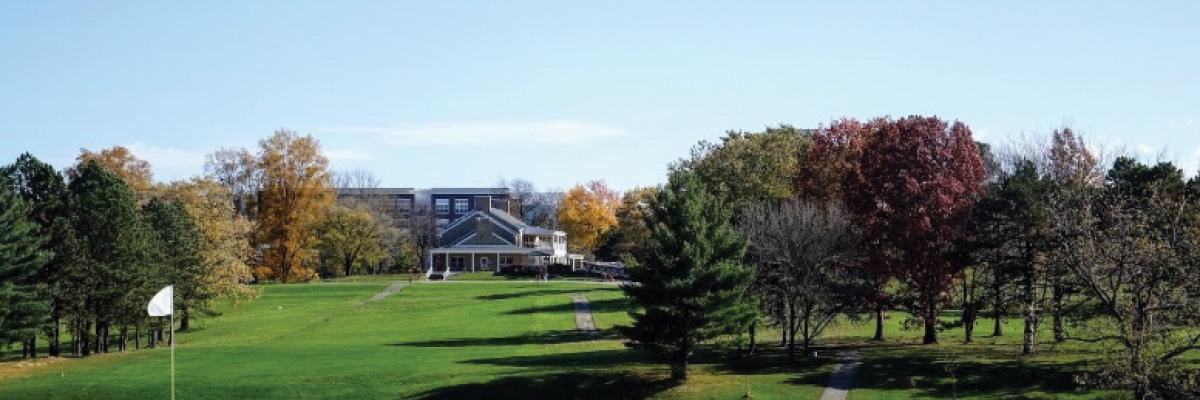
Highland Park Golf Course was represented by Tom Sheetz, golf course manager, and Paul Sampliner, board member for Highland Park Golf Course Foundation.
While the slide presentation loaded, Bishop asked the finance director to explain why the money that the city puts in to support the golf course grew to $909,000. Bishop stated it was his understanding that the subsidy would decline over time, and Johnson replied that a transfer is needed because expected revenues are $1.65 million and expenses are $2.61 million.
Overview of Highland Park Golf Course
Sampliner began the presentation by stating that revenue is down because the course is entering its second transitional year but is expected to be fully operational in 2027. He added that while a loss of $281,000 is projected for this year, the course is on track to turn a profit and be fully sustainable during the 2027-2028 season with the new driving range and 36 holes of golf.
Sampliner stated that new streams of revenue include the new driving range and $20 fee for a non-resident card. Cleveland residents get the card for free.
Sampliner stated that facility improvements included new golf carts, drainage system, irrigation improvements, point-of-sale system, which should save money this year, new putting greens and bridges. Additional improvements in 2026 will include new cart paths, bunkers, tree removal, parking lot and redesigning two holes.
Sampliner said that community events include a partnership with First Tee – Cleveland, weekly golf clinics, and junior golf with 12 different high schools.
Questions from council members
Polensek said that he is totally opposed to subsidizing the golf course and his priorities are parks, playgrounds and rec centers for children and adults.
Polensek said he was here (Ordinance No. 117-2023) when this presentation was made about keeping Highland and the mayor said that the course would be able to support itself in a short time. Now, he said, we are subsidizing it at twice what we are subsidizing Burke Airport.
Polensek told his colleagues that tough decisions have to be made. He said: All morning we heard we don’t have enough revenue for urban forestry, employees, equipment and “da da da.” He added that he can go to Collinwood Recreation Center and point to 15 things that need to be done.
Polensek closed with a suggestion to go back to the Metroparks and see if they can work out a deal with HIghland.
Conwell echoed Polensek’s comments then said he cannot explain to his constituents that the city supports $2.5 million (for Highland) when there is a lot of poverty, people hear gun shots, people’s roofs are falling in, and children need food.
Conwell closed by saying he can’t do it, even if it’s a dollar.
Join the movement for transparency
Civic power can start with you! We train and pay Documenters to take notes at local government meetings and share them here. Learn more about becoming a Documenter.
Slife asked for the 2026 projected balance and Gissentaner replied that he doesn’t think anyone in finance has seen projections beyond 2026. Slife followed by asking whether every year we plan for it to be zero. Gissentaner replied, yes we usually balance this to zero if it’s not deriving a profit.
Slife asked if the golf course is profitable, does it come back to the city? Gissentaner replied no, it would be used to pay for improvements. Slife finished stating he would like to learn more on the five-year plan for the golf course becoming profitable.
Harsh asked for the name of the schools that utilize Highland and Sampliner replied 18. Looking through the documents, Harsh stated that the subsidy is really $961,000 ($909,000 subsidy + $51,000 project loss) and if you divide that by the 160 Cleveland kids who played for free it means that we spent $6,000 per kid for a golf trip.
Harsh said that we are making it cheaper for the suburbs to do things on our tax dime. He said, if he told his constituents the city was subsidizing 18 suburban schools to golf cheap, they would be mad at me.
Harsh said that we can’t keep our pools open because the heaters are breaking and when I asked the director, repeatedly, what the plan was to get new heaters she gave me a very technical answer, but the answer was not this year.
Harsh continued that there are lots of golf courses available to everyone in the region and having this one be subsidized by taxpayers, who can’t use their own rec centers in their own neighborhood. Harsh said this million dollars can be used to fix the pool in Glenville.
Harsh noted that the five year profit loss projection from the golf course shows a loss in 2025 of $566,678 which almost matches the $556,015 transfer from 2024. Then, there’s a $83,000 deficit for 2024 but city records show a $556,000 deficit. He said, basically the $83,000 deficit doesn’t match the city’s subsidy.

Harsh asked why the revenue transfer in and out that Highland brought to council doesn’t match what’s in the budget book. Barrett replied that he can speak to what’s actually in the city’s accounting system but can’t speak for the golf course’s projections.
Harsh closed saying he thinks this is a ridiculous thing to spend money on. “If it can truly be profitable, we can find a buyer. It’s golf. Rich people golf. They buy golf courses. And it’s so far from us that no one will ever know it happened.”
Kazy asked how long the Highland Park Golf Course Foundation has had the golf course and they replied three years. Kazy asked how much philanthropic dollars have been brought in and Sampliner replied he believes $300,000 – $400,000 and things are in the works with big names such as Key Bank.
Kazy asked for an explanation as to why the representatives believe $1 million dollars is a good investment in Highland Golf Course. Sampliner replied, it’s a temporary plan with the golf course being self-sustainable in two years.
Griffin stated he was one of the people emotionally tied to the golf course. That he, Gray and Bishop have a large portion of the southeast side that uses the golf course as an amenity. That everybody entered into this on the assumption that we would wean out the subsidy and it would take care of itself, he said.
Griffin concluded, “I am not going to die on this hill because I have died on it too many times before.”
Kazy asked if the council decided not to subsidize Highland what would happen and Gissentaner replied this would be an operational problem while Barrett added it would also be a city problem because it’s a city asset.
Kazy asked Barrett whether the contract between Highland and the city states that the city has to subsidize the course for $1 million dollars a year. Gissentaner replied he doesn’t think so but there are certain payments the city has to make.
Kazy closed stating, Harsh ran some numbers and an acre in Highland Hills is worth $71,000 which makes the golf course’s 400 acres worth $28,560,000. “Imagine how many rec centers could we fix with $28.5 million. And parks. And with that money we could build a new course here (at Burke),” Kazy said.
Bishop stated if the city is patient, the golf course can be profitable in two years and could be worth $150 million by 2035. He added that we are selling ourselves short if we abandon ship now rather than wait two more years. Bishop concluded the discussion on Highland Park Golf Course saying, we need to be patient and see what happens in two years.
Park Maintenance and Properties
The discussion started with clarification of the number of employees in the department to which Barrett and Johnson stated there are 103 of which three moved to the administration department.
Polensek expressed the frustration council members have with getting basic city services done. Polensek asked Porch whether she has sufficient staff and equipment and she replied there are not enough employees but there is adequate equipment and the job is getting done.
Polensek asked Porch what is the department’s biggest need and she responded, ball diamond prep. Nichols added that aerial images of ball parks and fields, using the county planning commission website “Greenprint” show a decline in maintenance starting in 2016, which indicates there used to be a dedicated crew. Nichols continued that the focus has shifted to providing basic maintenance during the pre-season, in-season, and post season, while excluding maintaining the quality of sub-surface soils.
Polensek concluded with a request for what is needed and Barrett replied the first step is to fill 17-20 vacancies and pay them more.
Bishop asked for the number of ball diamonds and Porch replied 70 clay fields, five synthetic fields, and 32 grass infields.
Harsh stated Loew Park has one field that has not been maintained and they are looking at removing the diamond from Harmony Park then moving all baseball to Loew. Harsh asked whether money that council invests into parks and rec is visible in the budget and Gissentaner replied, no it comes out of the special fund.
Harsh followed up that he would be “livid” if he saw a sign that says “Loew Park rehab brought to you by Mayor Bibb” when this is money city council fought for.
Slife stated one reason he’s having hearings about Burke Airport is because there’s a chorus of people who say turn it into a park. Slife added that the city struggles with what it has right now, without taking on another 400-acre park.
There were no further questions.
West Side Market
Bishop asked when the market was going to be stable enough for the city to stop subsidizing and Nichols replied they should break even by 2030.
Bishop asked where Cleveland Public Market Corp. (CPMC) was and Nichols replied they are not here today. Bishop asked whether CPMC sold more space to vendors and Nichols replied yes and the north arcade is slated to open in 2028. Barrett added that the support agreement changed, which is why CPMC is not present today.
Bishop asked what changes were made and Nichols replied they switched from a management agreement in 2025 to a ground lease. Nichols said this means all income will stay with CPMC and the city will no longer advance funds on a quarterly basis. Nichols explained that there is an annual support agreement whereby the city allocates grant dollars to CPMC.
Bishop asked whether the change required council’s approval and Nichols replied she believes it went through the legislative process ,but will have to confirm. Barrett added that there was a request for the budget and projection that was sent to council staff prior to hearings.
Harsh said the information from CPMC is disturbing and Rosemary Mudry should be at the table if she is asking for $783,000, not Nichols, who came on after the realignment. Harsh continued that they are running a deficit, which they plan to close by 2030 through:
commercial kitchen rental, which is currently $0 but projected to be $303,000;
renovated food hall, which is projected to bring in $1 million; and
merchandise sales are expected to increase from $12,000 to $400,000.
Harsh stated the only revenue that should be a given is from parking even with the 66% drop from $1.5 million to $498,000. Harsh stated if this falls through the city is looking at a perpetual $784,000 subsidy when it was in the quarter of a million dollar range when the market was run by the city.
Polensek concurred with Harsh that CPMC should be here. Polensek stated the problem was the basement. He also added that we’re not subsidizing the East Side Market which is in trouble.
Conwell agreed CPMC should come before the council. Conwell said the danger that’s coming up is the city still owns the East Side Market which it leases to NEON Health Centers for $1 a year. That a receiver was appointed over NEON and the place will probably go dark before the end of the year.
Conwell said the city pumps millions into the West Side Market while the East Side Market was left to close for 20 years and people in Glenville had no grocery store at all. Conwell said we cannot let this happen again and if the West Side Market is taken care of and not the East Side Market he will “have a fit,” protest the West Side Market, and write letters to tell his constituents.
Hudson agreed CPMC should come before the council next week. Hudson recalled pushing for a non-profit to operate the market in the 2000 because the city was a slumlord. Hudson said a lot of money is needed to reach the standards that a public market should be at.
There were no additional questions and the meeting was adjourned.
These notes are by Documenter Christina Easter.
If you believe anything in these notes is inaccurate, please email us at documenters@signalcleveland.org with “Correction Request” in the subject line.