
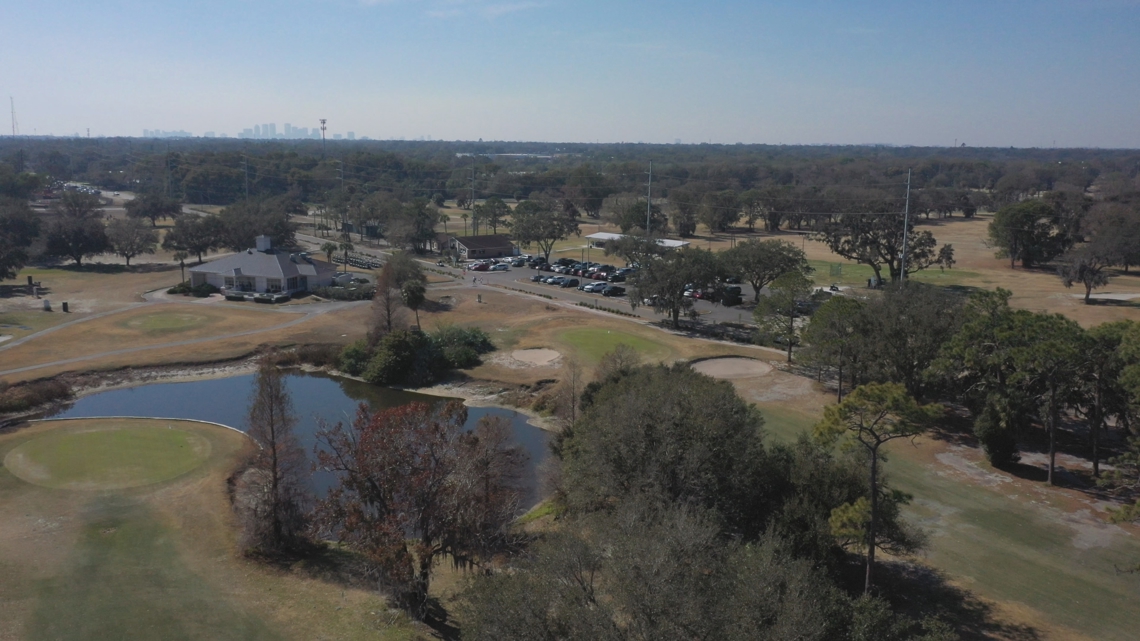
“It’s a jewel for the Black community,” Lionel Ballard said, describing how Rogers Park came to be. “They built this by hand.”
TAMPA, Fla. — Tucked just outside of Sulphur Springs sits a golf course born during segregation in the early 1950s, built out of sheer love for the game.
“It’s a jewel for the Black community,” Lionel Ballard said, describing how Rogers Park came to be.
“They saw white guys playing golf and they wanted to play themselves. Eventually, with determination and sweat and tears, they decided to build their own.”
Ballard says the men who built the golf course did so over several years, using whatever tools they could find.
“They built this by hand,” he said. “In between their jobs and raising their families.”
Ballard watched the golf course grow to what it is today, eventually writing a book on the course’s history and detailing what black golfers and caddies had to endure just to play.
“They had to fight dogs off just to come down 30th street just to come to the golf course,” he said. “That’s how cruel some of the whites in the community were.”
Ballard says the course continued to grow, gain popularity, and eventually became a stop on a tour for black golfers called ‘The Chitlin Circuit Tour.’
But, regardless of their success and skill level, some nearby neighbors couldn’t see past the color of their skin.
“Certain places wouldn’t feed them. Certain hotels they couldn’t stay in. These guys were top-notch players and they had money,” he said.
Rogers Park wasn’t just ahead of its time when it came to overcoming hurdles with race in the sport. In the 1950s, the course also launched a women’s league.
“Very few golf courses had women’s leagues,” Ballard said. “Especially, imagine black women in the mid-50s playing golf? Think about that.”
While other golf parks chose segregation and hate, Ballard says Rogers Park Golf Course always has been, and always will be, open to anyone who wants to play.
“They didn’t care if you were white, black, green, purple — if you had golf game, you were welcome to play,” he said.
Ballard’s book is called “Rogers Park Golf Course: 18 Holes of History.”