
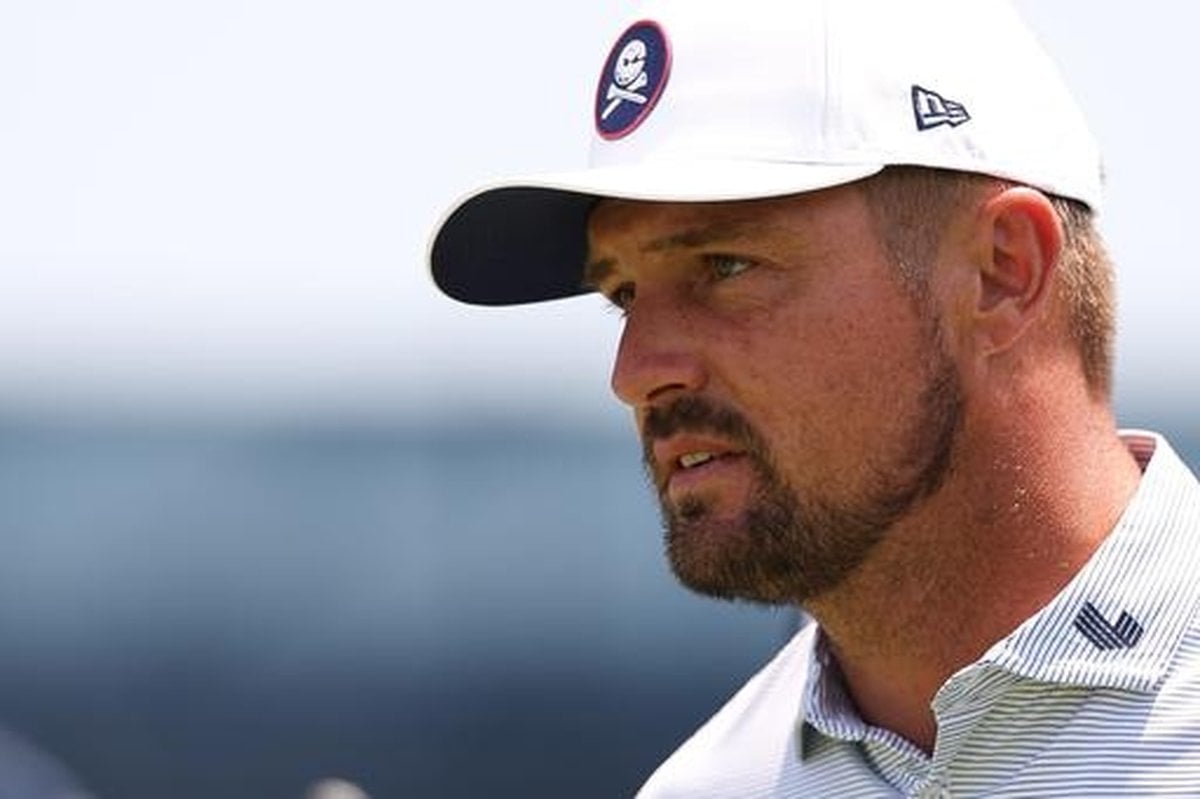
Bryson DeChambeau, one of golf’s most polarizing and innovative figures, has once again found himself at the center of industry headlines—this time, not for a jaw-dropping drive or a tournament win, but for the dramatic end of his partnership with LA Golf. The split, confirmed on February 25, 2026, marks the conclusion of a collaboration that had, until recently, seemed perfectly aligned with both DeChambeau’s analytical approach and LA Golf’s ambitions to disrupt the equipment market. But as the dust settles, the story reveals a fascinating clash of vision, business strategy, and the limits of customization in the world of professional golf.
DeChambeau’s relationship with LA Golf began in 2018, when the company’s founder, Reed Dickens, touted the then-rising star as “an ideal partner for our mission to bring the technically advanced shafts used by the pros directly to golfers.” The partnership was anything but ordinary—DeChambeau’s reputation for scientific rigor and relentless tinkering made him the perfect test pilot for LA Golf’s engineering team. Together, they developed custom shafts and even collaborated on new club head designs, including the much-discussed Face ID driver, which, despite DeChambeau’s input, never actually made it into his tournament bag.
Yet, behind the scenes, tensions simmered. DeChambeau, who owned a modest two percent stake in LA Golf, sought to dramatically increase his influence. According to Dickens, the split was triggered when DeChambeau’s business advisor delivered an ultimatum: DeChambeau wanted a controlling 51 percent stake in the company, or he would walk away. “Bryson’s got 2 percent of the company. And I think the guy doesn’t realize that he’s dealing with a redneck. And I say, ‘There’s no path for that.’ They played chicken with me, and now we’re going to graciously part ways,” Dickens told Golf.com. Despite the strong words, Dickens insisted there was no personal animosity, adding, “Bryson and I actually have some of the same tendencies, and I have nothing but respect for him.”
For DeChambeau, this isn’t uncharted territory. The 32-year-old, who swings his driver at an eye-watering 130 miles per hour, has always pushed the boundaries of equipment technology. His approach demands bespoke solutions—clubs that are reinforced, stiffened, and engineered to withstand forces far beyond what the average player will ever produce. As Dickens put it, “Bryson needs someone serving him 24 hours a day; he needs somebody to build him his own clubs, and that’s not scalable for us.” This echoes the sentiments of Ben Schomin from Cobra Golf, DeChambeau’s previous equipment partner, who remarked in 2022, “Everybody is bending over backwards… It’s just really, really painful when he says something that stupid.”
Despite the challenges, the partnership produced results. DeChambeau captured two U.S. Open titles—first at Winged Foot in 2020, then at Pinehurst in 2024—using LA Golf shafts throughout his bag. At the 2025 Masters, he played in the final round alongside eventual champion Rory McIlroy, again wielding a full complement of LA Golf equipment. The collaboration also yielded innovations like a custom putter shaft and bespoke club heads, tailored specifically to DeChambeau’s unique one-plane swing and high-speed style.
But the engineering that fueled DeChambeau’s success came at a price. Building clubs for a player who operates at the extreme edge of performance is expensive—R&D, durability testing, and custom prototyping for one athlete quickly add up. For LA Golf, the business model was always a balancing act: Could the company justify the cost of such intense customization if the resulting products weren’t scalable to the broader market? After all, the average golfer swings at speeds between 80 and 90 mph, a far cry from DeChambeau’s 130 mph. The lessons learned from working with him might trickle down to retail products, but if the innovations can’t be adapted for the masses, the financial math gets uncomfortable.
The split comes at a pivotal moment for LA Golf. Earlier in February 2026, the company reportedly laid off close to 80% of its workforce while shifting aggressively toward a direct-to-consumer (DTC) model. Jeff Meyer, LA Golf’s chief design officer, confirmed the move to a 100-percent DTC approach, stating, “Now that we are going to have a full bag of fully assembled golf clubs, it doesn’t make sense for us to sell shafts to support other brands’ heads.” While Meyer pushed back on the notion of widespread layoffs, the strategic pivot signals a major transformation for the brand, which had previously built its reputation as a premium shaft supplier.
Against this backdrop, DeChambeau’s departure is more than just a celebrity partnership gone awry—it’s a reflection of the broader challenges facing golf equipment manufacturers. The tension between catering to elite athletes and serving the needs of everyday golfers is as old as the sport itself, but DeChambeau’s extreme demands brought the issue into sharp focus. As one industry observer put it, “When you build for the outer edge of the bell curve and cater to his every demand, you’re no longer designing for everyone. If there isn’t enough trickle-down, what’s the point?”
DeChambeau’s star power is undeniable. With 2.6 million YouTube subscribers and 4.3 million Instagram followers, he brings enormous visibility and buzz to any brand he touches. His intellectual curiosity and willingness to experiment have made him a fan favorite—and a headache for equipment makers. But as LA Golf’s experience shows, there’s a limit to how much a company can bend before it breaks.
This isn’t the first time DeChambeau’s equipment relationships have ended in public splits. His highly publicized fallout with Cobra Golf in 2022 followed a similar pattern: intense collaboration, technical innovation, and ultimately, irreconcilable differences over business direction and scalability. For both LA Golf and Cobra, the challenge was clear—how to harness DeChambeau’s insights without losing sight of the broader market. In both cases, the answer was to walk away.
As for DeChambeau, the future remains wide open. With his considerable earnings—top PGA Tour players, including DeChambeau, took home tens of millions in 2025—he’s not dependent on club sponsorships to fund his career. Whether he’ll seek a new equipment partner or venture further into designing his own gear is anyone’s guess. What’s certain is that wherever he goes, the golf world will be watching closely.
For LA Golf, the split with DeChambeau is both an end and a new beginning. As the company doubles down on its direct-to-consumer strategy and prepares to launch a full lineup of assembled clubs, it’s clear that the brand is betting on a future where it controls every aspect of the customer experience. Whether that bet pays off—or whether the lessons learned from partnering with one of golf’s most demanding minds will trickle down to benefit everyday players—remains to be seen. For now, both parties are moving forward, each charting a course that reflects their own vision of what golf can, and should, be.