
50 Words or Less
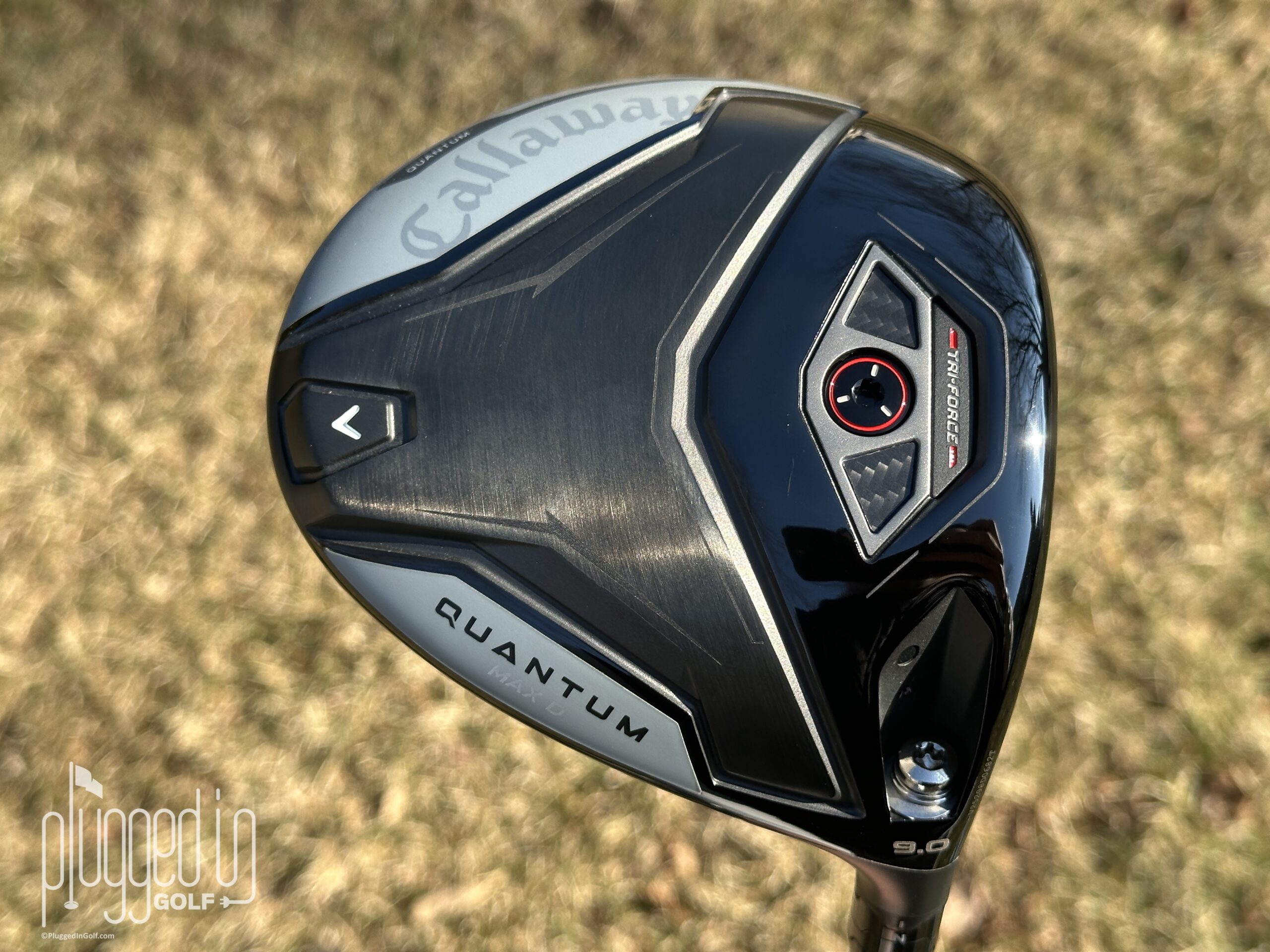
The Callaway Quantum Max D driver is the most forgiving of the Quantum drivers. Strong ball speed and high launch. No adjustable weighting, just a built-in draw bias.
Introduction
For as much time as the golf internet spends talking about Tour-style clubs, the reality is that they only fit a small minority of golfers. Most players need more forgiveness and more help keeping the ball off the right side of the course. For those players, the new Callaway Quantum Max D driver is going to be a very compelling choice. With the most forgiveness in the Quantum family, it could be the opening to more distance and more confidence off the tee.
Looks
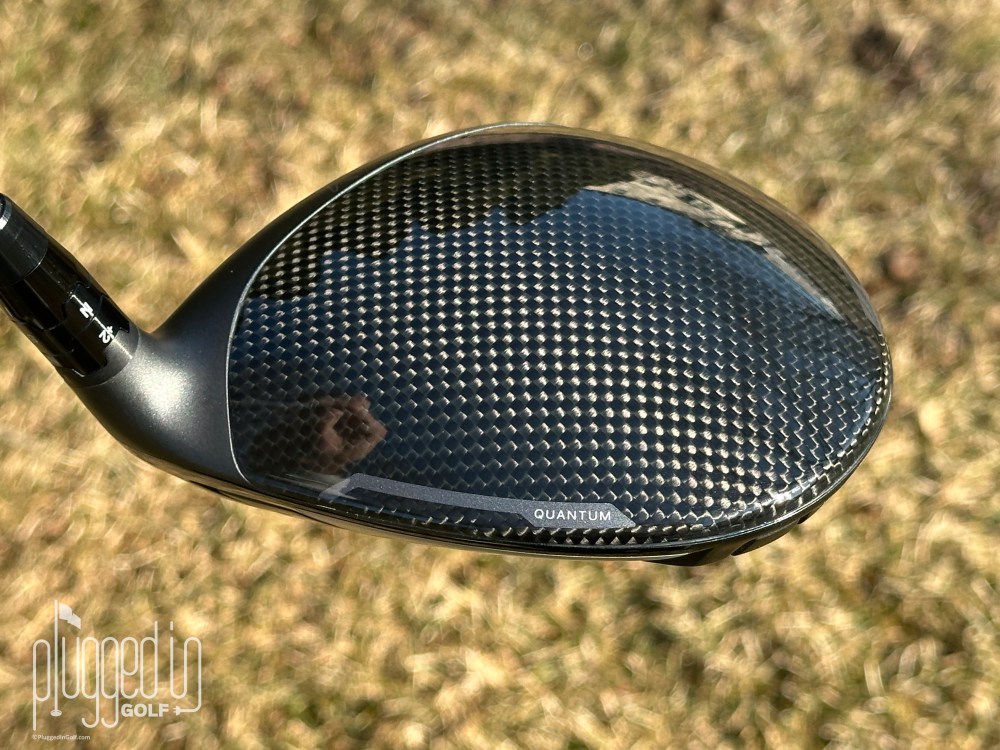
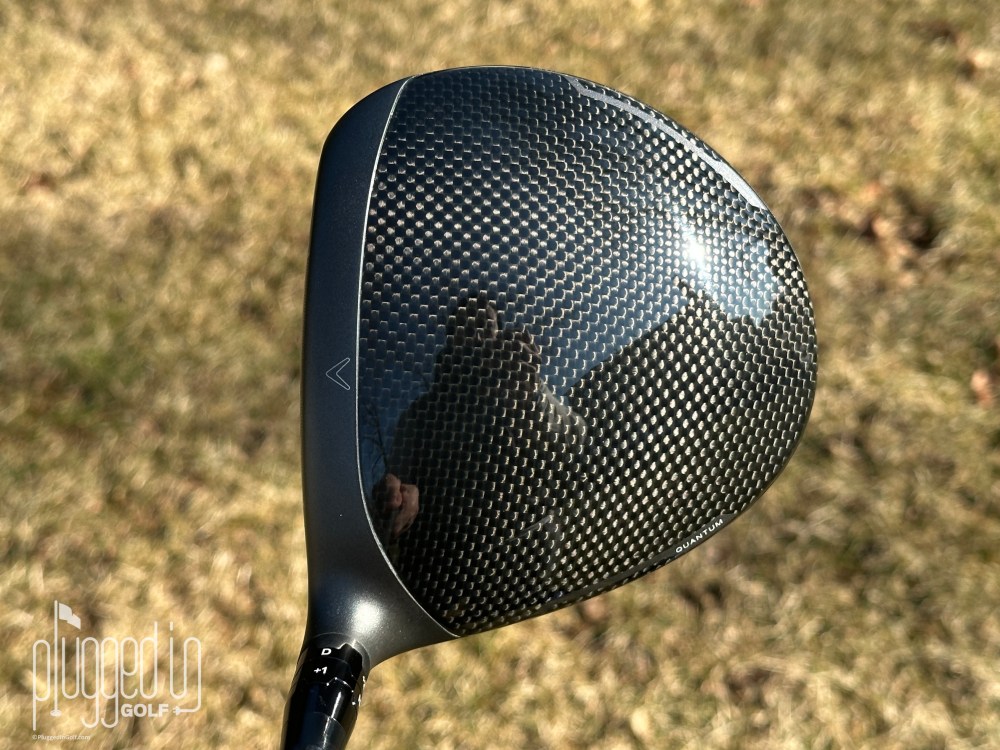
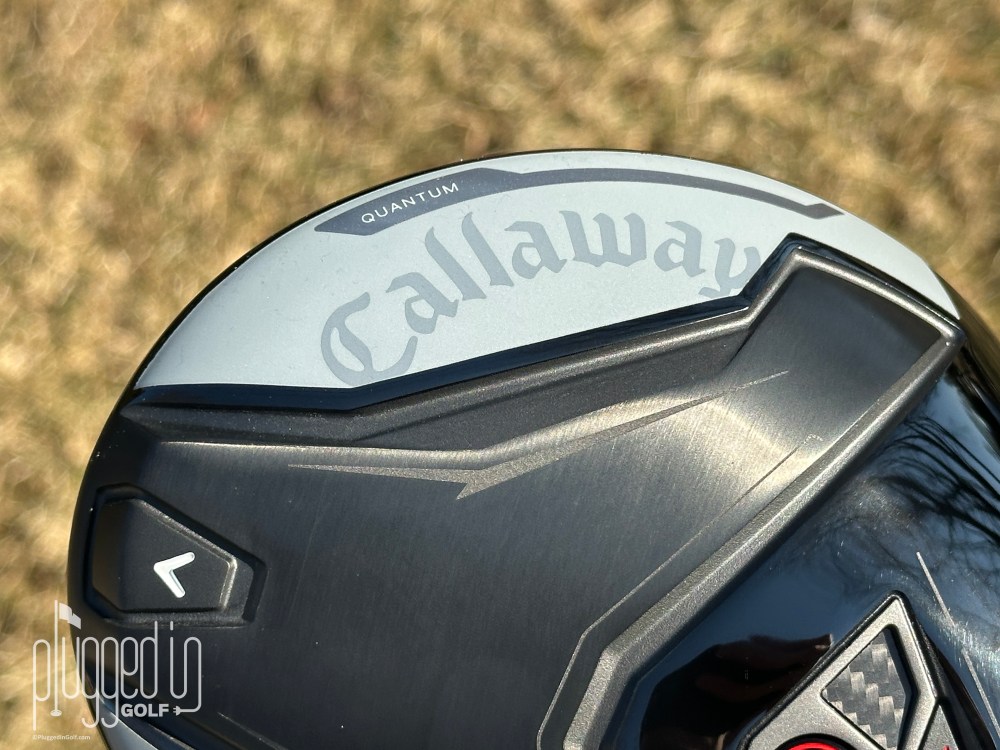
At address, the Callaway Quantum Max D driver looks the part of the super game improvement driver. It’s long from front-to-back with a full shape that leans toward the heel. The crown is a dark, gloss carbon fiber with a ribbon of matte grey at the front. Alignment is aided by the outline of a small chevron.
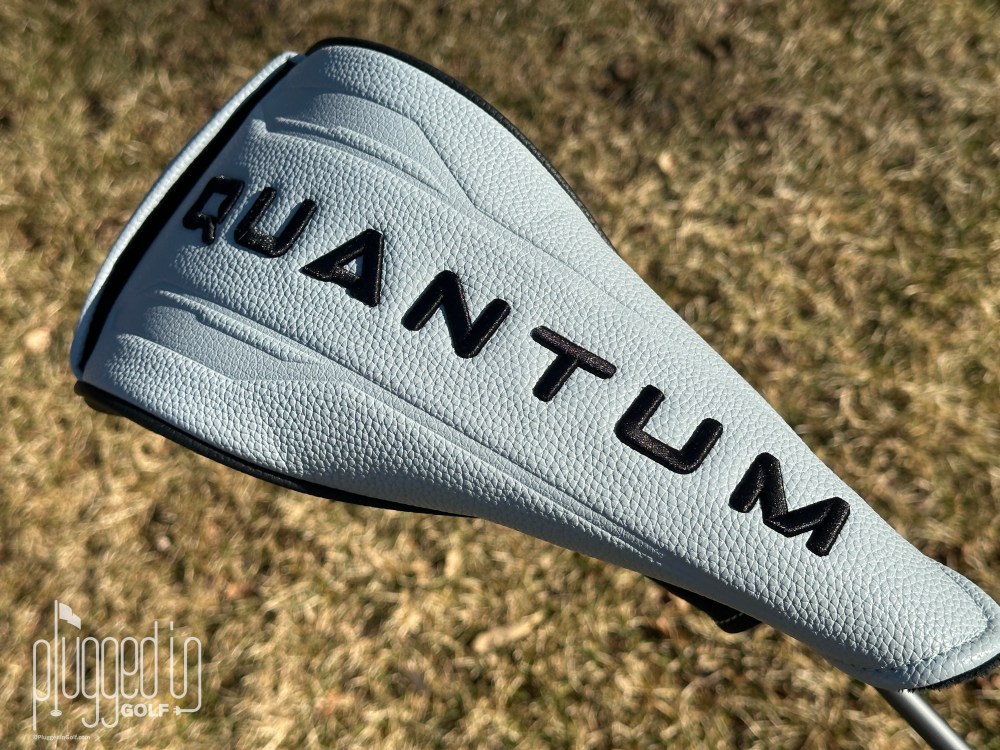
In the bag, the Quantum Max D looks very similar to the Quantum Max. A dark grey “Y” separates two light grey elements and the gloss black leading edge. Branding is moderate in size. Where the Max D stands alone is that it does not have the Advanced Perimeter Weighting on the trailing edge – more on this later.
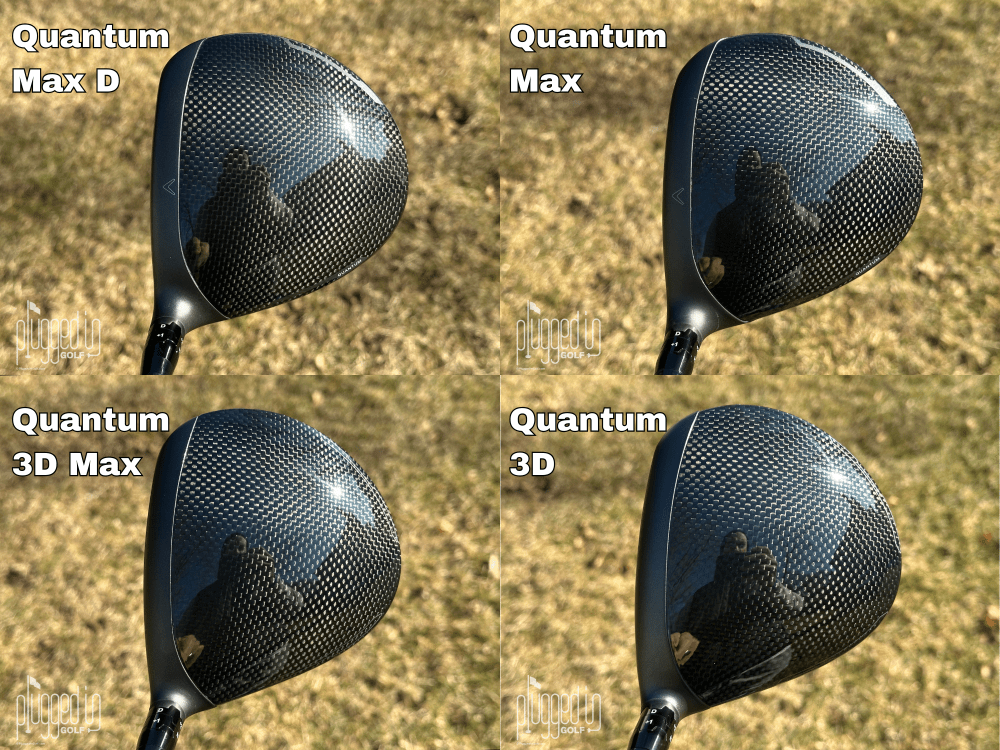
Comparing the Callaway Quantum Max D driver to the other Quantum models, it stands apart on the “forgiveness” end of the spectrum. It’s about 1/8″ longer from front-to-back than the Quantum Max [review HERE], and its face is slightly wider. More than any specific measurement, it’s the large footprint that sets the Max D apart. As I’ll say numerous times, the gap between this and the other Quantum drivers isn’t huge, but it’s noticeable when they’re next to each other.
Sound & Feel
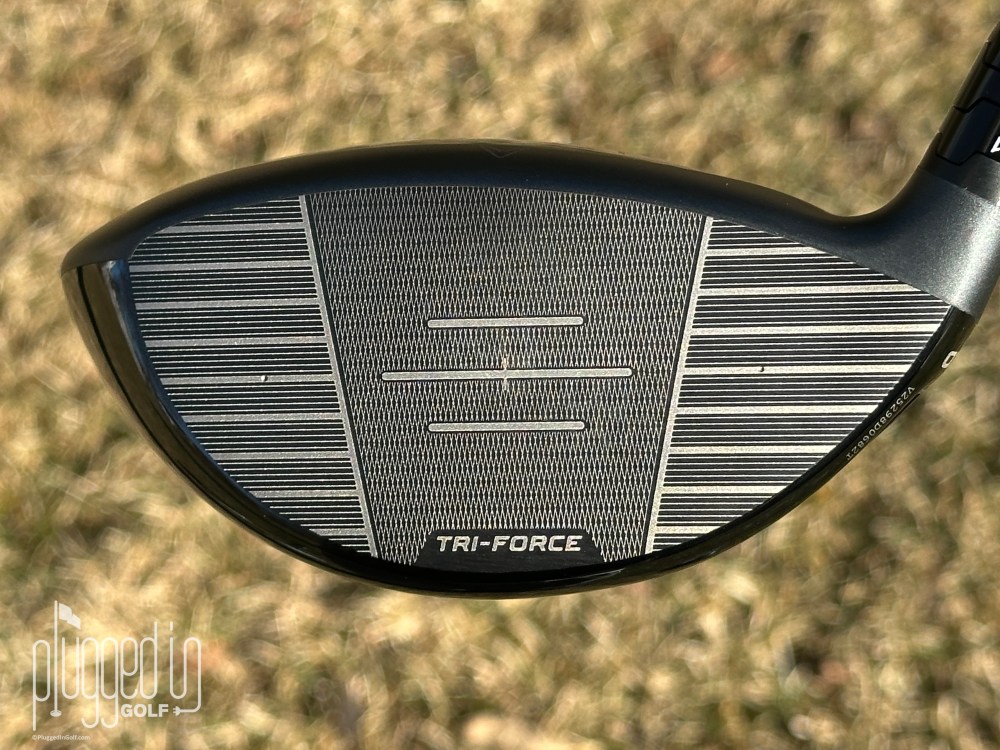
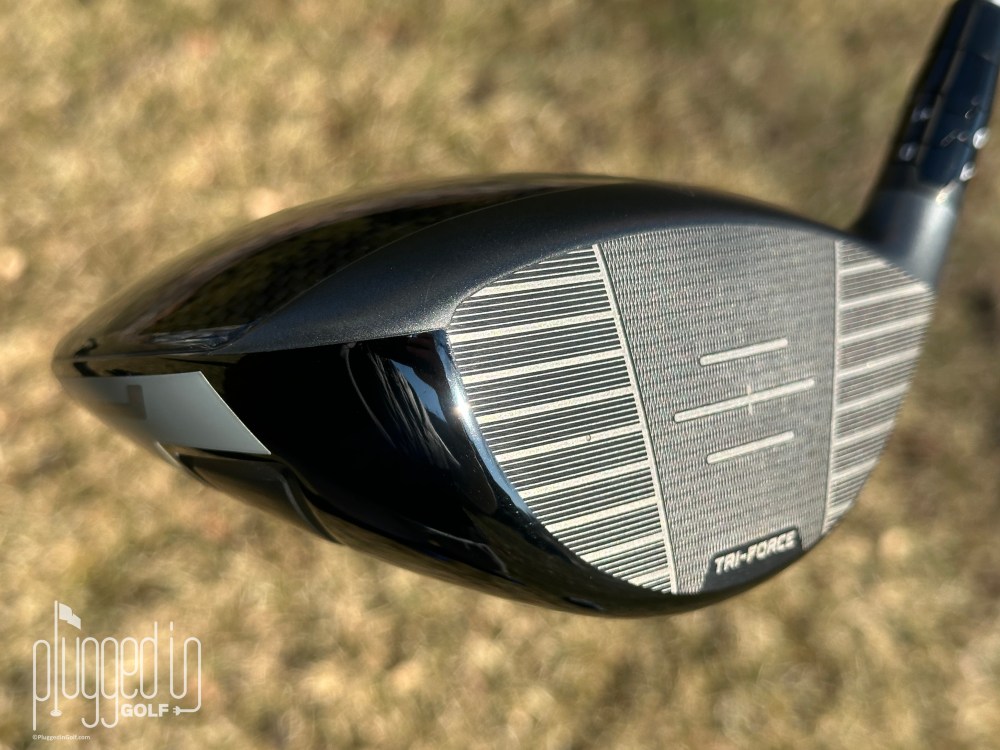
Starting with a wide lens, the Callaway Quantum Max D driver has the feel that’s unique to the Quantum family. The Tri-Force Face – a layering of titanium, poly mesh, and carbon fiber – has a feel that’s solid but also soft, bouncy, and fast. On center, the feel is addictive. That pairs with a sound that’s fairly muted and low pitched.
Zooming in on the four Quantum drivers, the hallmarks of a super game improvement do come through. Compared to the Triple Diamond [review HERE], the Quantum Max D does not feel quite as solid. It’s a small difference, but it’s noticeable when hitting them side by side. Similarly, the Max D is a hair louder than the others. It’s no more than average overall, but the others are a little more subdued.
Finally, the Callaway Quantum Max D driver does the most to make all shots feel good. You can locate impact through your hands, but you need to pay attention. The sound of impact only changes when you get substantially away from the sweet spot. As this driver is targeted at higher handicap players, the lack of penal feedback is not a bad thing.
Performance
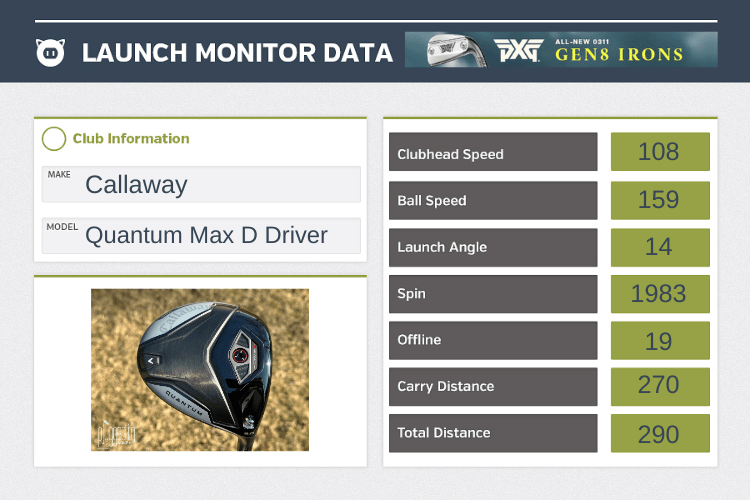
We can start where I’ve started all of my Quantum driver reviews: ball speed. On center, the Callaway Quantum Max D driver is very impressive, producing speeds that are among the best I’ve seen lately. Where the Max D separates itself from its brothers is the level to which is preserves that speed. Per Callaway, this driver has the “Highest” forgiveness, and that was evident when I had it on the launch monitor. Mishits that might lose 4 MPH with another driver would lose just 2. If you’re someone who likes to explore all corners of the club face like I do, this kind of robust ball speed is very valuable.
In addition to “Highest” forgiveness, the Callaway Quantum Max D driver has notably high launch. Even though I was hitting exclusively draws, the ball was launching higher than with any other Quantum driver. For the nth time, it’s not a night and day different, but the gap was measurable and noticeable. If you’ve been chasing that elusive high draw, this could be the driver for you.
Turning to the namesake feature – the D in Max D stands for Draw – this club does have a pronounced draw bias. Callaway states that it’s a “slight draw bias,” and this is the one spot where I’ll disagree with them. Admittedly I am hook prone, but I’ve tested enough clubs to say that this is at least a moderate draw bias. It’s not a “You’ll never see the right side of the course again” slice-killer, but it has a decided preference for the left. My shots ranged from nice draw to sweeping hook; I had to work pretty hard to hit a straight ball.
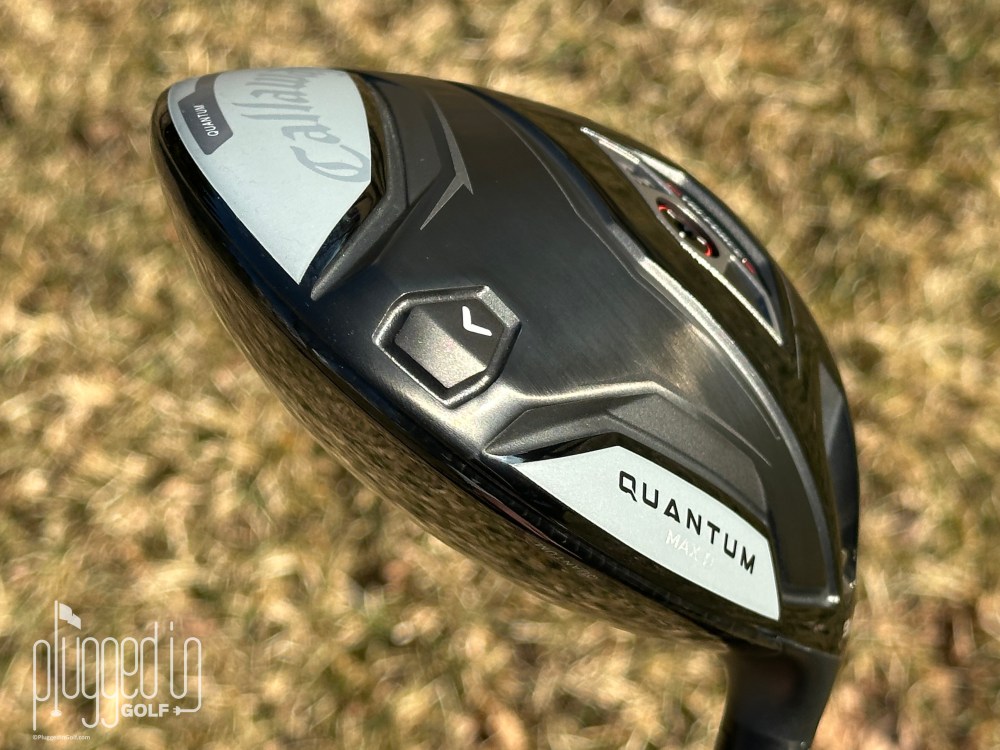
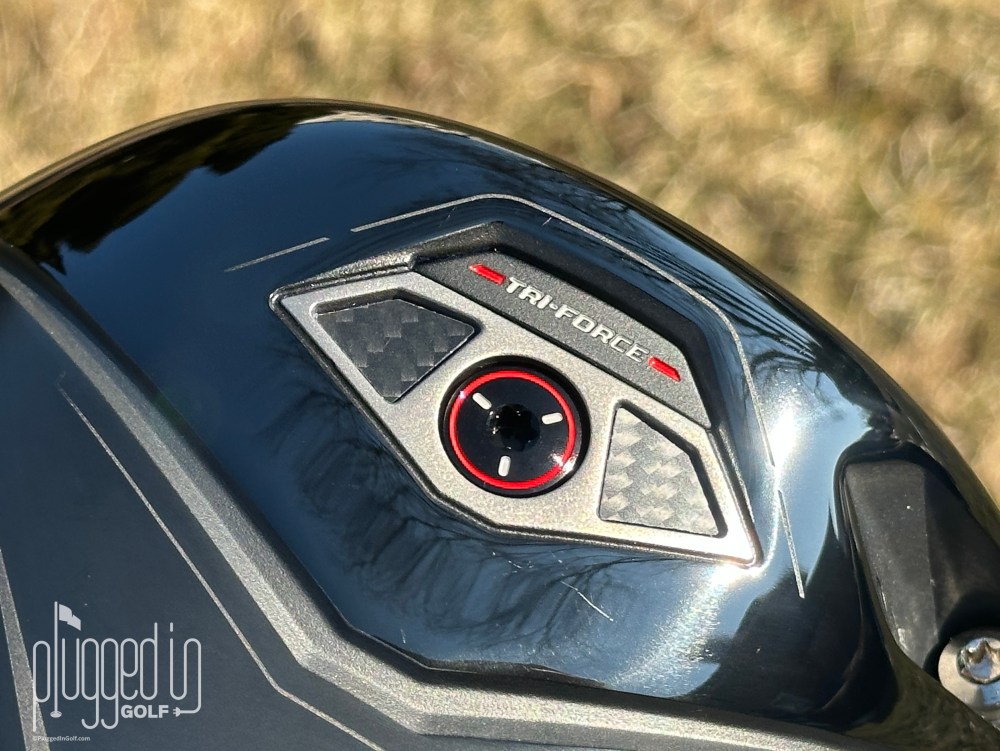
The most obvious way in which theCallaway Quantum Max D driver stands apart from the other Quantum drivers is that it does not give golfers the ability to manipulate that draw bias. There is no Advanced Perimeter Weighting (APW) on the Max D, just an internal draw bias. You still get Callaway’s Opti-Fit hosel which allows you to adjust loft and lie, but the settings on the hosel tend to go toward more draw bias not less. This club is definitely designed for players who only want their ball to go left (or less right).
Finally, let’s place the Quantum Max D in context with the rest of the Quantum drivers. From a positive perspective, it’s the most forgiving. From the negative side, it’s the least versatile because of the lack of adjustable weighting. Those are just two sides of the same coin because adjustable weight systems eat up discretionary weighting. For many golfers, especially slicers, forgiveness for versatility is a great trade. That said, players that want more flexibility will be pleasantly surprised by how much forgiveness they find in the Quantum Max – which opens up a Neutral weight setting – and the Quantum Triple Diamond Max [review HERE], which offers the possibility of favoring a fade.

Conclusion
The Callaway Quantum Max D driver delivers on everything is promises. This is a very fast, highly forgiving driver, that can do a lot to promote a draw or minimize your slice. If those sound like appealing traits in a new driver, visit your Callaway fitter to get one tuned to your specs.
Buy the Callaway Quantum Max D Driver HERE
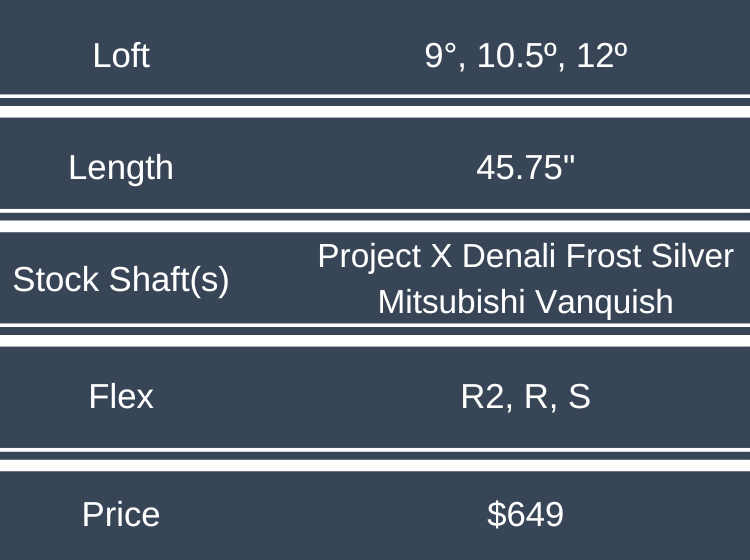
Callaway Quantum Max D Driver Price & Specs
Editor In Chief at Plugged In Golf
Matt has worked in nearly every job in the golf industry from club fitting to instruction to writing and speaking.
He founded Plugged In Golf in 2013 with the goal of helping all golfers play better and enjoy the game more.
Matt lives in the northwest suburbs of Chicago with his wife and two daughters.
