
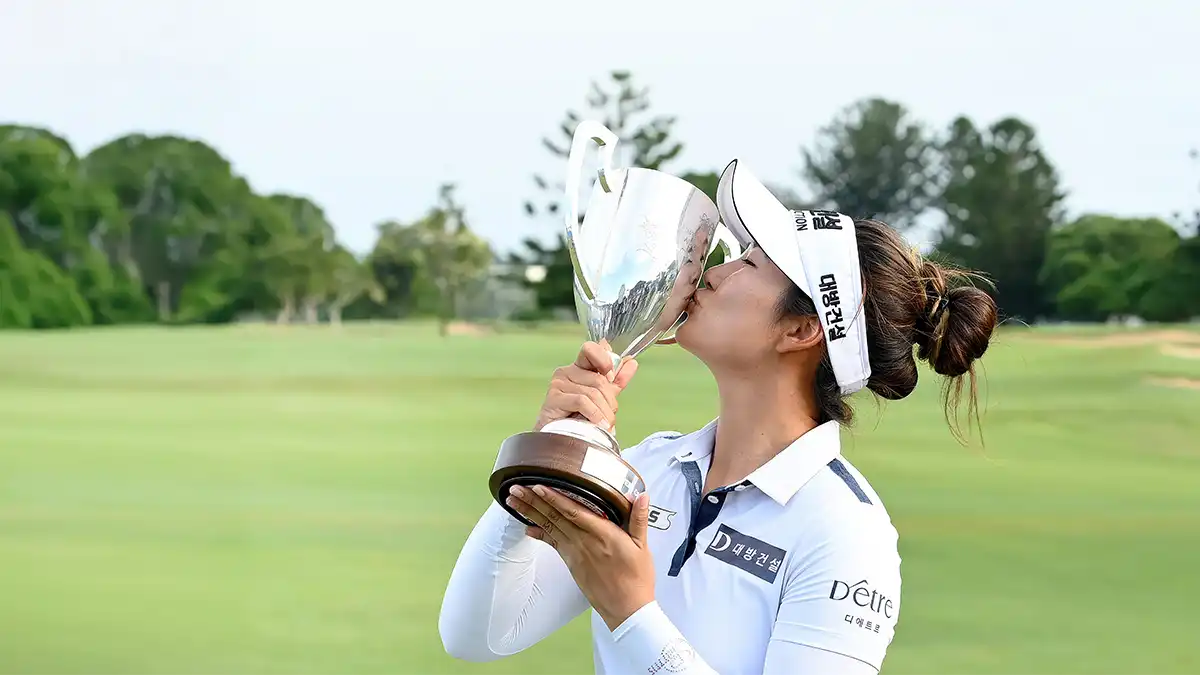
The return of the women’s Australian Open as a standalone event and the re-emergence of the WPGA Championship of Australia are central to a huge month in women’s professional golf.
There surely hasn’t been a month in Australian women’s golf quite like what awaits this March. Seventeen of the 31 days will include a local women’s golf tournament – and that figure rises to 20 if you permit us to include the final three days of February as well.
Six tournaments across three states, including two showpiece events, symbolises the lofty heights to which the women’s side of the game has ascended in recent years. Not only is Australia producing several of the best female players (including multiple major winners in 2025), this is also the home of some of the premier events.
The two biggest changes to the WPGA Tour of Australasia schedule from last season to this are the return of the women’s Australian Open to a standalone format at a more favourable time of year and the re-emergence of the WPGA Championship of Australia. Neither has been fractured by what some see as chequered histories, but rather strengthened and now ready to reclaim their rightful position as pillars of the women’s Australian tournament season.
In the past three years, the women’s Australian Open has been held as part of a combined format with the men’s Australian Open and the Australian All Abilities Championship. When the announcement came last February that the three events would be separated, there was a sigh of relief from some. Not so, WPGA chief executive Karen Lunn. There had been conjecture about the combined format, some labelling it a ‘failed experiment’ and asserting that it did nothing for the women’s championship and tarnished the men’s. Lunn doesn’t see it that way. For her, it’s all about taking the positives and stepping into the future.
“Scheduling was the biggest issue; it was always going to be a problem and it was. If we could find a date that would fit both men and women, I still think it could work. But it was a real positive for women’s golf for the three years. It elevated women onto the same stage as the men, brought new fans to the sport, and it created greater visibility for sponsors.”
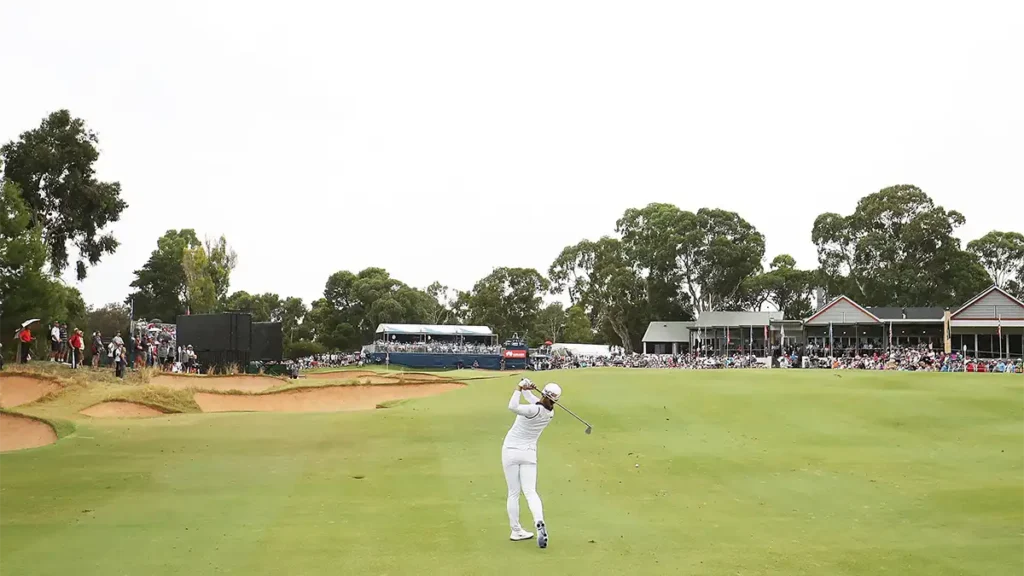
This year’s women’s Australian Open will be played at Kooyonga Golf Club in Adelaide from March 12-15. The Open has been played at Kooyonga once before, in 2018 when South Korean Jin Young Ko won, and returns to Adelaide as part of a three-year agreement with the South Australian Government.
The change of date to March won widespread approval from players after the 2024 championship was played just days after the LPGA’s season-ending CME Group Tour Championship in Florida, meaning the Australian players and a handful of internationals arrived in Melbourne the day before the tournament jet-lagged and unprepared. The rejigged timing means it has clear space around it from the LPGA schedule, coming at the end of the LPGA’s Asian swing and opening the possibility of attracting more international players.
A week after the Australian Open comes the WPGA Championship of Australia, from March 19-22 on the Palms course at Sanctuary Cove Golf & Country Club. The WPGA Championship has endured other travails in its short history. First held in 2022 as the Fortinet Australian WPGA Championship alongside the men’s Fortinet Australian PGA Championship at Royal Queensland – with Su Oh claiming the Karrie Webb Cup from Grace Kim – it then went into hiatus while the WPGA sought appropriate partners. This it found in a joint relationship with the PGA of Australia, Mulpha Events Gold Coast, Tourism & Events Queensland and Experience Gold Coast, and the 2025 edition was set to be a beauty. Until Cyclone Alfred arrived and ruined the party, that is.
“It was horrendous. I don’t think I’ll ever get over that,” Lunn says of her disappointment at its last-minute cancellation. But her outlook on the event is positive – and ambitious.
“We want to do an event of which we can be proud. It’s our championship, and our goal is to have it sit alongside the men’s PGA Championship of Australia as our two flagship events from a tour perspective.”
This year’s WPGA Championship will, like the Australian Open, have a standalone format, and will also form a central part of a Festival of Golf. Billed as a high-energy celebration and with free entry, the Festival of Golf encapsulates a week of festivities that includes food, fashion and shopping around championship golf and with the T100 Triathlon on the weekend.
Both the Australian Open and the WPGA Championship will be co-sanctioned with the Ladies European Tour, part of a significant four-week swing for that circuit in Australia that includes the Australian Women’s Classic and the Ford NSW Open. Although the LPGA has scheduled the significant Founders Cup the same week as the WPGA Championship, Lunn is nonetheless confident of a great field.
“We have around 28 players on the main and secondary tours, many of whom are playing very well, and we’re very hopeful of getting our leading players to play,” she says. “2026 is also a Solheim Cup year, so potential European team players will be keen to get some points early in the season.”
A HECTIC SCHEDULE
The women’s NSW Open (February 26 to March 1) will set the tone for ‘Manic March’, although it’s a tournament that feels like it’s been in the public consciousness for months already. That’s because the players’ road to Wollongong Golf Club began months ago.
Golf NSW stages six qualifying events as a pathway into the NSW Open, the last two of which will be played as part of the 2026 season in mid-February at Moss Vale and The Links Shell Cove. Several players gain entry to the tournament proper via these mini-events, which have served as wonderful proving grounds for emerging players like Hannah Reeves [see page 82], who won three in succession last spring.
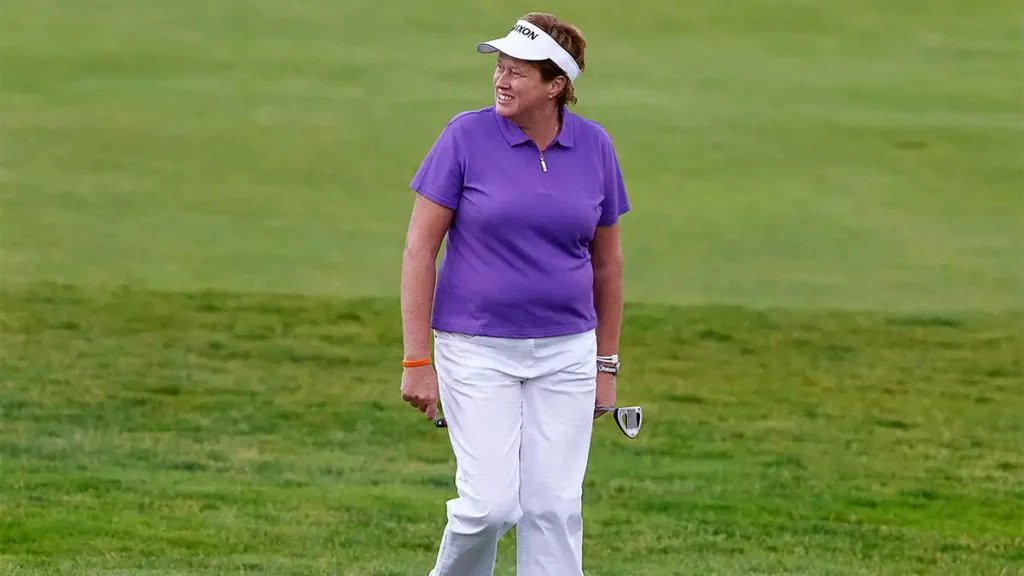
The NSW Open and the Australian Women’s Classic (Magenta Shores, March 5-8) then lead in to the two premier events, the Australian Open and WPGA Championship, but are anything but support acts. Their outstanding honour rolls between them include names such as Celine Boutier, Maja Stark, Caroline Hedwall and the legendary Dame Laura Davies as well as 2025 winners, rising stars Mimi Rhodes and Manon de Roey.
Of interest is the Wagga Wagga Pro-Am, to be played from March 26-27, the only pro-am on the official schedule and a reminder of the early days of professional golf in this country.
In 1972, South Australian businessman and keen golfer Alan Gillott, reading about women’s professional golf in the US, hit on the notion that it should be played in Australia too. The then-Ladies Professional Golf Association of Australia (LPGAA) was born later that year and its first event, the Simpson Pope Classic, played in March 1973 by its 12 founding members.
Two name changes later and now with a close working relationship with the PGA Tour of Australasia, the WPGA Tour of Australasia is hosting its 2026 schedule with about 300 members and 16-18 events, a number that is getting close to those of the Epson Tour and LET Access Tour, the secondary tours of the behemoth LPGA Tour and the Ladies European Tour, respectively. The import of that is not lost on Lunn.
“It’s been a really interesting journey and I’ve been really fortunate to have been involved for quite a bit of it,” she said.
A former LET player and LET board chairman between 2003 and 2013, when Lunn took on the role as chief executive of the then-Australian Ladies Professional Golf (ALPG), she recalled that “there weren’t any big events back when I turned pro in 1985. We used to traipse around the country playing pro-ams for around $5,000.” Wagga Wagga this month is a $50,000 event.
The WPGA Tour has come a long way from its first days. In 2024, women professionals were playing the biggest events for prize funds up to $500,000 for the Australian Women’s Classic and NSW Open while the purse for the women’s Australian Open was $1.7 million. But beyond the dollars is the greater opportunity now afforded young players.
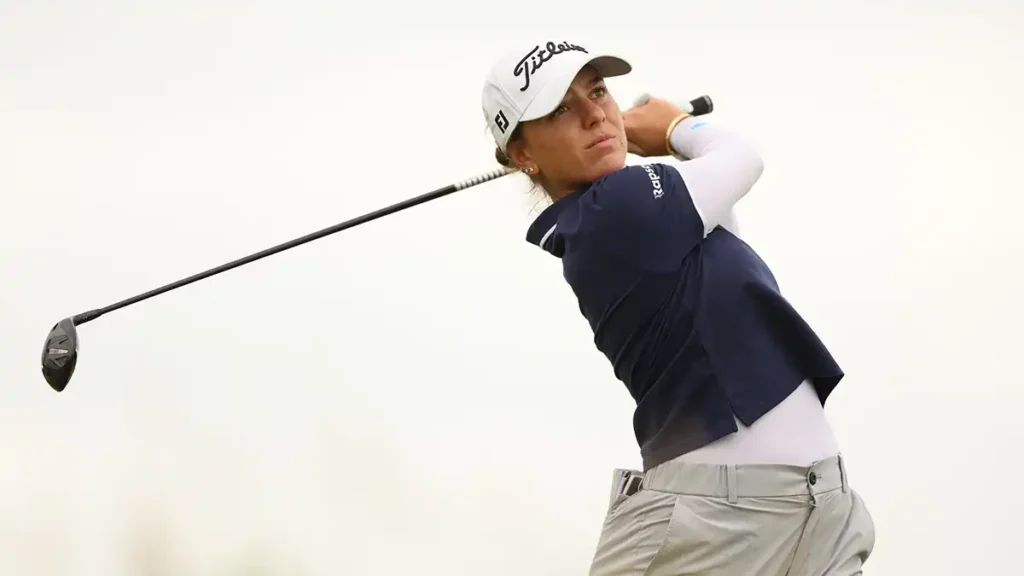
“Before, we just had a few events and the other tours didn’t really consider us a tour, but now having 12 events with Rolex Ranking points, people are saying, ‘Well, that’s a genuine pathway to the bigger tours, rather than just a country that stages some really good events but not many of them,’” Lunn says.
Burgeoning co-sanctioning with the LET (and at times with the LPGA) through the past 20 years has been a big part of that recognition.
“It’s hard yakka down here,” Lunn adds. “We’re a small country, a small economy, and if you look at some of the Asian events or the LPGA, they’ve got massive economies, so it’s a very different ask for us. The exchange rate doesn’t help us to compete. And many women’s sports are really popular now, so we’re fighting them for sponsorship dollars too.
“We’re far better to align with a strong tour like the LET where the prizemoney is certainly more sustainable in the long term. And if we’ve got any additional money in the budget, we can look to
pay a couple of superstars to come out. We’re keen to build on the schedule
and elevate the events we’ve got.”
Co-sanctioning with the LET not only brings better prizemoney and excellent players to our events, it also creates opportunities for emerging players, both here and from abroad. Take the example of Steph Kyriacou. As an amateur, Kyriacou won the 2020 Australian Women’s Classic, the first event of that LET season, by eight shots over then-world No.35 Ayean Cho. After turning pro two days later, Kyriacou won again on the LET in 2021 and qualified for the LPGA Tour for 2022, where she had two top-10 finishes in majors – tied seventh at the Women’s Open and tied 10th at the Women’s PGA Championship – and was runner-up in the 2024 Amundi Evian Championship.
Now Kyriacou is one of the world’s better-ranked players. All on the back of an Australian tournament backed by the LET. And she’s not the only one.
“I think it’s a great pathway for our girls in that when they get to those bigger events, they’re not proper ‘rookies’; they’re fairly hardened professionals who are not overawed by playing against the best players,” Lunn says. “And they get three bites of the cherry getting into those bigger events; either they do well enough by their play this year to get in, or they play well at qualifying or at the beginning of 2026 to earn their opportunity.”
It works the other way, too.
“Aside from the four-week swing, we’re a really valid opportunity for players to come here for nearly three months to earn prizemoney. And the players love coming here; nearly all the clubs we go to offer billeting, so that cuts their costs, which for younger players is really important. And they develop friendships with the people with whom they stay. It’s very different to other places in the world.”
Seeing top players live is also important in creating heroes for young golf fans.
“It’s great for young girls in Australia to be able to watch their heroes like Minjee, Hannah or Grace or Charley play here because they can’t get up in the middle of the night to watch overseas coverage and when it comes on in the morning, most of them are at school.
“There’s also so much diversity for fans, to see players from all over the world. I think the fields we had this year with the LET, there were something like 38 different countries represented.”
We’re living in an exciting time in women’s professional golf in Australia and around the world. With the strength of the LPGA nowadays, there is flow-on depth in the Epson Tour, the LET and the LET Access Tour. All this bodes very well for the future of women’s professional golf globally, and our players are right among it. There is something in the air, and Lunn feels it too.
“I really do. I think it shows the energy that women’s golf has,” she says. “I think there’s a real shift in momentum for women’s golf and that’s probably part of the shift in women’s sport generally. But we know the benefits that golf has to offer and we have to celebrate our difference to other sports. We need to showcase the talent that women have.
“I think we’re in a very good place right now.” – Additional reporting by Steve Keipert
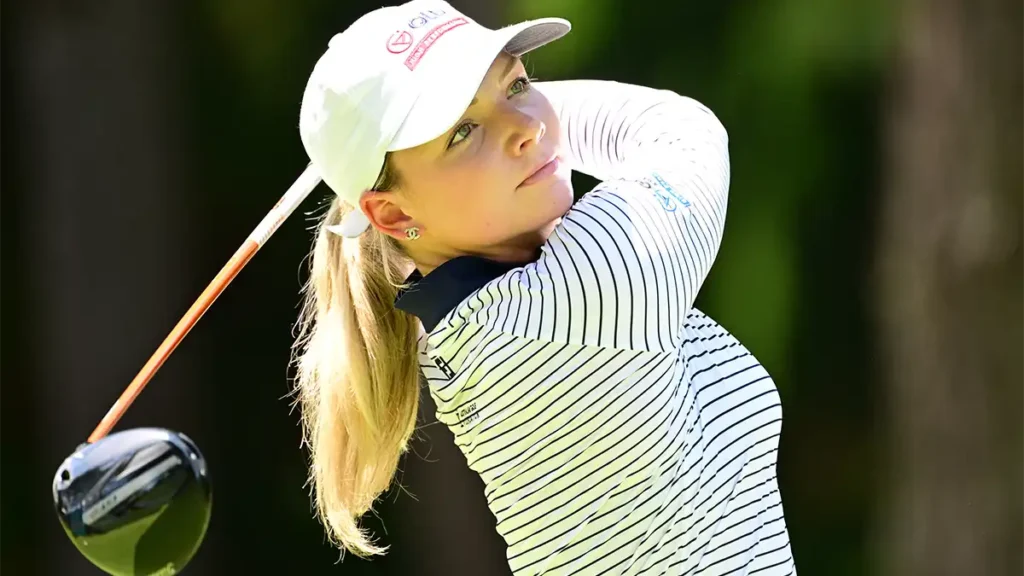
Another Hannah to watch
If you’re looking for a new local name to keep an eye on this month, chances are one will present itself on the leaderboard without you having to search for long. You see, Hannah Reeves has already made a habit of winning even though she only turned pro last spring. Straight out of the blocks, the 24-year-old from Stanthorpe on Queensland’s Granite Belt won three consecutive Women’s NSW Open qualifiers to signal she was ready to make the leap from the amateur ranks with a flourish.
The 36-hole qualifiers might act as a road to the event proper, however they are still tournaments in their own right, with Reeves capturing the Ford Women’s NSW Open Regional Qualifying Series event at Mollymook Golf Club’s Hilltop course in her pro debut last October then backing that up by claiming the Wagga Wagga and Dubbo legs in quick time. Think about that for a moment… she was undefeated as a professional golfer in her first three starts.
Since then, Reeves has repeatedly bobbed up on leaderboards. She shared third place in her bid to win four NSW Open qualifiers in a row and more recently held the first-round lead at the Vic Open in wild, windy conditions at 13th Beach Golf Links.
Another bright prospect under the tutelage of Grant Field, and also a graduate of Queensland’s Hills Golf Academy where Jason Day excelled, Reeves is further proof that today’s rookie professionals show up steeled for the big time thanks to world-class coaching and a development system that nurtures rising amateurs and prepares them for pro careers. Reeves says she didn’t necessarily get the most out of her amateur career in terms of performances yet felt like her game developed to the point where she could turn pro last spring at age 23. And who’s to argue after such an enigmatic start?
Some credit for the comfort players like Reeves, Justice Bosio, Abbie Teasdale and other emerging players feel when they turn pro should go to the local circuit. The WPGA routinely invites the best amateurs to compete in events, which better equips them for when they do transition to the play-for-pay ranks. Often, these amateurs will be paired with top professionals for the first two rounds, which makes playing and practising alongside them feel less daunting when it happens as a pro.
Then there are the groupings that happen by chance. At the women’s Australian Open in 2023, Reeves played alongside Hannah Green and Gabi Ruffels in the final round by fluke of the draw rather than being orchestrated by tournament organisers. It proved to be an invaluable experience as she tied for 18th place.
The strength of her game lies in her driving and tee-to-green play, while her putting is an area she’s devoted most focus to improving this summer. You also won’t see Reeves quit on a round. In fact, she’s quite proud of the fact she can ‘dig in’ and squeeze the most out of a round that perhaps isn’t going her way. It’s a trait that’s being noticed.
“She’s got a good attitude, a strong work ethic and has good people around her,” observes Karen Lunn, chief executive of the WPGA Tour of Australasia, “She’s mature and, from what I’ve seen, has a good all-round game.”
Reeves will play all four of the Ladies European Tour-co-sanctioned local tournaments during March, beginning with the NSW Open for which she qualified so emphatically. She’s familiar with Kooyonga Golf Club, host of the Australian Open, and as a Gold Coaster, she’s well versed in the vagaries of the Palms course at Sanctuary Cove where the WPGA Championship will be held.
So if you’re on the hunt for a player to follow this month and this year, we’re not going to declare that we’ve found one. Instead, Hannah Reeves has made a name for herself without any outside help. – Steve Keipert
getty images/bradley kanaris, Atsushi Tomura, Nigel French, mark metcalf, Manuel Queimadelos Alonso