
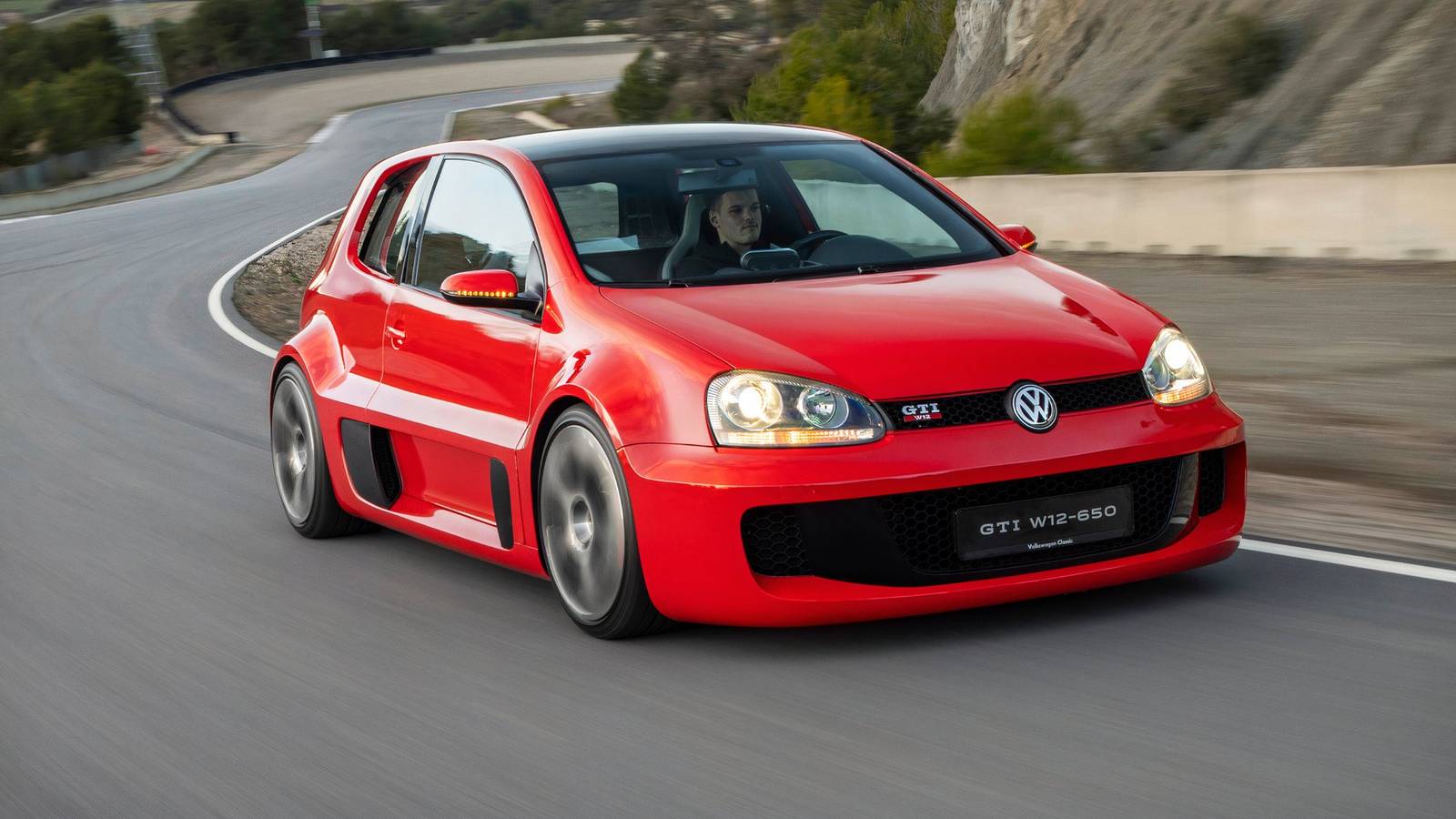
The Volkswagen Golf GTI has produced countless performance legends, but one creation still feels completely disconnected from reality. It did not preview a future production model or attempt to refine the hot hatch formula. Instead, Volkswagen built something that pushed the familiar Golf silhouette into territory normally reserved for exotic supercars, which is what makes it so insane.
In 2007, Volkswagen revealed the Golf GTI W12-650, a machine that looked like an aggressive Mk5 hatchback but behaved like something far more extreme. Beneath its dramatic bodywork sat a mid-engine layout, rear-wheel drive, and a twin-turbocharged twelve-cylinder engine sourced from within the Volkswagen Group itself. Nearly two decades later, the car remains fascinating for a simple reason: nothing about it aligns with what a Golf GTI is supposed to be.
The Golf GTI W12-650 Was A Hatchback That Hid A Supercar Layout
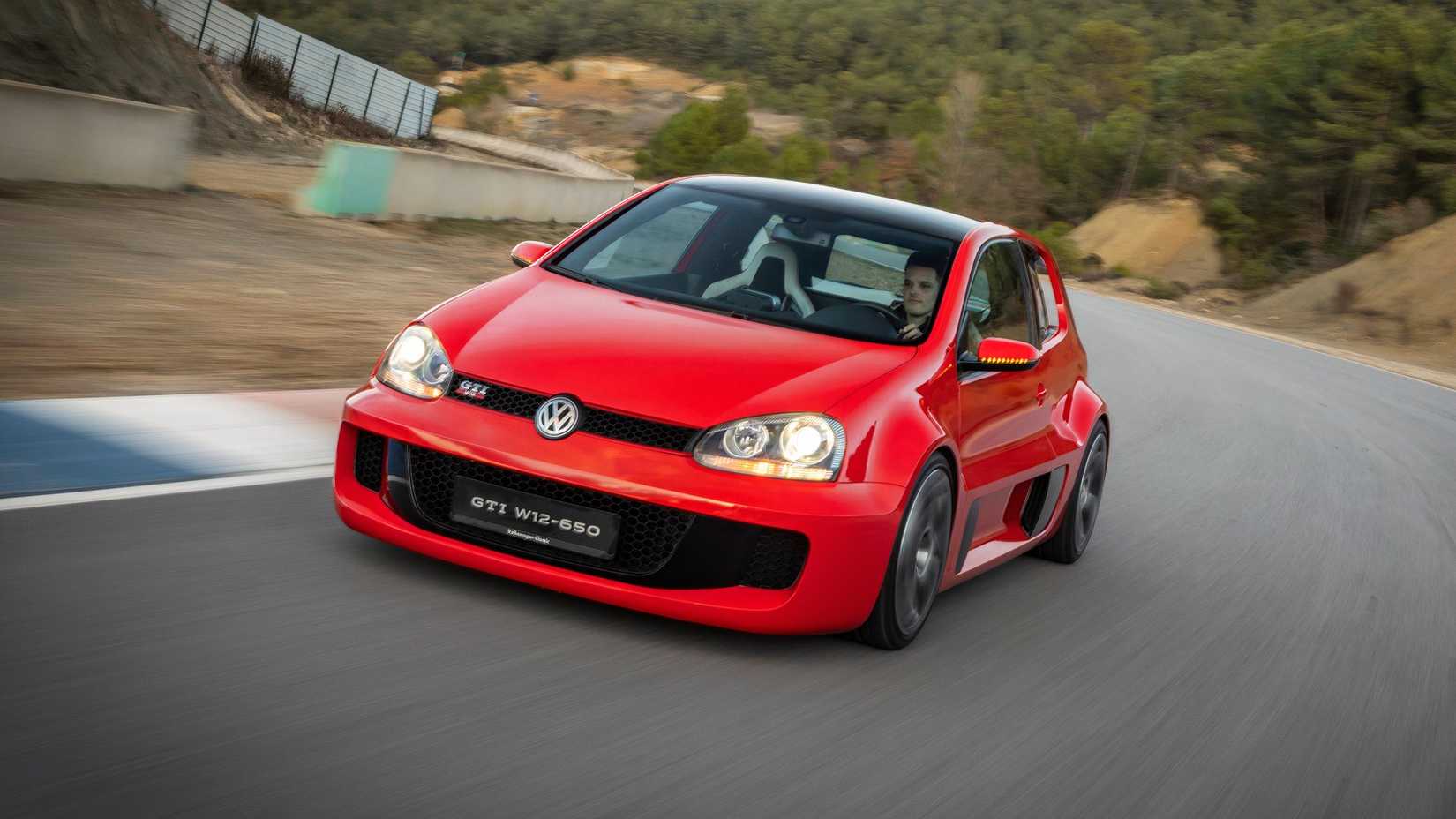
Volkswagen Golf GTI W12-650 driving on the streetVolkswagen
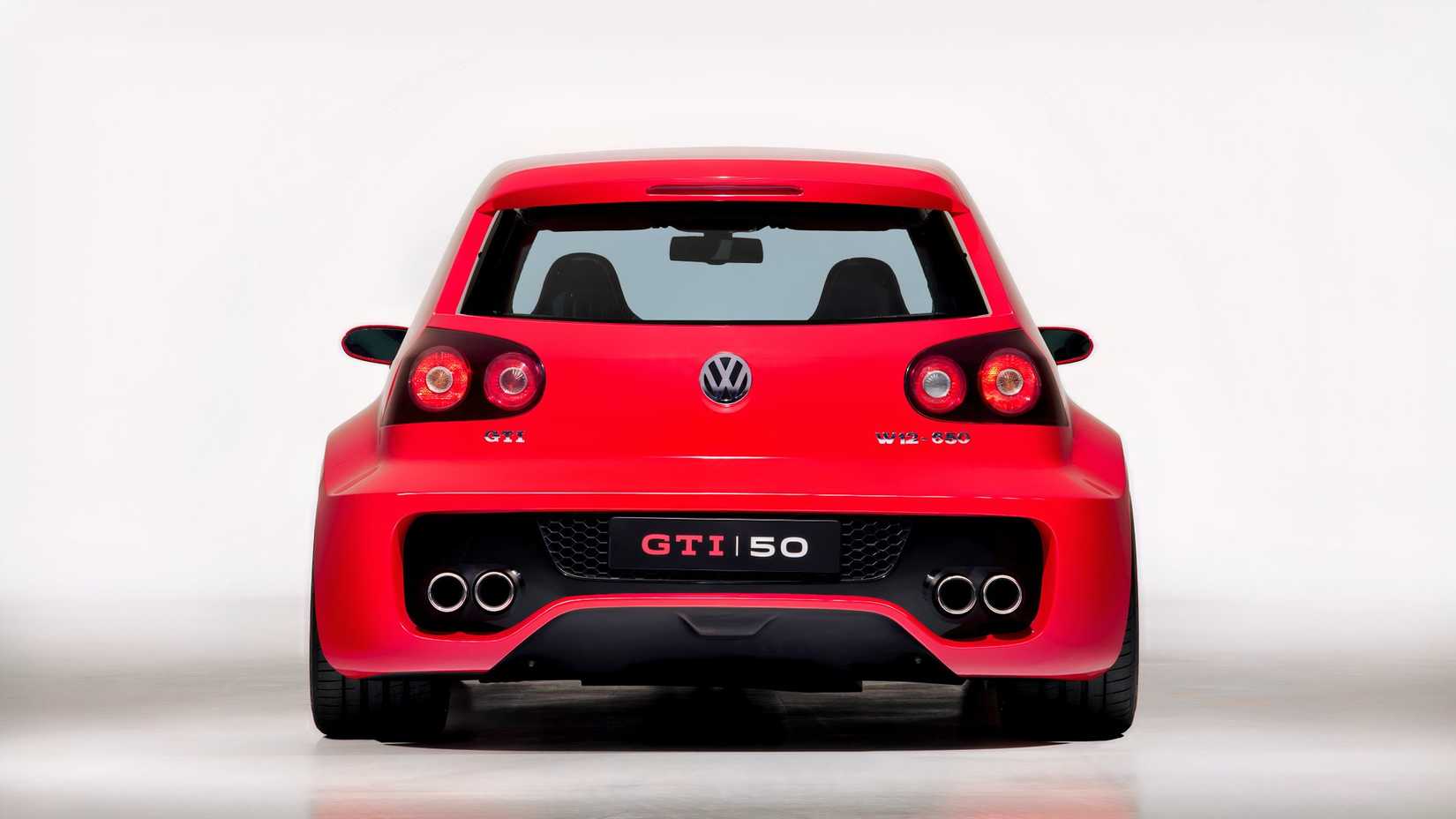
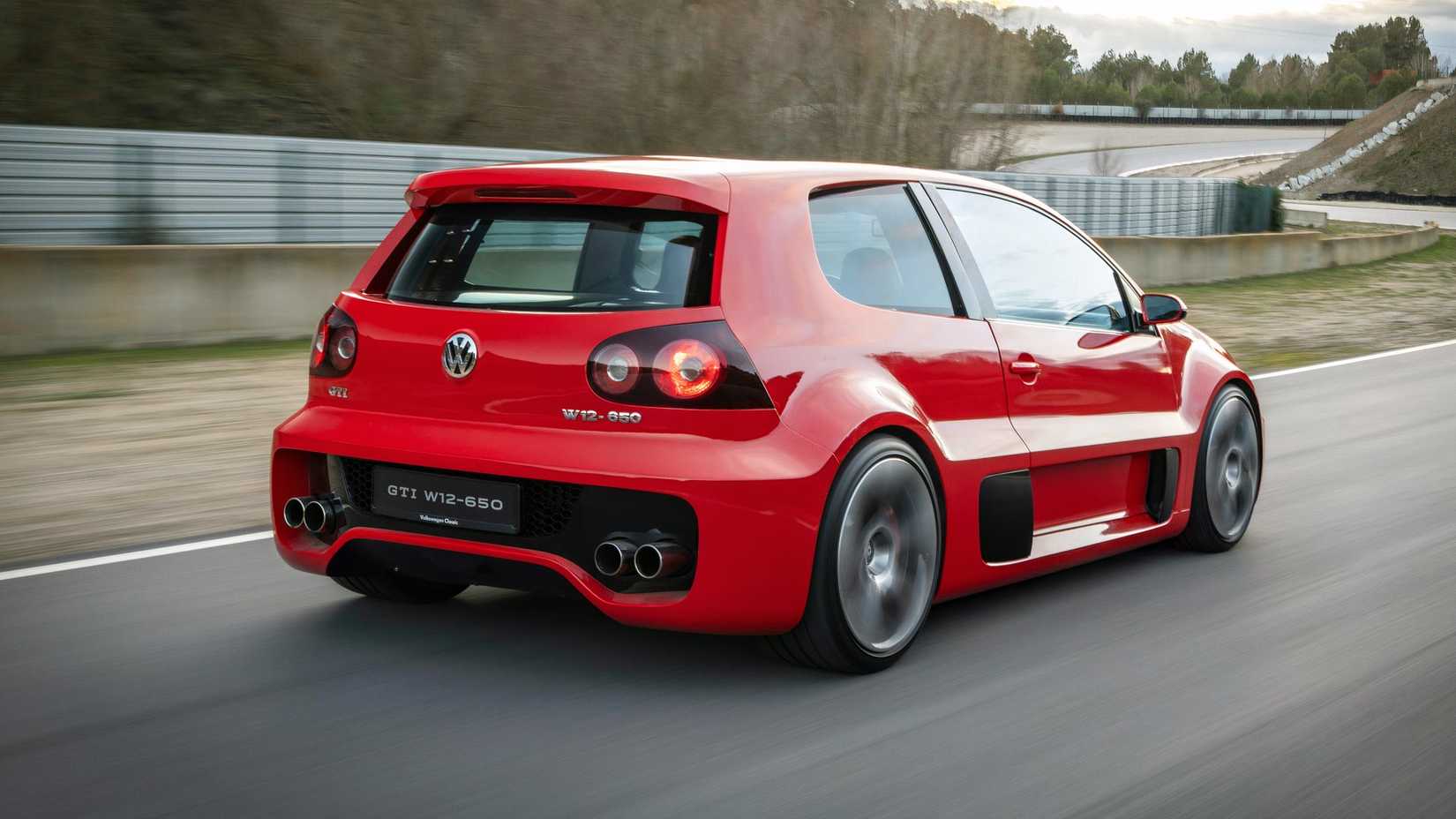
Volkswagen is celebrating 50 years of the GTI right now, and thanks to that birthday celebration, we are reminded of one of the coolest Golf models ever made. At first glance, the Golf GTI W12-650 retained just enough visual familiarity to confuse onlookers. The roofline, greenhouse, and basic proportions were recognizably Golf. If you look closer, the details immediately betray its true nature (evil laugh). The body was widened by more than six inches, cooling vents carved into nearly every surface, and the stance transformed into something unmistakably exotic.
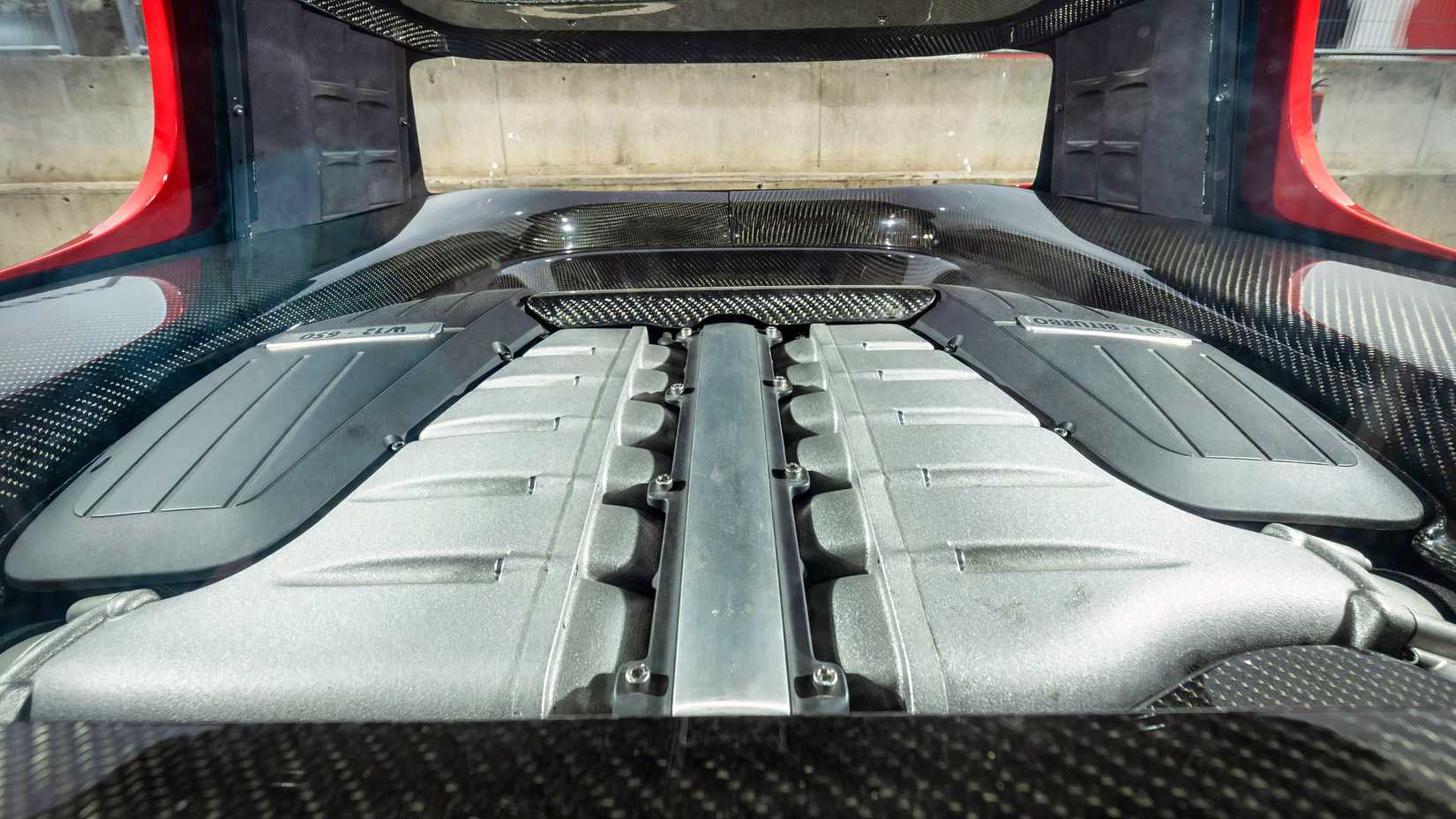
Volkswagen Golf GTI W12-650 twin-turbo W12 engineVolkswagen
The most radical change sat behind the front seats. Instead of the traditional front-mounted four-cylinder engine, Volkswagen engineers installed a twin-turbocharged 6.0-liter W12 engine, the same one you would find in a Bentley Continental GT. Putting the engine behind the seats effectively turned the Golf into a completely different animal. This was no longer a front-wheel-drive hot hatch your mom might accidentally buy; it was effectively a supercar wearing Golf sheet metal.
Packaging alone made the project extraordinary. Engineers had to rework the chassis, cooling systems, and structural components to accommodate an engine never intended for such a compact platform. The dramatic rear air intakes, reshaped C-pillars, and carbon-fiber roof scoop were functional necessities for keeping a twelve-cylinder monster alive inside a hatchback. Sure, it still looked Golf-y at first glance, but that’s where the similarities stopped.

Related
The 2025 VW Golf GTI Ditches The Manual But Keeps The Fun
The 2025 VW Golf GTI drops the manual transmission but keeps its performance edge, playful handling, and signature hot hatch appeal.
A Bentley Heart With Absurd Performance
The W12 engine itself remains one of the car’s most shocking elements. Borrowed from the Volkswagen Group’s luxury arsenal, the twin-turbocharged twelve-cylinder produced roughly 640 horsepower and 553 lb-ft of torque. These were numbers associated with high-end Bentleys, not compact hatchbacks.
Volkswagen projected a 0–62 mph sprint of just 3.7 seconds, a figure that placed the W12-powered Golf firmly within supercar territory. Even more astonishing was the claimed top speed of 201.8 mph. While never officially tested, it was an absurd number to associate with the model, regardless.
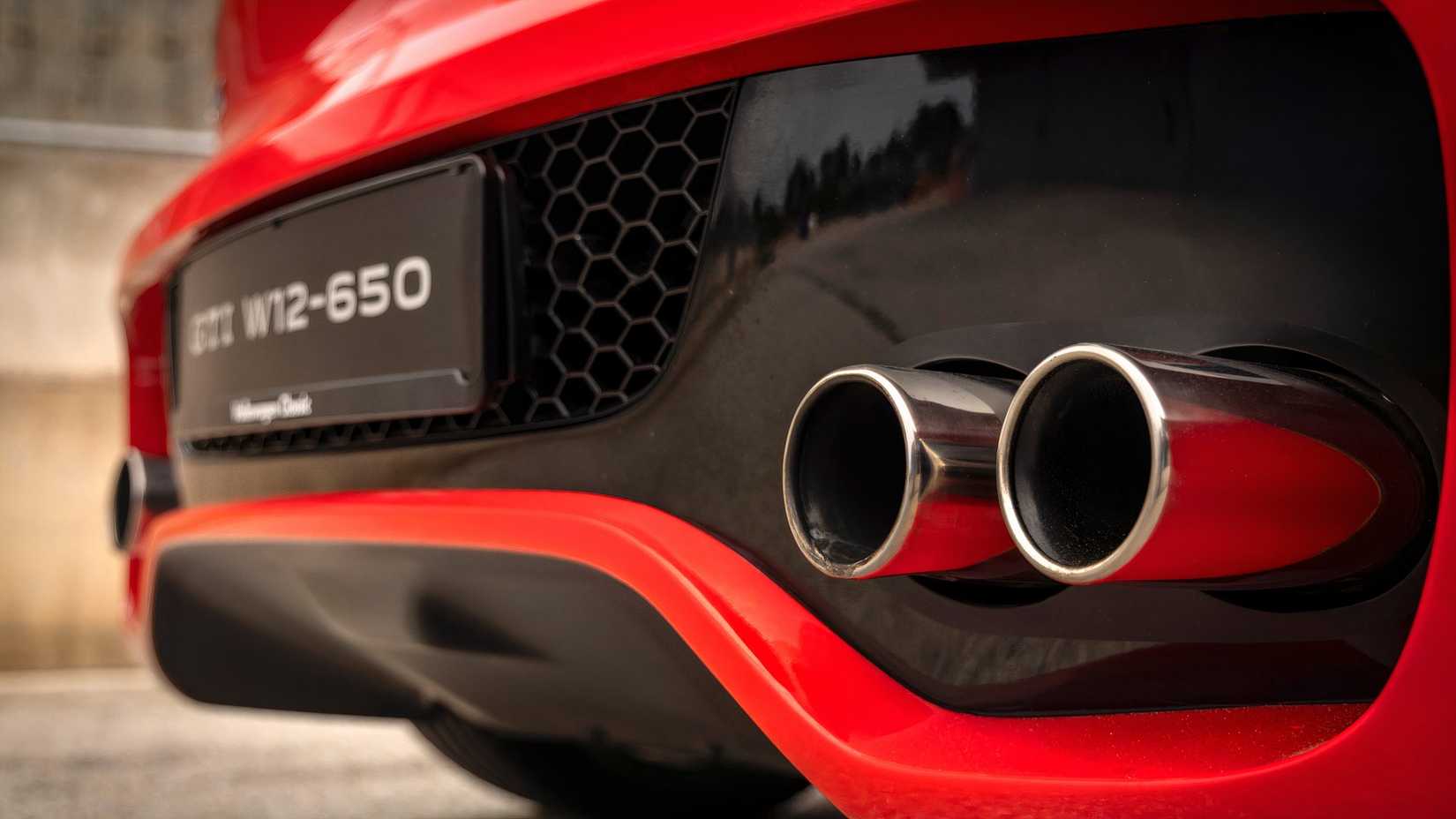
Volkswagen Golf GTI W12-650 quad exhaustVolkswagen
Specification
Golf GTI W12-650
Engine
6.0L Twin-Turbo W12
Power
640 hp
Torque
553 lb-ft
Layout
Mid-Engine
Drivetrain
RWD
0–62 mph
3.7 sec
Top Speed (Claimed)
201.8 mph
Volkswagen Golf GTI W12-650Volkswagen
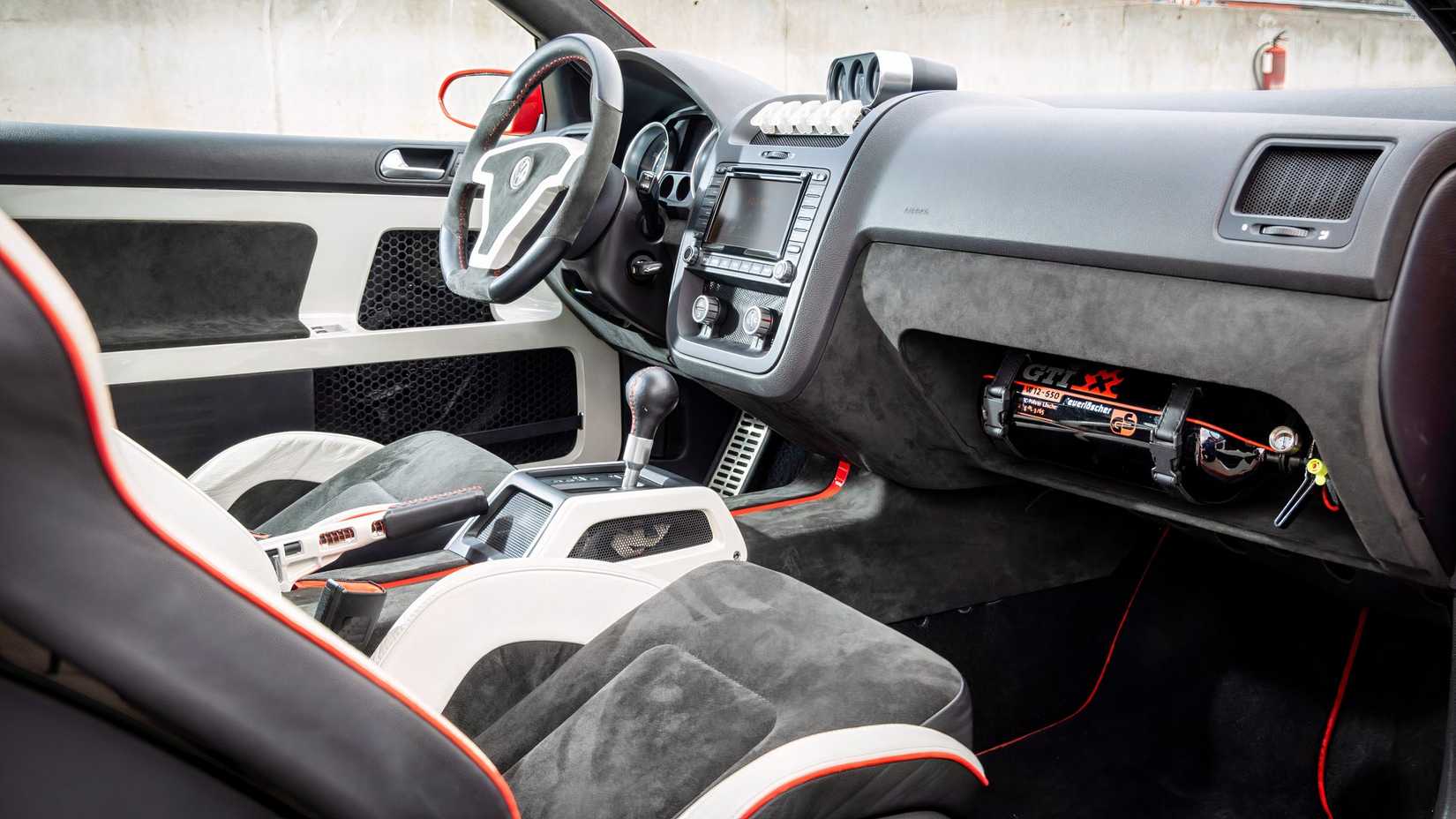
Delivering that performance required equally exotic supporting hardware. Volkswagen borrowed braking components from the Audi RS4, rear axle elements from the Lamborghini Gallardo, and a six-speed automatic transmission from the Phaeton luxury sedan. The car became a true showcase of VW Group engineering opportunism and brainstorming gone right.
A short-wheelbase hatchback sending massive twelve-cylinder torque exclusively to the rear wheels inevitably produced a driving experience described by many as borderline terrifying. The W12-650 was not engineered for everyday usability or predictability; it simply existed to demonstrate what was technically possible, not what was sensible. This is how some of the best concepts come to be.

Related
Every Golf GTI Quarter-Mile Drag Race Crowns VW’s Quickest Hot Hatch
Is the Mk.8 actually the quickest?
Why This Golf Still Feels Impossible Today
Volkswagen Golf GTI W12-650 back 3/4 viewVolkswagen
The Golf GTI W12-650 emerged from a uniquely ambitious era within the Volkswagen Group. Under Ferdinand Piëch’s leadership, the company repeatedly pursued projects that prioritized engineering spectacle alongside commercial products. Vehicles like the Bugatti Veyron and Volkswagen Phaeton reflected a corporate culture willing to explore extremes.
That mindset has largely disappeared these days, as modern automotive development operates under far tighter constraints defined by regulations, emissions targets, safety requirements, and financial accountability. Radical mechanical experiments without realistic production pathways have become increasingly rare.
Volkswagen Golf GTI W12-650Volkswagen
The Golf GTI has long represented accessible performance. It is quick, engaging, and usable, but rarely reckless. A mid-engine, W12-powered hatchback producing supercar levels of power directly contradicts the GTI’s foundational identity. The car feels less like an evolution and more like a deliberate break from reality.
Looking back in celebration of the Golf, the W12-650 stands as a reminder of a period when major manufacturers occasionally built vehicles simply because they could. It was not a market-driven creation or a production preview, but more of an engineering flex or an unapologetically excessive interpretation of a familiar performance formula.
Nearly twenty years later, that is precisely why the Golf GTI W12-650 remains unforgettable. In a world increasingly shaped by efficiency, electrification, and rational product planning (read: boring), a mid-engine, twelve-cylinder Golf feels not just unlikely, but almost impossible. It really is a reminder of how good we had it at one point, and how the early 2000s were a sort of free-for-all time when something like this could actually come to fruition, rolling down the street for press photos, even if it never made it past there.