
PEBBLE BEACH, Cal.—If you accept the premise that every top pro can hit pretty much every shot, tournament golf is merely mental combat…especially at Pebble Beach Golf Links, where tiny greens mean tiny margins but unpredictable zephyrs can wreak havoc. For the best of the best, it often takes just one swing thought or mental cue to bust loose. World number one Scottie Scheffler opened the AT&T Pebble Beach Pro-Am with a desultory 72, but on Sunday nearly stole the tournament with a 63, during which he made three eagles and a career-best 151 feet of putts. What was the big revelation? “I never got ahead of myself,” Scheffler said. “This game is stressful enough and I think I make it even more stressful for whatever reason. But I was able to just really take it a shot at a time and just enjoy the rounds when I could.”
Min Woo Lee had been struggling coming into Pebble so he put a new driver and putter in the bag and suddenly the birdies started flying. “You’re never as far away as you think,” Lee said wistfully after his runner-up finish.
Indeed, the comeback player of the week was Collin Morikawa, the finicky, high-strung, obsessive, vexing and occasionally exhilarating 29 year-old. Coming off a season in which he didn’t win a tournament and was a non-factor at the major championships, Morikawa limped into Pebble after playing poorly in Hawaii and Phoenix to start 2026. He shot an opening 69 at Spyglass Hill—not bad!—but was so frustrated by his ballstriking he took to YouTube to watch old videos of himself, seeking inspiration (and data). Morikawa is known on Tour for being a maniacal perfectionist, which he doesn’t dispute: “I’ve been known to go down these deep, deep rabbit holes. Like very deep. Very, very deep.” A second round 68 at Pebble seemed like progress but Morikawa could only see his flaws.
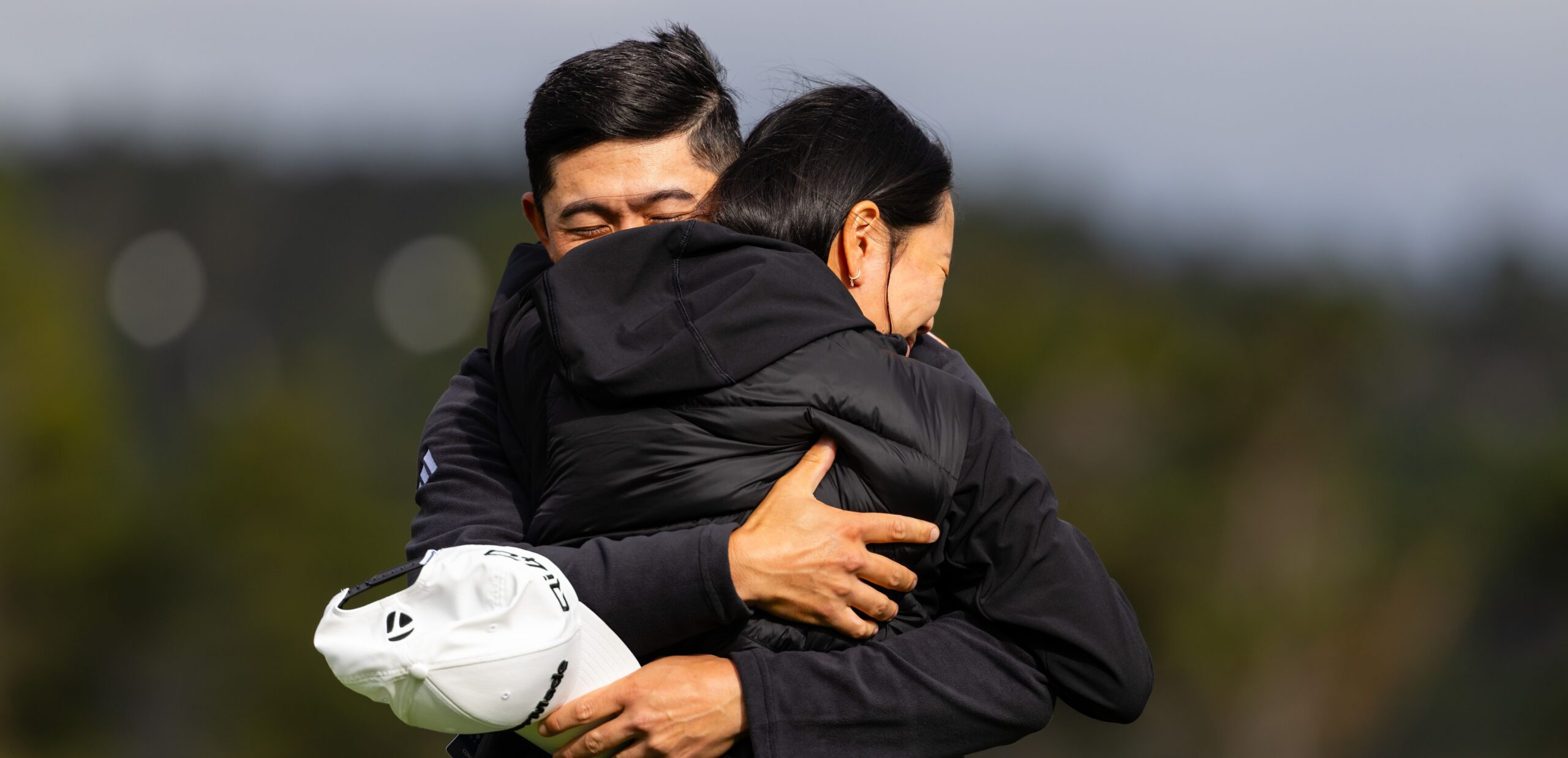
His lifelong swing coach Rick Sessinghaus, tired of all the kvetching, gave him a succinct pep talk: Stop obsessing about your swing and go play golf. Emphasis on play, a verb that often conjures joy. Sessinghaus reminded Morikawa that he didn’t used to worry about his results, he simply played to win. “It’s a small mindset adjustment and without him telling me that, who knows what I would have shot today,” said Morikawa, who, unencumbered, blitzed Pebble Beach in 62 strokes, picking up 6.47 strokes with his approach play, a single round career high for a guy who, pre-Scheffler, was known as the premiere iron player on Tour. Morikawa celebrated with a little wine— “which I never do”—a sign that he is finally learning to relax a tiny bit. “It’s a very stressful life,” he says, “and it’s hard to step back and say, man, how grateful we are to do this.” The vino was a good reminder. So is the enlarged perspective that comes with wife Kat expecting their first child in May. Looking back now, Morikawa sounds a little sad talking about the blockbuster beginning to his career. “I think I just didn’t enjoy it,” he says. “Like I didn’t enjoy the major wins as much as I should have.”
On a topsy-turvy Sunday, with a handful of big-time players flying up and down the leaderboard, Morikawa again looked like the fearless kid who won two of his first seven major championship starts. He put himself in position for a seventh career victory with a birdie binge around the turn and then began to take control of the tournament with a bending 30-footer on 15. (A couple of weeks earlier he had borrowed—stolen?—a blade putter from Kurt Kitayama; “It’s mine now,” says Morikawa with a laugh.) On 16, from 178 yards out into a cold, heavy wind, Morikawa flighted a 4-iron at the flag, an artistic shot his playing partner Sepp Straka called “unbelievable.” That led to another birdie, allowing Morikawa to summit the leaderboard. After a bogey at 17, he came to the par-5 18th needing a birdie to win and summoned two perfect shots to set up a tap-in for the win.
Morikawa was uncharacteristically emotional in victory, a hint at the anguish he’s suffered over the last 28 winless months. “To be fair to Collin, all of us can be perfectionistic,” says Tommy Fleetwood. “To be out here, you have to be tough on yourself. I think one of the hardest things in sport is to manage your own expectations. Collin, maybe he needs to give himself more credit. How old is he? He’s had an unbelievable career already and he’s going to do a lot more. He works incredibly hard, he leaves no stone unturned. There are ebbs and flows to a golf career, but last year now looks like a little blip. He never stopped being one of the best players in the world.”
Detractors love to point out that Morikawa took both of his major championships during Covid, or that he is 0-4 lifetime in PGA Tour playoffs. But he’s also the first American to win the Race to Dubai and has as many major championship victories as Hall of Famers like Greg Norman, Johnny Miller, Curtis Stranger, Bernhard Langer, Ben Crenshaw and Jose Maria Olazabal. Now Morikawa has won at one of golf’s cathedrals, Pebble Beach. He vowed on Sunday evening to “set crazy goals and push myself even harder because I fully believe I can achieve that.” The quest for self-improvement never really ends: this year he is playing a new ball and has hired a new trainer.
But, importantly, a player who once needed external validation now says, “I don’t think I have anything to prove to anyone. I think it’s more just to myself to say, Man, you’re on the right path, like keep believing in yourself because look what you’re doing.”
He did plenty at Pebble, including staring down a charging Scheffler. But the biggest victory came within. The sky’s the limit if Morikawa can keep playing with this freedom and joy, and his colleagues know it.
“He’s even more dangerous now,” says Fleetwood. “Very, very dangerous.”