
Callaway Golf Company (Callaway, CALY) returned to its roots in 2025, reverting to its pre-Topgolf moniker and changing its ticker symbol to one that better reflected its focus as a pure-play golf equipment company.
“We successfully completed our 2025 strategic initiatives, which were to return Callaway to a pure play golf equipment company and strengthen our balance sheet,” commented Chip Brewer, president and CEO, Callaway Golf Company, in an earnings release on February 12. “The sale of our Jack Wolfskin business and the sale of a 60 percent stake in our Topgolf business have simplified our portfolio, generated significant cash, eliminated our liability for any Topgolf venue financing and operating leases and allowed us to pay down $1 billion of term debt.”
Brewer said these actions leave the company in a net cash position and with future upside at Topgolf, given its remaining 40 percent stake.
“With the support of our Board, we intend to use this cash to pay off our convertible debt and begin returning capital to our shareholders via the $200 million share repurchase program we announced in January,” he continued.
On a conference call with analysts that evening, Brewer walked participants through a recap of a year with more than a few major changes.
“In May, we successfully completed the sale of the Jack Wolfskin outdoor apparel and gear business to Anta Sports for $290 million, representing an important first step towards refocusing our strategic priorities on our core golf equipment and apparel businesses,” Brewer began. “Then just last month, we announced the successful completion of the sale of a 60 percent stake in the Topgolf business to Leonard Green & Partners in a deal valued at approximately $1.1 billion.”
He said CALY has received approximately $800 million in cash in this transaction and immediately repaid $1 billion of Term Loan B debt.
“Following the deal close and the repayment of the debt, we are in a net cash positive position. And we anticipate generating positive cash flow this year, returning capital to shareholders and ending the year with a continued net cash to zero net leverage position,” he added.
Brewer also expects Topgolf to thrive going forward and suggested that this transaction will provide CALY investors with Topgolf’s upside without any operational involvement from the Callaway management team and without any financial obligations.
“Importantly, all Topgolf lease and debt obligations stay with the new Topgolf entity with no recourse back to Callaway Golf,” he said. “With these transactions behind us, we’ve returned to our roots as a leading pure-play golf company, including returning to our prior name, Callaway Golf Company.”
Brewer went on to say, “The excitement in our headquarters in Carlsbad is now palpable as we turn our focus to bring the company vision to life, which is to make the game better for every golfer by being the global leader in innovation, performance and craftsmanship across premium golf equipment, apparel and accessories.”
The CEO said, “I’m pleased to report the Callaway Golf Company’s Q4 results were better than expected in both the top line and in EBITDA. This applies to all regions as well as both TravisMathew and Callaway Golf.”
“There is no doubt that the last several years have proven that the game of golf is as healthy as it’s ever been or certainly as I’ve ever seen in my career, and according to the National Golf Foundation, 2025 was no exception.”
Brewer continued, talking through key industry metrics:
The year ended with U.S. rounds played up 1.2 percent, marking another record year, the third consecutive year of growth and the sixth year of increases over the last seven years.
Golf’s U.S. reach, including those who play, watch, read about or follow golf, is now more than 136 million or approximately two out of every five Americans.
Participation in off-course golf rose again and is now estimated at 38 million, an increase of 63 percent since 2019. And this growth in off-course golf is clearly driving greater interest in the game and creating a stronger on-ramp to on-course golf.
On-course golf participation is now estimated at 29.1 million, up 20 percent since 2019. Over the same period, on-course participation by women is up 46 percent. Young golfers aged 6 to 17 years are up 58 percent, and participation by people of color is up 61 percent.
“These are terrific numbers and trends,” he noted. “The sport and business of golf is clearly in a good spot.”
Turning back to the Callaway Golf Company business, the CEO said Callaway, Odyssey and TravisMathew remain “impressively strong” brands, a position he said they have enjoyed for some time.
“On the golf equipment side, Callaway maintains a Top 2 market share position in both clubs and balls in the U.S. and a Top 1 or 2 club position in every primary market we compete,” he said. “This past year on global tours, the Callaway and Odyssey brands saw 61 driver, 92 putter and 35 ball wins. We are generally viewed as the leader in technology and innovation globally, and Odyssey remained the #1 putter across global tours.”
Turning to the Apparel & Gear segment, Brewer said the Callaway and Ogio gear and accessory business reportedly remains strong, and TravisMathew remains “a premium scaled men’s apparel and lifestyle brand with a growing presence in women’s.”
 Full-Year 2025 Results
Company CFO, EVP and chief legal officer Brian Lynch jumped into the conversation to provide some depth to the fourth quarter and 2025 full-year results.
Full-year consolidated net sales were down 0.8 percent year-over-year (y/y to $2.06 billion, or down 0.9 percent in constant-currency (cc) terms.
The Softgoods segment, which includes Apparel, Gear and Other accessories, was reportedly impacted by a soft macro backdrop in the U.S. and Asia. Sales declined 1.4 percent (-1.2 percent cc) to $685 million.
Golf Equipment sales were down 0.5 percent (-0.7 percent cc) year-over-year.
“With regard to tariffs, in 2025, the company incurred $34 million of incremental tariff costs, of which $25 million impacted our Golf Equipment segment, with the remainder impacting the Softgoods segment,” Lynch noted.
Full-year consolidated gross margin declined approximately 60 basis points year-over-year to 42.2 percent of net sales, reportedly due to $34 million in incremental tariffs, which reduced gross margins by 166 basis points. Lynch said Golf Equipment gross margin increased 10 basis points y/y and would have increased 189 basis points, excluding tariffs.
“These results are a testament to the hard work and good progress our teams have made on our gross margin initiatives,” Lynch said.
Full-Year consolidated operating expenses increased 1 percent, as the company’s cost-savings initiatives offset almost all normal inflationary pressures and the year-over-year increase in annual compensation expense. Lynch said the company paid very little annual incentive compensation in the prior year.
Full-year net income from continuing operations was $38.8 million on a GAAP basis and $38.4 million on a non-GAAP basis.
Adjusted EBITDA was $222.4 million, representing a $38.8 million decrease year-over-year. The result was better than expected and was attributable to $34 million in incremental tariff expense, a $35 million increase in annual incentive compensation, and partially offset by cost savings and select price increases.
Lynch noted that FX (foreign exchange rates) had a minimal impact on the company’s full-year 2025 results.
Fourth Quarter Summary
Fourth quarter consolidated sales decreased 1.1 percent y/y to $368 million. This decrease was driven by a $11 million decline in Golf Equipment sales, resulting from fewer second-half product launches, partially offset by a $7 million increase in the Softgoods segment.
Golf Equipment sales declined 4.9 percent (-5.1 percent cc) y/y to $214 million in the 2025 fourth quarter.
Softgoods sales increased 4.8 percent (+5.1 percent cc) to $154 million in the fourth quarter.
Gross margin for the quarter declined 220 basis points y/y to 37.4 percent of net sales, driven by a 340-basis-point impact from incremental tariffs.
Operating expenses increased by $19 million in Q4, driven by a $19 million increase in annual incentive compensation expense. Lynch said the company was lapping a reversal of the amount of incentive compensation accrual in Q4 2024.
Net loss from continuing operations was $66.0 million in Q4 on a GAAP basis and $46.5 million on a non-GAAP basis.
Adjusted EBITDA weighed in at negative $25 million, a decrease of $30 million from the prior year period, attributable to $12 million in incremental tariff expense and the $19 million increase in annual incentive compensation.
Outlook
Callaway Golf Company is forecasting total revenue of $635 million to $665 million in the 2026 first quarter, representing a ~3 percent year-over-year increase at the midpoint. Adjusted EBITDA is expected in the $110 million to $125 million range.
“In Q1 2026, we expect an incremental $24 million of tariff expense compared to Q1 2025, and we are lapping a $12 million benefit from the early termination of our former Japan headquarters lease in Q1 last year,” Lynch noted.
“We are now in the process of resetting our business by emphasizing our most profitable products and channels and reducing costs while continuing to invest in the areas that matter most for the health of the business,” the CFO continued. “From this reset base, we believe we can grow sales more profitably, generate stronger free cash flow and be in a position to return significant capital to shareholders. We have strong brands, and with our renewed focus on our core business, we are excited about the future.”
Brewer said the company is very proud of the new product for 2026 and reported that initial feedback on new golf equipment from both the green grass and retail partners has been strong.
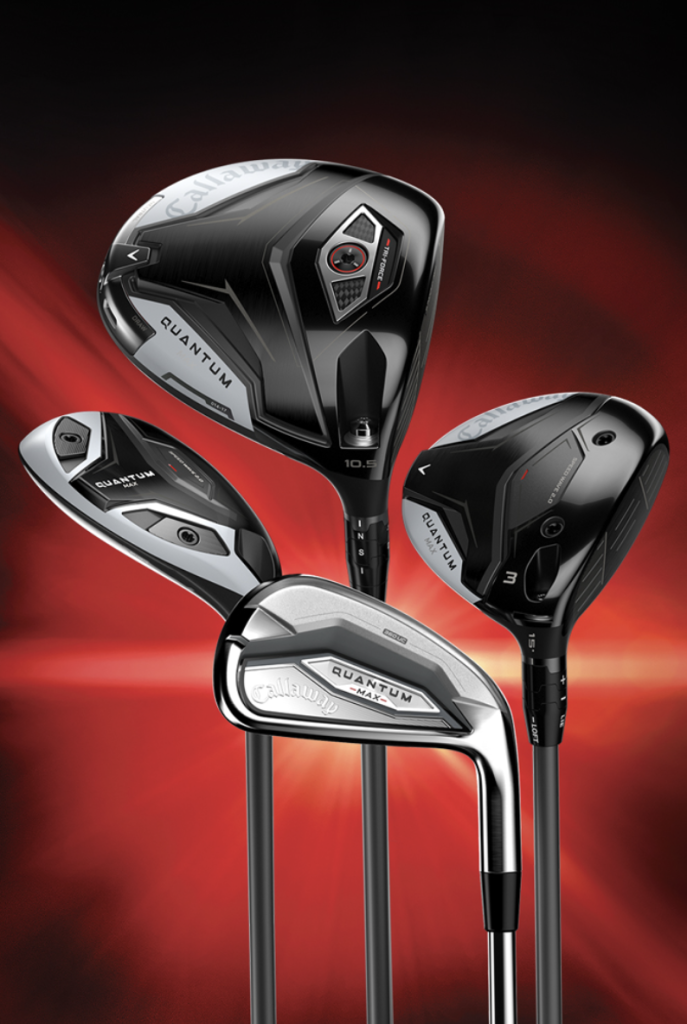
“On the clubs’ side, we launched our Quantum family of woods and irons as well as our new Odyssey AI dual putters. These are engineered with groundbreaking technology across every category,” he detailed.
On the Ball side, Brewer said they are excited about the second iteration of the premium Chrome Tour family of balls, which are designed to deliver more speed along with “unmatched consistency and overall performance.”
“As we get ready for the peak spring and summer sales seasons, we are excited about our new product offerings across our business as well as healthy market fundamentals,” the CEO said in his concluding statement. “At the same time, there are some external factors to consider. First, the incremental tariff expense of approximately $40 million in 2026, on top of approximately $35 million last year, is driving prices higher than historical levels in several categories. In addition, although the golf consumers remained healthy and engaged over the last year, both overall consumer confidence and job growth have been at lower-than-desired levels. Taken all together, these dynamics warrant close monitoring.”
Brewer continued, “Still, as we return our full focus to our core business, we’re excited about the opportunities we see.”
He went on to list three fundamental changes that he believes will maximize efficiency and drive long-term improvement in market share and margins:
Callaway is pulling back on sales of some of its lower-margin categories and channels across the business;
Callaway is making incremental investments into its fitting program, an area that is important for the company to maintain its leadership position in equipment; and
Callaway will be making some changes to its launch cadences, taking a longer-term view of its product line that would have normally launched this fall and extending product life cycles in another.
“These changes will have a negative impact on our revenues this year, particularly in the second half, but should improve our long-term profitability and market share going forward,” Brewer concluded.
Image courtesy Callaway Golf Company