Frustrated wildlife carers are pleading for change after rescuing 88 flying foxes in a harrowing multi-day operation. The animals were trapped in the netting of a driving range, with the mass tangling the third one at the site already this month.
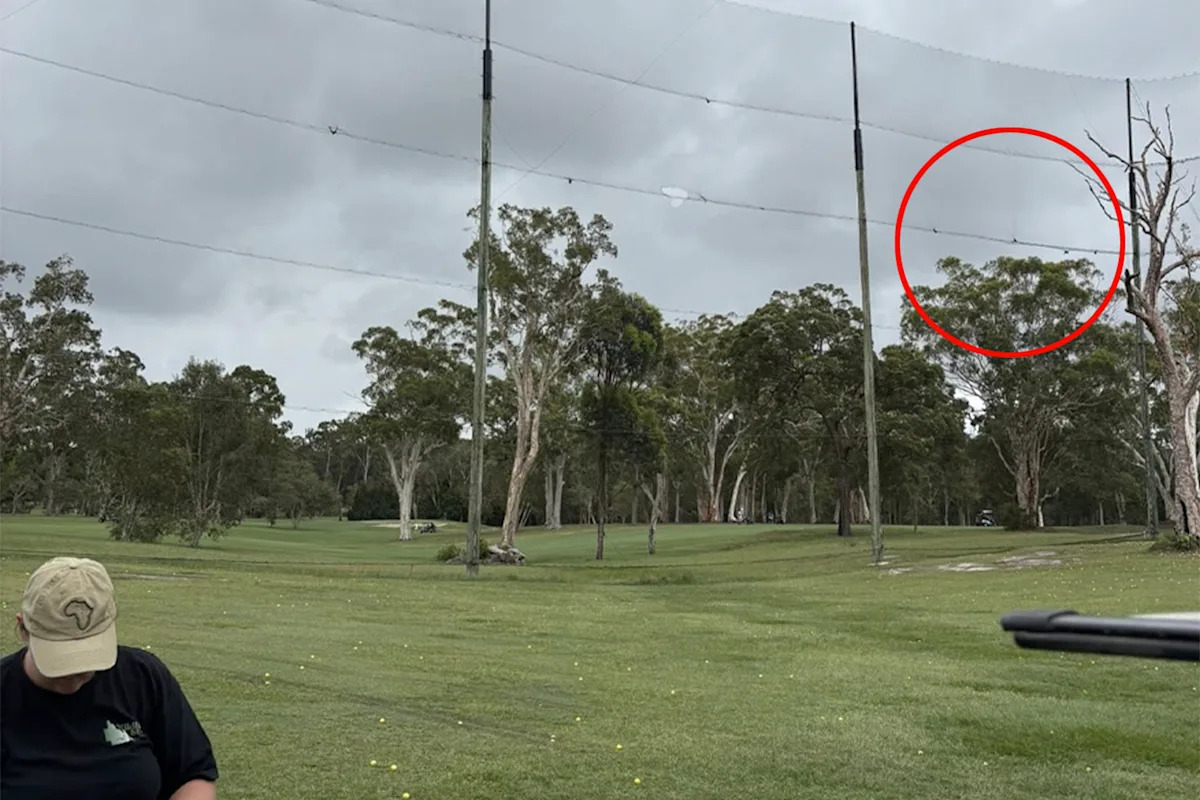
Katrina Odgers responded to a call for help at Noosa Golf Club on Tuesday morning to find dozens of bats caught in the netting. She spent the entire day helping to rescue as many bats as possible, but later that night more bats became stranded.
“There were 88 bats in total. And I think less than half survived,” Katrina told Yahoo News.
The rescue was painstakingly long, with a cherry picker working to cut the bats down one at a time.
Each bat took around 10 minutes to cut down, with the rescuers watching on helplessly as many of the animals “died in front of us” before they could be reached.
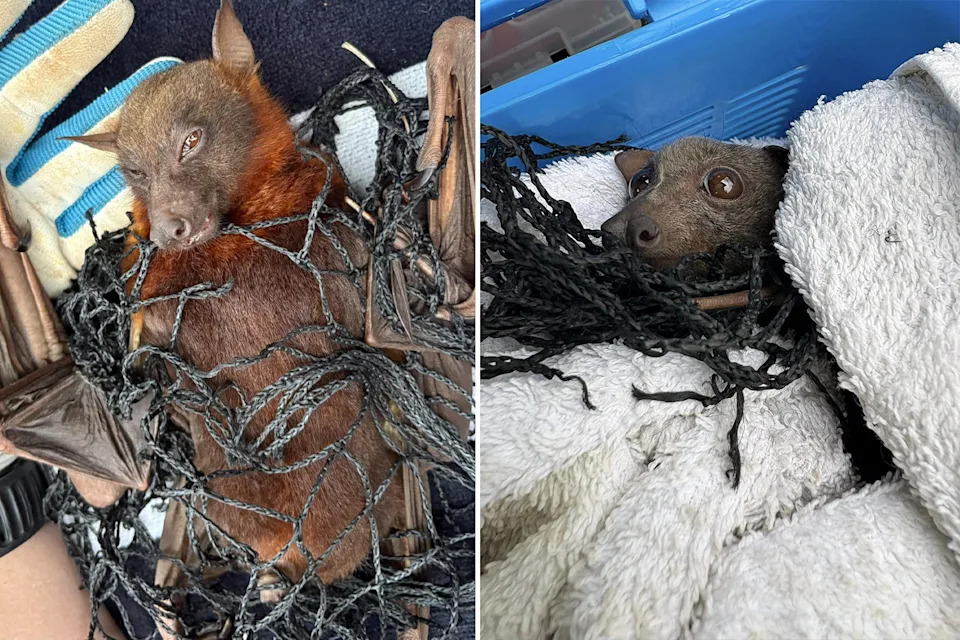
Less than half of the trapped animals survived. Source: Katrina Odgers
“They were severely dehydrated. We’re just lucky that it was a cloudy day, otherwise a lot of them wouldn’t have survived after about 11am,” she said.
“They were dehydrated, their eyes were open because they couldn’t blink, they were that dehydrated. We’d get them eyedrops if they weren’t blinking.”
The netting was wound so tightly around some of the bats it was choking them.
The rescued bats were taken to Australia Zoo Wildlife Hospital, where some are now in the hands of carers.
Golf club working to find long-term solution
As well as funding the cherry picker, Noosa Golf Club set up flood lights near the nets to deter the bats on Wednesday night.
It was successful, with one lone bat found and released on Thursday morning.
Katrina said that while the lights appeared to be effective, it wasn’t a long-term solution.
“You can’t keep that up because you end up attracting insects and then you get microbats and owls and tawny frogmouths and powerful owls and things like that,” she said.
The nets were installed about six months ago, with the first animal entrapment occurring shortly after they were set up.
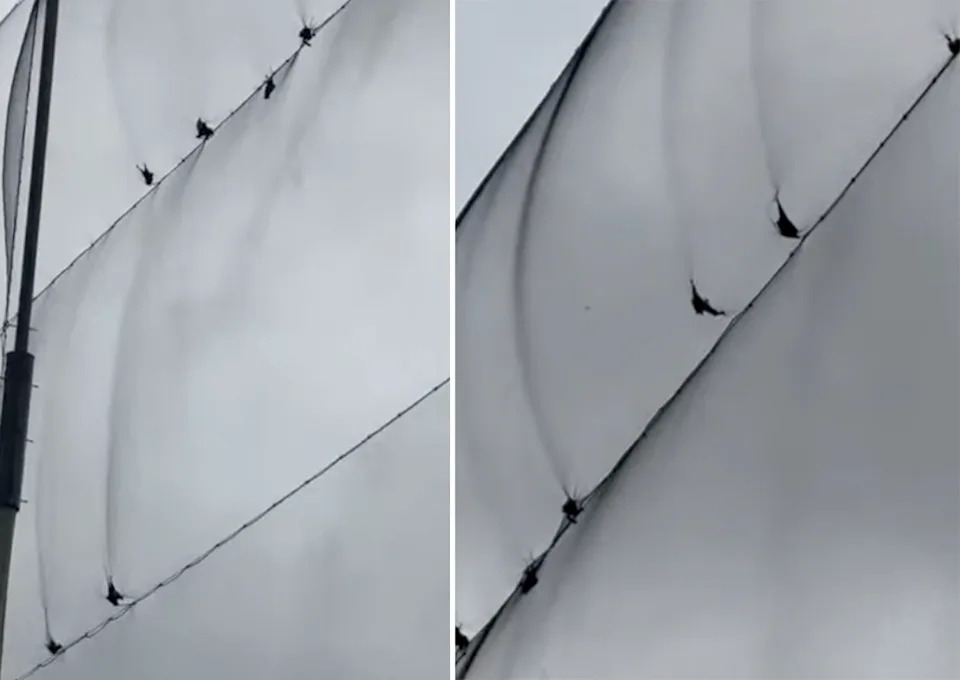
Rescuers watched on as the bats died while trapped in the nets. Source: Katrina Odgers
Noosa Golf Club president Dale Officer told Yahoo News the club is working to find the best solution, and is looking at adding reflective discs to the net.
“We’re taking steps to try and solve this issue long term,” Mr Officer said.
“Our problem is, because the nets are 25 metres high, you need a specialised and authorised team, and they’ve got to have proper equipment to get up that high, so the earliest we can get them out here is about two weeks.
“In the meantime it’s just us bearing the cost of floodlights for two weeks.”
Mr Officer said the golf course is a nature reserve, with resident kangaroos, koalas, goannas and many species of birds.
“We’re mindful of protecting all of the animals that live onsite as well as the ones that visit our site,” he said.
“We’re more than well aware of our environmental and community responsibility, so that’s why we’ve done all we possibly can.”
He said the club has been liaising with Queensland Parks and Wildlife, who have visited the driving range and are happy with the steps being taken.
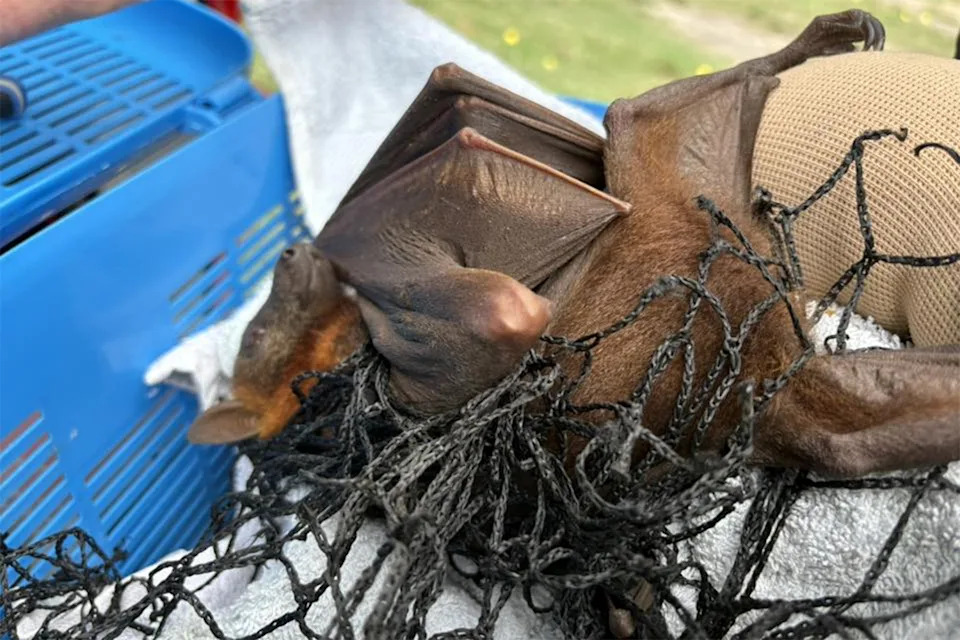
Katrina is now petitioning for the nets to be replaced with a wildlife-friendly alternative. Source: Katrina Odgers
For Katrina and her fellow rescuers, they would love to see the nets replaced with wildlife-friendly netting — nets that have holes so small that no animals can get caught.
She argued that the top of the netting will have to be replaced anyway, as there are around 50 holes cut into it where the live bats were removed.
“Get the top two layers down, just for now and put up safe, tight netting,” she said. “Make it wildlife-proof, and make it visible to them at nighttime.”
Mr Officer said the club is looking at “all options”, including changing the netting, tightening the tension in the nets and adding the reflective discs.
“With koalas, it’s ‘no tree, no me’. With bats, it’s ‘no me, no tree’,” Katrina said, saying they are crucial to pollinating native Australian trees, particularly Eucalyptus species.
“We would lose our entire ecosystem if bats died. They are our keystones species.”
The wildlife rescuers have started a petition to have the nets replaced.
Do you have a story tip? Email: newsroomau@yahoonews.com.
You can also follow us on Facebook, Instagram, TikTok, Twitter and YouTube.