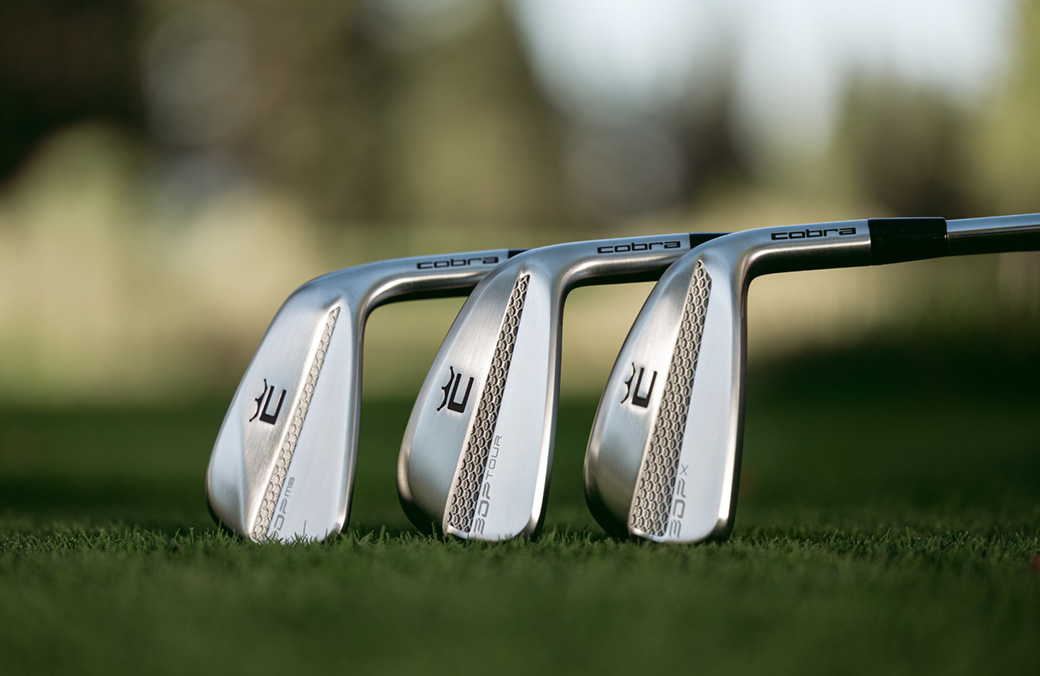
It hasn’t been quite two years since Cobra released the LIMIT3D irons, which were the first commercially available 3D-printed irons. The initial launch of these irons remains seared into my memory as one of the most fascinating iron-technology stories told. True to Cobra’s style, that first batch of 500 irons led to a full release of the 3DP Tour irons, which generated so much interest that Cobra has run out of stock on multiple occasions. With their 3DP line, the manufacturing story is compelling, the technology is real, and the performance is outstanding.
In light of the success and growing interest in the 3DP irons, Cobra is now fully committed to demonstrating that even more golfers can benefit from the forgiveness and feel of 3D-printed irons. Today, they are announcing an expansion of the 3DP family, introducing the 3DP MB and 3DP X models.
“We’re excited to offer these two new innovative iron models that build on the tremendous success of our 3DP Tour irons,” said Ryan Roach, Director of Innovation at COBRA PUMA GOLF. “With the addition of the MB and X, we now have a 3D-printed model that can fit the vast majority of players, allowing just about any golfer to benefit from the performance advantages of 3D printing technology.”
Cobra’s 3D-printed Iron Process
While we at THP have previously covered Cobra’s 3D iron printing process, it’s helpful to provide a brief overview for those who may not have seen our breakdown of the LIMIT3D irons, which were first announced in the spring of 2024.
Each 3DP iron begins in nTop, an advanced computational design platform Cobra uses to engineer the internal lattice structure. Through numerous trials with this program, Cobra engineers have developed an innovative internal lattice structure, marking a significant breakthrough in iron design that can only be achieved through 3D printing. This lattice structure reduces overall weight, increases strength, and enables these irons to feel more like a solid blade. Thanks to this internal design, Cobra can incorporate up to 100 grams of tungsten in the heel and toe of the irons, enhancing stability and lowering the center of gravity.

After finalizing the designs, it’s time to print. Cobra uses a process called Direct Metal Laser Sintering (DMLS) for their irons, which involves 316L stainless steel powder. Each head requires more than 2,600 laser passes during the DMLS build process. Once all the passes are complete, a tray of 32 iron heads is ready for assembly. Cobra then removes any excess powder that wasn’t used, recycling it for future batches of irons. Next, they mill in the grooves, spaces for tungsten weights, and the appropriate logos. After all the milling is finished and the tungsten weights are added and capped, the 3D-printed irons receive a chrome finish and are robot-polished to perfection.
What’s the benefit of 3D-printed irons?
One of the significant advantages of 3D printing irons from a manufacturing perspective is the speed at which a complete set can be produced from start to finish. In 2025, Cobra manufactured over 250 sets of 3D-printed irons per month, with expectations of increased production in 2026.
In terms of performance, Cobra has proven that the internal lattice structure is crucial for breaking the link between iron size and MOI. This technology, combined with tungsten sole weights, allows smaller irons to perform similarly to clubs with a larger body. Within Cobra’s lineup, the 3DP Tour irons are comparable in size to the King Tour irons, yet they offer enhanced forgiveness that is more typical of larger models, such as the King Tec-X.
Without further ado, let’s take a look at the two newest irons of the 3DP iron lineup.
Cobra 3DP MB Irons
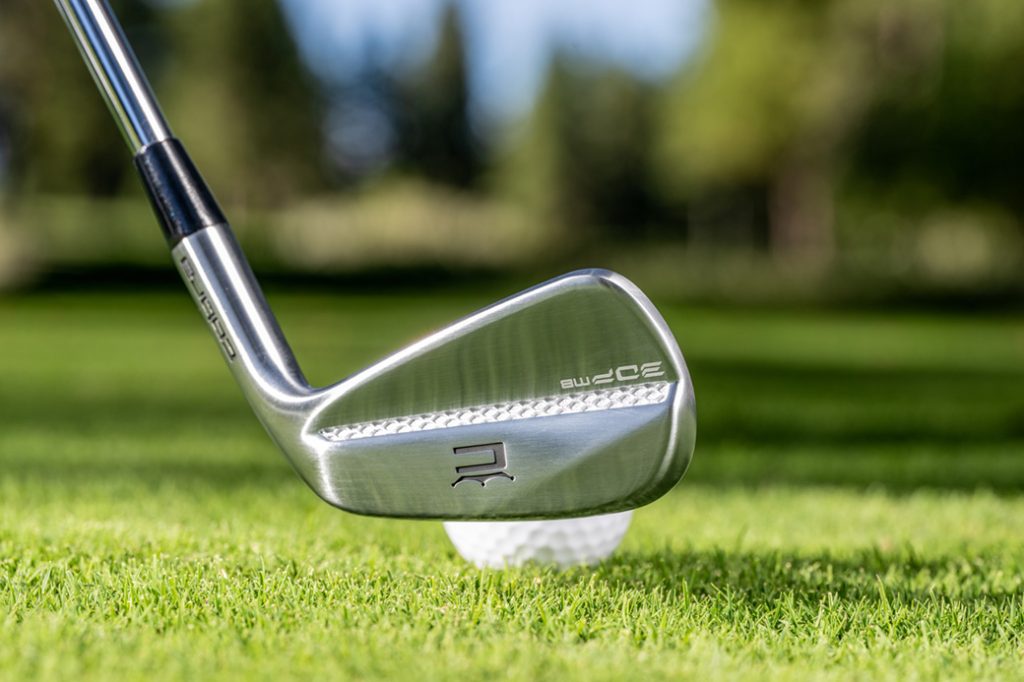
Despite technological advancements across various iron designs, the muscleback iron has perhaps received the fewest groundbreaking innovations. Its evolution has been primarily based on subtle refinements over the years. Golfers choose a set of MB irons for several reasons, including feel, consistency, and, for some, a touch of vanity. Cobra is revolutionizing the muscleback category with its new 3DP MB irons by incorporating a 3D printing process.
Cobra is demonstrating the potential of its technology with the development of the 3DP MB irons. Traditionally, blades are meant for the most skilled ball-strikers, as they are the least forgiving type of iron, which is why they aren’t seen in the wild as much as game-improvement models. In fact, the use of blades on the PGA Tour has even declined in recent years. However, the new 3DP MB irons could change that, as Cobra believes these clubs offer enough forgiveness for golfers with handicaps of up to 10 to use comfortably. The internal lattice structure enables more tungsten weighting on the heel and toe, making these muscleback irons arguably the most forgiving blades ever produced, all while maintaining the look and feel that define muscleback irons.

Designed for players like Max Homa and Gary Woodland, the 3DP MB irons are modeled after Cobra’s KING MB irons, but feature a slightly thinner topline and a touch more offset.
Cobra 3DP X Irons
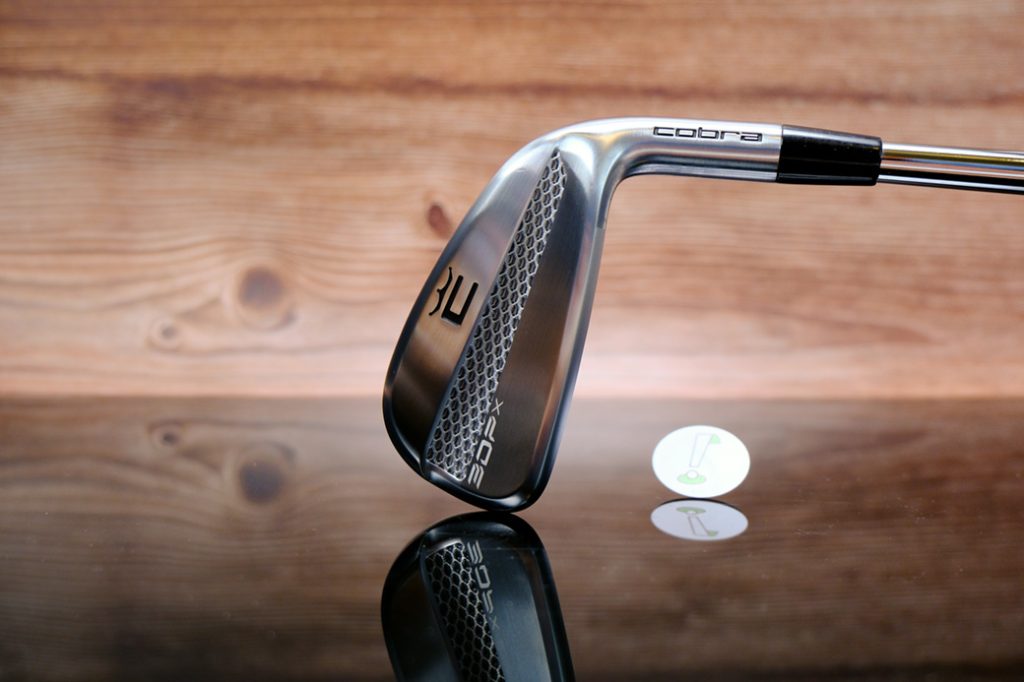
While the 3DP MB irons aim to revolutionize the muscleback iron category, the 3DP X takes a similar approach, only in a larger footprint. It offers a size comparable to Cobra’s Forged Tec X while providing forgiveness that surpasses Cobra’s current super game-improvement irons.
Cobra believes the 3DP X irons will appeal to a wide range of golfers. Utilizing the same 3D printing process and materials, the largest 3DP iron maintains a similar feel to the Tour and MB models. To enhance MOI properties, Cobra has incorporated tungsten weighting in the hosel and at the heel and toe areas. As a result, the 3DP X irons will offer improved stability on off-center strikes.

One point we discussed regarding the 3DP Tour irons is that their lattice structure, which connects and supports the face, does not provide the speed-enhancing benefits typical of traditional hollow-body irons. The same applies to the 3DP X. These clubs are not specifically designed to enhance speed; instead, they have a one-piece design without a face insert. Instead of maximizing speed, these irons focus on being more forgiving and playable while maintaining a smaller chassis that offers exceptional feel.
“Cobra Golf has always been driven by innovation. The fact that we are the first OEM to offer a full range of 3D-printed irons that exceed the performance of comparable, traditionally made irons clearly shows our level of dedication to making the very best performing gear in golf.”
Dan Ladd, President of Cobra Puma Golf

Cobra’s 3DP family now includes three sets, with the 3DP Tour set continuing through 2026. This expansion means the line now caters to an even wider range of golfers. Those who have always wanted to game a set of blades but were hesitant due to a lack of forgiveness may finally find the ideal option with the 3DP MB. Meanwhile, higher handicap golfers, those with a 10+ handicap, who need more forgiveness but prefer not to use bulky-looking irons, might discover that the 3DP X is exactly what they are looking for.
The Details
Pre-order: 1/6/2026
In Stores: 1/9/2026
Price:
3DPMB – $1980 for a six-piece set
3DP X – $1980 for a six-piece set
Stock Shaft: 3DPMB – KBS $-Taper 110(MB)
3DP X – KBS Tour Lite(X)
Dexterity: Both sets available RH and LH
More information on Cobra’s expansion of their 3DP iron family is available at www.cobragolf.com.
Go to discussion…