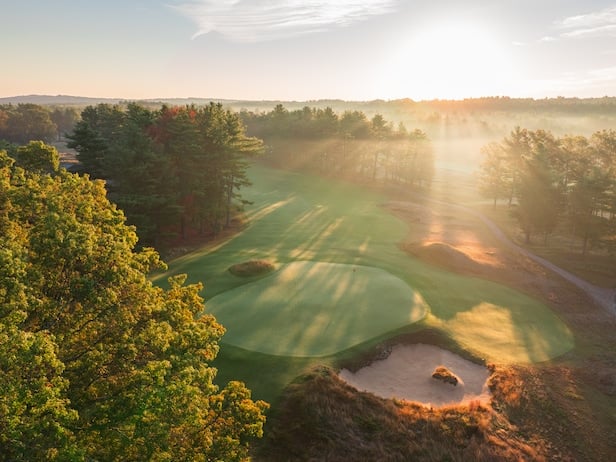
A quarter of the way into the century, it’s clear the quality of new courses and renovations continues to get better. Developers and clubs keep giving architects outstanding properties to work on, along with budgets to match. Even when the land doesn’t sing, designers have found ways to put spins on it that make the courses nevertheless stand out. There’s no appetite, nor much tolerance, for uninspired thinking and the kinds of build-by-the-numbers courses that were pumped into the market in the 1990s and early 2000s. The majority of new courses built since 2020 have been conceived with care and a mandate to put the golf above all other considerations. The same is true with renovations.
I didn’t get a chance to see every new course or major renovation this year, but there were holes at each place I did visit that left deep impressions. Here are the 10 best new or newly remodeled holes I saw in 2025.
RELATED: America’s 25 most beautiful golf courses, ranked
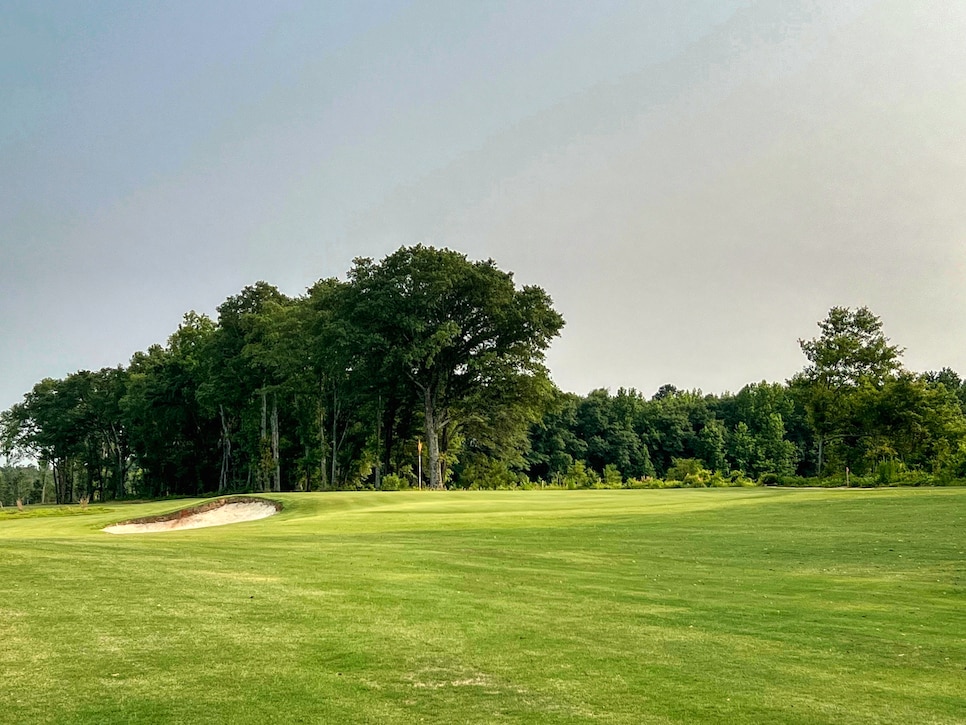
BROOMSEDGE GOLF CLUB REMBERT, S.C.15TH HOLE, PAR 4, 409 YARDS
Most members and guests play this hole (or should play this hole) from a shorter set of tees that make it worth trying to hit driver near the green. The setup is classic yet under-utilized: a hard, straight out-of-bounds line runs up the right side of the hole with all the space you want to the left. But the farther drives hedge from the penalty line, the worse the angle becomes back to the narrow green that sits just feet from the boundary—in other words the approach shots must be hit back toward the O.B. with no room to miss long. Designers Mike Koprowski and Kyle Franz have set up a devil’s dilemma: What club to hit? Where to aim it? It’s topped off with perhaps the course’s most subdued, attractive putting surface set at fairway grade and gently rising toward the rear.

Derek Duncan
Derek Duncan

Derek Duncan
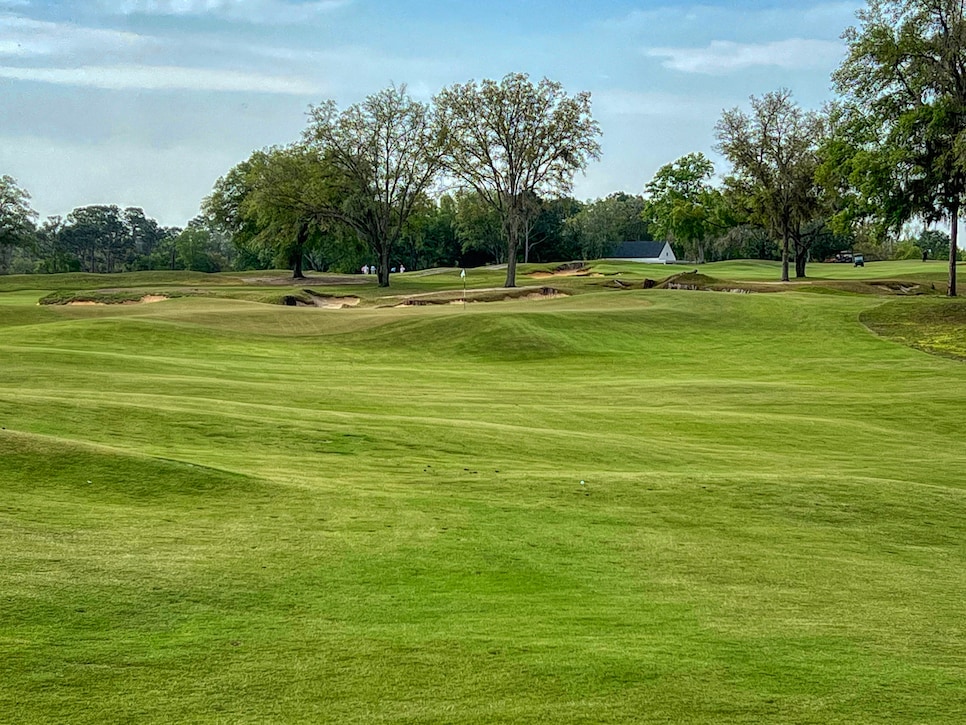
CABOT CITRUS FARMS (THE ROOST) BROOKSVILLE, FLA.4TH HOLE, PAR 4, 420 YARDS
A number of different holes from The Roost, the second 18-hole course to open at this public complex an hour north of Tampa, could have made this list based just on the sensuous and sometimes maddening shaping of the greens (these include the par-5 third, the long, bunkerless par-4 12th and the uphill par-4 15th). But the choice goes to the fourth for its strategic dynamism. Two centerline bunkers make players choose either the high left route around them or a lower-level fairway to the right. This decision should be made with care because approach shots from the wrong angle, even when played with a wedge, may not be able to hold certain sections of the wide green, especially left hole locations. A brutal false front rejects any shot that spins too much or comes up slightly short, and swales and shoulders steer balls in other unwanted directions. The Roost is a collaboration by Kyle Franz, Mike Nuzzo and Ran Morrissett, but the green shaping credit goes to Canadian Rod Whitman, architect of Cabot Links and frequent associate of Bill Coore and Ben Crenshaw.

Derek Duncan
Derek Duncan

Derek Duncan
EASTWARD HO! CHATHAM, MASS.4TH HOLE, PAR 3, 165 YARDS
The new fourth hole at Eastward Ho! on Cape Cod didn’t leave me speechless when I saw it, but it did reduce me to a single syllable: Wow! I said it repeatedly as I walked this bluff-top par 3 overlooking Pleasant Bay and took in the full view of the green. I say “new” because even though the hole was built over 100 years ago by Herbert Fowler, the complexion of it has changed radically after Kyle Franz’s 2024 renovation. Franz believed that the run-up to the old green, including a big dip in front of it, was once maintained as putting surface so he restored it as such, expanding it by over 7,700 square feet. It’s now an enormous Biarritz-style style green, the swale centered and bracketed by two elevated platforms, one of the most dramatic of its type. Eastward Ho! was already one of American golf’s greatest settings on unbelievably wild seaside terrain, and the fourth adds yet another showstopper to its astounding repertoire.

Derek Duncan

Derek Duncan

Derek Duncan

Derek Duncan
RELATED: The Timeless 21: The courses that have been ranked on every list of America’s 100 Greatest Courses
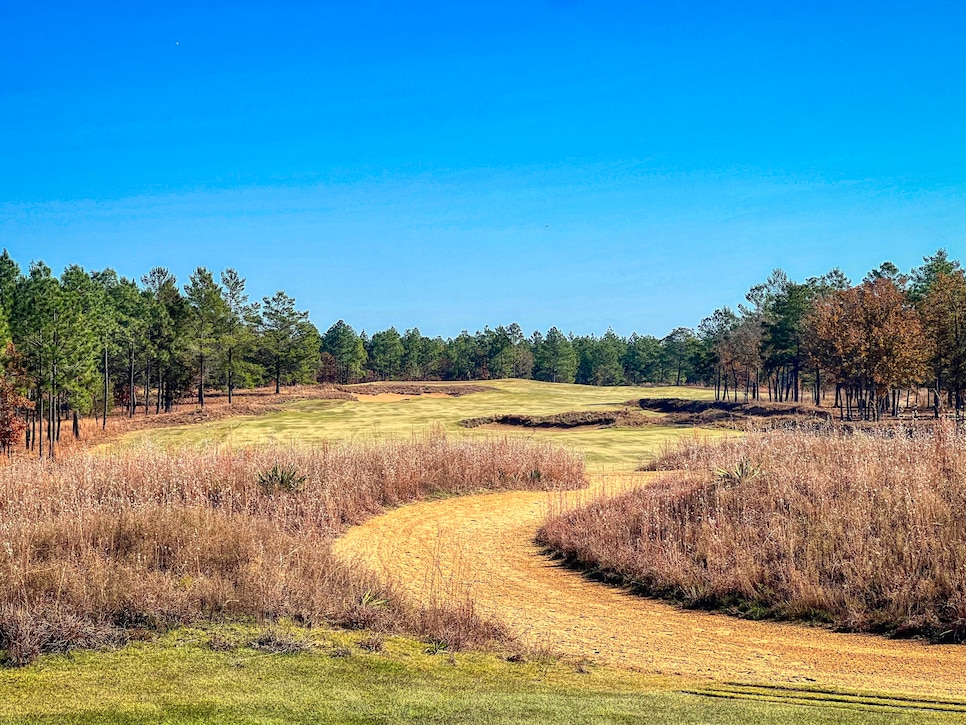
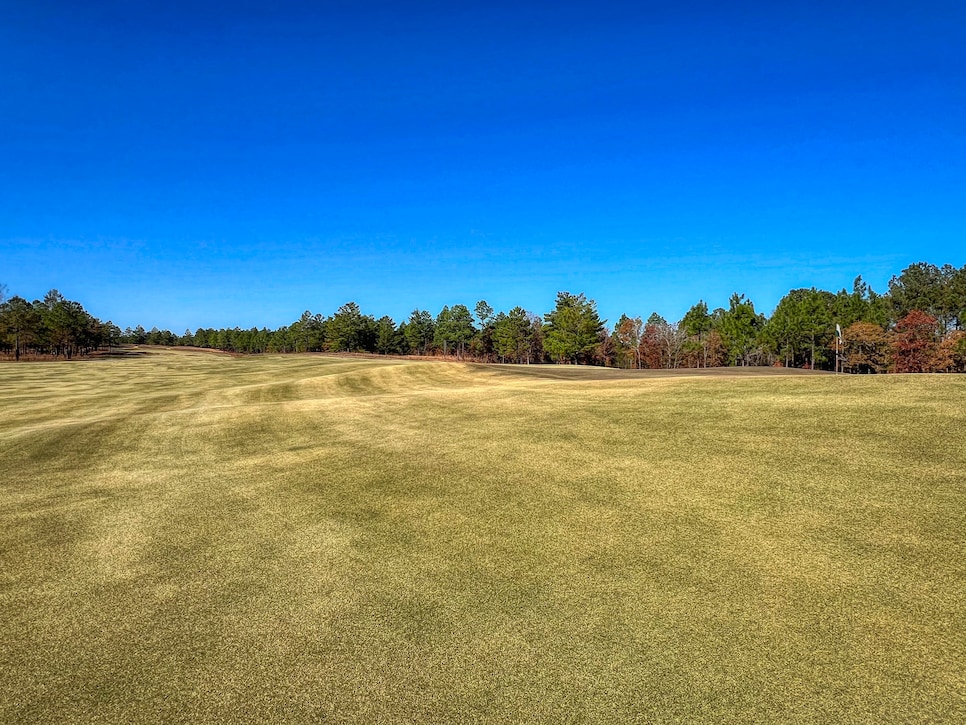
FALL LINE (EAST COURSE) BUTLER, GA.3RD HOLE, PAR 5, 520 YARDS
Few things in golf are more exciting to me than tight, firm short grass. The third at Fall Line’s East Course in remote central Georgia, designed by the Australian firm of Geoff Ogilvy, Mike Cocking and Ashley Mead (OCM), showcases it in abundance. The reachable par 5 is a playground of fast turf that encourages bold play. It allows plenty of room to hit, though two perfectly placed bunkers, one in the right half of the first landing zone and one further up on the left, force a tacking strategy unless they can be carried on direct lines. The star turn, however, happens at the green, or more precisely the two acres of short grass that surrounds it, setting up a dazzling matrix of third shots and short-game possibilities. This is where the fun begins. The architects are experts of the Melbourne Sand Belt, a region known for its distinctive style of bunkers (the type of which are found on The Fall Line’s West Course), but grass and the space they give it is the riveting focal point of the third.
Derek Duncan

Derek Duncan

Derek Duncan
Derek Duncan
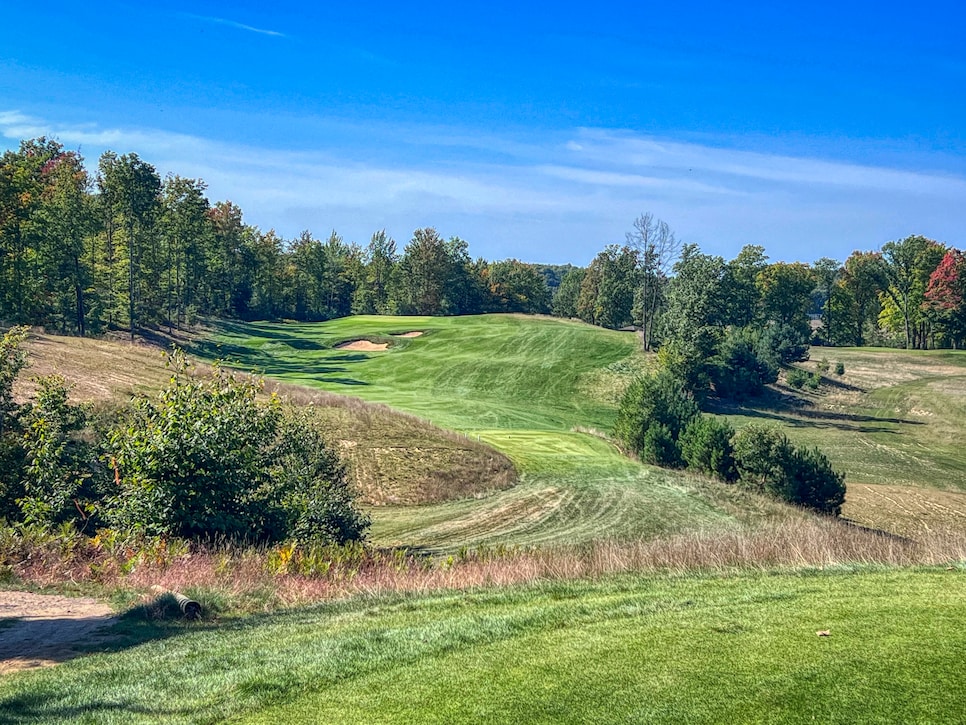
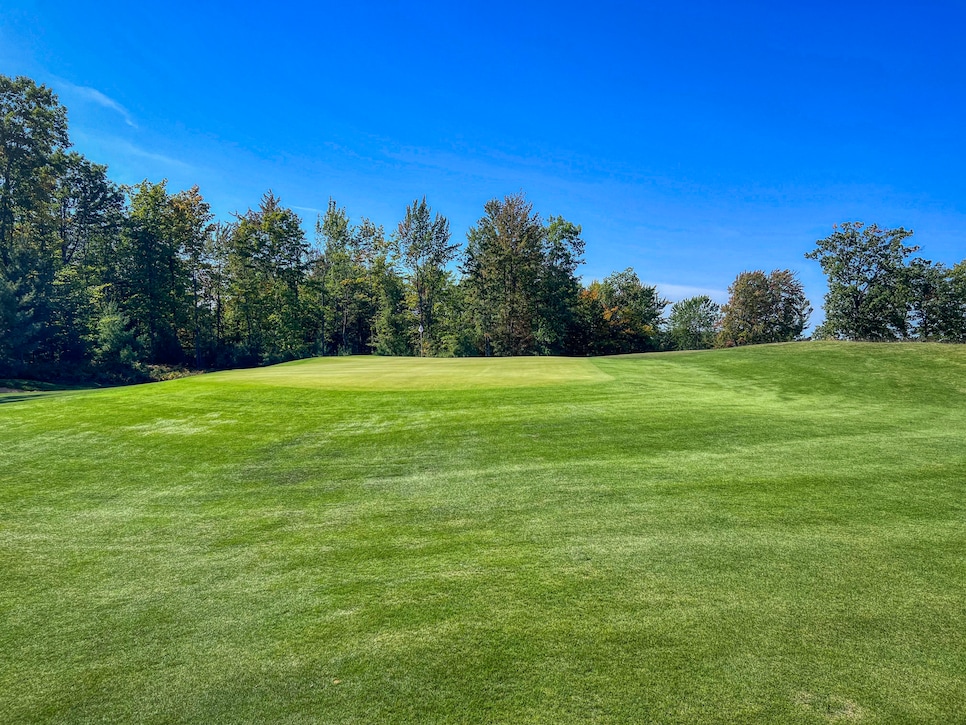
HIGH POINTE GOLF CLUB WILLIAMSBURG, MICH.7TH HOLE, PAR 4, 310 YARDS
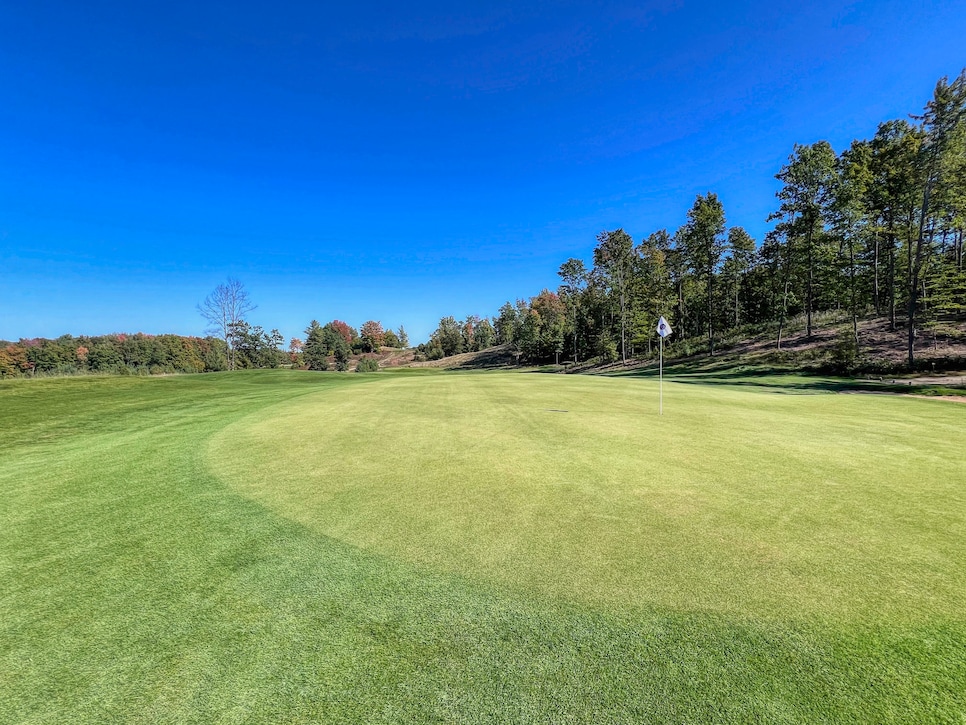
High Pointe is a mixture of 6 1/2 reclaimed holes that Tom Doak built in 1987 as part of his first design, and 11 1/2 brand-new holes built in 2024 on adjacent property acquired by owner Rod Trump (the original course closed in 2008 and half of its land was sold off as a hop farm). The uphill seventh, part of the new batch of holes, is as enticing and sneakily dangerous as Doak’s best short par 4s like the seventh at Ballyneal, the sixth at Pacific Dunes and the 13th at Streamsong Blue. A carry off the tee of 270 yards will cover the furthest of two centerline bunkers and get close to the front of the green. Drive it anywhere else and a blind, intermediate pitch shot from an unlevel stance awaits. The green is crowned and slick, and missing it in the basin on the left results in delicate recoveries. Like all good short par 4s, you stand on the tee licking your chops thinking a 3 is in play, and more often than not you walk off the green licking your wounds.
Derek Duncan

Derek Duncan
Derek Duncan
Derek Duncan
RELATED: Trout National is one of the most hyped new courses in recent memory. And we got a first look
THE INTERNATIONAL (PINES) BOLTON, MASS.12TH HOLE, PAR 4, 418 YARDS
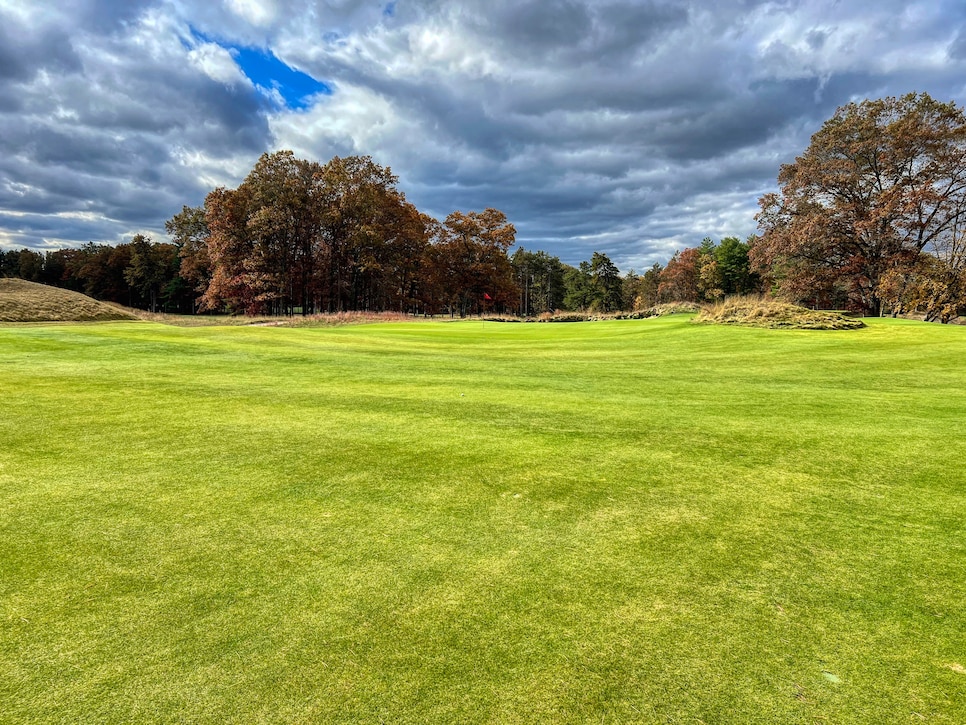
The Pines Course at this complex west of Boston was a novelty when it opened in the late 1950s because it measured over 8,000 yards, the longest course in the country. As part of their reconstruction in 2024 under new ownership, Bill Coore and Ben Crenshaw whittled over 1,000 yards off the scorecard and completely rerouted the design. What’s novel about the Pines now is a set of intensely contoured greens, some of the most severe in the Coore/Crenshaw portfolio, a few of them borderline outrageous. The 12th hole, by contrast, is refined. The wide dogleg pivots right through pines and drives that don’t hug the inside line will scamper left off a hogsback out of position. The hole feels as British (London, that is) as anything you’ll find in New England with the fairway sliding smoothly into a low green rippled at the edges and set in a heathland-like clearing of short grass, a lone fescue-covered hummock providing a light touch of strategic intrigue. Like a good links, the hole can be played in different ways and is unlikely to inflict serious damage to the score, but a 4 here requires strong driving and short-game finesse. Bold and brash can be fun, but the confidence to be calm and speak softly is sometimes a golf hole’s most appealing quality.

Derek Duncan

Derek Duncan
Derek Duncan

Derek Duncan
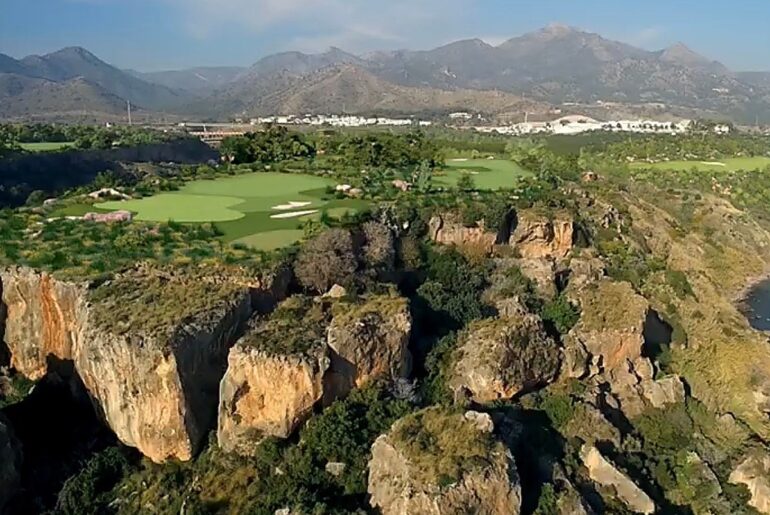
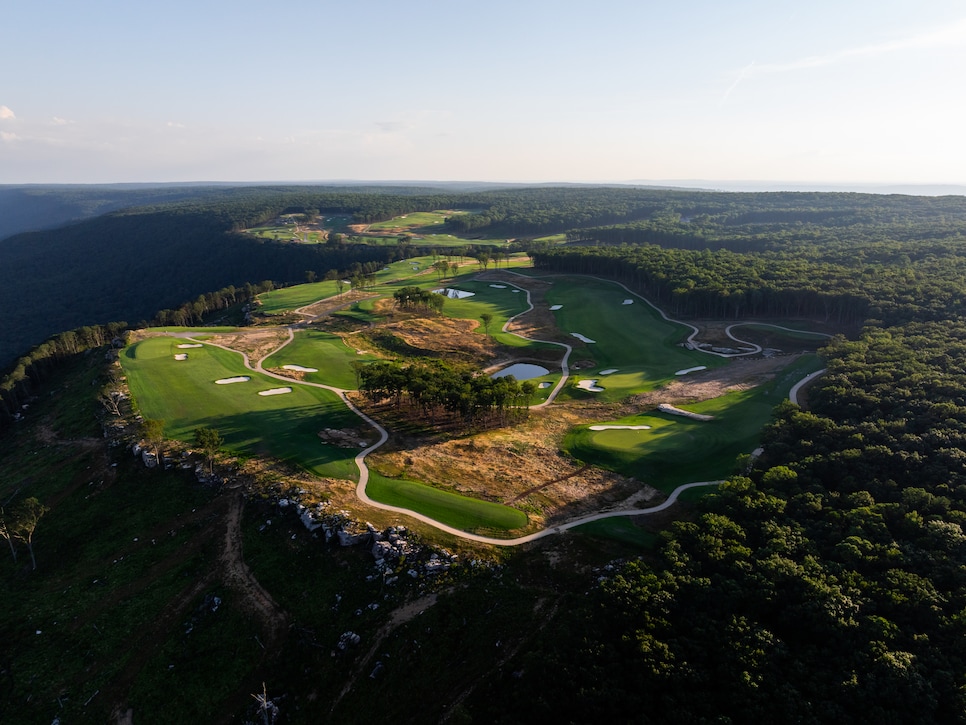
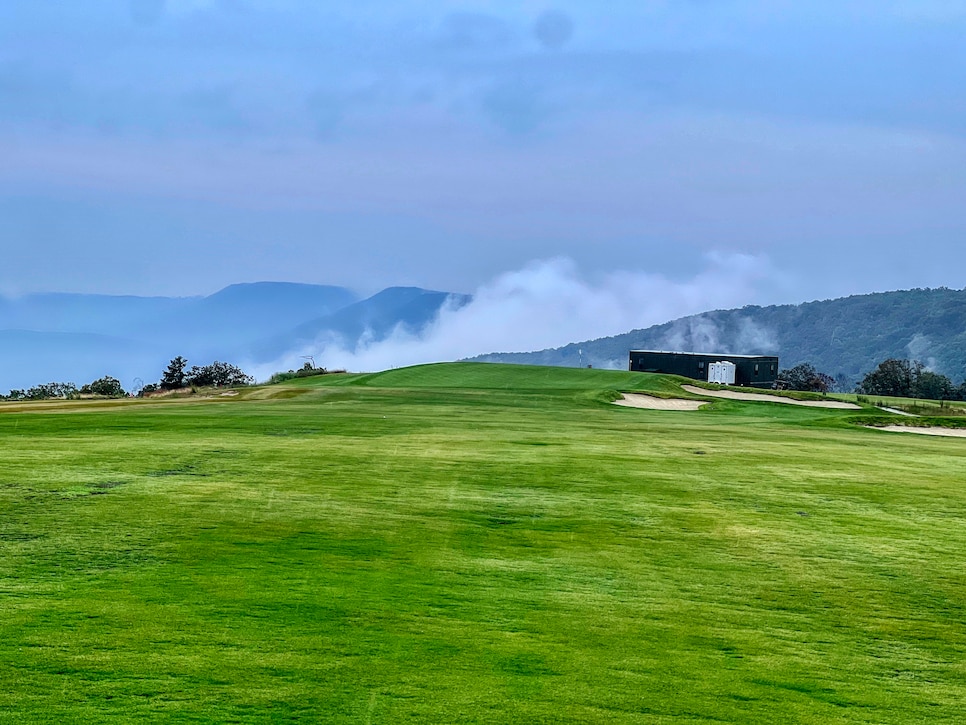
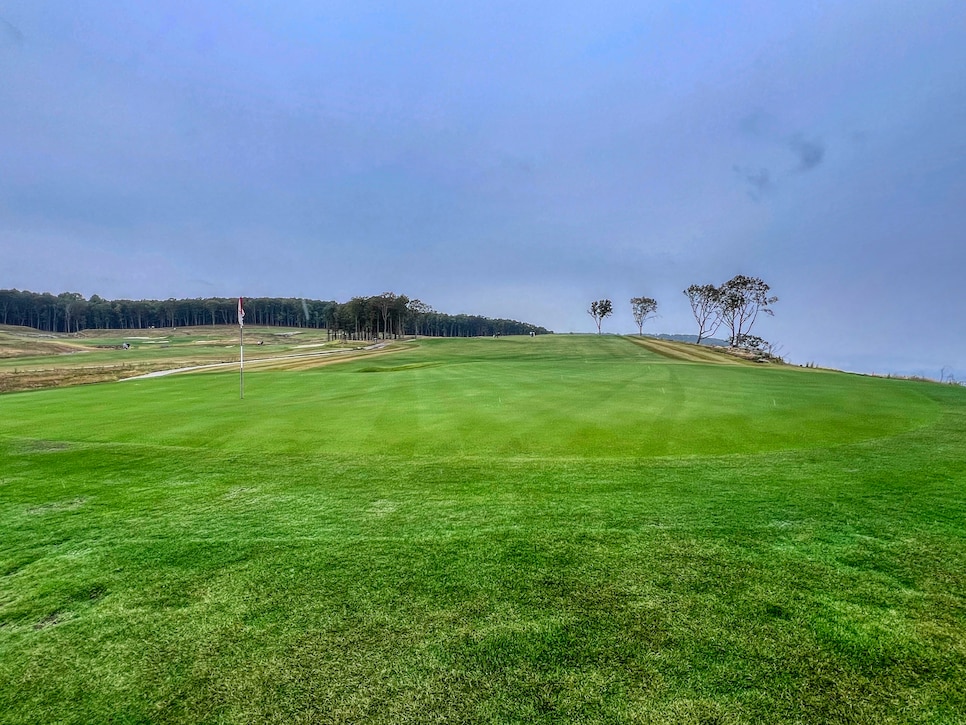
With great settings come great responsibility. Designers Bill Bergin and Rees Jones knew they had a special piece of land hanging off the side of Georgia’s Lookout Mountain with the cliff edges suspended hundreds of feet above the valley floor. But what would be the best way to take advantage of such a rare situation? How would they strike a balance between the interior and cliffside holes? They chose to run as many holes as possible along the length of the cliffs (four in all, with a fifth, a par 3, jumping a gap) including the 10th that comes the closest to fulfilling the promise of the setting. The par 4 curls with the shape of the outer perimeter and is wisely bunkered on the inside to nudge drives and second shots closer to the infinity plane. The green is lovely, presented like a throne rising against the vast horizon beyond it with simple hole locations that get increasingly difficult the farther back they’re set. In a setting like this, you don’t need much more.
Jeff Marsh

Derek Duncan
Derek Duncan

Derek Duncan
Derek Duncan
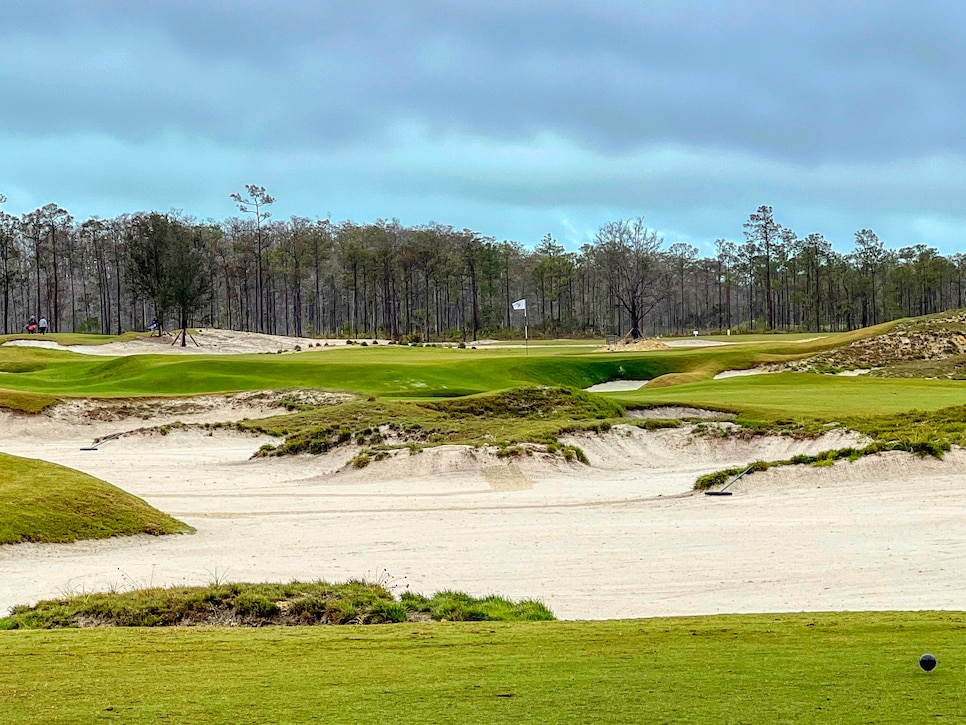
KINSALE CLUB NAPLES, FLA.13TH HOLE, PAR 3, 167 YARDS
Kinsale is one of those clubs not built on great land. The site in north Naples was brutally flat and limited in space with waterfront condominiums towering on one side. Such a situation demands a creative approach to transcend such limitations. Gil Hanse and Jim Wagner used the blank, sandy slate to create their own interpretations of the Seth Raynor/C.B. Macdonald catalogue of ideal holes that include a Redan, Road, Leven and so on. But the short par-3 13th is inspired by the Postage Stamp at Royal Troon (not a Raynor/Macdonald hole) and is used cleverly as a way to get out of one of the property’s tight corners, allowing several adjacent holes to play in close vicinity. The setup is a mirror image of the original with the small green falling away into hollows on the left and anchored on the right by a manmade dune. There’s a lot going on with the Kinsale design—it needed a lot—but the 13th is a moment of much needed sophistication, a tasty short-iron to a small, attractive target that makes you want to stand on the tee and attempt the shot over and over.

Derek Duncan
Derek Duncan
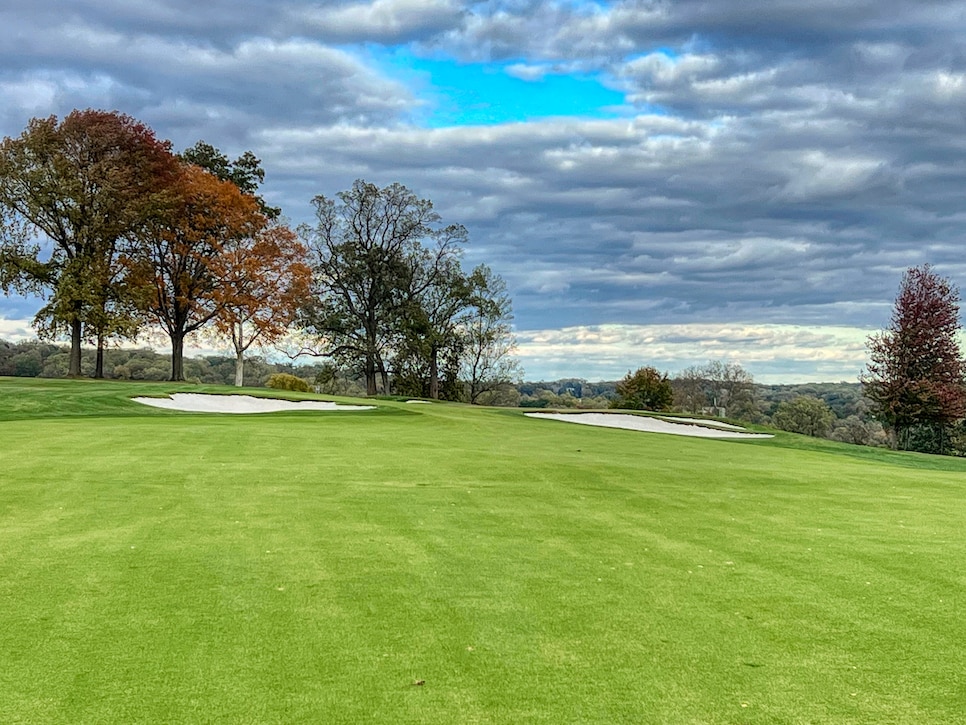
PHILADELPHIA COUNTRY CLUB GLADWYNE, PA.12TH HOLE, PAR 5, 619 YARDS
Jim Nagle’s 2023 and 2024 renovation work at Philadelphia Country Club, a 1927 William Flynn design that hosted the 1939 U.S. Open, is strong enough to put the course back in the conversation with Merion, Aronimink and Philadelphia Cricket as the Main Line’s best. The property is grand, with holes that camber up, down and across muscular land movements, and the final stages of tree removal and bunker reshaping/expansion do wonders to accent the land’s scale. It all comes together in the epic par-5 12th that begins with a blind, uphill drive before walking along a ridgeline to a green framed against the distant rolling hills of west Philadelphia. It’s naïve to suggest that the green can’t be reached in two shots, but players who want to try better bring more than just firepower because the trouble increases the closer they get to the green. This is beauty and brawn all in one.


Jeff Marsh

Jeff Marsh
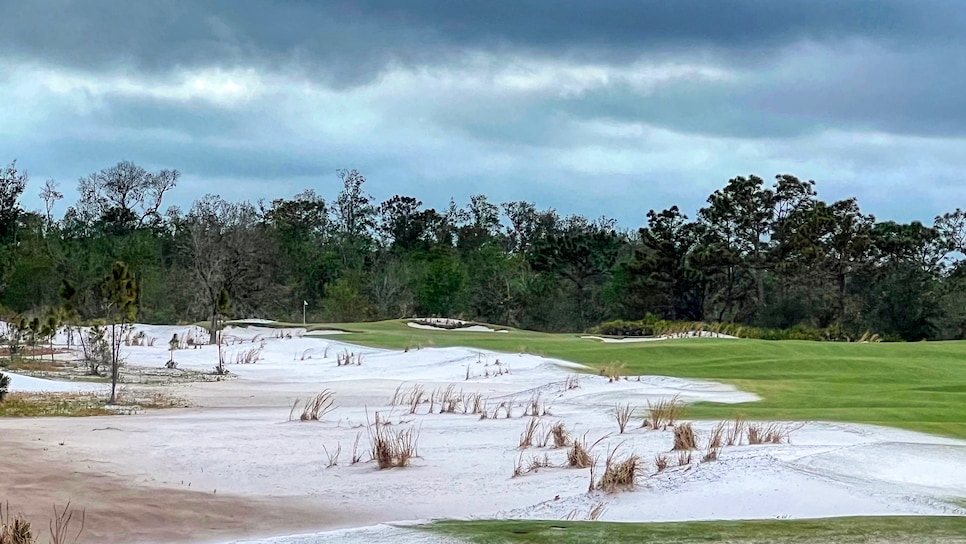
Good first holes should do more than just get your round going—they should introduce you to the course and even foreshadow things to come. The first at Soleta might not be the strongest or even most evocative hole at this new Nick Price design 30 minutes east of Sarasota, but I can think of few other openers that more effectively establish the themes of the design. As this par 4 demonstrates, Soleta’s closest cousin is desert golf, with long ribbons of turf bordered immediately by native material, in this case uninterrupted outlines of open sand. To create this look, the entire site was excavated and flipped to expose the soft sugar sands that the design team shaped into the low, scruffy dunes that buffer fairways and greens. Playing the course is to step into a world where the rules of engagement are different but clear, and the first wastes no time in dictating the action. The strategy of the hole is also elegant, with a lone formal bunker protecting the right edge of the fairway, the side from which the angled and fragmented green opens up.


MORE: The 13 most fun golf courses in the U.S., according to our expert
• • •
Explore Golf Digest’s new Course Reviews section where you can submit a star rating and evaluation on all the courses you’ve played. We’ve collected tens of thousands of reviews from our course-ranking panelists to deliver a premium experience, which includes course rankings, experts’ opinions, bonus course photography, videos and much more. Check it out here!
This article was originally published on golfdigest.com