
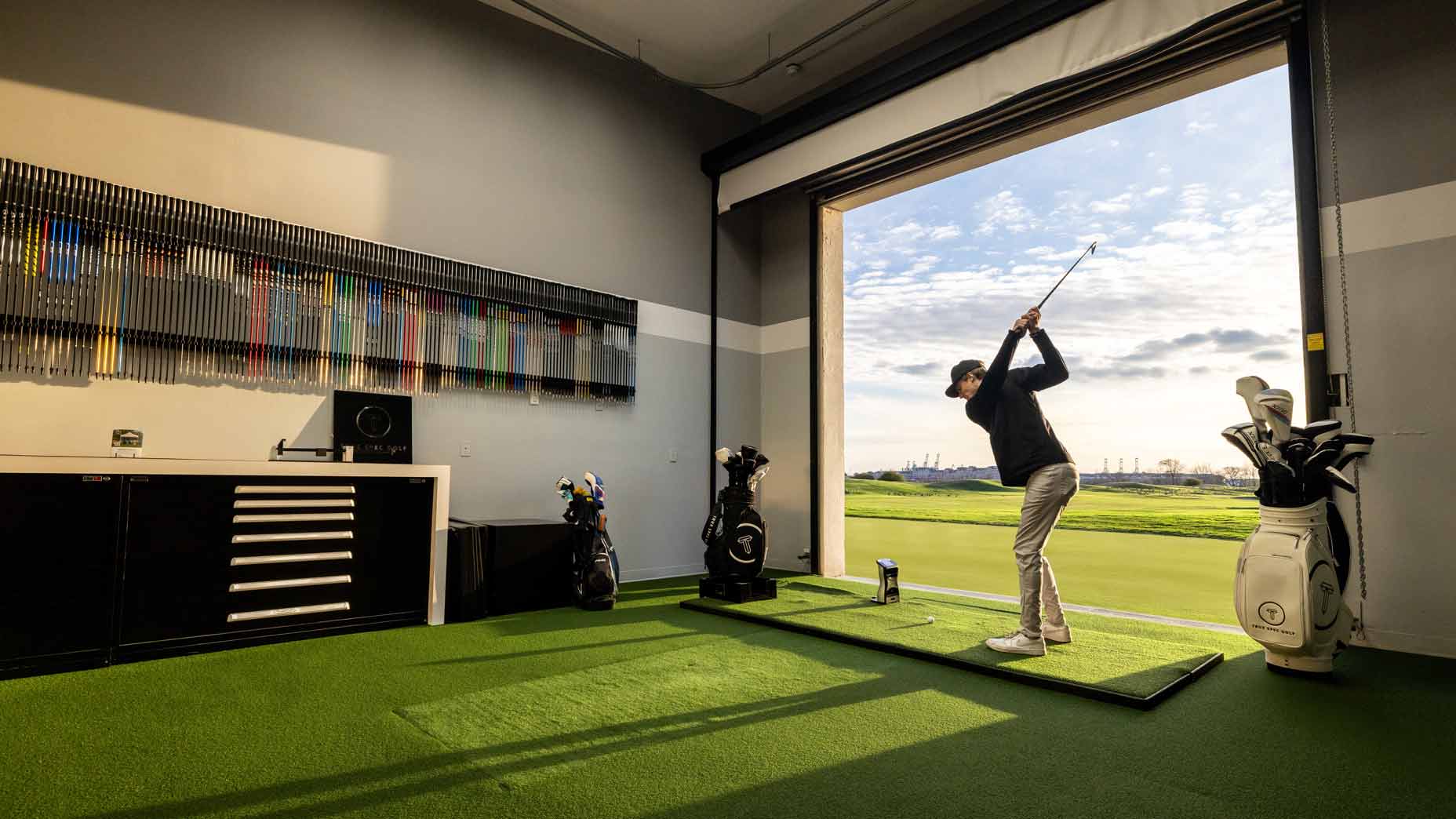
Iron lofts have quietly become one of the most misunderstood topics in modern equipment, particularly in the game-improvement category. This is why finding the right lofted set of irons for your game can be a crucial part of a fitting.
Look back a few decades and the numbers tell the story. In the 1980s, a standard 7-iron sat around 35 to 36 degrees of loft. Today, many game-improvement and players-distance irons feature a 7-iron closer to 28 to 30 degrees, sometimes even stronger.
That shift has sparked plenty of debate. Is it simply a marketing tactic designed to make golfers feel like they are hitting the ball farther? Or is there a legitimate performance reason behind what some refer to as “loft jacking”?
The answer is a little of both. And once you understand how modern irons are designed and who they are designed for, the trend starts to make sense.
How modern iron design changed the equation
To understand why lofts have changed, you first need to understand how game-improvement irons have evolved.
Over the last two decades, R&D teams have gained the ability to manipulate center of gravity in ways that were not possible in the past. Multi-material construction, hollow bodies and dense materials like tungsten allow engineers to move mass lower and farther from the face.
That CG placement directly influences launch, spin and forgiveness.
When you look at the players these irons target, a few swing tendencies show up consistently. Many amateur golfers strike the ball thin, swing steeply or come across the ball with a path that creates excess launch and spin. Left unchecked, those tendencies lead to shots that balloon, lose speed and come up short.
The solution is to add mass where players tend to miss the ball most, usually low on the face, while reducing static loft to keep launch and spin in a playable window.
Stronger lofts are not there just to inflate distance numbers. They exist to offset the high-launch characteristics created by modern CG placement.
When strong lofts work against the player
That said, stronger lofts are not the right solution for everyone.
Why Tiger Woods’ 2000 golf bag still feels untouchable, even today
By:
Johnny Wunder
Take a mid- to high-handicap player with above-average clubhead speed, a steep attack angle and an inconsistent path. Pair that swing with a modern 6-iron that sits at 30 degrees of loft and features today’s low CG designs, and the result can actually be too much launch with spin numbers closer to a pitching wedge.
Lower loft is one of the most effective ways to reduce launch and spin, but only if the player needs it.Most golfers struggle to control dynamic loft at impact. That is where modern iron technology helps. The goal is not to turn players into tour pros. It is to make the game more playable and enjoyable.
Not every high handicapper needs less loft
This is where the conversation often gets oversimplified.
While many higher-handicap players create too much launch and spin, plenty struggle with the opposite problem. We see it daily during fittings.
A golfer comes in playing a game-improvement iron and launches the ball low with spin rates a couple thousand RPMs below ideal. Shots fall out of the air and run 20 yards or more past the green. That can stem from slower clubhead speed, a shallow attack angle or difficulty controlling loft at impact.
What is spin loft and how can it help your golf game? | Fully Equipped
By:
Jack Hirsh
For that player, strong lofts can actively hurt performance.
This is why many manufacturers now offer high-launch versions of their game-improvement irons. Adding a few degrees of loft can dramatically improve peak height, carry distance and stopping power without sacrificing forgiveness.
Forgiveness is more than dispersion
When golfers talk about forgiveness, they usually focus on left and right dispersion. Hooks and slices are easier to spot, so they get the most attention.
Distance consistency matters just as much.
Having the proper loft throughout the set helps produce predictable carry numbers, tighter front-to-back dispersion and more confidence when attacking greens. Two golfers with the same handicap can require very different loft packages to achieve those results.
The bottom line

True Spec Golf Club Fitting
With 70,000+ clubhead and shaft combos, True Spec Golf will custom fit and build you a precise set of clubs.
Loft is no less important than shaft, length or lie angle. Buying irons straight off the rack and assuming they will perform the same for you as they do for someone else is a gamble, especially given how wide the range of modern lofts has become.
This is where a proper fitting matters. Working with a fitter, like us at True Spec Golf, who understands how today’s technology interacts with your swing allows you to dial in launch, spin and distance instead of guessing.
The goal is not to chase distance. It is to build a set that produces repeatable numbers and helps you hit more greens. Sometimes that means stronger lofts. Other times, it means exactly the opposite.
Want to find the right irons for your game in 2026? Find a club-fitting location near you at True Spec Golf.
“>