
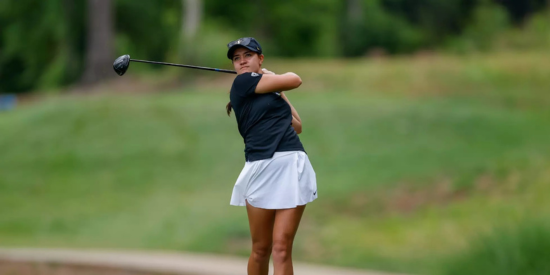
The McCormack Medal and What It Really Means
Romero’s biggest line-item of 2025 is the one that confirms everything else: she captured the Mark H. McCormack Medal as the leading female player in the World Amateur Golf Ranking.
That distinction comes with immediate stakes. If she remains an amateur, Romero holds exemptions into the 2026 U.S. Women’s Open at Riviera and the 2026 AIG Women’s Open at Royal Lytham & St Annes. In other words: two major championship starts are already on the calendar, and her path to the biggest stages is already cleared.
A 2025 Season Built on Contention, Not Flash
The most telling detail about Romero’s year is how often she simply stayed in the picture. Across the WAGR counting window, she piled up top finishes in collegiate majors, USGA championships, and pro starts—exactly the mix you expect from a modern No. 1 amateur who isn’t sheltered by schedule.
At Oregon, Romero delivered a season that looked like a weekly threat to win. She claimed the 2025 Big Ten individual title while helping the Ducks make a statement in their first season in the league—an immediate imprint for both player and program.
She backed it up in the postseason with a regional win (NCAA Gold Canyon Regional) and another strong NCAA Championship showing—exactly the kind of spring sequence that separates “great college player” from “best amateur in the world.”
Proof Against the Pros
For many elite amateurs, “pro experience” means making cuts. Romero did more than that in 2025—she proved she could compete inside professional fields and bring her game into real contention windows.
Her year included multiple pro starts, highlighted by a top-10 finish at the LPGA’s Portland Classic, plus solid showings in other professional events. That matters because it compresses the timeline: a player who can contend on the LPGA schedule while still in college has already done much of the hard adaptation work.
The Signature Moment: A U.S. Women’s Open Record Round
Every No. 1 amateur season has a moment that becomes part of the player’s long-term identity. For Romero, 2025 delivered one at the U.S. Women’s Open—where she posted a final-round 67 at Erin Hills, the lowest round ever recorded by an amateur in championship history.
It was the clearest snapshot of her ceiling: fearless, technically sound, and capable of producing elite scoring on the biggest stage, even inside the volatility of major championship conditions.
What 2026 Looks Like: The Year It All Converges
Romero enters 2026 with three parallel tracks that can elevate her from top amateur to global name:
1. Major Championships With Real Expectations
With exemptions already secured for Riviera and Royal Lytham, Romero won’t be “happy to be there.” The bar is higher now—because she has already shown she can score in major conditions.
2. A Likely Curtis Cup Role
If Romero remains amateur through the summer, she is the type of player Team USA builds around in match play. The 2026 Curtis Cup is set for Bel-Air Country Club in Los Angeles, and it would be a surprise if the world’s No. 1 amateur isn’t a central figure in that lineup conversation.
3. The Pro Transition—Whenever She Chooses
Romero’s 2025 schedule already looked like a hybrid model: elite college golf plus selective pro starts plus high-pressure USGA events. That’s the modern blueprint for a smooth transition—because by the time she turns professional, the stages won’t feel new.
The Bigger Picture
Kiara Romero ends 2025 at No. 1 because her game and her résumé match the ranking: she wins in college, she contends in majors, and she belongs in professional fields.
In 2026, the stakes get sharper. Two majors, a likely Curtis Cup runway, and another year of postseason college pressure all point to the same conclusion: this isn’t a ranking she’s borrowing. It’s one she’s defending.


