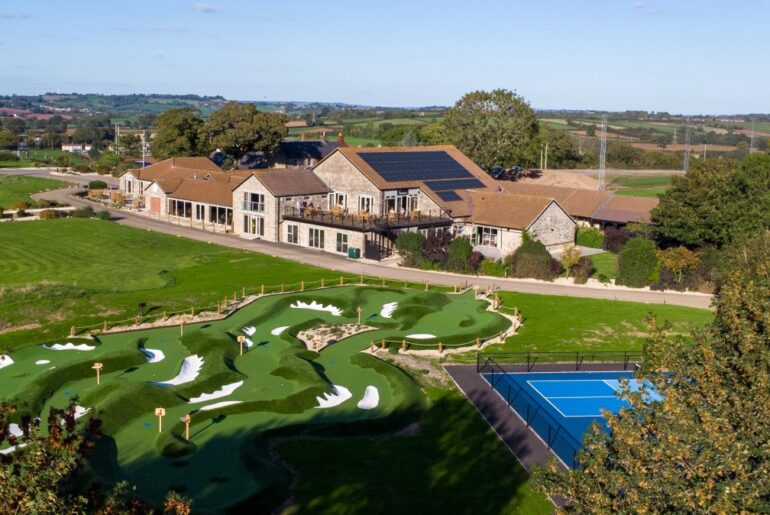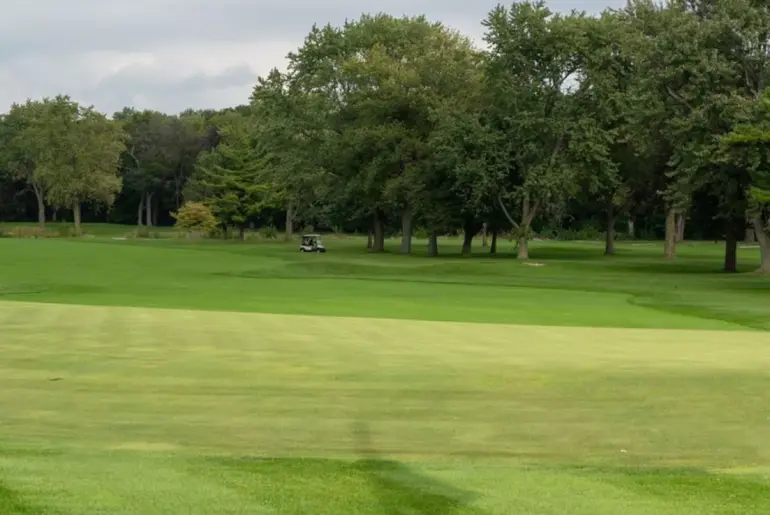
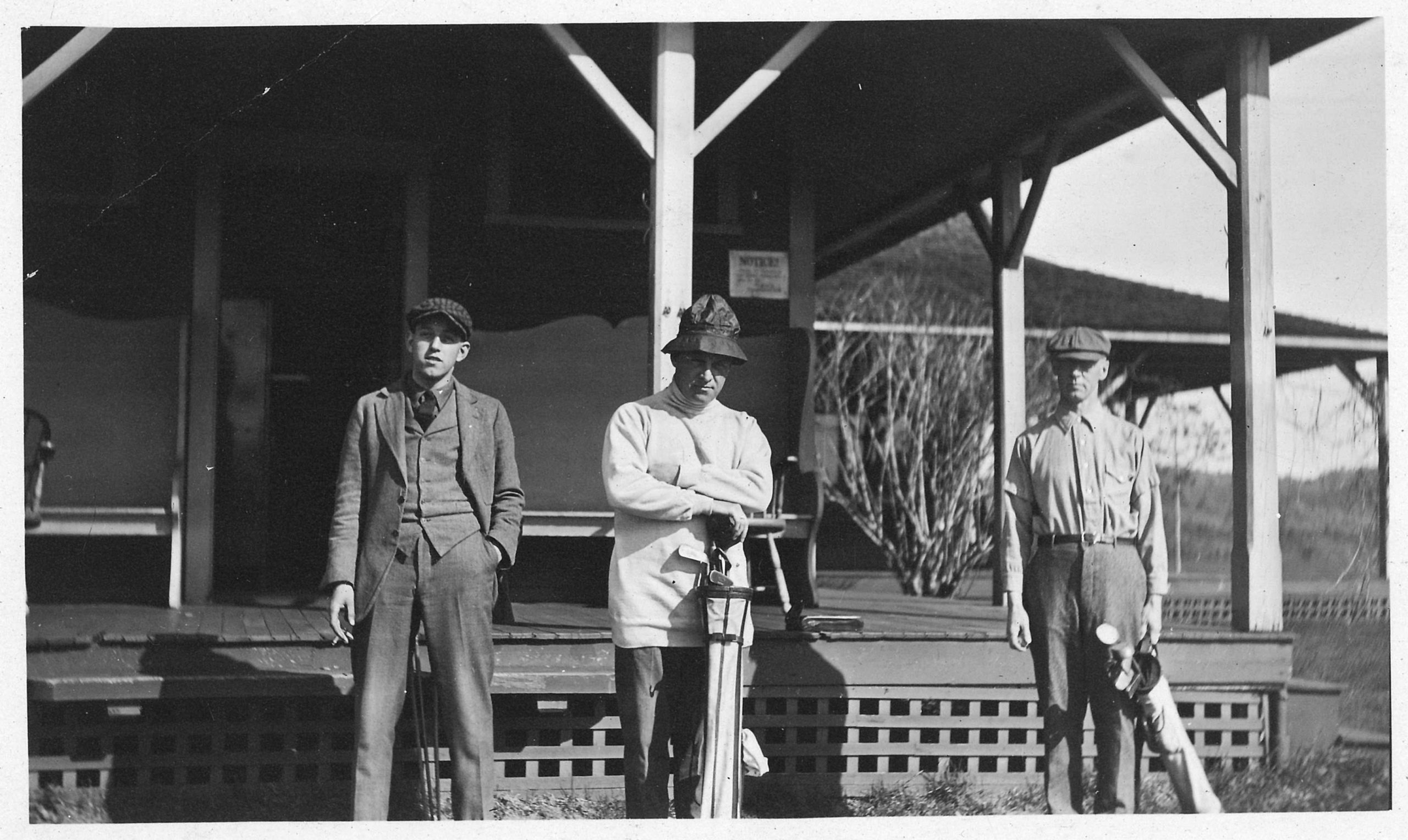
Montpelier is currently discussing how to use the city’s 133-acre Country Club Road property. Over the past 150 years this property has been variously a horse trotting track, fair grounds, private golf course, and an Elks club.
Trotting Track
When F.W. Beers published his atlas of Washington County in 1873, the property located next to the Montpelier and Wells River Railroad tracks near the East Montpelier Road was labeled the “Old Gilman Track.” Edwin H. Gilman, a “well-known horse trainer and driver” had owned the trotting track between 1866 and 1872.
In 1869, the Washington County Agricultural Society held its annual fair at Gilman’s farm for the first time, utilizing the track for its popular horse races. Three years later, the Vermont Watchman and State Journal reported there were five races at the track spread over two days with purses totalling $1,050. Fifteen hundred spectators attended the first day and 3000 came on the second. Although trotting horses pulling drivers in sulkies were the principal competitors on the track, bicycles raced there, and Richard Nichols, “pedestrian,” ran a half mile on the track in 2 minutes, 24.75 seconds in July 1876.
 Program with annotations for two races at the Gilman Trotting Park, 1876. Image courtesy of the Vermont Historical Society.
Prospect Park
Later that centennial year, three Montpelier businessmen purchased the property as a central location for county agricultural fairs and named it “Prospect Park” after the popular Olmstead and Vaux-designed park in Brooklyn, New York. Expanding their audience, they hosted the state fair at the park from 1879 to 1881. The Watchman trumpeted, “The improvements made on Prospect Park this season involve a very large addition to the floral hall, a great improvement upon the road to the grounds, putting the track into the very best condition and a general fitting up in every particular of the whole grounds.”
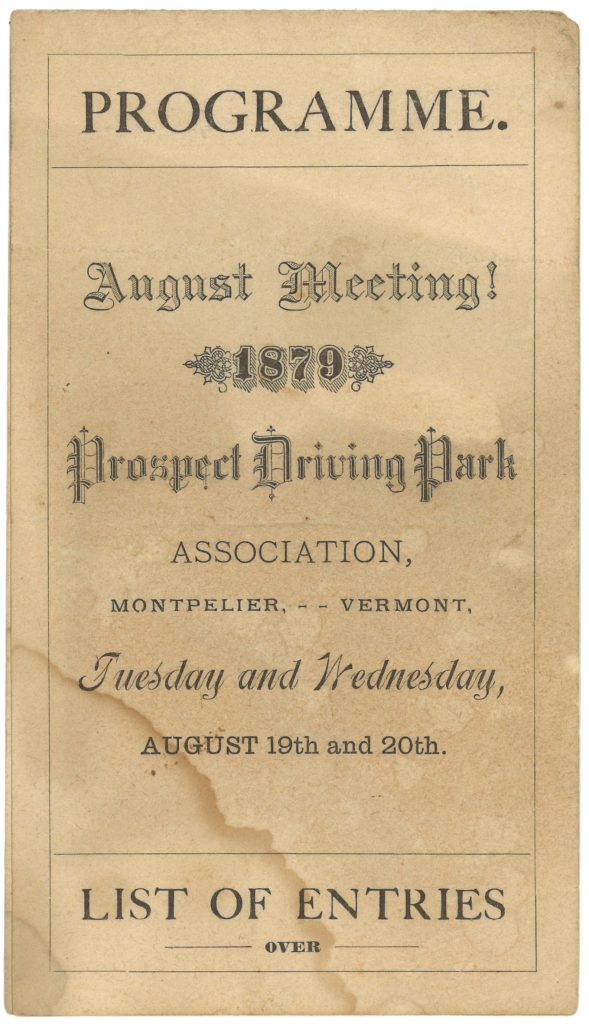 Cover of the program for five races over two days at the Prospect Driving Park in August 1879. Image courtesy of the Vermont Historical Society.
Prospect Park was a particularly attractive spot for a state fair. Fair publicity touted public access to the “beautiful” Statehouse, the “large and commodious hotels” in the capital city, the “pleasant carriage road,” and the fact that the park was accessible by both railroad and street cars. The Montpelier and Wells River Railroad even had a depot at the entrance to the fair “with side tracks for the accommodation of exhibitors in transporting stock.” “The people of Montpelier will also extend a cordial welcome,” the program promised.
Despite the success of three consecutive state fairs and unbeknownst to county fair organizers, the owners of Prospect Park sold their property to an adjacent landowner, farmer Sam Smith, in December 1881. The Washington County Agricultural Society was furious. They had suspended the county fair for three years in favor of the state fair but then the fairgrounds on which their buildings stood was sold out from under them! They took out an ad in the newspaper to express their outrage, accusing the owners of disposing of property which “morally they had no right to do.” Nothing came of their objections. The land sale put an end to horse racing and fairs on the property.
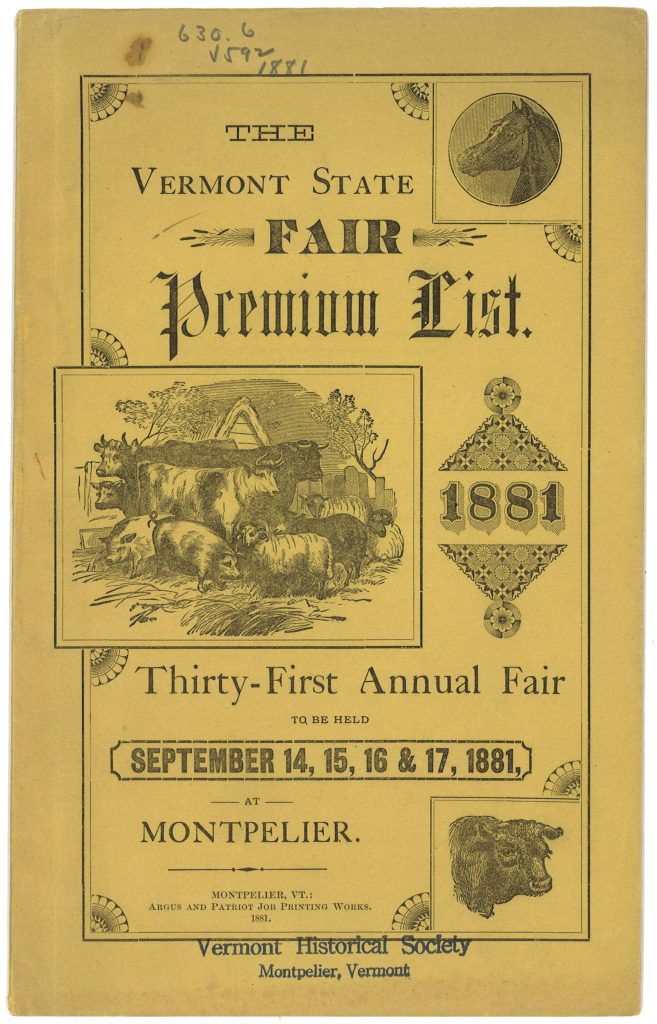
Cover for the program of the last state fair held in Montpelier, 1881. Image courtesy of the Vermont Historical Society.
Country Club
On May 21, 1902, five prominent Montpelier men incorporated the Montpelier Country Club and purchased a portion of the Sam Smith farm near the “Barre transfer” section of the street car line. The 120-acre farm was described as “beautifully located on a slope and an ideal place for a country club.” The club was also expected to have facilities for tennis and croquet in the summer and tobogganing and snow shoeing in the winter.
The golf course was designed by the Scot George Low, Sr., of the Dyker Meadow Golf Club in Brooklyn, New York. Low, who had also laid out a 9-hole golf course in Rutland and several courses near New York City, said “the club will have as good a set of links as could be made anywhere.”
According to the Montpelier Evening Argus, “The golf course has been styled by experts as an unusually ‘sporty’ one, and the greens will be equal to any in New England by another season.” The paper opined that “the teeing grounds lack the monotony unusually found … the sixth in particular being one which will delight the hearts of all golfers.” It was built up off the ground by eight or nine feet with stairs leading to the bottom of a ravine at its base. Several rustic bridges added to the “picturesqueness of the course.”
The new club organizers renovated the former floral hall into a clubhouse. They removed the walls in the first floor to create an assembly hall and built a 12-foot wide porch on three sides of the building. A porte cochere off the porch received arriving vehicles. For those using public transportation, a bridge was constructed across the Winooski River from the trolley car line.
The interior of the club house had butternut woodwork, window seats, sitting nooks, and windows “finished in an artistic manner, many being of unusually large size and all effectively placed,” according to the Montpelier Evening Argus. The newspaper continued to extol the virtues of the building: “From one large window in the west a magnificent panorama presents itself, in the center of which Camel’s Hump looms up grandly and majestically, the best view being afforded of any place within a radius of a dozen miles.”
The Montpelier Country Club flourished as an independent organization sponsoring tournaments, parties, and other activities until the late 1940s, when it started running a deficit. By 1950 it was clear that the club would not be able to open for the summer.
Elks Club
In May 1950, Lodge No. 924, Benevolent and Protective Order of Elks, then occupying the building at 15 Barre Street where Buddy’s Famous Burgers is now, purchased the 155-acre property. The Elks, making a commitment to operate the golf course and run a restaurant, were praised for meeting their civic duty.
In 1961, the 124 members of the club voted unanimously to build a new lodge near the club’s entrance road for a cost of $162,000. The plans called for a 4,800-square foot meeting hall, television room, reading room, cocktail lounge, and a separate men’s lounge in addition to bars, storage, and kitchen facilities. Ground was broken for the new lodge on June 29, 1962, and by December the club was hosting the Argus Santa Ball to raise money to buy clothing and footwear for children. Gov. Philip H. Hoff attended the building’s dedication and said the new lodge was truly “a symbol of the new Vermont.”
The club flourished for many years in its new location, but in 2016, with its membership down to 400 from a high of 1,200 in the 1970s, the only Elks club in the state to operate a golf course sold its real estate to Citi Properties and leased it back. Membership continued to slide and the Elks pulled out in 2020. The golf course operated under the name Capital City Country Club for a year, but golfing on the property ended after the 2021 season. In June 2022 the city of Montpelier purchased the Country Club Road property for $3 million, opening a new chapter in the history of this land.