Twin Aussie major winners, a career Grand Slam completed and a return to ‘normal’ Australian Opens highlighted a banner year in world golf.
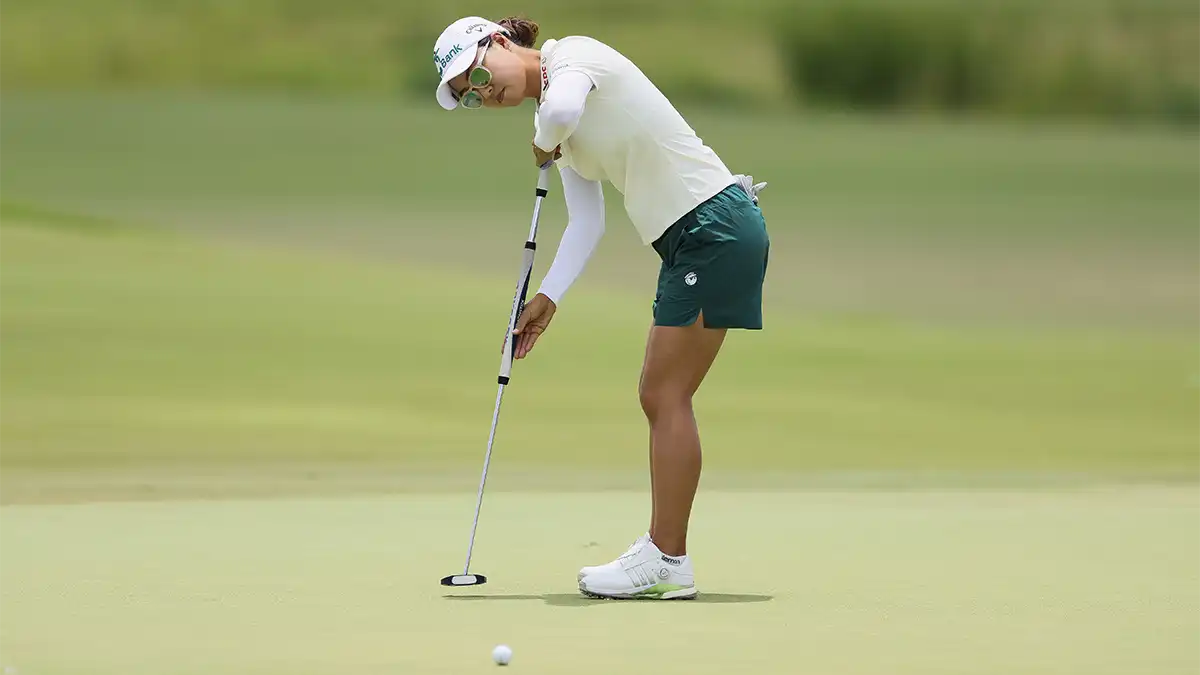
The long putter looks to have done for Minjee Lee what it did for Adam Scott at a similar point in his career. Bravo to Lee (and coach Ritchie Smith) for being brave enough to recognise the need for change.
▶ ▶ ▶
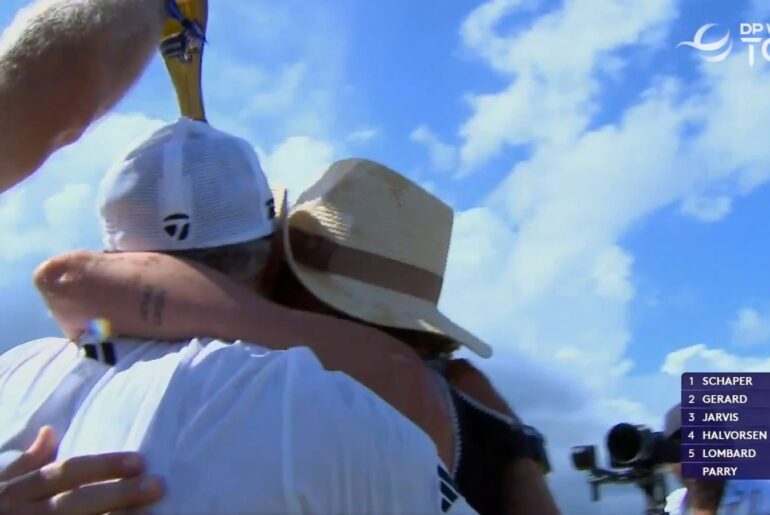
Has a better closing stretch in a major championship been authored than that compiled by Grace Kim at the Evian Championship? Surely not. It’s not any course-architecture buff’s cup of tea, yet the Evian Resort layout reminds us that sometimes it’s the ones constructed to produce drama that often serve up the grandest finishes.
▶ ▶ ▶
Two Australian major winners in two major starts illustrates a tremendous wealth in talent across women’s golf in our country. Surely no one felt more pride throughout 2025 than Karrie Webb.
▶ ▶ ▶
Meanwhile, our overall representation on the PGA Tour is as weak as it’s been in decades. At least Min Woo Lee and Karl Vilips saved us with matching breakthrough victories.
▶ ▶ ▶
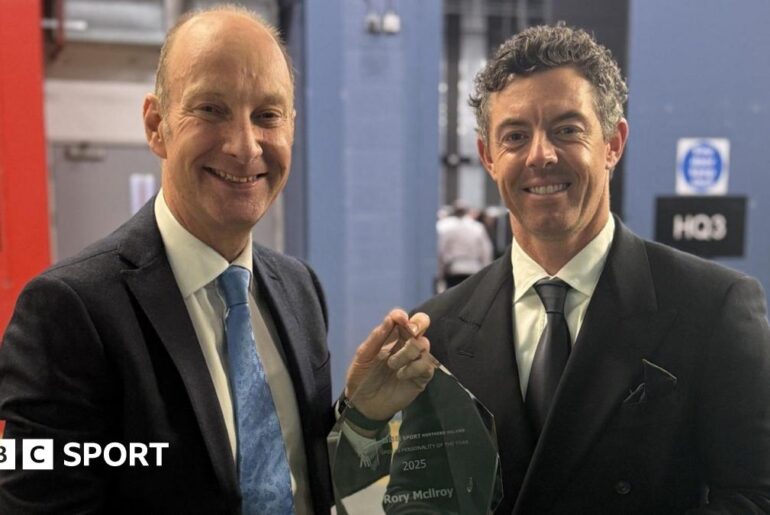
I needed to rewatch the final round of the Masters to appreciate its drama. Has a last day at Augusta produced so many tremendous shots by the winner but also so many awful ones? Regardless of the indirect path he took to it, Rory McIlroy at last has his missing green jacket. Whether he settles for his lot in life or remains driven for more majors as he nears 40 becomes his next quandary.
▶ ▶ ▶
J.J. Spaun’s tenacity won him this year’s US Open after several wicked breaks along the way. That, and his Hail Mary putt across the 72nd green. Amid the usual carnage at US Opens, one man always seems to strike the right shot at the right time and this time Spaun was that man.
▶ ▶ ▶
Adam Scott contending so deep into a US Open was at odds with his career record at the championship, yet not at odds with his skill set. One wonders how his final round might have played out had USGA officials moved the tee-times to avoid the worst of the ugly Sunday weather rather than stubbornly sticking with their original TV broadcast window.
▶ ▶ ▶
The sight of gifted professionals slashing at balls deep in five-inch rough at Oakmont didn’t exactly preach the notion of skill – but that is an argument raised at many a US Open. Is it ‘right’? Is it ‘fair’? That’s eye-of-the-beholder stuff, but it has been the MO of the championship for a long, long time, which perhaps makes it acceptable once a year. (If every week looked like that, pro golf would be dead.) As for Oakmont and it’s famously ferocious and penal setup, a US Open there once a decade feels about right.
▶ ▶ ▶
One seemingly innocuous shot summed up why Scottie Scheffler blitzed the field at the Open Championship. It came on the par-3 sixth hole during the third round, when everyone else was chasing the hard-to-find, back-right pin position with high, floating, cut-up iron shots. Scheffler, though, threaded this low, half-chipped beauty that pierced through the breeze and chased up the green with all the safety of a greenside pitch. It was majestic. He missed the ensuing birdie putt, but it mattered little. He’d already demonstrated why his game had adjusted to the nuances of links courses. He eagled the next hole and began his victory march.
▶ ▶ ▶
The notion of “What’s next?” surfaced a lot in the past year, largely because of the timing of McIlroy’s career Grand Slam completion and Scheffler’s first non-Masters major title at the PGA Championship six weeks later. The Irishman, who went missing on the golf course for several weeks after the Masters, appeared lost – devoid of a quest after finally fulfilling his dream. Meanwhile, the American continued to exude a quiet determination paired with a dose of, This doesn’t actually matter, that he shared during a surprising yet revealing media conference in the days before claiming the Open Championship. Forget his peerless iron play and strategic nous – that combination is why Scheffler is currently the untouchable world No.1.
▶ ▶ ▶
Is Scheffler the most dominant male golfer since Tiger Woods, as some recency-bias-inflicted members of the American golf media would have you believe? Probably. Brooks Koepka – with five majors to Scheffler’s four – would perhaps like a little input into that conversation (recognising that four of McIlroy’s five majors were collected during the Tiger era). However, if majors alone is not your yardstick, then the argument for Scheffler endures.
▶ ▶ ▶
Parity dominated the LPGA Tour, where it took until October to find a repeat winner. On the back of a 2024 season when Nelly Korda won seven titles, such equality felt wonderfully unpredictable.
▶ ▶ ▶
LIV Golf moving to 72-hole tournaments next year is a positive step. Will the circuit’s name change to LXXII, though? Unlikely. But if it did, “Lexi” works as a nickname.
▶ ▶ ▶
The games some tour pros – most visibly Collin Morikawa – played with the media was equal parts tiresome and intriguing. There remain some unresolved rules of engagement in this ever-evolving space.
▶ ▶ ▶
The PGA Tour’s new world-feed broadcasts (implemented last March) have taken away from the viewing experience of non-Americans far more than they have added. We’d much rather hear from the host broadcaster and their on-course foot soldiers, thanks.
▶ ▶ ▶
The return to normality for the format of the Tour Championship is to be applauded. What was odd, however, was the PGA Tour’s decision to change the rules mid-season. If I were a player building towards a season-ender with a particular format that was then changed on the fly, I wouldn’t be happy.
▶ ▶ ▶
The Korn Ferry Tour taught us that 59 isn’t the extraordinary milestone in professional golf that it once was.
▶ ▶ ▶
Viktor Hovland taught us the dangers that lurk in the quest for perfection in golf.
▶ ▶ ▶
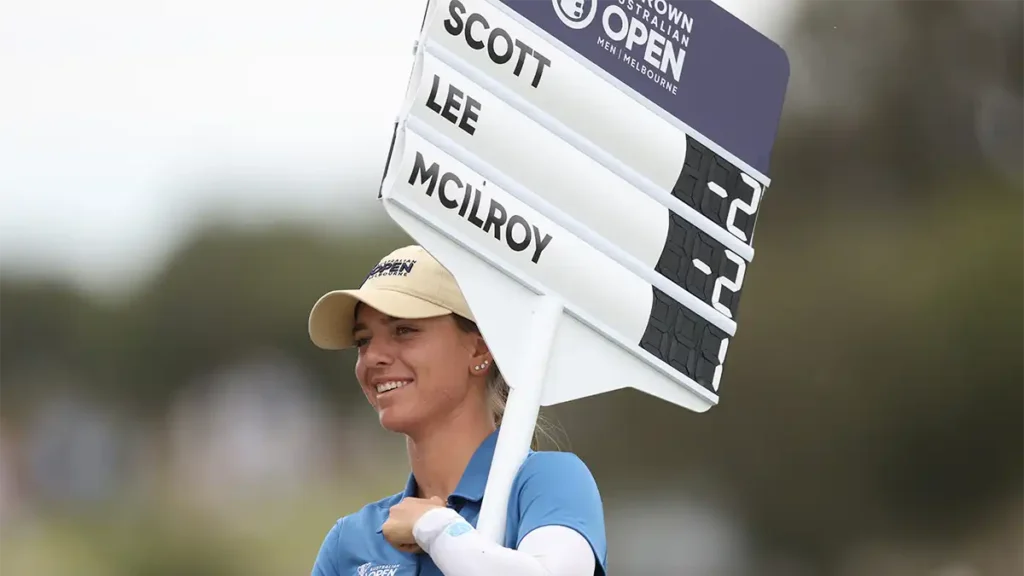
By volunteering at the men’s Australian Open, Steph Kyriacou taught us there are myriad ways to maintain a connection with this game.
▶ ▶ ▶
Keegan Bradley taught us it was never possible to do two jobs at once.
▶ ▶ ▶
Finally we saw a Ryder Cup with an away-team victory. However, the behaviour of the crowds overshadowed anything that took place on-course. But was a Ryder Cup in New York ever going to be any different?
▶ ▶ ▶
That said, such horrendous conduct reflects a decaying of modern society. It’s no longer enough to purchase a ticket to a sporting event, spectate and cheer appropriately. No, particularly in America, it’s now ‘necessary’ to attempt to inject yourself into the action in a vain attempt at ‘look-at-me-ism’. It’s pathetic.
▶ ▶ ▶
In the competition, it’s so abundantly clear from the way the respective sessions played out that the American side approaches foursomes and four-ball matches as individual golfers trying to mesh as pairs, whereas the Europeans are far more cohesive operating in duos. It also explains why the US side convincingly won the singles session. Solving the pairs conundrum is America’s next challenge.
▶ ▶ ▶
One change the Ryder Cup needs is in setting up the golf course. There was zero emphasis on driving accuracy at Bethpage Black, yet by design. That tactic backfired on the Americans, but it also sucked a lot of the skill out of the play. It’s time for neutral parties to prepare the host venue.
▶ ▶ ▶
Staging dual Australian Opens made sense on some levels but unfortunately not all. Hopefully both editions receive similar levels of support post-‘divorce’. The men’s event in Melbourne in December was an outrageously good start; will the women’s championship in Adelaide feel the same love this March?
▶ ▶ ▶
McIlroy returning to play in the Australian Open – for a hefty sum – reignited the age-old (and, frankly, unresolved) debate over appearance fees in this country. Tiger Woods at the 2009 Australian Masters was widely regarded as a bargain at $3 million, especially considering the roughly tenfold economic benefits Victoria experienced as a result. McIlroy for a similar sum 16 years on feels about right on that scale… depending, of course, on whether you see appearance money as a necessary evil or a blight on the sport.
▶ ▶ ▶
The 2025 season will surely go down as the peak of on-course displays of anger among tour pros. Yet what’s got them so much more worked up?
▶ ▶ ▶
The rising term “YouTube golfer” is equal parts compelling and confounding.
▶ ▶ ▶
Quote of the year: journalist Joon Lee made a salient point in a mid-year op-ed piece in the New York Times about the ways sports have changed with the invasion of private equity and disjointed streaming strategies: “Fandom isn’t being nurtured anymore. It’s being mined.”
Questions that will frame 2026
Can anyone stop Scottie Scheffler?
Can anyone stop Chris Minns and the NSW Government’s ridiculous proposal for carving up Moore Park?
Have we lost all hope of a PGA Tour/Saudi PIF co-operative, and does golf even need it now?
How much senior golf will Tiger Woods play, and does the sport need him to?
Which version of Cam Smith will show up?
Is Gabi Ruffels the local player to watch this year? If the rising Aussie tide on the LPGA Tour truly does lift all boats, the uber-gifted Ruffels could be a super-yacht.
Photographs by Sam Hodde, Morgan Hancock/Getty Images