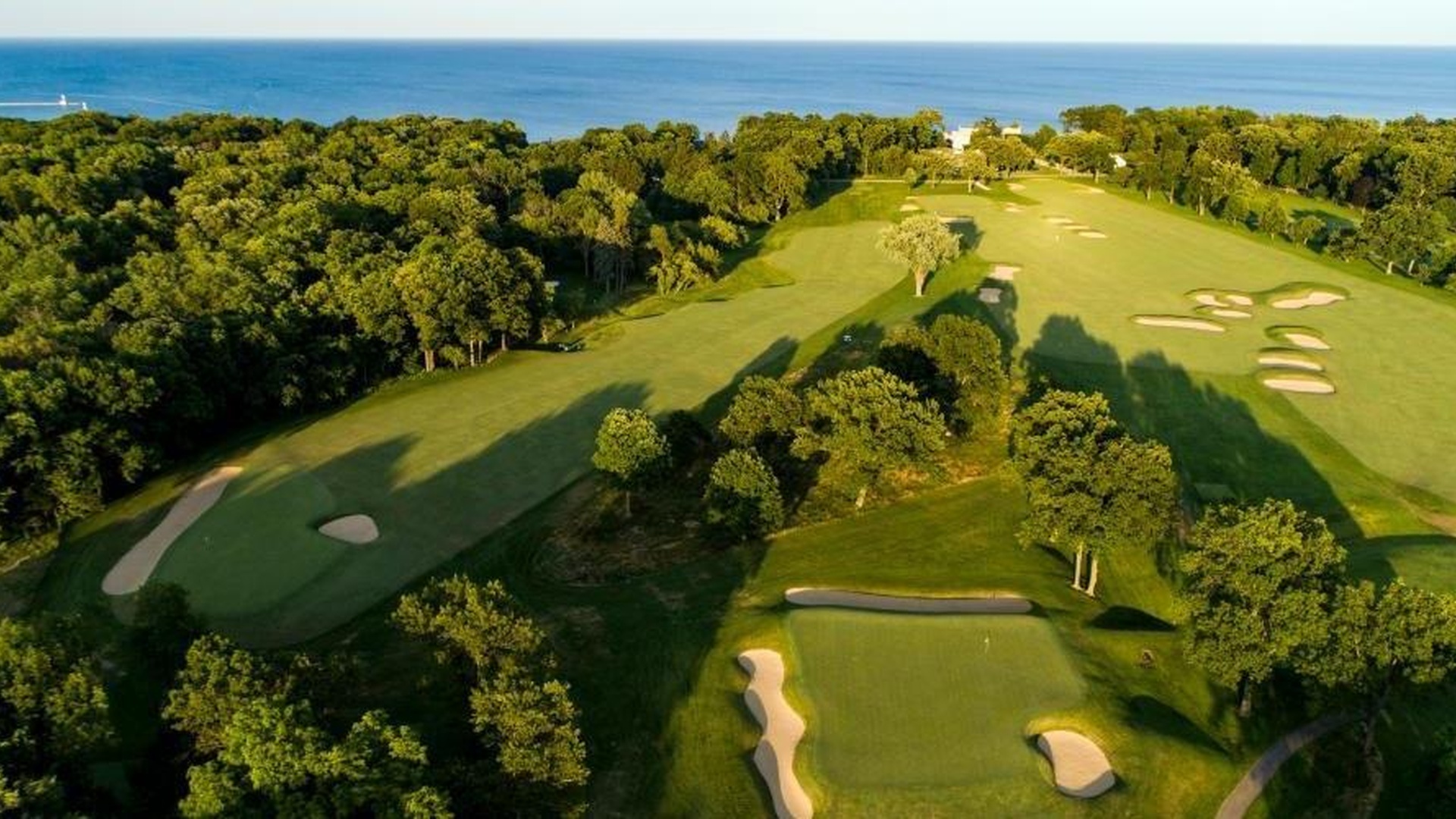
If you’ve spent any time around Chicago golf architecture conversations, you’ve heard Shoreacres spoken about in a tone that’s equal parts reverence and disbelief. Reverence, because it’s one of the purest surviving expressions of Seth Raynor’s bold, geometric style. Disbelief, because the scorecard doesn’t look intimidating—until you actually try to hit and hold those greens.
Set in Lake Bluff along the Lake Michigan shoreline, Shoreacres is a private club that feels like it was dropped into place by a different era—an era when golf architecture wasn’t trying to be fair, but interesting. And interesting is exactly what Raynor delivered here.
A North Shore club born from a summer community
Lake Bluff grew as a summer destination for Chicagoans in the late 1800s, and that seasonal rhythm helped shape the story of Shoreacres. One of the key figures in the club’s founding was Stanley Field (nephew of Marshall Field), who—along with members from nearby Onwentsia—helped establish a club that was welcoming for social golf, including play with spouses (a notable detail for the time).
The club was founded in 1916, and after delays tied to World War I, Raynor completed design and construction in 1921.
That timing matters, because Shoreacres sits right at the beginning of Raynor’s most important run—when he was stepping out from under C.B. Macdonald’s shadow and proving he could build great courses on his own.
Seth Raynor: engineer-turned-architect with a taste for bold ideas
Seth Raynor wasn’t trained as a traditional golf-course architect. He was a Princeton-educated engineer and surveyor who became deeply involved in Macdonald’s work at the National Golf Links of America, then branched out into a design career that produced some of the most celebrated “Golden Age” courses in the United States including Chicago Golf Club.
Raynor’s calling card was unmistakable:
Big, sharply-defined greens
Deep, steep-faced bunkering
Strategic angles that reward positioning more than raw power
Template holes—classic green/strategy concepts (like Redan, Eden, and Biarritz) adapted to each property
At Shoreacres, Raynor didn’t just apply those ideas—he fused them into one of the most character-rich routings in the Midwest.
The land: where Shoreacres separates itself from “short course” stereotypes
You’ll hear Shoreacres described as “short,” and it’s true in the modern context: daily-play setup is just over 6,300 yards, and it’s been noted as the shortest course in GOLF’s Top 100 Courses in the World ranking. But Shoreacres is not a “short course” in the way people casually mean it.
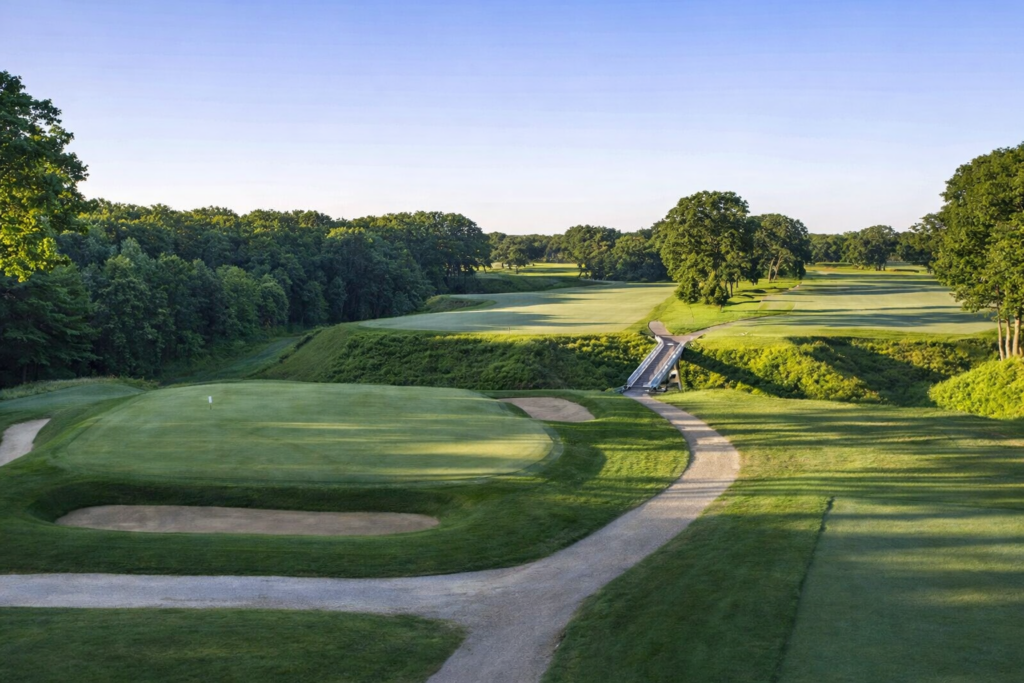
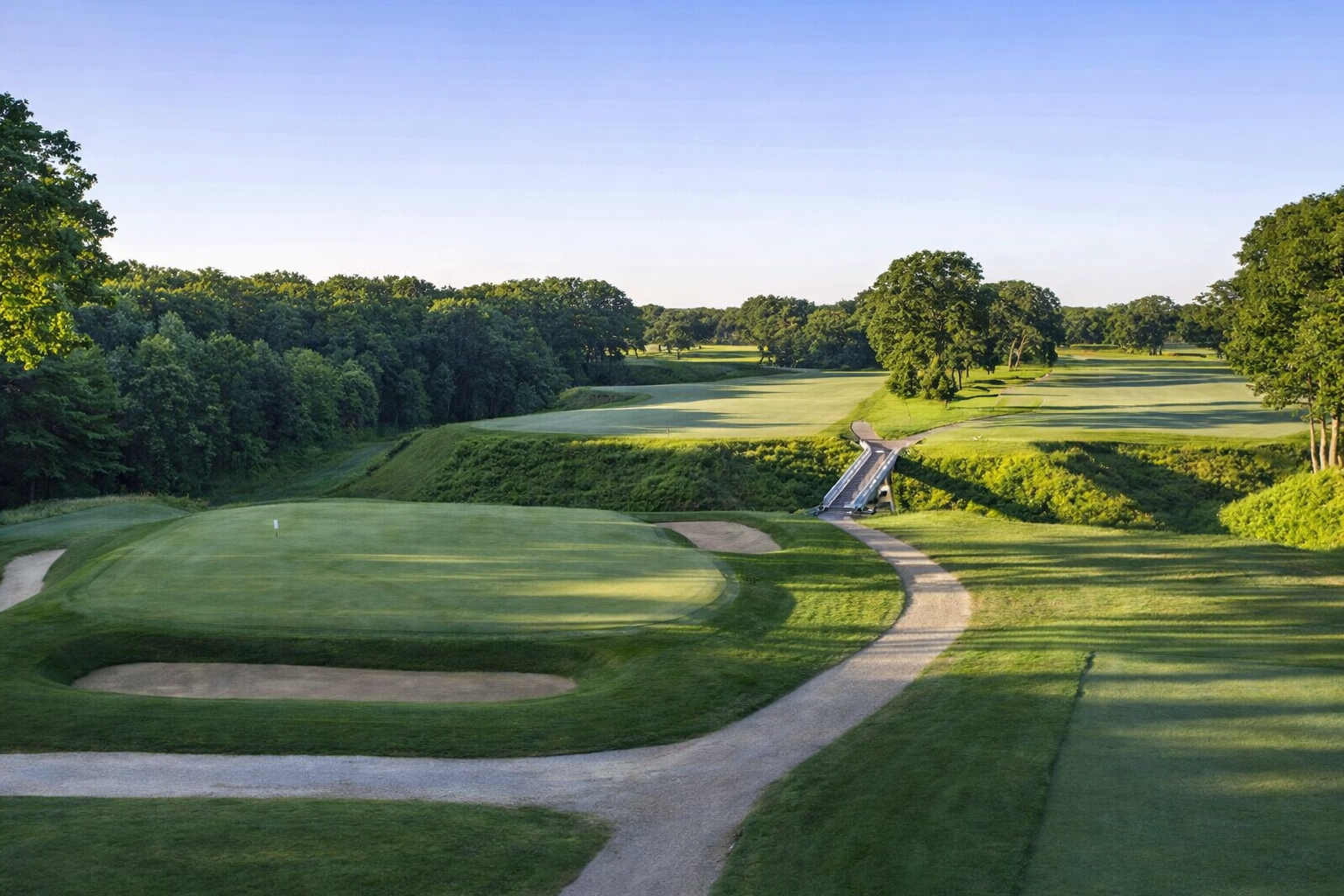
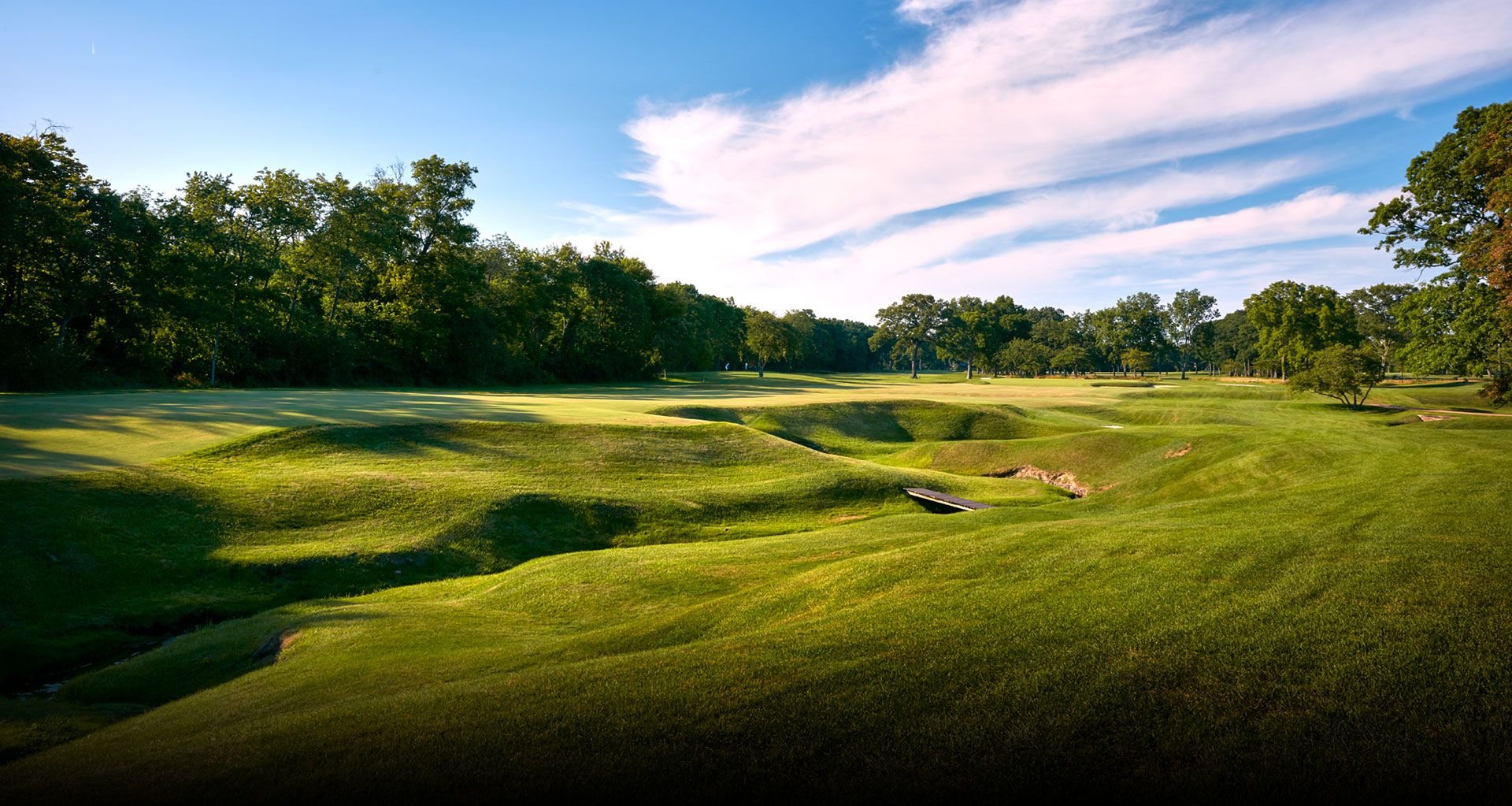
The front nine lulls you into comfort—relatively flatter, more straightforward movement—then the property turns dramatic. From roughly holes 11–15, the routing interacts with ravines in a thrilling sequence that gives Shoreacres its signature pulse.
This is where Raynor’s genius shows: he doesn’t use the ravines as a one-note hazard. He uses them as strategic architecture—sometimes as a forced carry, sometimes as a diagonal threat, sometimes as a visual pressure point that makes you feel like the hole is narrower than it is.
The result is a course that’s less about surviving length and more about surviving decisions.
“You’ve been Raynored”: defense at the greens, not the yardage
The most consistent Shoreacres truth is this: it’s a second-shot course that plays like a putting course.
Raynor’s greens are not merely targets; they’re the entire story. Miss in the wrong place and you can go from “good shot” to “impossible two-putt” quickly. GOLF describes Shoreacres’ primary defense as living “on and around its greens,” to the point that regulars joke, “You’ve been Raynored.”
This is also where the template concepts show up not as museum pieces, but as living, breathing problems:
Biarritz: a long green split by a pronounced swale (the famous “chasm” effect), demanding distance control and smart pin management
Redan: a par-3 concept built around a canted green that wants to kick the ball away from where you think you’re aiming
Eden: a par-3 template emphasizing exacting placement, with surrounding hazards dictating conservative vs. aggressive lines
Raynor could be severe, but it’s rarely arbitrary. The greens are asking you to think—before, during, and after the swing.
Shoreacres Clubhouse Front
A clubhouse story with wartime chapters and a dramatic rebuild
Shoreacres’ story isn’t only told through grass and sand.
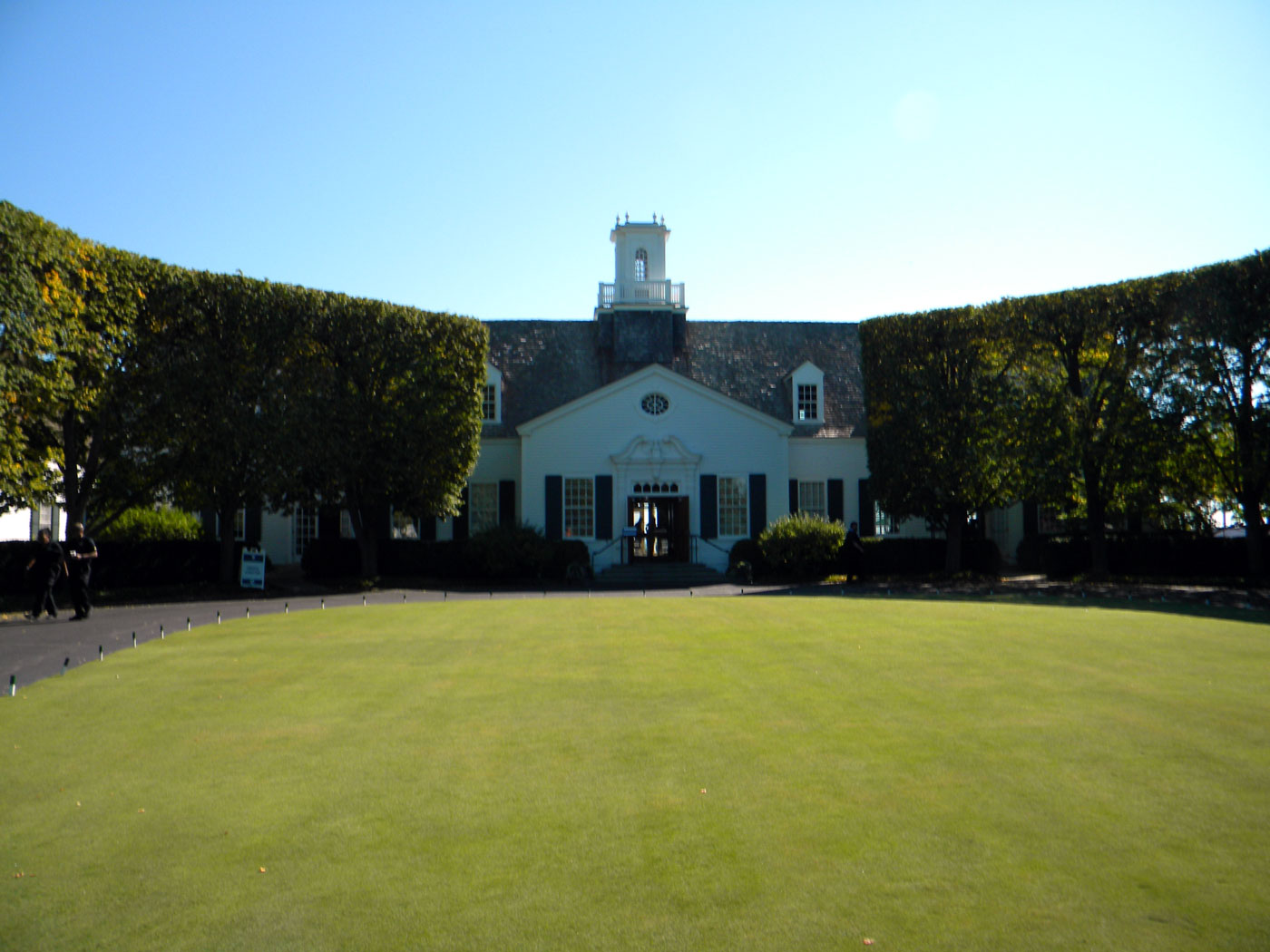
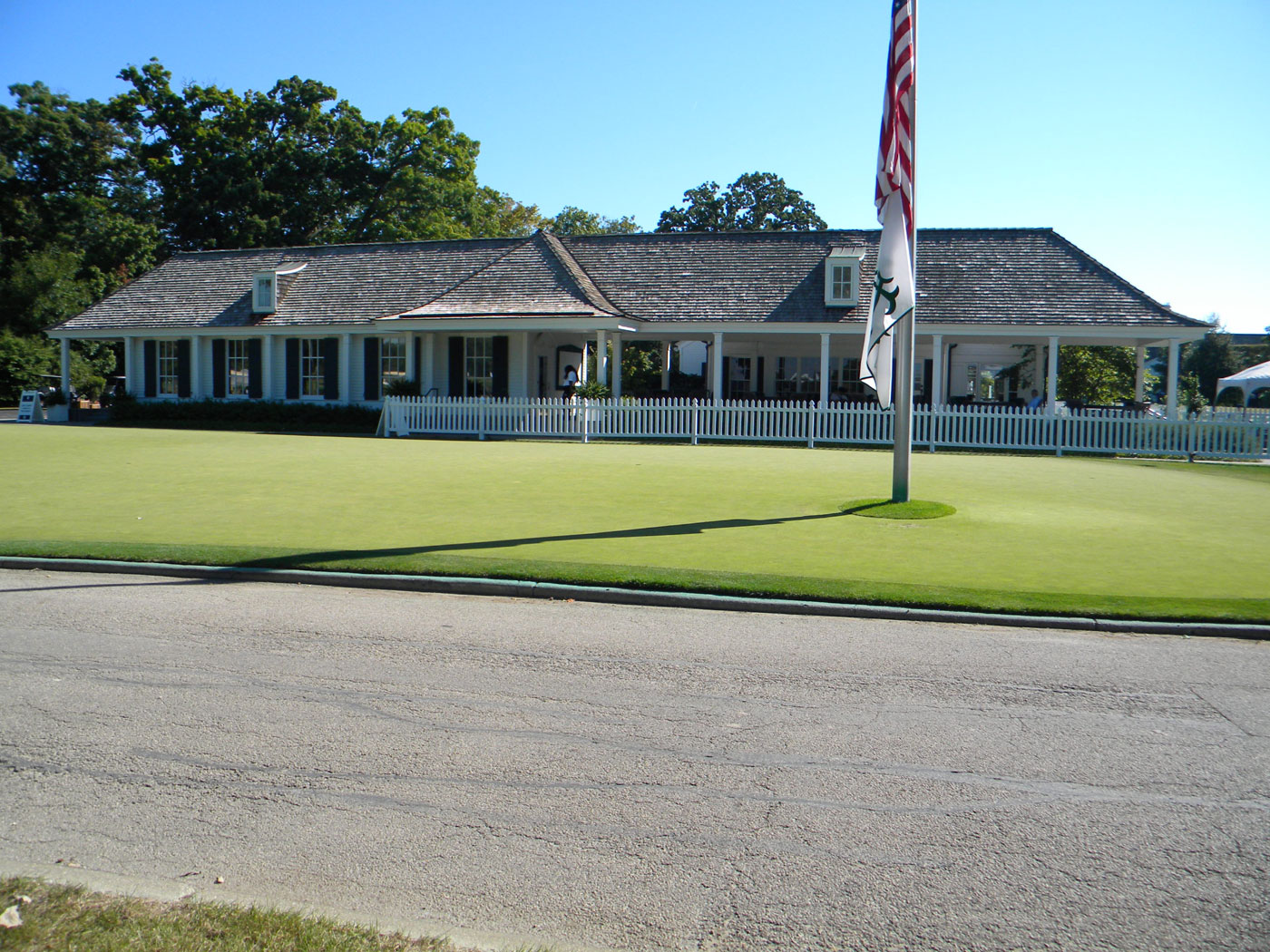
After World War I slowed early progress, the club used surplus naval barracks as temporary locker rooms—spaces members liked so much that it influenced the long-term clubhouse direction. The club ultimately hired noted architect David Adler, who designed a clubhouse in an Early American style—an intentionally more intimate, relaxed expression than the “grand” clubhouse originally envisioned.
Then history intervened again. In 1943, Shoreacres agreed to loan its clubhouse and course to a naval base/hospital context, providing use for patients (including wounded servicemen) and supporting the war effort in a tangible way. And in 1983, the clubhouse was destroyed by fire. It was rebuilt to retain the character of Adler’s earlier design, reopening in 1984.
For a club that feels quietly timeless, Shoreacres has lived through moments that were anything but quiet.
Restoration without reinvention: the Doak era
One of the most impressive things about Shoreacres is how it has resisted the typical private-club temptation to “modernize” through wholesale redesign. Instead, it leaned into the value of what it already had.
In the early 2000s, Shoreacres brought in Tom Doak to lead a thoughtful restoration—especially around tree management and expanding fairways and greens back toward Raynor’s original intent. Golf Club Atlas notes that green expansions in some areas increased putting surfaces by more than a third, restoring hole locations and bringing back the outer-edge drama that makes Raynor greens so fascinating.
That’s the key phrase: restoring the edges. At a Raynor course, those edges aren’t decoration—they’re strategy. Get the ball to the wrong quadrant and you’re suddenly putting defensively, trying not to bleed strokes.
Why Shoreacres matters in Illinois—and in American design
Illinois is one of America’s best architecture states, and Shoreacres is a cornerstone of that reputation. It sits in a rare Chicago-area cluster of historically significant clubs that read like a living museum of classic design. But Shoreacres’ significance goes beyond rankings.
It’s a reminder that golf doesn’t need to be long to be great, and it doesn’t need to be brutal to be memorable. It needs:
A routing that reveals the land at the right moments
Greens that create endless variety
Hazards that demand choices, not just punishment
A design identity that’s confident enough to be itself
Shoreacres has all of that—wrapped into a North Shore setting that feels both understated and iconic. In part to its well-earned reputation, the club hosted the 2025 edition of the prestigious Jackson T. Stephens Cup.
And maybe that’s the most Shoreacres thing of all: the club doesn’t need to tell you it’s special. It simply hands you the scorecard, lets you feel comfortable for a hole or two… and then, somewhere around the turn, you realize you’re standing on ground that could only have come from the mind of Seth Raynor.
Because at Shoreacres, you’re not playing yardage. You’re playing angles, contours, and consequences—the way the Golden Age intended.