
The golf developer who last year received a fast-tracked, initial approval from top Florida officials to acquire a swath of protected state forest has now instead sold some of its land for conservation.
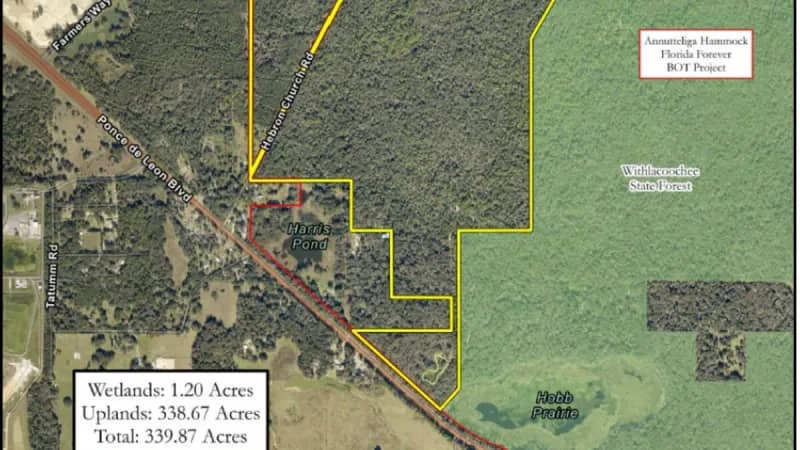
A nearly 340-acre property in Hernando County officially became public land on Nov. 24 after Florida’s environmental agency closed a purchase with Cabot Citrus Farms for $19 million, according to a statement from the Florida Department of Environmental Protection.
Gov. Ron DeSantis, Attorney General James Uthmeier and Agriculture Commissioner Wilton Simpson voted in June to greenlight buying the Brooksville property for conservation, but some details about the purchase, including how much money the state would pay, remained unclear.
The acquisition marks a reversal for both the company and the state, who agreed on a proposal last year to trade away some of the Withlacoochee State Forest after Cabot asked for the land to expand its Brooksville golf operation.
At the time, Cabot wanted a 324-acre piece of the state forest directly west of its existing golf courses. In return, Cabot agreed to give the state about 800 acres of timberland in rural Levy County, which was isolated from other conservation land and wasn’t on the state’s land acquisition wish list.
Florida’s top elected officials, including DeSantis, initially approved that land swap last year after no discussion and no mention of state forest land, leaving the public in the dark.
Revelations about that deal, first reported by the Tampa Bay Times, prompted public outrage as DeSantis was already trying to distance himself from a separate scandal over his administration’s proposal to build golf courses, hotels and pickleball courts on nine state parks.
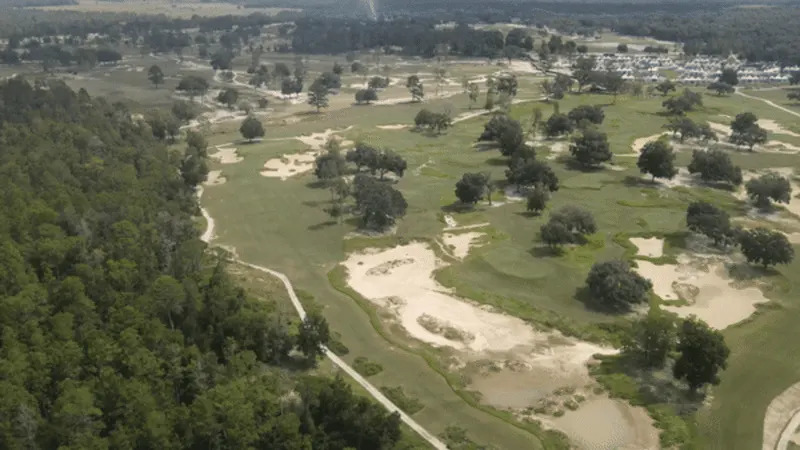
Despite DeSantis at one point defending the Cabot Citrus land swap, the golf developerquietly withdrew the plan earlier this year, the Times previously reported. Now, instead of Cabot building over a section of the forest, the state’s purchase of the company’s land will add to it. The land the company sold to the state is just southeast of its golf courses and borders the Withlacoochee forest, roughly a mile from the public lands it wanted to acquire last year.
“Protection of that land, which represents some of the most important unprotected lands remaining in the … area, has been a state priority for many years,” said Eugene Kelly, president of the Florida Native Plant Society. “Preservation of that land is vastly preferable to its development as part of the Cabot Citrus golf resort.”
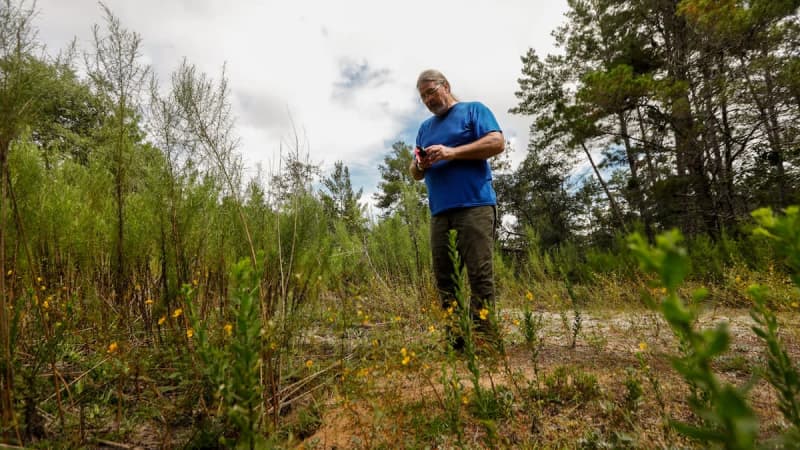
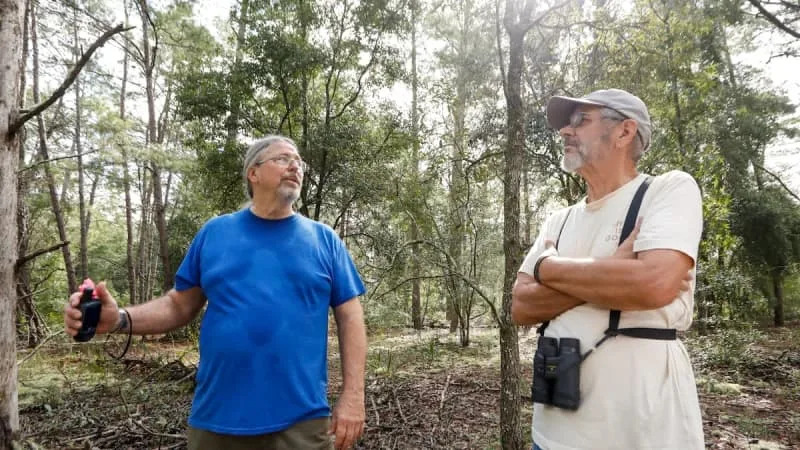
Last year, Kelly joined Times reporters on a hike through the sand pines of the Withlacoochee forestland that Cabot wanted to acquire to expand its golf resort. Now, he says the nonprofit he represents is pleased to celebrate the additional public lands.
The newly acquired property, mostly wooded uplands, was slated to be developed and had a 2024 county-assessed value of $17.5 million, according to appraisal documents. An Orlando firm appraised the land at $19.9 million in August, and the state agreed to buy it for $19 million, according to Alexandra Kuchta, a spokesperson for the Florida Department of Environmental Protection.
The state is using funds from its flagship conservation land acquisition program, Florida Forever.
The appraised price tag of the property — which shakes out to more than $58,000 per acre — was calculated based on the roughly 900 homes that could have been built there under a master development plan, according to the appraisal report. It’s one of the more expensive land transactions that Kelly has seen, and the price tag was driven higher by the development pressure the land faced, he said.
Kelly and other conservation experts who spoke with the Times said the purchase is another example of why the Florida Forever program, which carefully evaluates conservation land purchases, should be fully funded.
“The state would be in a much better position to conserve our best remaining natural areas if Florida Forever funding was sufficient to begin negotiations and complete the transactions before developers begin knocking at the door and securing development approvals,” Kelly said.
There’s about an acre of wetlands on the newly acquired property and a nearly 43-acre area with a cave system and two sinkholes, according to the appraisal report.
When DeSantis and his Cabinet voted to buy the land in June, the cave exploration and conservation group Florida Speleological Society said it welcomed the acquisition.
“This is a major step forward in protecting one of the most ecologically and geologically significant areas of the Brooksville Ridge — a region long recognized by cavers, biologists, and conservationists for its exceptional natural value,” the group’s president, Jacob Fletcher, said in a statement at the time.
The property is home to rare longleaf pines, sandhills, unique hardwood forests and crucial habitat for species like the Eastern indigo snake, gopher tortoise and Florida black bear, Fletcher said. The land also has sections of fragile limestone earth that help to feed Florida’s aquifer.
Cabot Citrus is the first American resort run by Cabot, a Canadian luxury golf course developer with operations in places like France, the Scottish Highlands and St. Lucia. Cabot didn’t respond to requests for comment about the land acquisition.
While he believes the purchase was likely overvalued, Tom St. Clair, who heads the Hernando Audubon Society, said he supports the acquisition.
St. Clair said he appreciates the course reversal from Cabot, but hecautions anyone who thinks the company had a change of heart about how precious public lands are among Floridians.
“I don’t think they’ve learned that lesson,” St. Clair said.
Just weeks ago, Cabot found a new location where it wanted to build its next 18-hole course and golf shop: a stretch of pristine, coastal public lands in Nova Scotia.
After widespread outcry from Canadians, Nova Scotian Premier Tim Houston told reporters that the company’s controversial pitch was going nowhere.
Times staff writer Emily L. Mahoney contributed to this report.
The Tampa Bay Times launched the Environment Hub in 2025 to focus on some of Florida‘s most urgent and enduring challenges. You can contribute through our journalism fund by clicking here.


