Following a six-month renovation spearheaded by Davis Love III and Love Golf Design, Harbour Town Golf Links in Hilton Head Island, South Carolina, reopened in November.
Originally designed by Pete Dye with his wife Alice, and assisted by Jack Nicklaus, Harbour Town has been the home of the PGA Tour’s RBC Heritage tournaments since the course opened in 1969.
Love III, who won the RBC Heritage a record five times, served as player-consultant on this current project. Love is very familiar with the region and the complexities of working here: He grew up on the Southeast’s coastal islands and his company, Love Golf Design, designed another course at The Sea Pines Resort, Atlantic Dunes by Davis Love III.
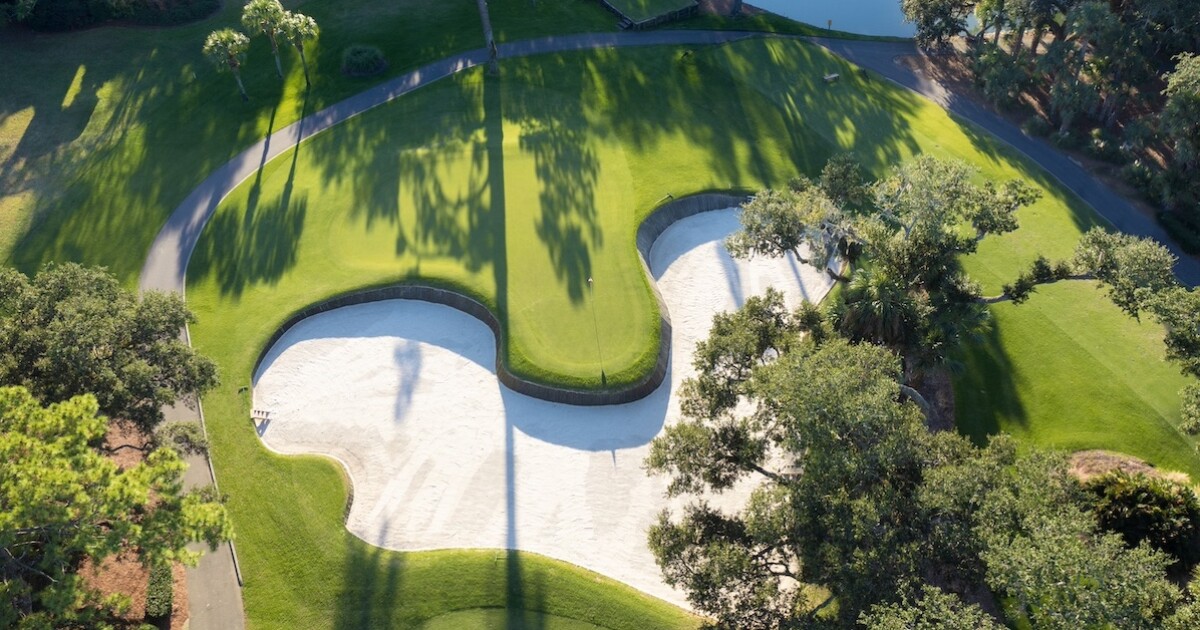
Harbour Town Golf Links, Hole No. 13, Hilton Head Island, South Carolina.
(Photo: Harbour Town Golf Links)
From the beginning of the project, Love and the team responsible for the restoration — including Allan MacCurrach from MacCurrach Golf Construction; Jon Wright, head golf superintendent, Harbour Town Golf Links; John Farrell, director of sports operation; The Riverstone Group, which owns The Sea Pines Resort; and others —were committed, as Love said, “to protecting the strategy and integrity of Pete’s design.”
“We were very fortunate to own such a historic and popular PGA Tour tournament venue in Harbour Town Golf Links,” said Matthew Goodwin, representing The Riverstone Group. “We are fully committed to maintaining the golf course to the highest possible standard, while preserving the original design integrity of Pete Dye.”
Originally intended as an updating of the course’s infrastructure to ensure championship-caliber conditions year-round, the project also presented an opportunity to restore many features from Dye’s original design. It would also ensure that one of the country’s most recognizable layouts stood the test of time. Along with improvements to the agronomy and maintenance, all greens, bunkers and bulkheads were rebuilt. The turf species — TifEagle on the greens and Celebration Bermuda on the fairways, tees and rough — remain the same.
As for changes to the design, even the experienced Harbour Town Golf Links player will have trouble spotting them, explains Farrell. “Every ‘change’ we made had some documentation or images or video of what it was like previously.” Updates include returning some greens to their original shapes, which brought back some hole locations that were lost as the surfaces shrank over time. The same with some greenside bunkering, which, due to years of play and shrinkage, no longer abutted their greens.
Farrell added that while Love offered a Tour player’s expertise, he was in tune with management’s desire to keep the course fun, exciting and challenging the other 51 weeks of the year when resort guests, property owners and locals celebrate it.
CONSTRUCTION CONCLUDES AT MARIETTA CC
Architect Bill Bergin and Landscapes Unlimited have completed an additional phase of construction work at 27-hole Marietta Country Club in Kennesaw, Georgia, northwest of downtown Atlanta.
The golf course project revolved around reshaping greens and bunkers, regrassing fairways and upgrading the irrigation system. The enhancements also benefit the club’s maintenance team, making it easier on its resources while consistently presenting top-tier golf course conditions.
Bergin provided numerous designed tweaks, but he also reimagined several holes. The Atlanta-based designer is well known for his award-winning layouts at Chattanooga (Tenn.) Golf & Country Club, Santa Rosa Golf & Beach Club (Fla.), McLemore Resort (Ga.) and many more private clubs and daily-fee facilities.
“We knew of Landscapes Unlimited’s exceptional work at other clubs in the region, and the company came highly recommended by Bill Bergin,” said Daniel Laterza, general manager of the 110-year-old club. “Its dedication and professionalism have been evident at every stage of the project. Our members are already thrilled with the transformation.”
THE SOCIAL ASPECT
I was on-site at Myakka GC yesterday. 9 holes complete. SPECTACULAR! Congrats to the design team @FryStrakaGolf Paul Azinger and everyone associated with the project. Quite possibly this is the biggest golf project ever undertaken. BIG BALL PARK!!! Mountains created…
— Charlie Rymer (@CharlieRymerPGA) November 21, 2025
IMPRESSIVE IMPRINT ON LINKS KENNEDY BAY
Links Kennedy Bay in Port Kennedy, Western Australia, has reopened after an 18-hole redesign by legendary Australian professional and architect Graham Marsh.
Located on the Western Australian coastline, 30 miles from Perth, the course now features the addition of more than 100 pot bunkers featuring synthetic revetted faces from EcoBunker.
Originally opened in 1999 and relaunched in 2001, Links Kennedy Bay has been reimagined by Marsh and Western Australian industry leader Trevor Strachan as part of a brand new resort development by the Western Australia Beach and Golf Resort. With the original back nine sold for development, the redesign necessitated a new back nine, along with the rerouting of holes five through nine. Essentially, Marsh had a blank canvas to safeguard the long-term viability of the course as well as to elevate playing conditions.
“The use of EcoBunker was validated through a feasibility study by Trevor Strachan, which confirmed its long-term advantages over natural revetting,” said Adam Strachan of Sports Turf Construction, project manager for the redevelopment. “I was initially concerned about using synthetic faces in such a beautiful, natural landscape, but the results are superb. The bunkers are indistinguishable from natural revetts and come with a minimum 25-year lifespan.”
A primary challenge in the redesign was the extreme weather conditions in the area. Along with the very hot, dry summers, Perth is infamous as one of the windiest cities in the world. Additionally, the region receives up to 24 inches of rain annually, most of which arrives in the winter months, making bunkers vulnerable to sand blow, washout and erosion.
“The course previously had natural revetted bunkers, but with exposure to the elements many wasted away into sandy faces and became very irregular,” Adam Strachan said. “The new design ensures consistency across the course, maintains the intended challenge that golfers face from the bunkers, delivers a sharp, natural aesthetic and will do all these things for many years without significant maintenance.”
Bunker walls on the course now range from two feet to a dramatic six feet. The bunker walls were installed by Sports Turf Construction with support from EcoBunker Australian distributor Turfcare Australia.
“The course takes inspiration from the world’s great links courses,” Adam Strachan said. “We’re particularly proud of our interpretation of the famous ‘Hell Bunker’ from the 14th at St. Andrews’ Old Course. EcoBunker gave us the stability to create an intimidating, visually striking feature that will stand the test of time. After building 100-plus EcoBunkers at Kennedy Bay, I’ll be looking to use this technology whenever possible in future projects.”