MORGANTOWN, W.Va. — The PGA Tour FedEx Cup playoffs concluded in August and Fall Series events wrapped up just prior to Thanksgiving. The month of December in the world of professional golf is usually reserved for exhibition events.
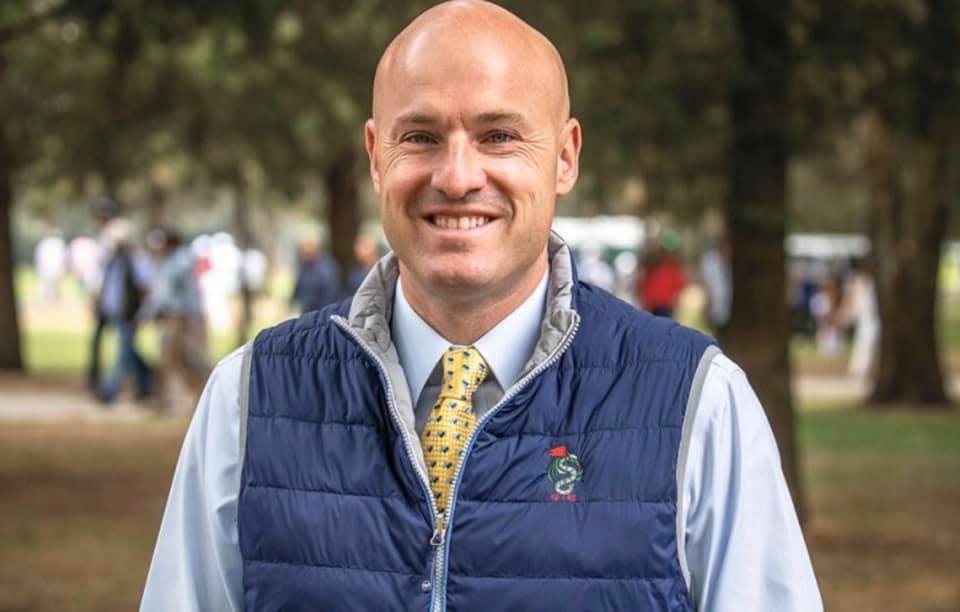
As snow blankets the ground in his home state, the grind doesn’t stop for Kanawha County native Ken Tackett. The former West Virginia Golf Association Executive Director is in his 12th season on the PGA Tour, working as a rules official. In between Florida-based events in Naples on Sunday and Jupiter midweek, Tackett discussed life on Tour on Sunday’s Citynet Statewide Sportsline.
“We’re road warriors. Everyone asks, ‘Where do you live?’ I’m like, ‘Well, Marriott or Hilton, if you can believe that’, Tackett said.
“My wife and I love Charleston and we can live anywhere. But we love the Kanawha Valley and we love West Virginia. We love everything about it. Our kids are in Morgantown at WVU. We don’t have a desire to live anywhere else. Truthfully, I am fortunate enough to go to some fantastic places with my job.”
Tackett officiated the Grant Thornton Invitational over the weekend. It is a team event featuring PGA and LPGA professionals. Tackett says “offseason” events may carry less pressure for players, but they can still provide competitive moments late in the final round on Sunday.
“The players are somewhat relaxed. They are still competitors and they want to win. It is funny because they are kind of loose the first day. Then it gets tighter coming down the stretch [Sunday]. The leaderboard was a four-way tie at one point and you can tell they still want to win. But there’s a lot of joking back and forth. It is cool to see in these mixed events where we don’t get to see the top ladies except once a year. They are so good. For our guys, we see them practicing together on the putting green and the short game area and it is kind of fun to watch.”
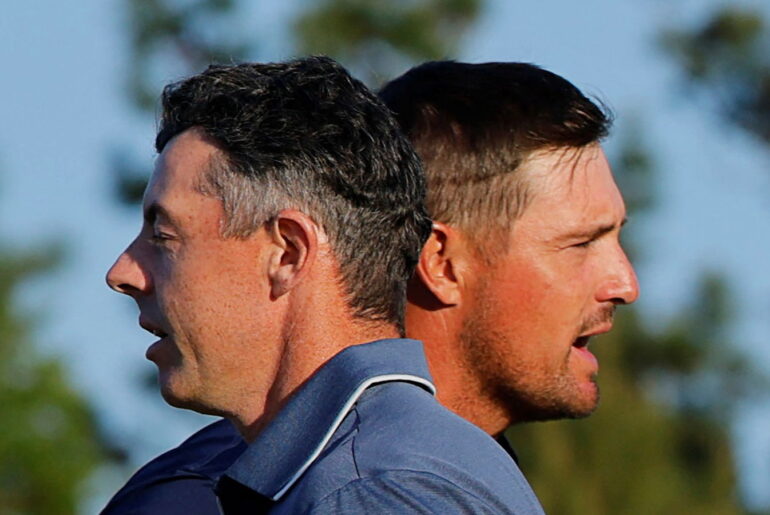
Monday was a travel day for Tackett and he is set to officiate the Optum Golf Channel Games featuring Rory McIlroy and Scottie Scheffler in a made-for-TV event on December 17.
Eventually, Tackett will enjoy some relaxation time before the 2026 tour calendar opens in mid-January. Six events spread throughout Hawaii, California and Arizona comprise the early portion of the year-long schedule.
“The west coast swing is my favorite. You are just going to such amazing golf courses. In January and February, it is nice to be in California. And the [WM] Phoenix Open is probably one of my favorite events. It is so big and they are so creative and they do a wonderful job with that venue. So it is fun. The Genesis in Los Angeles at Riviera, Torrey Pines, Pebble Beach, it is an amazing stretch.”
Tackett typically works around 25 events each year, spending up to 200 nights per season on the road.
“My wife has a rule that I am not allowed to send pictures. Occasionally when I’m in Maui at Kapalua and staring over at Molokai, I will send a picture and I think, I am going to send it to the kids and my parents, but I will leave my wife out of it, only joking. We try to enjoy that part of the job because that is the hardest part of the job. Crazy as it might sound, it is the travel. The kids will come out with us to the U.S. Open each year on Father’s Day weekend and we will do some trip around the U.S. Open. The Tour and the majors are so good to spouses and families, because they understand the commitment they give each week.”
As an on-course official during tournaments, Tackett and his fellow officials can have very quiet or very hectic days as players request rulings or clarifications. Like any top-level official in a professional sport, building rapport to effectively communicate with golfers is a necessary part of the profession.
“We serve on the rules committee at all four majors. That really makes the players feel more comfortable to see professional referees out there on the golf course in the high-pressure moments. A lot of it is not what you say, but how you say it. That’s so important when you are dealing with a ruling. You know it is possibly going to be a two-stroke penalty and you could be delivering good news or bad news. It is all in how the delivery is, showing a bit of empathy with the situation. You are always trying to help the player and provide them with the right information.”
In addition to communicating with golfers on the course, when conversations can be picked up on television or radio broadcasts, Tackett can also be asked to provide rules clarifications in media interviews.
“You almost have to assume that in today’s world, everything you do on a golf course is going to be either on worldwide television or possibly picked up on somebody’s phone that is going to be on social media. Having the professional decorum while not being stuffy at the same time, it is kind of a fine line that we balance.
“Speak plainly and clearly and not too legalese, ‘Rule 16.1-5’. Really kind of talk to the average listener out there, rather than too specific.”
Prior to the start of tournaments, advance officials are heavily involved in course setup. Tackett says finding a middle ground between difficulty and playability is often a priority.
“We always want to try to challenge the best players in the world. Certain weeks are more demanding than others. A lot of that has to do with the time of year we play, where we play and the golf course design as well. I immediately think of Bay Hill in Orlando. It is a tough track. Usually, it is a northeast wind that time of year and it is a really good challenge for our players.
“It is entertainment. But I think people see through it if you make it too easy. They want to see the challenge. We are very cognizant of that.”
When a gap in his schedule does come open, Tackett will often test his own skills on courses in the Kanawha Valley.
“Jonathan Clark is a good friend of mine from West Virginia golf fame. He and I will get together and play at least a handful of times throughout the year. Craig Berner at Edgewood, I will go see him and try to get a round in here and there.”