

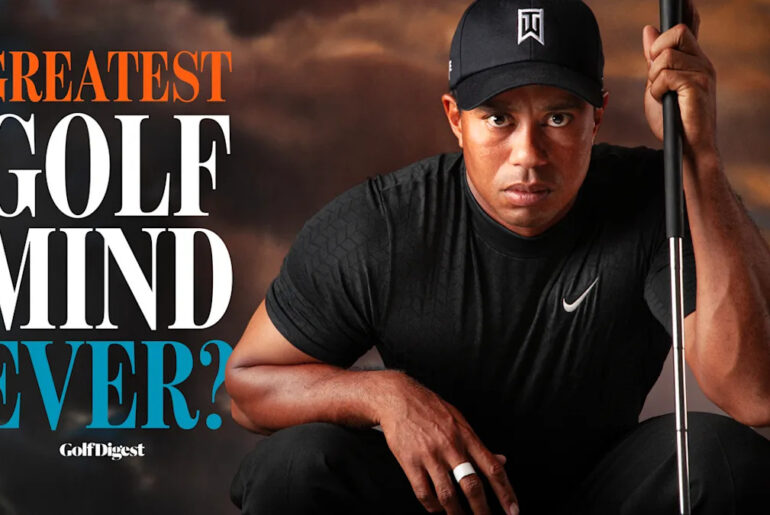
How Tiger Woods’ Biggest Gamble Proved His Genius l Mind Games l Golf Digest
I would like to start playing as well as I did and um I say I'm on the on the way back and it's really good. I've been changing a few things in my swing and I didn't I didn't like him and I've been working. I knew my success was going to go down but over the long haul uh it was the right thing to do. >> This is a weird way to dive into the greatness of Tiger Woods, but let's start by talking about a time in which he was not so great. The year was 1998 and Woods won just once on the PGA Tour when he held off a journeyman named Jay Don Blake. One win and fourth on the money list is still pretty good. Yet, compared to the year before and the incredible run that followed, Woods's 1998 was kind of a dud. And yet, it's possible 1998 was the most important season of Tiger Woods's career because of what was happening behind the scenes. That was the year Woods decided to think about golf differently than almost every other player who came before. The subject of this video is Woods's most underrated skill. You could point to so many factors that made him great, but it was his mind that truly set him apart. And during this period, he locked in on something about golf and competition the rest of us miss. The same mindset that led to 82 PGA Tour wins and 15 major championships is actually a decent blueprint for the rest of us. from how we define playing our best to how we try to get better to what we might be overlooking along the way. So, what happened in that 1998 season? Well, one year earlier, this happened. Tiger Woods won the Masters by 12 shots. It was a record- setting, landmark performance. The result so emphatic it led to the absurd question, shouldn't this guy win every time he plays? This was an actual thing people asked at the time. Only weeks after that win, Woods popped in a tape of the tournament. And what others saw as a golfer pounding a course in submission, Woods saw as just a really good week. He knew his timing was impeccable, and he also knew that wasn't something he could always count on, especially under pressure. The decision he made next was equal parts bold and reckless, but also a testament to his competitive genius. He decided he wanted to rebuild his swing. Why would that happen? Because he felt like he could always get better. Tiger always wanted to get better. Didn't matter how good he was, he always felt he could do something better. >> On the surface, it still made zero sense. Remember, most elite golfers need years before contending in a major. Tiger won in his first ever as a pro. And he didn't win just by a little. He won by 12 shots. There had never been a performance like it in golf. And for most of us, the reaction would be, "I should just keep doing that." So, was Woods just a perfectionist? Did he really think a 12- shot win wasn't good enough? In fact, he was saying the opposite. Woods's decision was a concession to a level he knew he couldn't sustain. >> He used to say, "I've got to get better, but yeah, we got to get the club in a better position. I got to be more consistent." I do it all now with timing and I have great short game and so on and so forth. I want to get where this becomes second nature to me where I can swing like this every time in any situation. The professional game is about the quality of your bad shots more than it is the quality of your good shots. >> Jimediaz is a golf digest senior writer who has known and covered Woods since he was a teenage prodigy. >> But it was a big change and it took a long time. But he was prepared for that sacrifice cuz he thought it was really for the greater good of a long career. And he was really thinking about, you know, being the greatest golfer and what that was going to take and not just be someone who would occasionally shoot, you know, these incredible uh rounds and and have these incredible tournaments. He really wanted something that was more sustainable and that's what he defined greatness by. >> Ultimately, Woods' swing changes were about more than a specific feel or avoiding a certain miss. It was about adapting to competition and managing imperfection. As Haimey said, it was about the quality of his bad shots. This was Woods's genius calculation, and it's the part of golf we don't pay nearly enough attention to. Why? Because we're usually preoccupied chasing our very best, which might not even be helpful. For instance, what do you call those performances when everything comes easy and your timing is perfect? We know it as the zone or flow. It's the state of peak performance when everything is clicking and you're able to lock in on a task and execute without distraction. These flow states are real and come with a specific set of definitions. Yet, most of us just know it when we see it. A flow state is Michael Jordan dropping a string of three-pointers and shrugging his shoulders as if he couldn't explain it. or show Otani striking out 10 and hitting three home runs in a playoff game. For some reason, I always think of this scene in the movie Old School when the Will Frell character rattles off this brilliant answer in a debate and then stirs awake as if he blacked out. >> I believe strongly there will always be a need for us to have a well articulated innovation policy with emphasis on human resource development. Thank you. >> Of course, Woods's 1997 masters was no fluke. He really was that good. But flow states are still outliers because they make things feel simpler than usual. That's why Michael Jordan shrugged his shoulders that time in the NBA Finals and why Tiger Woods was worried watching the tape of the Masters. Both recognized it shouldn't be that easy. This is how Woods described it in his book, How I Play Golf. I had struck the ball great that week, but by my standard, I felt I had gotten away with murder. From a ball striking standpoint, I was playing better than I knew how. Those words playing better than I knew how is Woods talking about flow. >> I would think if you looked at it and you probably asked him, there was a sense of just absolute connection to what he was doing. >> Brett McCabe is a clinical and sports psychologist who works with a number of PJ tour players. >> Balls came out of the windows he wanted. They went to where they were going. He was locked in visually neurocognitively and how the brain functions. There was a whole lot of rhythm and timing and alignment that was going on that week. But that's not sustainable, Sam. It's not. As Mabe says, we crave flow states because that's when we're operating at our best. But chasing flow hurts more than it helps because you can't count on it and you're unprepared for reality as a result. >> If we promise ourselves and that we have to be in flow in order to compete, what we do is we undercut our competitive capacity. Our ability to compete with a variety of different conditions that are presented to us. Why would we ever want to take that away from ourselves as competitors? McCabe says it's possible for certain athletes to tap into flow easier than others, but no one is successful at accessing them all the time. And this was the part that Woods was trying to address. He knew sometimes you just don't have it. Even among the best players, the golf swing always feels a little different from one day to the next. >> The right club. Be the right club today. >> Yes. >> So, if Flo represents our peak performance, Woods was trying to account for the days when Flo was nowhere to be found. He knew some days he would feel only fine and other days he might feel worse than that. So starting in 1997 and through all of 1998, Woods worked on changing his swing. He worked on shortening his back swing and relying more on rotation and less with his hands. The goal was not to play like he did at the Masters, but to play better golf more consistently, whether he was in a flow state or not. Woods called this wanting to win with his B game, but it connects to another psychological theory called a window of tolerance. That might not be a phrase you're familiar with, like the paradox of choice in my last video. It's a concept that originated elsewhere here. It was an effort to understand how our nervous system reacts to different stressors. But it also represents a very common dynamic in golf. The window of tolerance is the creation of a psychiatrist named Daniel Seagull, who know that we move between different emotional and physiological states, and we function in some states better than others. The extremes are where we struggle. Too much chaos and we're overwhelmed. Too rigid and we shut down. The ideal is the perfect middle. Seagull calls this harmony, but it's essentially the same as flow. It's an optimal state, but not always there when we need it. How well we manage when tilting in either direction is our window of tolerance. And the broader our window, the greater our resilience. It means we can be pushed out of that perfect middle and still find a way to function. We might be agitated or uptight, distracted, angry. Your window of tolerance isn't measuring how well you can execute when everything feels great. It's about the days when everything feels off, but you still find a way to push through. So, stop for a second. What does this sound like? It sounds a lot like golf. Some days you feel great. Other days you don't. Putts don't fall. You're pushing everything right. Or maybe you're just jittery over the ball. The mistake is assuming that good golfers don't have days when they are out of sorts. Of course they do. They just fight through it well enough that the rest of us don't notice. One of my favorite golf moments was when Anukica Saenstam played in a PGA tour event, the Colonial. I was there in person. There was a ton of pressure on her since she was doing something a woman hadn't done in decades. And then she did this. I don't think I've ever seen a player hit a shot with more pressure and more tension in my life. It was knee buckling indeed. And after a solid iron shot, she had a good look at birdie here on her first hole. >> It was her way of saying the pressure was massive and yet she still striped it. That is a window of tolerance. And it's why Tiger Woods rebuilt his swing because sometimes in golf you're uncomfortable and you have to play anyway. It wasn't a simple adjustment, which is why he struggled for most of that 1998 season, but he stuck with it. And then one day, Woods was on the range at the Byron Nelson in May of 1999, and he said something clicked. >> And the Tiger changes, they were subtle. So unless I pointed them out to you, you probably wouldn't see it, but he knew what it was. And I wanted him to take the year and just do a little bit at a time. No, that's not Tiger Woods. He wanted to do it all right now. I said, "Well, Tiger, you got to play in these events in all of ' 98." He said, "I don't care. I don't care if I don't win one." I got a phone call from him one day. He was in Dallas getting ready to play. And he called me. He said, "But you, I got it. I feel it. I feel everything we've worked for. I got it now. Now I can take off and go." And he sure did. >> What followed was the greatest stretch of golf in history. Woods won seven of his next 11 majors, including four straight, the Tiger Slam. Was Tiger in a flow state the whole time? Of course not. He was just really, really good. But more importantly, when he was off, he knew how to muddle through with less than his best, better than anyone else. Remember, we're talking about someone who won the 2008 US Open playing on a broken leg. And I've been asked this question numerous times. Am I ever nervous? Are you kidding me? You know, I'm I'm nervous on the very first shot. I'm nervous throughout the entire day. Um, but it's how I channel it and how I harness it. um how do I put that energy into either deeper focus or deeper intensity? You know, that's something that we can all do. And it's not not to be ashamed of it or afraid of it. Go after it. >> Woods's window of tolerance was so wide he didn't need to be or feel perfect to win. By now, you might be wondering, "Well, what does this mean for me?" Because you're probably not going to win the Masters by 12 shots and decide to rebuild your swing. But if you're a golfer, you have bad days and average days and occasional great days. One of the worst things we do as golfers is hold up our best days as our standard. If you once shot 78, you wonder why you don't shoot 78 every time. >> The golf course is going to put up challenges. It is an obstacle course and we don't know where the challenges and the barriers and the gaps are and what they're going to do to test us. We assume that our maximum capacity is available to us every day. That's a fatal flaw. Now, it's what's been sold. It's been sold across the board. I get it. It's not sexy to sell average. It's just not sexy to sell potential. >> The point here isn't that we should settle. Brett's still talking about trying our absolute best on every shot. But this obstacle course he describes means a great shot might not be the one 2 ft from the flag. It might be 30 ft right or we might miss the green outright. All dependent on whatever it is you're working with that day. All this ties to the same idea. I would like my best shots to end up next to the flag stick. But the real key to becoming a better, more consistent player is making my bad swings a little less bad. So next time you play, take a moment to recall not just the best shot you hit all day, but also a really difficult moment that you at least managed pretty well. That's a different kind of progress, but it might be the most important kind. It's the kind Tiger knew he needed if he wanted to be truly great. And at least in his case, it seemed to work out pretty well. Thank you for watching. If there are topics around the mental game you'd like us to cover next, let us know in the comments below. >> My tendency is to hit the ball a little low when I'm nervous. I don't get the ball up in the air and won't >> You get nervous >> at times. When dealers got face card and I got 16, I get really nervous.
After winning the 1997 Masters by 12 shots, Tiger Woods did something that shocked the golf world: he rebuilt his swing.
Woods struggled while implementing the changes during the next season, winning only once, but what followed was one of the most dominant stretches in the history of professional golf.
So why would the best new player in the world take such a big risk after staring his career so hot?
In this episode of Mind Games, Golf Digest’s series on the mental side of golf, host Sam Weinman breaks down the deeper strategy behind Tiger’s decision. Woods wasn’t chasing perfection, he was expanding his “window of tolerance” by building a swing and mindset that allowed him to compete even when he didn’t have his best stuff.
Featuring insights from Tiger’s former coach Butch Harmon, sports psychologists, golf historians, and Tiger himself, this episode explores a powerful lesson: winning golf isn’t about how good you are on great days. It’s about how competitive you can be on your off days.
Whether you’re a scratch player or a weekend golfer, this is a mindset and strategy you can apply to your own game.
👉 Subscribe for more mental game tips, strategy, and data-driven insights from Mind Games.
Have you tried any of these mental game strategies? Let us know!
Like, Subscribe and Comment with any questions or ideas for future episodes!
Follow GolfDigest:
Instagram / golfdigest
Twitter https://x.com/GolfDigest
Subscribe to Golf Digest on YouTube ►► http://bit.ly/golfdigestyoutubesub
Grab a Golf Digest + membership ►► http://glfdig.st/mFqM50OXuv4
Writer & Host: Sam Weinman
Producer & Video Editor: Ben Walton
Executive Producer: Christian Iooss
(golf mental game, golf psychology, golf decision making, golf course strategy, golf mindset, mental side of golf, how to think on the golf course, golf confidence, paradox of choice golf, overthinking golf shots, golf regret and decision making, golf practice priorities, how to practice golf smarter, golf course management tips, how to simplify golf, why too many choices hurt your golf game, how to make better decisions on the golf course, mental tips for better golf performance, golf practice routines that actually work, golf strategy and shot selection advice, how to stop second-guessing shots in golf, best mindset for playing your best golf, simplifying your golf strategy for lower scores, how to manage your mind under pressure in golf, golf improvement, golf tips, golf practice, golf course management)
Chapters:
0:00 Intro
1:25 The 1997 Masters
2:05 Tiger’s 1998 Swing Rebuild
3:55 The Chasing “Flow” Mistake
6:59 The “Window of Tolerance”
9:25 1999 “Butch I got it. I feel it.”
10:00 A Historic Run
10:58 What This Means For You
11:58 Verdict

4 Comments
It’s all about your state of mind, and how you manage that throughout 18 holes, with the course and circumstances sending you all kind of difficulties. One moment you are calm, then something happens and you loose that state.
great topic ❤
Tiger was doing Decade 20 years before anyone knew what that was
Great video, would have loved to seen this dive into all of Tigers swings and what he did with Harmon, Haney, Foley and where the tolerance was during that time.
I know his 2000/01 is so well documented but his 2005 iron play with Hank Haney is the greatest I have ever seen.