In the 1741 edition of Poor Richard’s Almanack, a 35-year-old Benjamin Franklin, writing for the Poor “Richard Saunders” character, opined about the fruits of wisdom.
“At 20 years of age the Will reigns; at 30 the Wit;” Franklin wrote. “And at 40 the Judgment.”
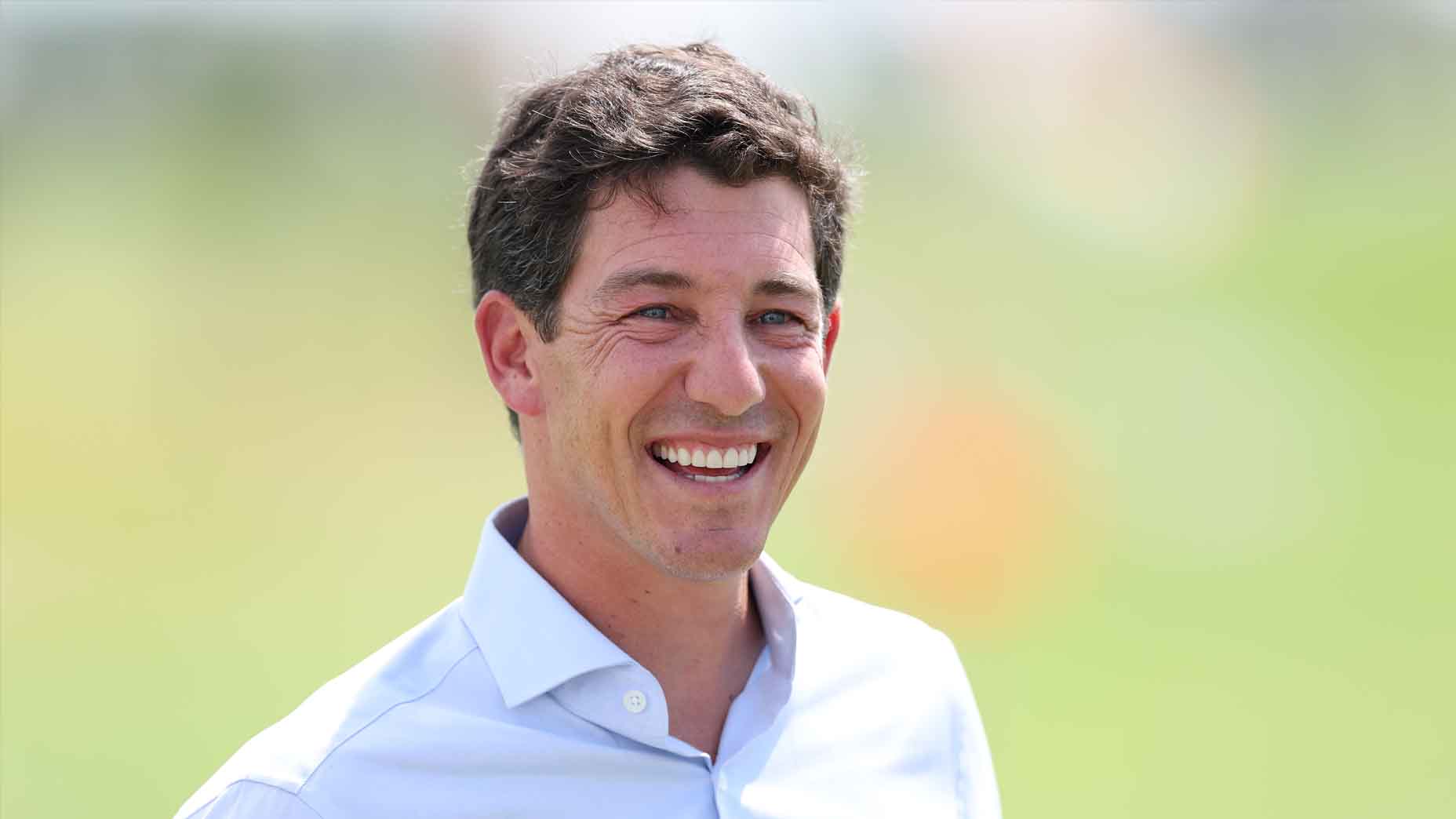
Two hundred and eighty-five years later, the LPGA’s 40-year-old commissioner Craig Kessler hopes Franklin’s words hold.
Above any job title or talking point, Kessler’s age is the most fitting analogy for the battle he hopes to wage as the newly minted chief executive of the LPGA. As one of the youngest leaders of any major sports league on earth, Kessler enters the LPGA credibly capable of dragging the tour to the bleeding edge of innovation and growth. But, at 40 years old, he hopes to navigate those changes without harming the golf business as it has always been: TV rights and title sponsorships and hospitality tents and goodwill.
This is Kessler’s greatest advantage and sincerest threat as the leader of the LPGA: He is old enough to remember the good old days — and young enough to know what comes after them. Now, in a moment defined by systemic upheaval, it is Kessler’s job to decide what stays and what goes.
And the best way to understand that struggle? Kessler says it starts in the living room.
“In my generation, you put on the TV, and if you didn’t like what was on, you waited until the top half or the bottom half of the hour to see the next episode,” Kessler told GOLF.com on Monday during a media day promoting next month’s Hilton Grand Vacations Tournament of Champions. “I’ve got three boys — they’re 6, 8 and 10. I’ve watched the way they consume content, and it is so different from my generation. They sit there with an Apple TV remote, and if they don’t like something, within six seconds, they hit next and go on to whatever they want to watch.”
It’s in those six seconds that Kessler has come to understand the world of women’s golf. If the previous generation of sports-watchers was defined by those who would wait for the bottom of the hour, the next generation will be represented by those who won’t wait until the bottom of the minute.
“Watching how the future generation of LPGA athletes are consuming media and entertainment has been completely eye-opening for me,” Kessler said. “We’re thinking about winning our share of the attention economy, and we are making the right moves in the right way in order to succeed.”
Kessler is not alone in this sentiment. The “attention economy” has been adopted by many in the sports ruling class in 2025 as an acknowledgement of the times. We are living in an era of mass distraction, when multi-billion-dollar social media companies are funded on the premise of endless scrolls and engaged time. The shift can be best understood in economic terms: Now, for the first time, people are not the customer but the product; the more attention earned, the greater the profits.
For the sports leagues competing within the “attention economy,” the downstream shifts have been equally tectonic. To sports executives of the modern era, the ultimate currency is not trophies or wins but seconds of attention won, and the competitors are not “other leagues” but internet behemoths like TikTok and Instagram. The old way of doing business is still quite valuable — in their rawest form, sports TV deals and sponsorships are selling a captive audience — but the wave of new media options has also created a brand-new way of doing business.
What golf can learn from Roger Goodell’s surprising NFL admission
By:
James Colgan
This presents an unusual opportunity for sports organizations like the LPGA, which are not bound solely to our traditional understanding of attention as “hours on network television.” For Kessler’s LPGA, attention could mean an expanded TV rights partnership with a major partner (Kessler’s biggest win as commissioner to date is a major partnership with FM to deliver expanded LPGA television hours in 2026). But it could also mean growth in a social media world whose algorithms are primed to boost individuals living interesting lives, visiting beautiful places, and interacting with famous people — three things prevalent almost every week on the LPGA.
“I think the most critical theme is giving fans a chance to understand our athletes, both inside the ropes and also outside of the ropes,” Kessler said. “Fans crave not just watching their favorite athletes compete, but also understanding who they are as people. What are they doing in their free time? What do they eat? What do they watch? Who do they hang out with? What are they wearing? And some of the biggest stars in sports have found a way to cut through and show both their competitive side and also their real-life personalities.”
If you’re sensing a theme in Kessler’s thinking, you’re correct. The ideas he’s hoping to implement at the LPGA aren’t exactly beamed in from a StarLink satellite through ChatGPT; they’re adapted from the old-school sports marketing playbook for modern times. And in a world where an audience can be built and cultivated without the help of a major TV network, Kessler’s ideas reflect a flexibility to win on any terms.
Will these ideas amount to a meaningful change in the business of women’s professional golf? It’s too early to say. The original rules governing sports popularity haven’t changed — big stars competing on big stages in events that matter — and the LPGA still has its work cut out to these ends.
But these are unusual times in pro sports. Large audiences have never been cheaper, easier or more accessible to reach in human history. Soon, content generated by artificial intelligence could lower the barrier even further — and yes, Kessler has ideas about that, too.
“I think AI is going to fuel the desire more than ever before for human connection,” he said. “Events like the Tournament of Champions perfectly feed into our innate desire that has evolved over millions of years for human connection.”
There is little debate that the LPGA requires a clear vision and good judgment.
The 40-year-old leader of women’s golf certainly has the former. As for the latter?
Well, maybe Poor Richard can testify.
You can reach the author at james.colgan@golf.com.
“>