
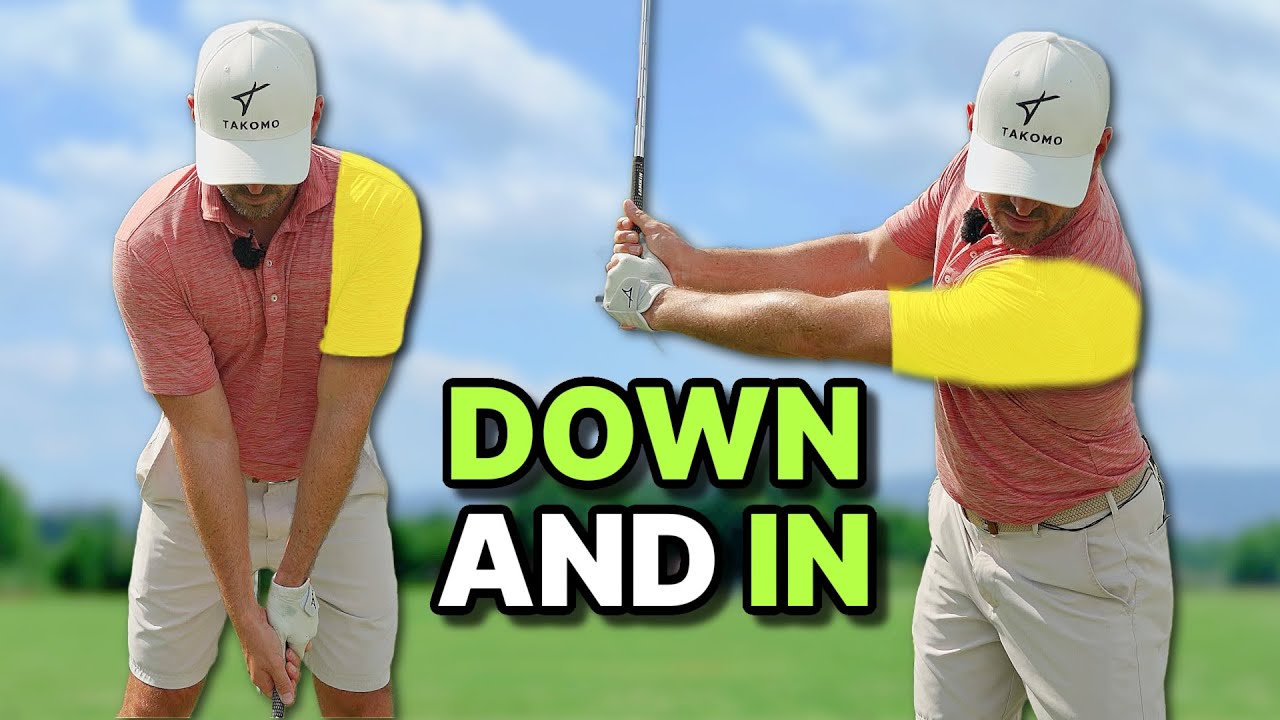
Eric Cogorno reveals how to stop standing up in the golf swing – the shoulder move that helps you maintain your spine angle like PGA Tour Pro Tommy Fleetwood
**⏱️ TIMESTAMPS:**
⚡ 0:00 Why 90% of Golfers Stand Up Through Impact (And The Fix)
🎯 0:33 The “Down and In” Mantra That Changes Everything
🏌️ 0:58 How PGA Tour Players Maintain Their Spine Angle
💪 1:57 Tommy Fleetwood’s Secret Shoulder Position Revealed
🔥 2:24 The One-Yard Drill for Perfect Shoulder Tilt
✅ 3:47 Why Your Trail Shoulder Must Tilt MORE in the Downswing
🚀 5:39 Swing Coach App: Know If You’re Doing It Right
💥 8:22 Common Mistake: Not Enough Tilt (With Live Example)
_________
🏌️ WORK WITH ERIC COGORNO IN PERSON! Two-Day Golf Schools in Florida – Limited Spots Available this Winter! 👉 Register Here: https://bit.ly/48bbScn
📱 GET THE SWING COACH APP The BEST Golf Swing Training App Ever Created 👉 Download Here: https://inf.getswingcoach.com/EC1
🎯 PERSONALIZED COACHING Get Custom Golf Instruction from Eric Cogorno 👉 Learn More: https://www.cogornogolf.com
📚 STEP-BY-STEP TRAINING PROGRAMS Eric’s Complete Golf Improvement System 👉 Start Here: https://ericcogornogolf.podia.com
🛒 RECOMMENDED GOLF EQUIPMENT & TRAINING AIDS:
• Takomo Golf – https://takomogolf.com
• L.A.B. Golf – https://labgolf.com (Code: COGORNO for 10% OFF)
• LiveView Sports – https://liveviewsports.com/pages/ECGolf (Code: ECGOLF for $40 OFF)
• Precision Impact Right Wrist Trainer – https://pureswingproducts.com/?sca_ref=1815522.bXQUsGp2bS (Code: COGORNO for $20 OFF)
• theHanger Training Aid – https://www.hangergolf.com/?sca_ref=944104.HqM9GYcX2I (Code: COGORNO for 15% OFF)
__________
In This Video, You’ll Discover:
• Eric Cogorno’s simple mantra to stop standing up through impact and compress every shot
• How to maintain your spine angle throughout the entire golf swing for consistent contact
• Why your left shoulder in the golf swing must go “down and in” under your chin
• The one-yard checkpoint drill that instantly shows if you’re maintaining proper tilt
• How the Swing Coach app reveals exactly when you’re lifting vs. keeping your angles
• Why PGA Tour players increase shoulder tilt from 40° to 55° in the downswing
• The golf drills that transform inconsistent contact into pure ball striking
In this golf lesson, Eric Cogorno solves the most common problem he sees coaching – golfers who stand up through impact and lose their spine angle. Using Tommy Fleetwood as the model, you’ll learn exactly how to stop standing up in the golf swing by mastering the left shoulder in the golf swing movement that all PGA Tour players use to maintain their spine angle and strike it pure.
#howtoStopStandingUpintheGolfSwing #StopStandingUpThroughImpact #LeftShoulderInTheGolfSwing#EricCogorno #GolfSwing #GolfLesson #GolfDrills #PGATour #MaintainYourSpineAngle #ShoulderTilt
_______________________________________________________________________________ *
*I may earn a small commission for my endorsement, recommendation, testimonial, and/or link to any products or services recommended on Eric Cogorno Golf sites. Your purchase helps support my work in bringing you free content to help you learn about golf and improve your game. My goal is to help people through my experience so I will not recommend a product or service unless I’ve
1) Used it personally. (which will be the case the vast majority of the time)
2) Thoroughly researched it and got first-hand user feedback from other professionals I trust and that have used the product/service
I want you to try this with me. Left shoulder down and in and under your chin. Right shoulder up and back and behind your head. Take a look at this right here. This is what I see every day coaching regular golfers who struggle with inconsistent contact and results day-to-day. See, the thing we need to learn how to do is keep our relationship with the ground both during the back swing and down swing. It’s the standing up or lifting up that causes so many other problems. I’m going to show you how we can fix that today with the simple mantra down and in and under the chin. I’m going to give you one simple drill. It’s going to work for you right away. Okay. So, I want to give you a couple simple mantras to start to learn how to keep our relationship to the ground. I’m going to give you one simple drill and checkpoint after that. I’m gonna show you how you can use the Swing Coach app to automatically know if you’re doing this correctly. So, with my students in person, I love this mantra. If we pull up a good ball striker here during the back swing and we draw a circle around the shoulder here, we’re going to see during the back swing how the lead shoulder goes down and in, right? Or back and under the chin. Down and in and under the chin. I’m going to show you how to feel that exactly how much. Now, you’ll notice as the lead shoulder goes down and in and under the chin, what that enables me to do from the down the line angle if we split screen is the ability to make a full back swing turn while still keeping my body the same distance from the ground. And that’s the key to consistent ball striking. Now, my right shoulder is going to mirror my left shoulder just in the opposite direction. My lead shoulder goes down and under the chin. My right shoulder goes up back and behind my head. Now, if we pull up a good model, a simple thing I like to tell my students is, “Hey, if we drew a line up from the golf ball, your goal is to get your shoulder down and back, right down and under the chin to the point where it gets basically at or just past that ball line.” So, if you check me out and someone like Tommy Fleetwood, we’ll see at the top how he’s able to get his shoulder at or just past that. If we split screen him, you’ll see that his ability to do that from face on down and in and under the chin again keeps that body’s inclination to the ground. Now, the next thing a lot of students will ask me is how much tilt am I supposed to have? How much down and back? And I really like this simple drill I learned here from Craig Hansen. I want you to put a second golf ball about one yard outside of your initial golf ball and slightly behind it. I’ve got an eight iron here. I want you to do that with that as well. Take your setup. So the club head’s on your trail shoulder and the the grip of the club is outside your lead shoulder like this. Now during the back swing, the amount of down you want is roughly to the point where this leading edge, you’ll see this with Tommy Fleetwood Green shirt, it’ll point about a yard outside the ball. That’s like a really good checkpoint. As the clubs get shorter, it might be a little bit more than that, kind of a little more towards us. As the clubs get longer, it’ll be a little bit outside of that. But your feel that you’re going to transfer is about one yard outside of that. So I want you to put a golf ball there and feel what it feels like to get the grip pointed about at that angle and at or slightly behind that golf ball. Now as I feel that I can feel that with my lead shoulder going down in under the chin or I can feel that trail shoulder going up back and towards the target. Now, the beautiful thing about this drill is not only does it work during the back swing where I’m trying to get that roughly one yard outside, but it also works during the down swing. Now, if we see Tommy Fleetwood, he’s about one ball outside or roughly 40° with the shoulders. But during the down swing, his shoulders going to be slightly more tilted. It’ll actually point inside that ball line. To give you a rough estimate, I’m going about at that golf ball, you know, 40° of tilt. And as I come down, I’m trying to go inside of that about 55. So the shoulders are actually more tilted during the down swing. You want to feel your trail shoulder more down in the down swing than you felt your left shoulder in the back swing. And while I mentioned with different clubs the tilt will change. Most of that’s due to your setup. You want to feel that yard outside sensation basically with all clubs. So from a drill perspective, I want to do one or two rehearsals. Left shoulder down and in and under the chin. right shoulder up and back behind the head roughly one yard outside. And the down swing, I’m gonna feel the opposites. Now, now my right shoulder goes down and in and under my chin, and my left shoulder goes up and back and behind my head. So, you’ll see a good golfer, if we show the Tommy there again, draw the line up from the the golf ball as a reference. Left shoulder down and in under the chin. Right shoulder up and back behind the head. And then he’ll reach the opposite. Right shoulder down and in under the chin. left shoulder up and back behind the head by about that arm’s parallel in the follow-through position. So, I want to do two or three reps just to get a feel for what that feels like. I feel a little bit of my lead side tilting on the way back and more trailside tilting on the way through. So, after I feel that a few times, I’m going to transfer that into my hit. So once I get a feel, I start to hit balls with it, right? The next question is how the heck do I know if I’m doing it correctly or not, and that’s where the swing coach app comes into play. So once I have an understanding here, okay, I want to be able to create some tilt with my body back and through so that from the down the line angle, we draw the line up my back, I’m able to keep my relationship with the ground the same. I’m able to keep my inclination. I’m not constantly getting farther from and closer to the ground. That would be like the most chaotic, least consistent way to play. We look at really good ball strikers. We draw the line up there. What do they do? They keep their body’s inclination to the ground on the way back and down. Say, “Okay, cool. Now, I want to have a drill. One golf ball outside. I’m trying to feel myself get roughly to that. Left shoulder down and under the chin. Right shoulder up and back behind. Cool. I get it. But how do I know once I hit that I’m doing it enough or not?” Check this out with a swing coach app. I’m going to do a bad one on purpose where my shoulder goes too high and I don’t get enough tilt. This is what I see a lot during the back swing. So, the shoulder doesn’t go down enough, right? It goes in and like into the chin, not down and back. Okay? So, this will be like too flat of a shoulder turn. So, I want you to see this one. I’ll try and exaggerate here a little. And there you can see I literally topped it. Head at half back up by seven. Head at half back up by seven. Okay. Okay, there we saw head during the back swing up by seven and then up by nine. And it’s on a scale of 1 to 10, right? 10 being like a lot and one being a very little. So that was exaggerated. But you see that by me losing my distance away from the ground, I literally topped the ball. My contact was very inconsistent. And the point of this is that I need feedback to know if I did it right or not and how much to do. Because often times I’ll see a student, we’ll do the drill, right? I’ll feel the tilt, feel the tilt, and then I go to hit and I don’t do it enough. Okay, this is how I need to know if I’m doing it correctly or not. So, I just saw I lifted too much, right? I went back. My shoulders were too level. I got a seven and a nine. Okay, not enough tilt. Now, I’m going to exaggerate the opposite to find middle. So, my point here is sometimes it’s not enough to just do the drill. The key is how much you need to exaggerate the drill and the feels. If you’re turning too level like that, you might even need to feel like you’re creating more down, like overexaggerating. If we draw a line on the top of my head and on the top of a good ball striker, we’re really just trying to maintain our height during the back swing. I’m not really looking to go up or go down too much. Maintain height or just a slight lowering. Now, during the down swing, there’s definitely a lower. We show Tommy Fleetwood. you know, he’ll maintain his height or get slightly lower on the way back, but then on the way down, he definitely lowers from that line. Why? Because on the way back, he’s got those 40°, but on the way down, remember, he goes 55, he goes more tilted. What does that mean? That means the more shoulder tilt we have, the lower to the ground we get. Which means if we’re lifting and standing up and getting farther from the ground, we don’t have enough tilt. So, for one or two of these, we’ll draw the line on the head. I don’t mind as you’re feeling the shoulder down and in and under the chin, the right shoulder up and back and behind your head, like you actually exaggerate a little and feel like there’s a little bit of lowering. Now, when I feel this, and I’ll oftent times with my students, we’re going to recruit some other segments of the body as well. Meaning, I’m not just going to feel the shoulder go down. I’m also going to feel the left knee go down, the left hip, and the shoulder. So, all of my lead side lowering a little bit. Let’s see if I can get a neutral number here by feeling the lead knee, lead hip, and lead shoulder all going down. Good swing. Yeah. Good swing, really good strike, straight ball, solid contact. The problem is if you’re practicing by yourself, it’s so hard to trust that feel because you’re going to have to feel more than what actually happens. You’re going to think you’re doing it a lot and then you look on camera or look on the app and it’s the correct amount. So, how do we solve that? Well, gosh, just having that Swing Coach app give you feedback on every single swing would be amazing. I’ll put the link for this in the first link in the description down below. You get a free twoe trial to try this out for yourself. Okay, back to the beginning. So, my concept is lead shoulder down and in and under the chin, right shoulder up and back behind my head. I want to have my lead shoulder roughly, if we drew a line up from the ball, get in line with the golf ball. Same thing with my right shoulder. How much tilt do I want to create? I’ve got the golf ball one yard outside at setup. I’m getting my tilt right and my grip roughly to that ball on the down swing. I need more tilt, which means my trail shoulder goes inside of that on the way down. I’m trying to maintainish my height on the way back and have a little bit of lowering when I come down. I’m doing this to maintain my body’s inclination to the ground to make everything else way easier. I’ve got the Swing Coach app on to tell me if I’m doing it correct or not. If I do it poorly, here’s a lift. Head at half back, up by 10. Head at top, back by 10. Literally can’t get anything better than that. Now, if I want to do a practice swing, same thing. If I want to correct it, let me overexaggerate one. I’m going to go down too much. There’s my down too much feel. Good swing. And that gives me the good. What’s the point there? I have to feel exaggerating the opposite just to get to normal. Now I know what kind of feel I know what I need to do conceptually without this. But it gives me the level that I need to feel it. Okay. Left shoulder down and in and under the chin. Same thing with the right shoulder on the way down and through. Solid. Good swing. What you should get from this is hit the ball solid, more consistent day in and day out. You got to start by getting the back swing part correct and then add in those down swing feels. Okay. Left shoulder down and in under the chin. Right shoulder down and in under the chin. Left shoulder down and in under the chin. Right shoulder up and back behind the head. Reverse that on the way through. Right. It doesn’t get much easier than that conceptually, but again, it’s the application. One ball outside for how much tilt roughly, you know, right behind the golf ball for how much turn. Use the Swing Coach app to know if you’re doing it correctly or not. I promise you’re going to love this. Again, you can get a free two-eek trial if you like it. It’s only 15 bucks a month. You have an expert level coach standing right behind you. Promise you’ll love it. Leave me a comment down below if you have any questions. If you want to watch more like this, check out this video next.


3 Comments
My ball striking has improved after watching numerous Eric's videos. His ability to dissect the fundamental of good golf swing is impeccable. Keep doing what you're doing, thanks.
Is the swing coach app also available in Google play store,not just apple/Mac. Can you post the link,if so?
Very helpful explanation of the feels