
Before you buy your next set of irons, read this. Stronger lofts have changed how modern irons perform, and understanding what’s really happening could save you a lot of bad shots and wasted money.
You’d be forgiven for thinking the biggest changes in golf equipment over the last few decades have happened at the top end of the bag. Drivers tend to hog the headlines with their carbon crowns, twist faces, sliding weights, turbulators, AI-designed faces, and 10K MOI claims – but, quietly, golf irons have undergone a far more dramatic transformation.
Modern golf irons might look relatively similar to their ancestors from the 1990s and 2000s, but under the hood, they’ve changed dramatically. The way they launch, spin, fly, and land has completely changed. They’ve reshaped how we think about yardages, created new gaps, erased old ones, and altered the makeup of golfers’ bags at every level.
And the biggest cause of that shift is deceptively simple: loft.
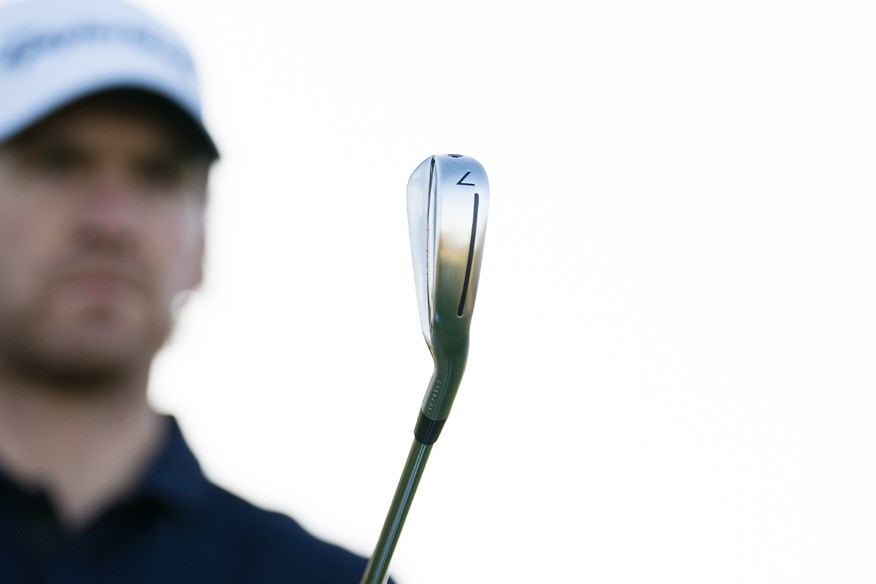
Iron lofts today are completely different from those of days gone by. A 7-iron used to live around 36°. Now, in many modern distance sets, it’s 28° or less. That’s not a subtle tweak – it’s a completely different golf club, wearing the same number on the bottom.
But how – and why – did we get here?
 Why iron lofts have gotten stronger
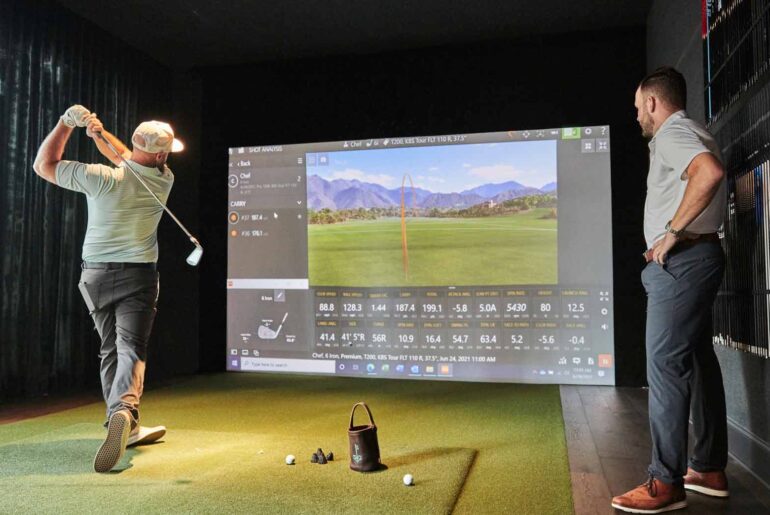
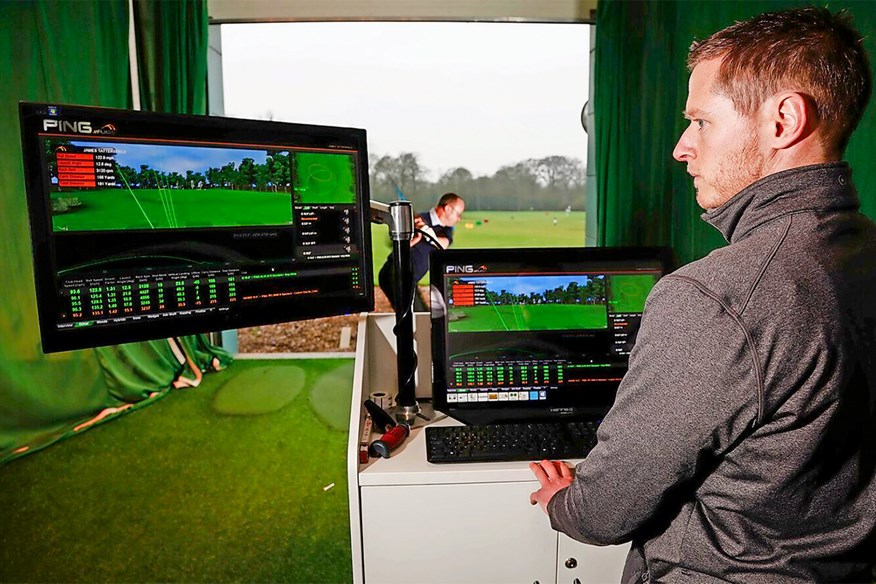
The loft revolution kicked off when launch monitors went mainstream. Suddenly, golfers could see their carry distances on screen, and brands realized something very quickly: the longest 7-iron usually won the sale.
And the easiest way to make that happen? Make the 7-iron a 6-iron in disguise.
But this loft-jacking, as it’s known, isn’t simply a sales trick.
As iron clubhead design evolved, designers were able to move the center of gravity (CG) lower in the head, which causes the ball to launch higher. Designers can then choose one of two paths:
Keep the loft the same to help slow-speed golfers launch the ball higher
Reduce the loft to add distance while maintaining normal height
Most modern distance irons choose option two. That’s why a modern 7-iron with 26° of loft can still provide decent launch – it’s engineered to do so.
But it doesn’t work for everyone. And, crucially, the type of golfer it doesn’t work for are often the ones most likely to buy it.
 The problems with strong-lofted irons
This is the bit that doesn’t get talked about enough.
Strong lofts don’t just make irons go further – they change how your entire set functions. And not always for the better.
Here are some of the biggest issues:
1. They don’t work for slow swing speeds
Strong-lofted irons rely on speed to create the height they’re missing from the loft. If the speed isn’t there, everything changes.
The ball launches too low
The whole point of game-improvement irons used to be helping slower swingers get the ball in the air. But when the loft is pushed into the low 20s and the golfer’s swing speed can’t produce enough launch or spin, the ball simply doesn’t climb. Instead of popping up nicely, it starts low and stays low.
Spin drops below the threshold needed to keep the ball in the air
Loft helps with spin – that’s why your pitching wedge spins more than your 6-iron. When backspin drops too low, a slower swing speed won’t generate enough lift to make the ball climb. This compromises flight and stopping power.
The peak height ends up way below where it should be
For a 7-iron to behave like a proper 7-iron, you want something in the region of 90-110 feet of peak height. Many slower swingers with strong lofts end up at 65-80 feet instead. That’s the difference between being able to stop a ball on the green versus watching it bound through the back.
Descent angle gets too shallow
This is the killer. A healthy 7-iron descent angle should be around 45-50°. With strong lofts and low speed, descent angles often fall below 40°.
At a shallower angle, the ball simply doesn’t have enough vertical angle to stop, so you start getting 15-30 yards of roll-out, which makes approach shots uncontrollable.
2. Gapping problems
Strong-lofted irons often create gapping problems at both ends of the bag.
The long irons bunch together
A traditional 5-iron might launch high enough for a slower swinger to use, but once lofts dropped, a huge portion of golfers simply couldn’t get them sufficiently airborne with enough spin to be functional. They ended up with several irons that carried a very similar distance.
Hybrids become mandatory, not optional
Unplayably low-lofted long irons forced many golfers into extra hybrids, meaning the iron set stops functioning as a proper set. You end up with a 7-iron that behaves like your old 5-iron – and then suddenly you’re into hybrids. For golfers who love hybrids, that’s no issue, but golfers accustomed to playing irons who are simply losing speed due to age may prefer a wider range of usable irons.
Your scoring clubs are left stranded
Even if you have the speed to use strong-lofted irons, they can cause problems at the bottom end of your bag. A 7-iron that carries 200 yards might be nice for your ego, but if your pitching wedge becomes your 160-yard club, you’ll be left with a lot of shots you don’t have a club for.
The stronger lofts of pitching wedges – many of which are now down to 40-43° – leaves your shorter clubs a lot of ground to cover. If your next club is a 56° sand wedge, that’s a huge gap. That issue led to the birth of the gap wedge, but as lofts have gotten even stronger, the gap has widened further and cannot always be covered by one extra wedge.
3. Your clubs lose versatility
Many golfers like to play chip shots with their pitching wedge, or even their 7-, 8-, or 9-iron. But when you have a ‘hot’, low-lofted set, trying to play finesse shots is like trying to gently fire a cannon.
It’s the same issue with partial and pitch shots. A 40° pitching wedge might work for full shots, but when you try to take some off it, the spin drops even lower, and your chance of controlling it goes out the window.
 Who should – and shouldn’t – play strong-lofted irons
Strong-lofted irons may suit you if:
You deliver good clubhead speed
You naturally launch the ball high
You value extra distance over increased spin and stopping power
You can make the long irons work, or don’t mind hybrids/fairway woods in their place
Strong-lofted irons may not suit you if:
You struggle for height on iron shots
Your ball flight is naturally flat
You produce low spin
You’re a low-speed player
“If you’re not delivering enough speed, there’s just not enough loft to give you the launch and spin you need,” Lewis Daff, one of TG‘s golf equipment experts and a Master Custom Fitter and club builder with more than 5,000 custom fittings under his belt, explains.
This is the heart of the whole issue. Strong-lofted irons aren’t bad – they’re just often aimed at the wrong type of player. They can work great for a specific type of golfer – usually someone with enough speed to generate their own height and spin. But slower and moderate-speed golfers? They end up fighting physics.
And the ultimate irony? These irons are often marketed directly to this exact group.
The very players who need extra loft, extra spin, and extra height are the ones most likely to end up with the opposite.
 What you should look for in an iron
If you’re thinking about changing irons – especially if you’re considering strong lofts – there are certain numbers you need to look out for:
1. Carry distance
Ignore total distance and focus on carry distance. You need to know how far your shots carry, because that’s what takes hazards out of play and helps you hit greens.
Your yardage potential will depend on your swing speed, but you want to ensure your shots are flying the distance you need them to. It’s also important to ensure you have good gapping between irons; too many golfers end up having two or three irons that fly a similar distance.
2. Peak height
How high the ball goes in the air is important. Too low, and it’s hard to hold a green. Too high, and you might balloon the ball and lose control in the wind.
A ‘normal’ 7-iron peak height would be 70-90′, while faster swingers may achieve 110-130′.
Faster swingers will typically generate more height than slower swingers, but even slower swingers should be wary if 7-iron shots are failing to break the 60’ barrier.
3. Spin rate
Spin is what stabilizes the ball in the air and helps it stop on greens. Too little spin and the ball will come in hot and flat. Too much and it can balloon off the face.
Traditionally, an ideal spin rate was the iron number multiplied by 1,000 – so a 7-iron would spin at 7,000 rpm, a 6-iron at 6,000 rpm, and so on – but most models will now spin lower than that. More swing speed will typically generate more spin. But if your iron shots are generating very low spin – we’ve seen 7-irons spinning in the 3,000-4,000 rpm range in testing – it’s going to make life very difficult.
4. Descent angle
How the ball actually comes down onto the green is critical. A shallow descent angle equals more roll – which might be fine on soft, receptive greens, but on firm, fast surfaces it can be a nightmare. You want a descent angle that allows the ball to check or stop, not bounce off the back of every green.
The ideal descent angle for iron shots is 45-50°. Golfers with slow swing speeds may struggle to hit that range, but go too shallow and you’ll have a hard time holding greens.
5. Feel and consistency
Numbers are important, but you also need to trust the club in your hands. If a strong-lofted iron produces the right metrics but gives you no feedback on strike, or if there’s a big jump in distance between your best and worst strikes, it’s going to make the game harder.
Not all 7-irons are the same
Not all irons have gotten stronger. Nowadays, there’s a huge range in what constitutes a 7-iron.
Example 7-iron lofts in 2025:
TaylorMade P7MC: 34°
Callaway Apex MB: 34°
Ping i230: 33°
Titleist T150: 32°
TaylorMade P790: 30°
TaylorMade Qi: 28°
Callaway Elyte X: 28°
Cobra DS-Adapt: 27°
Again, it’s not to say that one is better than the other. The key is finding what works best for you.
The best way to do that is with a custom fitting. Although, before you do that, you’d better read this:
Golf pro and custom fitter: ‘This is the BIG problem with custom fitting’