
Check out my best-selling book, The Four Foundations of Golf: https://amzn.to/3BMTJDY
Learn more about Pete’s Golf: https://www.petesgolf.com/
Check out Sweet Spot podcast episodes on clubfitting (search equipment education series w/ Woody Lashen): https://open.spotify.com/episode/6lhjxgHhxyJbGdh2Pzeg0v?si=1d520a9e53f44785
Here are my other videos on clubfitting:
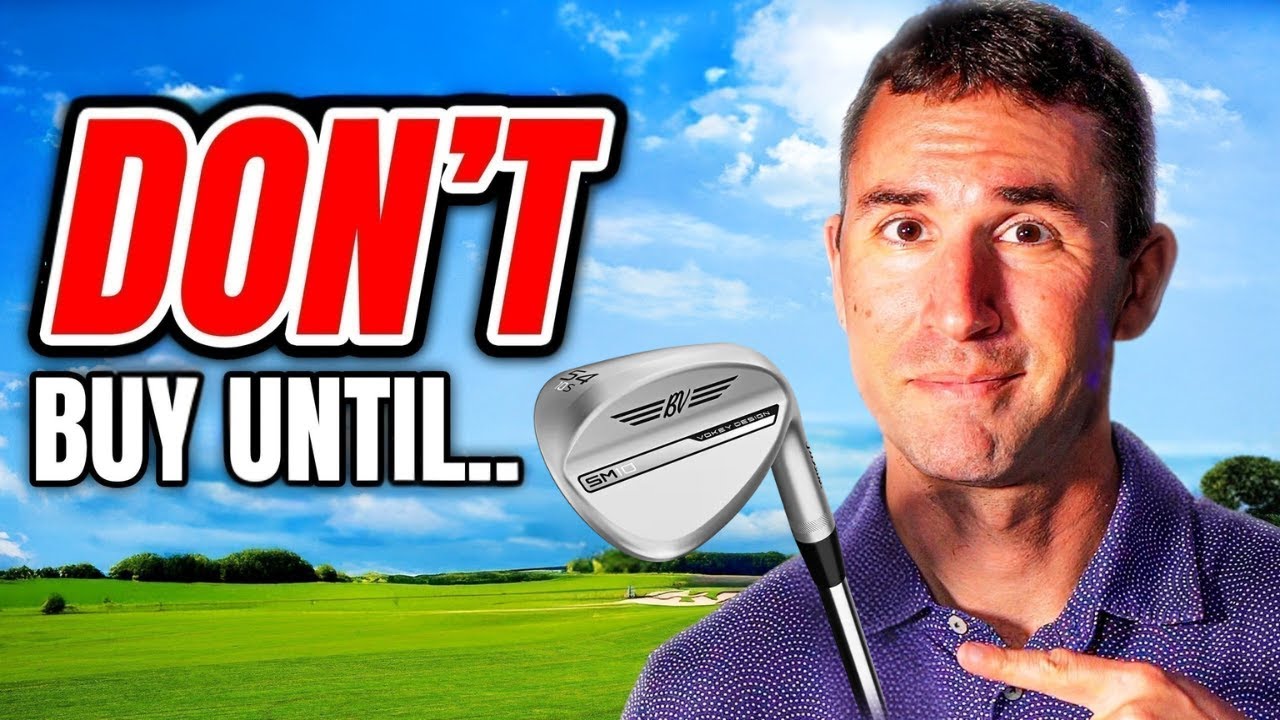
Golfers have such a hard time knowing the truth about wedges and fall victim to marketing claims. In this video, I’ll teach you how to look past those claims and learn more about how drivers ACTUALLY work.
0:00 Intro
1:40 Wedge Bounce Truths
4:46 Distance Gapping
5:42 Lie Angle
7:58 Shafts
9:14 Indoor vs. Outdoor Fitting
10:19 Test Yourself
11:10 Main Goals
Who am I?
My name is Jon Sherman 👋. I’m a best-selling author, PGA Tour coach, and a golfer just like you. I aim to help golfers of all levels lower their scores and enjoy the game more, but without talking about the golf swing. I focus on four topics – expectation management, strategy, practice, and the mental game. I’ll share some of my best advice on this channel in an easy-to-understand, actionable format.
Sign up for my free weekly newsletter: https://practical-golf.ck.page/newsletter
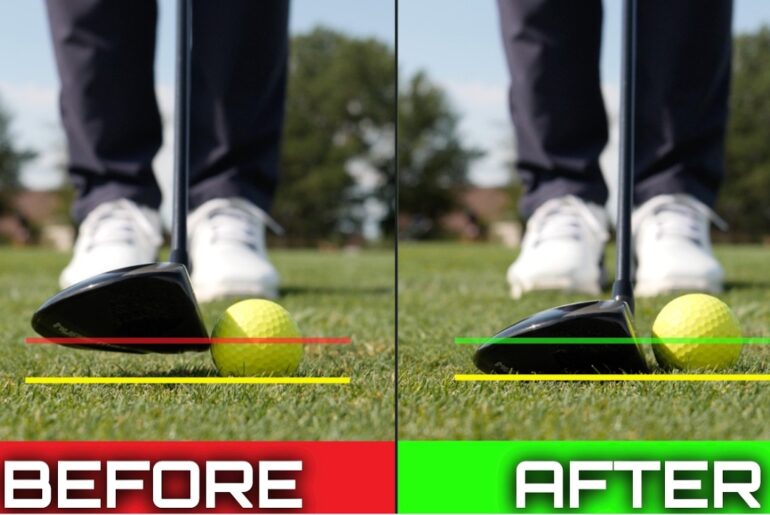
This took me 10 years to learn, and I’ll teach it to you faster than all the time you wasted watching wedge reviews that have no relevance to your swing. What if I told you that most golfers are getting the wrong bounce, sole design, and lie angle that didn’t match their technique or the turf conditions that they are mostly playing on? All because of a complete misunderstanding of how wedge design actually works. In this video, I’m going to show you what really matters in your wedges. In case you don’t know me, my name is John Sherman and I am the author of The Four Foundations of Golf. And on this channel, I’m giving you actionable ideas on how to take your game to the next level without any of the swing gimmicks that are everywhere. All right, let’s talk about what you should know about wedges and what a good fitting should address. Most golfers are treating wedges as an afterthought, and they’re the most precise and customizable clubs in your bag. A lot of players think too much about loft and distance control, but it’s really about customizing your setup for the types of shots that you hit well, and more importantly, the ones you struggle on. A proper wedge fitting is going to consider the turf conditions that you usually play on, how you deliver the loft of the club, and the types of clubs that you like to use from different lies on the course. Long story short, your ability to put the ball on the putting surface with your wedges is a huge factor in breaking a 100, 190, or even 80. You don’t want to make golf harder for yourself with the wrong set makeup. And before I get into this, I just want to give a huge thanks to my friend Woody Lashen from Pete’s Golf. I’ve spent the last 10 years learning directly from him, and they are recognized as some of the best club fitters in the entire golf industry. Now, let’s reveal the truth about wedge bounce, which is a really misunderstood topic. Bounce is the number one determining factor about how the wedge is moving through the turf. It’s defined as the angle created by the sole of the wedge from the leading edge to the lowest point of the trailing edge. Now, bounce is designed to prevent the club from digging into the turf by allowing it to skip or bounce through the grass or sand, which provides you with a ton of forgiveness and more importantly, efficient contact. But here’s the issue. The number stamped on the sole is misleading. There are no industry standards for measuring bounce. And Woody’s told me many times that whether it’s a Vokei, Ping, or Cleveland wedge that says 10° on it, they’re not all exactly the same. Each company is going to define them differently. That’s because effective bounce is influenced by the following things. Number one, the width of the sole. Wider soles are going to play with more effective bounce. Number two, the leading edge shape. The more rounded it is, the more forgiving it’s going to be. And if it’s a little bit sharper, it will dig more. And the third is heel and toe relief, which helps when you’re opening or closing the club face at a dress. So effective bounce isn’t really good or bad. It’s about matching turf interaction to your technique. And each of those three elements I discussed can be customized based on your club head delivery. For example, players who deloft the club, who get their hands forward at impact, are removing bounce, and they’re going to need more built-in relief. Conversely, the players who have their hands behind the ball at impact are adding loft and naturally adding bounce as well. So, they generally don’t need as much relief built in. So, if you’re delofting your wedge about 10°, you’re essentially removing all 10° of the bounce. Now, this is exactly what I do with my wedges, which is why I have a ton of relief built into my sand wedge. And that’s exactly why technique and turf interaction is at the heart of performance. A proper wedge fitting should give you the best chance of matching these two elements together. Now, a basic rule of thumb is that players that are more steep will need more bounce or a wider sole with more forgiveness, whereas more shallow pickers of the ball will need less bounce to avoid blading shots. An interesting trend that Woody mentioned to me is that better players typically need more bounce because they are delofting their wedges so much. It’s one of the signs of a better wedge player. So, a proper wedge fitting is going to balance launch monitor data like attack angle, dynamic loft with the player’s realworld performance on partial wedge shots. That’s really important. So, when you hear generic statements like, “Oh, I could just buy a low bounce wedge for tight lies.” It’s really not telling the whole truth because it doesn’t factor in your specific technique and tendencies on the golf course. What Woody typically likes to do with most golfers is give a variety of grind designs to accommodate the different shots and turf conditions that you’re going to face on all the different courses you play. Now, for most golfers, he’s giving more bounce in the middle wedge and the least amount of bounce in the highest lofted wedge. Now, let’s transition here to talk about loft and distance gapping because a lot of golfers make mistakes with their decisions. Loft gapping still matters a lot, but only after you’ve decided on the style of grind and bounce that you’re going to play. Usually, you’ll start the process from your pitching wedge. Let’s say you’re a longer hitter and you can hit your wedge about 140 to 145 yards. You’re likely going to need three wedges in your bag to fill these big distance gaps. So, if you are using a gap wedge, it should usually match your iron set as it’s a full swing club typically. Now, conversely, the sand and lob wedge can be custom fit to your technique and your turf needs on partial wedge shots. But also, don’t assume that the loft on your wedges needs to be evenly spaced. A fitting is going to consider the types of shots that you are hitting most often. Now, some players are really good at taking a little off their gap wedge where others cannot. So, the gapping should consider what you can execute on the golf course. But an even bigger spec that golfers don’t even think about is lie angle. And it can greatly influence missing shots to the left and right of your target and even result in chunk shots if you don’t get this spec right. Now, lie angle is defined as the angle between the golf club shaft and the sole of the club. And I’ll quickly demonstrate here with a wedge. So in other words, you can deliver the club toe up where the heel is digging into the turf, which is what I used to do a lot. And now I’ve actually shifted to the other end of the spectrum, which is toe down and the heel is up in the air. So based on the lie angle of the club, that will affect how the club interacts with the turf. So delivering the club toe up or heel up are extremes. And like everything else in golf I discussed, you generally want to avoid these extremes with lie angle. And here’s why. Lie angle becomes more influential on start direction as loft increases. In other words, this isn’t as big of a deal with your driver, fairway woods, or even your hybrids, but it is a really big deal when you start getting to higher lofted clubs like your wedges. So, here’s what’s interesting for a right-handed golfer. When the toe of the club makes contact first, they’re actually going to miss their target more to the right. And vice versa, when you miss more with the heel of the club making contact first, the ball’s going to go left. And what’s even worse than directional misses is that you’re going to have worse turf interaction, most notably chunk shots, which is probably the most important element of wedge play. And Woody told me that about 70% of the golfers he sees on a daily basis needs a lie angle adjustment on their wedges. Now, typically he’s giving golfers a slightly flatter lie because it produces misses that are a bit softer and more playable. And in addition to that, a flatter lie angle usually suits golfers better on a shorter swing. There’s a little less handle raise at impact, and players deliver their wedges differently than their irons. But of course, everyone is different, so that’s what club fitting can address. You might not do all of those things, and you might need different specs. That’s why it’s so important to get fit on a launch monitor if possible like the GC quad because you can literally measure how you are delivering the lie angle of the club at impact. It will take a picture of it and show it to you. Now, last but certainly not least, I want to transition to shafts. The decision you make with your shaft profile, weight, and flex can have a massive impact on your launch characteristics with your driver hybrids and your irons. But with wedges, it’s not as influential. Woody told me that once you get above about 50 degrees of loft, shaft flex has minimal impact on launch and spin, and the loft is dominating those two measurements. Shaft selection in wedges is really more about feel and control, not chasing performance numbers. Now, Tiger Woods notably changed his wedge shafts because he wanted a different feel in his hands. A lot of golfers wedge shafts are way too heavy compared to their iron shafts, especially if they’re playing graphite like I am now. For example, going from a 65 g graphite iron to a 120 g steel wedge can absolutely kill your feel around the greens. So, here’s a really simple rule of thumb. Go slightly heavier and maybe slightly softer than your iron shafts for wedges, but match the bend profile. And you can absolutely get help with this. So, for players who are using graphite irons, maybe going to a light steel and wedges about 95° can provide stability without wrecking your tempo. But a common question that I always get is, what about getting fit indoors versus going outdoors? Let’s discuss the pros and cons of each approach with your wedges. So, a great wedge fitting is going to blend conversation, measurements, and the real shots that you’re hitting on the course. A fitter should be measuring things like attack angle, dynamic loft, and turf entry using a launch monitor like a foresight GC quad as I mentioned or even a Trackman. Now, partial shots matter more than full shots because turf interaction and distance control are going to drive your decisions mostly. Indoor fittings can be extremely accurate if the fitter knows how to interpret turf interaction from the data they’re seeing on the launch monitor. Now, in a perfect world, it would be better to do an outdoor fitting with technology measuring. Now, Woody has actually tested the difference between the two, and it usually comes up with the wedge that he would have picked on the indoor fitting would actually match the wedge he would pick on the outdoor fitting. But, he’s been doing this for over 40 years, and that might not be the case for all fitters out there. I simply can’t account for every single one of them in the world. Now, if you don’t have access to a great club fitter, here’s a simple test that you can do. If you can get access to some different demo wedge clubs, you’re going to want to take three different wedges with different sole and grind designs and rank them blindly on real shots that you can hit. If they do have different designs, you’re most likely going to notice differences between the two when you practice on different lies. And you want to go with the one that produces the most consistent contact and more importantly turf interaction, even if it’s not the one you thought you would like. I can’t tell you how many fittings I’ve been where I’ve wanted a certain brand name and it ended up being another club that was better for me. And when you do try different wedges, you’ll usually see a difference with how your club interacts with different lies and the accompanying distance, trajectory, and spin control. So, when you do purchase new wedges, you want help on the shots that are in your wheelhouse. But even more importantly, you want more relief and margin for error on shots that are not within your wheelhouse. And let’s face it, that’s a lot of them. The goal of the fitting is not to fix your wedge technique. It’s to match the club to how you are delivering it. And the last point I’m going to make about wedges, which is a really important one, is that these are actually the only clubs in your bag that can wear out. Now, your irons could easily last a decade depending on how much you play before they need to be replaced. But wedges can wear out much more quickly, as soon as one season if you’re playing a lot and the types of turf conditions that you’re playing in. Generally speaking, when you start to see strong visible signs of wear on the club face, that’s when they need to be replaced. Now, not everyone has the budget to do that at that exact moment. But here’s what you should know about performance. Woody always told me that it’s like tread on a car tire. If your tires are worn out, they’re still going to perform well on perfect road conditions, but once you start introducing rain, ice, or even snow, then they’re going to lose traction much faster, and you might slip a bit. So, on the golf course, your performance is not going to suffer on perfect lies as much. But once you start introducing more moisture or debris like sand or grass that gets trapped between the club and the ball, you simply won’t be able to spin it as much, and you’re going to lose control over your distance and trajectory, which is the most important elements of good wedge play. So, I’ve gone over a lot in this video, and I don’t want everyone to rush out and go buy a new set of wedges. You might not need it. And it’s also possible that depending on where you’re watching this video, you might not have access to a great fitter. Either way, if you are a golfer who cares about equipment and is in the market for new clubs, you really should have a basic understanding of how all of this works. And that’s why I try and educate golfers on this. So, if you do want to do a much deeper dive on wedge fitting, I will include a link to the full podcast I did with Woody Lashen on our show, The Sweet Spot. That’s in the description below. I’ll also link to Pete’s Golf as well. If you’re in the New York metro area or are willing to travel to see Woody and his team, they are the absolute best. We’ve had tons of golfers around the world who listen to our podcast, who visit them regularly, and they’re very happy with what they get. They are truly legends. And if you want to learn more about club fitting, you can check out my other video where I share everything the OEMs don’t want you to


13 Comments
Thanks so much Jon! I appreciate all of the great info as I’m in the market to replace my now three year old Mizuno T22’s. They have served their purpose as I was fitted for them but I can definitely tell the drop off in spin and performance.
I got a couple of rules for wedges. Get a mixed bag of sole width, at least 1 fat and one thin. My second rule is…. if it doesn't say Cleveland, is it even a wedge??
Love it!@
Kirkland or bust. 10,000 RPM backspin is easy and they are easily replaced over time. Bounce isn't worthless, but your AoA is more important. Most of us could FAT a steel ball.
I am crap at golf so I play Cleveland Smart Sole wedges. Good stuff
I don't alway hit my sand wedge 170 yards, but when I do, it's from a green side bunker.
wise words
Great information. I find Woody the most informative guest on your podcasts. I play Vokey wedges 48,10 bounce 52,56 with 8 bounce. I never take more than a 3 quarter swing which helps me dial in my distances and hitting the ball constantly straight. Downside is I’ll chunk it here and there due to less bounce and skill. Distance control is most important to me but I’m always trying and practicing different lies to avoid miss hits.
evans bag review? tyty
I play 95g graphite iron shafts; 120g steel wedge shafts work best for me.
I’m lost. I’ve been an “off the rack” buyer my whole playing life so most of these terms are foreign to me.
Just buy Maltby wedge heads only and replace them on your same steel shafts. No need to buy $200 wedges with new steel shafts.
Thanks Jon, very informational, sums it all up in 13 minutes! I knew most of it (but took me a year checking out the correct videos and articles, then bumping into your podcast, book and finally this channel), but the fact that bounce is not measured the same way with each OEM was new to me. My own testimony: I played a high bounce sand wedge for years from bunkers and struggled. I thought it was mainly my technique, (well it was but partially because of occasional unconsciously applied shaft lean) but once I switched to a low bounce but still wide sole I saw instant improvement. Granted, I usually encounter pretty packed or moist bunkers over here in Holland, but still, even in freshly sanded bunkers it cuts nicely through the sand. And yes, I am happy that I bought my shafts at 95g light steel playing 75g graphite irons. Keep up the good vids!