
#golf #golers #golfcontroversies #putt #golf swing #bubbawatson
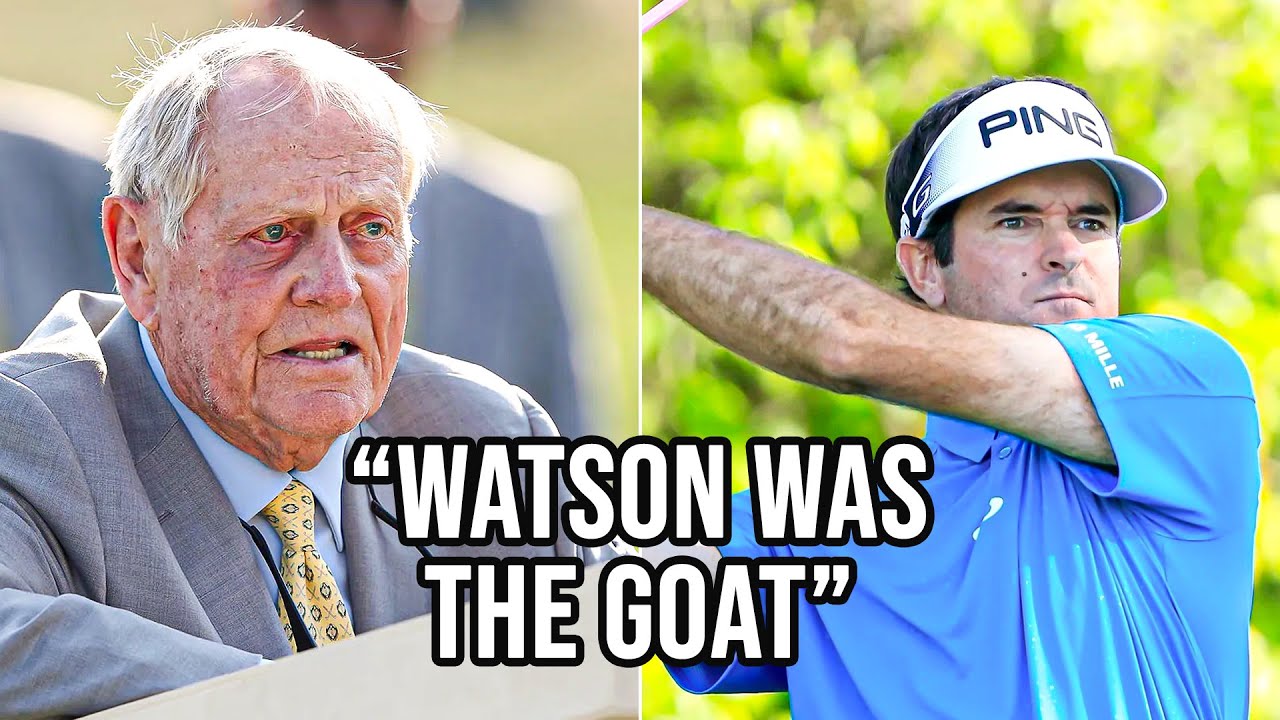
Some people think Bubba Watson was the greatest of all time, while others believe he never reached his true potential. But what do golf’s legends actually say about him? The truth might surprise you, because the sport’s most respected voices have validated Watson in ways that go far beyond his two Masters victories. From Jack Nicklaus praising his technical genius to Tiger Woods trusting him with team leadership, Watson earned respect that transcends tournament wins. Let’s explore what makes him so special in the eyes of those who know greatness best.
and then golf courses if people wanted to have a a champion. What do we hold the legends here? I think if he qualifies top six on points, I would personally like to see him play. I miss being out there. I miss competing. I miss mixing up with the boys and I like beating those guys. Some people think Bubba Watson was the greatest of all time, while others believe he never reached his true potential. But what do golf’s legends actually say about him? The truth might surprise you because the sport’s most respected voices have validated Watson in ways that go far beyond his two masters victories. From Jack Nicholas praising his technical genius to Tiger Woods trusting him with team leadership, Watson earned respect that transcends tournament wins. Let’s explore what makes him so special in the eyes of those who know greatness best. Jerry Lester Watson Jr., known as Bubba, stands as one of modern golf’s most fascinating figures. He won 12 PGA Tour events, including the Masters in 2012 and 2014, reached number two in the world rankings, and consistently bombed drives over 315 yards. But statistics alone don’t capture what makes him unique. Watson built his entire career without ever taking a single professional golf lesson. Not one. He learned the game at age six with a cut down nine iron his father gave him, hitting whiffle balls around the house. While every other modern champion studied under elite instructors and followed biomechanical principles, Watson trusted pure instinct and natural athleticism. This self-taught foundation makes him a profound historical exception. A throwback player succeeding in an era dominated by technical analysis and datadriven instruction. His swing looks chaotic to the untrained eye. Watson employs an aggressive, steep takeaway that keeps the club head outside his hands as he reaches the top. Then comes the truly unusual part. His kinematic sequence seems to defy basic biomechanics because he initiates his forward motion before completing his back swing. The club is still moving backward while his body drives toward the target. This creates massive torque that Watson immediately capitalizes on through powerful leg action. He plants his right heel early and uses his lower body fantastically with hips and torso opening significantly ahead of impact. The ground force he generates is so intense that his feet often stay planted until after the ball is struck, producing his characteristic balanced finish pose. The result, Watson topped the PGA Tour driving distance statistics five separate times in 2006, 2007, 2008, 2012, and 2014. At his peak, he averaged over 315 yards per drive with swing speeds reaching 194 mph. But raw power tells only part of the story. His self-taught mechanics grant him unparalleled control over club face angle and path at impact, allowing him to shape shots to extravagant measures. Watson is arguably the best shot shaper in professional golf, capable of bending the ball nearly 90 degrees when necessary. That extreme shot shaping ability produced one of the most legendary moments in Mast’s history. During the 2012 playoff against Louis Uisen, Watson faced a crisis on the second playoff hole. His T-shot on the par4 10th hole found pine straw deep in the woods with towering magnolia trees blocking any straight path to the green. From 160 yards out, Watson pulled a 52° wedge and executed a shot that seemed functionally impossible. He intentionally curved the ball in the shape of a letter C, hooking it nearly 90° around the trees and onto the green. The ball came in hot, settled near the hole, and Watson won his first major championship moments later. Phil Mickelson, a three-time Mast’s champion known for his own creative shotmaking, publicly stated he could not imagine duplicating that hooded wedge hook. Coming from someone of Mikkelson’s technical skill, that admission carries enormous weight. The shot that won Watson the green jacket showcased exactly what his untoured approach enables. Where conventional instruction would dictate laying up or punching out sideways, Watson saw a path invisible to mechanically trained eyes. His pure instinct and athletic freedom produced a result beyond the capacity of even the most accomplished peers. This brings us to Jack Nicholas, golf’s greatest champion with 18 major titles. Nicholas historically favored players who employed full rotational unrestricted swings that maximized natural power. He praised golfers like Phil Mickelson and VJ Singh for using classic techniques, often contrasting them with modern, more restrictive styles. Nicholas believed it was fundamentally impossible to generate more speed and power with a typically restrictive half-body modern swing than with a fully rotational one. Watson fits perfectly into the powerful archetype Nicholas admired. Analysts have compared Watson’s T-shot mechanics side by side with Nicholas’s own powerful action, revealing striking technical similarities. Beneath Watson’s unique external appearance lies a core efficiency of motion shared with the game’s legends. While his takeaway is idiosyncratic, detailed analysis of his downswing and release shows he utilizes a very classic swing through impact. The eccentric preparatory movements load his core for an elite classical ball striking release. Nicholas’s appreciation validates Watson as belonging to a rare group of powerful major champions who prioritize full natural rotation over a modern mechanical restriction. If you’re enjoying this deep dive into what makes Bubba Watson special according to Golf’s legends, hit that subscribe button and drop a comment telling me which current player you think has the most unique swing on tour. I read every single comment and your input helps shape future videos. Tiger Woods recognized Watson’s talent early, reportedly telling him directly that he was too good not to be winning. This established Woods’s acknowledgement of Watson’s raw major winning potential. But respect evolved into something deeper in 2016 when Woods elevated Watson to a strategic leadership role that shocked many observers. Captain Davis Love III appointed Watson as the fifth assistant captain for the 2016 Ryder Cup at Hazeltime, serving alongside Woods, Jim Furick, and others. This appointment raised eyebrows because Watson had missed selection as a player. Some reports suggested concerns over his perceived personality or lack of popularity among certain peers influenced that decision. Yet, the leadership group, including Woods, trusted Watson’s character to be a team asset despite or perhaps because of his emotional transparency. Captain Love explicitly stated they sought experience and possible future captain experience. The team actively wanted to utilize Watson’s enthusiastic personality, telling him to leave his clubs at home and just bring the personality. Woods’s acceptance of Watson in this role signified a maturation of respect. Moving beyond acknowledging raw potential to trusting Watson’s leadership and emotional influence within the high pressure team environment, Woods later reflected on the immense, often unappreciated work that goes into the captaincy side, confirming that players take it for granted. Watson’s presence provided necessary emotional balance and camaraderie following the controversial 2014 Rder Cup defeat. For Watson, the experience proved transformative. He openly discussed how much he learned from seeing the event from the other side, gaining crucial perspective on himself. He publicly expressed a desire to change who he was as a player if he made the team again, suggesting the leadership role fostered significant personal maturity and self-awareness. The vice captaincy served as a profound redefinition of his value to peers, confirming that Woods’s esteem had progressed from simple technical acknowledgement to full confidence in Watson’s character and resilience. Watson is famously emotional, often breaking down in tears after victories when discussing his adopted son, Caleb, or reflecting on his late father. He wears his emotions on his sleeve, providing stark contrast to the typically stoic demeanor of many tour professionals. This makes him a breath of fresh air and highly relatable figure. But his public emotionality is deeply connected to underlying mental strength, not weakness. After his 2012 Masters victory, Watson articulated a philosophy key to his resilience. “Golf is not my everything,” he said. By prioritizing life outside the ropes, including family and hobbies, like driving a classic car, he maintains critical perspective. This philosophical foundation prevents him from internalizing loss and allows him to go home and think about the great times rather than pouting over defeat. This capacity for rapid emotional processing and recovery is crucial for competitive longevity. It aligns perfectly with the definition of golf greatness, articulated by renowned coach Butch Harmon, the ability to recover from adversity faster than everyone else. Watson’s emotional freedom is not fragility, but a mechanism of mental toughness, allowing him to process high pressure situations swiftly and remains centered in a strong sense of self. Where other players bottle up frustration and carry it for days or weeks, Watson releases it immediately through tears or laughter, then moves forward with a clear mind. Watson’s influence extends beyond majors and team leadership into golf’s cultural landscape through the Golf Boys. He joined fellow PGA tour professionals Ben Crane, Ricky Fowler, and Hunter Mahan to form a humorous boy band that created viral music videos. They appeared in outlandish attire like jumpsuits, performing cartwheels, and choreographed dances. Their video, oh, garnered millions of views, and became the most popular non-tiger Woods golf content on YouTube at the time. The project presented a light-hearted, accessible side of professional golf, reaching audiences typically underserved by traditional media, but the endeavor was primarily philanthropic. Sponsored by Farmers Insurance, the videos raised significant charitable proceeds for various initiatives supporting causes like providing clean water to millions globally. The dedicated involvement of successful peers like Crane and Fowler in such a high-profile, light-hearted, humanitarian project underscores the genuine collaborative spirit and strong personal bond they shared with Watson. Webb Simpson provides the clearest barometer for the depth and durability of Watson’s friendships. The two were highly successful partners in team competitions, going 3-1 at the 2011 President’s Cup and 2-1 at the 2012 Ryder Cup. Simpson possessed unique perspective on his partner, noting that Watson’s best golf and personal demeanor emerged when he maximized the fun and joking elements of the game. Their friendship faced its truest test in 2022 when Watson joined the LIIV Golf League, creating significant polarization across professional golf. The move split the sport between the traditional PGA Tour and the Saudi backed Upstart league. Many friendships fractured under the pressure of conflicting loyalties and financial interests. Yet Simpson, who served as a PGA Tour policy board member and remained firmly on the traditional tour side, confirmed he and Watson remained tight. Simpson not only maintained the relationship, but publicly validated Watson’s decision, stating the move makes a lot of sense for him. Simpson offered the highest praise for Watson’s character by expressing regret that Watson’s move meant missing the opportunity to be a traditional United States team captain. “I think he would be an amazing captain,” Simpson said. Furthermore, Simpson publicly acknowledged the game’s loss due to division, stating the PGA Tour misses the personalities of LIIV. This open loyalty and defense of his friend, despite Simpson’s central role within PGA Tour structure, demonstrates that Watson’s authentic personal character and deep bonds are valued highly enough to survive even the sport’s most divisive professional schism. Watson formerly joined LF Golf in 2022. The decision was initially delayed by his significant fear of criticism and potential backlash. Due to a knee injury requiring surgery, he initially took a non-playing captaincy role with Nibcks Golf Club before becoming a full participant in 2023. The immediate aftermath saw Watson struggle mentally, physically, and competitively. He posted just one top 10 finish in 2023 and zero in 2024. At one point, finding himself in the drop zone facing relegation before successfully leveraging a business case to remain owner and captain of the Range Goats. Watson offered Canada assessment of his struggles, stating that the mandatory 14week LIIV schedule is fundamentally tougher than the traditional PGA Tour schedule. On the PGA Tour, golfers choose from approximately 40 events, allowing specialists to select the top 20 courses that fit their game. This flexibility is vital for a player like Watson, whose genius lies in high curvature, long distance, and strategic positioning. These skills flourish on classic treelined courses that reward shot shaping like Augusta National over modern open layouts. Conversely, the LIV model requires participation in all 14 events, regardless of course suitability. Watson noted that no matter if all courses are bad for you or good for you, you have to change your game and try to figure out how you can attack each course. This public critique confirms the limitations inherent in his non-uniform instinctual style. His self-taught art is hyper effective on specialized courses, demanding creativity, making uniformity a significant challenge. This reveals the specialist’s paradox. The unique freedom of his swing grants extreme capability in unorthodox situations. But that capability is not designed for universal applicability across every type of golf course architecture. Despite initial challenges, Watson demonstrated competitive drive and analytical willingness to adapt even as a self-made veteran. He experienced resurgence in 2024, achieving tied for fourth and tied for seventh finishes. This improved form is attributed to technical adjustments, notably switching to a new mallet style putter and gaining confidence through input from a new caddy. These changes significantly impacted his short game, improving pudding metrics. His current efforts to compete and lead the Range Goats as owner and captain continue the leadership path validated by his RDER Cup experience, underscoring that his commitment remains focused on both highle competition and team structure regardless of tour affiliation. So, what makes Bubba Watson special in the eyes of golf’s legends? It is a synthesis of technical genius and emotional authenticity validated by the game’s ultimate authorities. Jack Nicholas recognized in Watson’s self-taught approach a maximization of natural rotational power, seeing a necessary throwback to classical ball striking principles. The technically impossible shots Watson executed, particularly the 2012 Mast’s hook, remain permanent testament to the unimmatched effectiveness of his untuittered art. Tiger Woods in the United States captaincy demonstrated profound trust by selecting Watson for crucial leadership roles, confirming that his emotional transparency and experience were key assets in building team unity. His enduring relationships with peers proven by the successful charitable collaboration of the Golf Boys and the loyalty of Web Simpson across professional divides confirm that Watson’s personal character transcends institutional or financial allegiances. Watson’s place in golf history is that of an irreplaceable anomaly. He is a self-taught high-power artisan whose success provided powerful challenge to the notion that technical conformity is required for major championship success. In an era where biomechanical analysis and instruction manuals define every aspect of the modern swing, Watson proved that organic athleticism and pure instinct can produce results that outperform mechanical prescription at the highest levels. His career stands as compelling celebration of athletic instinct over mechanical instruction. The self-made champion secured his place among the game’s elite, earning two green jackets by daring to play shots others deemed impossible. His willingness to be emotionally vulnerable, coupled with commitment to humor and charitable work, solidified his status as an approachable and compelling figure both inside and outside the ropes. The legends of golf and Bubba Watson something rare and valuable. They see a player who defied convention and succeeded anyway, who remained authentic in a sport that often demands conformity, who built genuine relationships in a competitive environment that can isolate individuals. They see someone whose unique path validates the principle that greatness comes in many forms, not just the ones prescribed by instruction manuals and swing coaches. If this exploration of Bubba Watson through the eyes of golf’s greatest players gave you new appreciation for his unique legacy, make sure you’re subscribed and let me know in the comments which aspect of his career you find most impressive. His self-taught swing, his emotional authenticity, his charitable work, or his ability to maintain friendships across professional divides. Your thoughts matter and I’ll see you in the next
1 Comment
I have a friend who was lucky enough to get tickets to the Masters. He called me after a Thursday round and told me he stood on the plaque that marks the spot on the 10th where Bubba hooked that shot onto the green. He told me that nobody who has seen that plaque can believe that he actually could make that shot !