With his hands in his pockets, the 16-year-old stood calmly as he waited for his cue. Billed like a curiosity at a Victorian circus by the master of ceremonies — “ladies and gentleman … the sensational Luke Littler” — the boy soon strolled to the Alexandra Palace stage and mauled his first victim; Christian Kist never stood a chance.
Littler hit seven 180s and a 106.12 average in a 3-0 whitewash that night, the first of an unprecedented run to the PDC World Darts Championship final and one of the most electrifying ascents in British sporting history.
“It was when he beat Raymond van Berneveld [in the fourth round]. That was the real moment when it was like: ‘right, this is serious now.'” PDC chief executive Matthew Porter tells ESPN.
“The numbers we hit on Sky for that were just off the charts compared to what we should have got for that night. The media coverage and the whole bandwagon just really kicked off from there.”
Defeat in the final to Luke Humphries denied Littler a fairytale ending, but his rise to global stardom could not be halted, only delayed. He was the Premier League champion before long, and an increasingly viral sensation with every successive nine-darter. Twelve months after his loss to Humphries, Little held the world championship trophy above his head after a 7-3 demolition of three-time champion Michael van Gerwen.
Luke Littler is gunning to defend his World Darts Championship crown this month. Andrew Milligan/PA Images via Getty Images
Now 18, Littler hasn’t been limited to a spot behind the oche.
A fitting icon for a generation shaped by DIY digital creators, Littler has made the leap from his bedroom to the big time. Where his darting predecessors became pub landlords, he has been featured in Forbes magazine and become the UK’s most searched-for athlete — last year, he ranked behind only the Princess of Wales and U.S. President Donald Trump as Google search subjects.
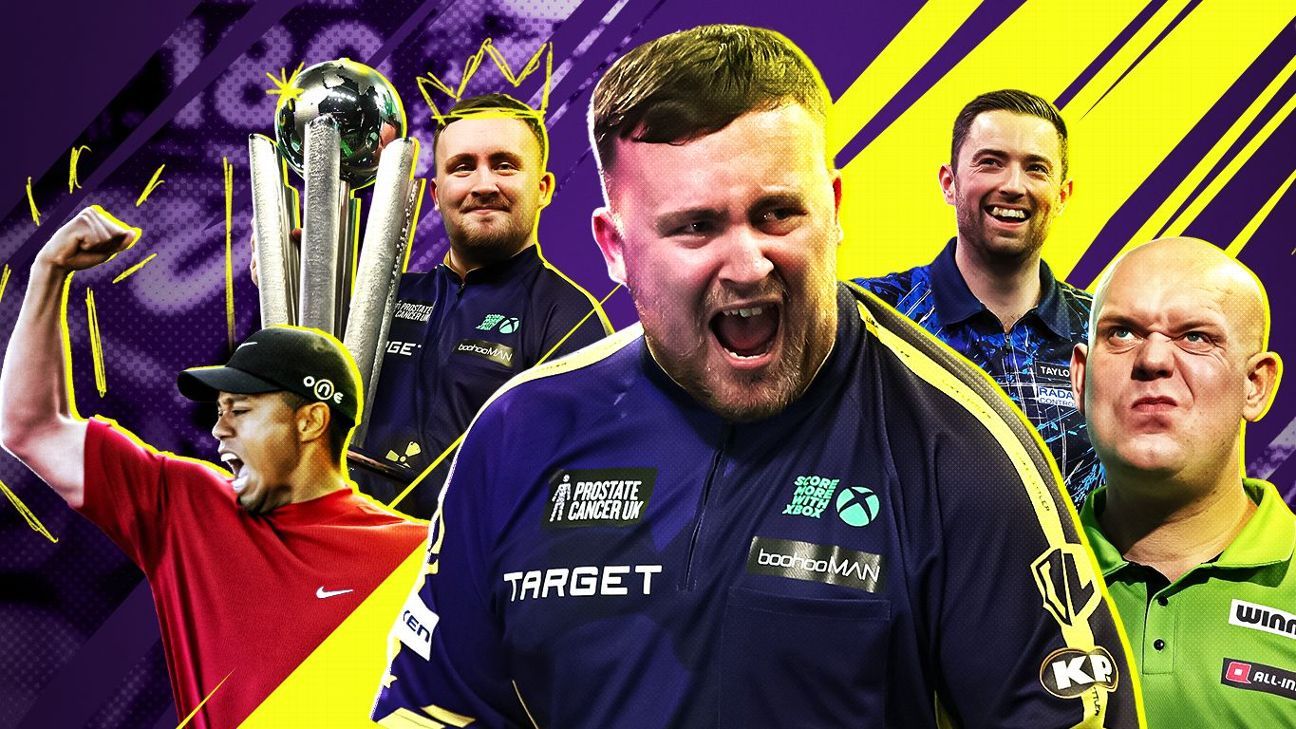
Darts is still feeling the aftershocks of ‘The Nuke’s impact. “The Luke Littler effect” has been compared to Tiger Woods’ reinvention of golf from a niche pastime into a star-studded global spectacle.
But does Littler himself think he’s had a similar influence on darts?
“I definitely have,” Littler tells ESPN.
“Obviously winning the Premier League on debut, the first world championship, got to the final. And then obviously the increase in prize money comes in. Yeah… it’s down to me a little bit.”
The Tiger Woods effect
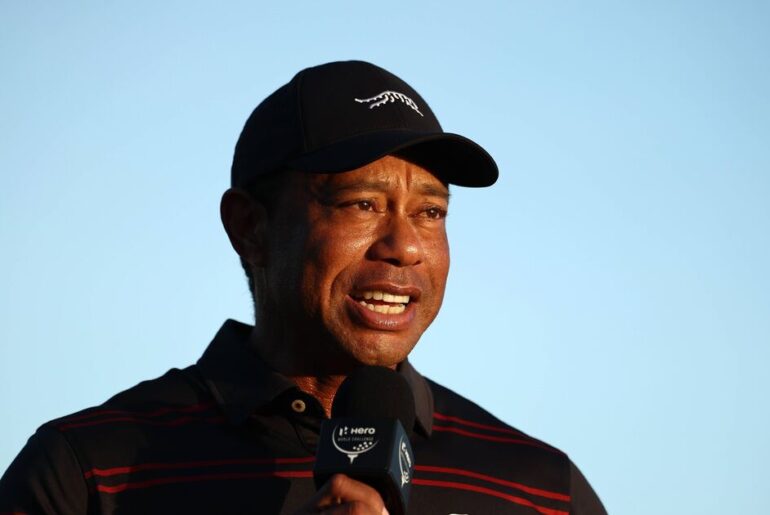
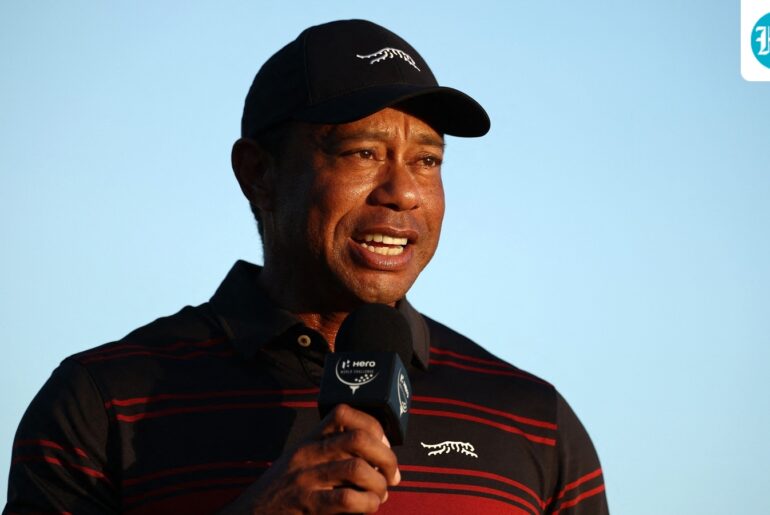
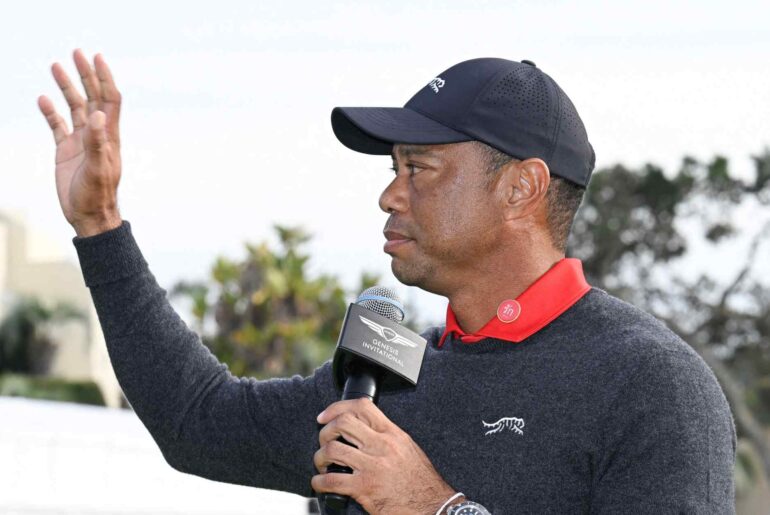
Twenty-seven years before the cameras zoomed in on Littler for the first time, Woods spoke to a salivating national media ahead of his pro debut in Milwaukee. “Hello world,” he said into the microphone hovering below his chin. Now one of sport’s richest men, Woods’ success went onto generate more than $1.5 billion for his rivals.
“I’ve told him, and I’ve said this before, nobody has benefited more from having Tiger in the game than myself,” Phil Mickelson said in 2014 as Woods’ powers began to wane.
“I remember when I was an amateur and I won my first tournament in Tucson in 1991, the entire purse was $1 million, first place was $180,000 and Steve [Loy, my agent] and I would sit down and say, ‘I wonder if in my lifetime, probably not in my career, we would play for a $1 million first-place cheque.'”
Tiger Woods’ golfing genius completely changed the economics of his own sport. AP Photo/Dave Martin
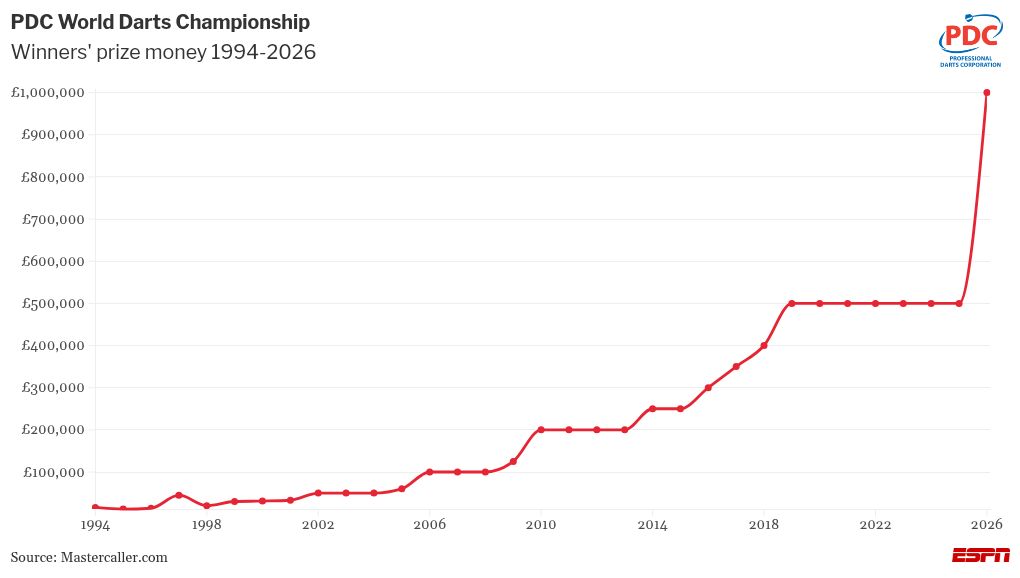
In darts as in golf, a rising tide lifts all boats — the feeling Mickelson described is one now being processed by the 128-player field heading to Alexandra Palace this winter as they compete for a record £1 million top prize — double what has been on offer in the world championship for the past seven years.
The Woods-style “Luke Littler effect” is one his greatest rival, Luke Humphries, says he’s embracing.
“Exactly that. Yeah, I think he’s like that change that sport sometimes needs. It just needs a big figure to come in and really bring attention to it,” Humphries tells ESPN.
“Golf was really big anyway before Tiger, but he brought a new level to it. What happens is the golfers now are thankful for Tiger because he’s now [earned them] a lot of money. But I think darts players in 20 years’ time will be very thankful for Luke because they will probably be earning £5 million for winning the world championship.
“It’ll be mostly because he’s brought a new generation of youngsters into the sport.”
What do his rivals think?play
0:37
Humphries: Becoming two-time world champion would mean more than £1M prize
Luke Humphries speaks about the £1 million prize at the World Darts Championship.
Attempting to make a living from darts is still risky business. Salaries are performance-based, and players need to cover flights, hotels and various other travel expenses with their winnings before they even get to a profit. A new PDC Tour Card holder has two years to prove they are at the required level — fail to earn their keep and they’re back where they started. The competition is fierce and with Littler’s emergence bringing fresh talent into the sport, it’s only getting tougher.
But the total £5 million total prize fund on offer this year to the expanded 128-player field — also double the amount available in 2024-25 — will be felt most keenly further down the rankings.
“Obviously, I’ve had a massive impact and, obviously, with the increase in prize money,” Littler says.
“I’ve played a massive part in the sport, but so has Luke Humphries, Michael van Gerwen — he’s been around for many years, Gary Anderson’s been around for many years. But yeah, I think the increase in prize money has not only helped myself, but it’s helped everyone else on tour.”
Luke Littler and Luke Humphries have been at the top of the sport for the past two years — but have they both receieved their fair share of credit? Ryan Hiscott/Getty Images
Do the other players appreciate the effect his impact has had on them?
“I think so. They should do because they’re playing for a lot more money,” Littler says. “If they win you can keep their Tour Card. They can be on the Pro Tour for many more years to come. I’ve just got to keep going.”
The increase to the total prize pot is also something PDC CEO Porter is keen to point out.
“To get £15,000 guaranteed when you qualify — for the rank-and-file members and the players who are trying to become professionals, that’s a huge help,” he says.
“Obviously they’ll have tax to pay and expenses to pay, but it will still be a big contributing factor towards their ability to fund themselves on the tour for the following year.”
However, Littler’s pull can have its downsides. The 18-year-old’s fight to leapfrog Humphries in the world rankings was considered a case of when, not if, in the months leading up to the world championship. Littler finally managed to overhaul ‘Cool Hand Luke’ by reaching the final of the Grand Slam of Darts (in which he beat Humphries 16-11).
In the aftermath of defeat, a genuinely gracious Humphries said he felt that he hadn’t got the recognition he deserved during his nearly two years at the top of the sport. “It’s no one else’s fault than the media’s because they’re the ones that control it and if they want to push me they can, but they decided not to, or do it as much [as Littler],” Humphries explains to ESPN.
Why darts has changed for good and bad
Darts’ growth is causing organisers a headache.
Tickets for this year’s world championship followed on from last year’s event in being bought in their entirety by PDC members during their pre-sale window, never reaching general sale. The demand has been likened to the ticket frenzy that surrounds the Glastonbury Music Festival. While its status as the home of darts is safe until 2031, the sport’s popularity is outgrowing what the Grade II-listed Alexandra Palace can accommodate.
Darts’ TV viewership figures now outstrip those achieved by other major events on the British sporting calendar. A peak TV audience of 3.7 million watched the 2024 final that Littler lost to Humphries — a figure that was comfortably Sky Sports’ biggest for a non-football event. The World Darts Championship is now bigger than the Ryder Cup, bigger than The Ashes, bigger than the British and Irish Lions tour.
Naturally, this Littler-inflated growth has led to a new £125 million broadcast deal, reportedly worth double the value of the previous contract.
Luke Littler lifted the coveted Sid Waddell Trophy for the first time after beating Michael van Gerwen in the PDC World Darts Championship final last January. BEN STANSALL/AFP via Getty Images
In an effort to satisfy audience interest, more tournaments — some with expanded fields — have been added to the already packed calendar. A stop in Saudi Arabia has been added to 2026’s schedule alongside nights at New York’s Madison Square Garden and London’s O2 Arena.
But growing pains have been felt by its star players. Humphries said in April that playing had come to feel like a “chore” and the relentless schedule has left him “emotionless.” Gerwyn Price quickly backed up Humphries’ frustrations following a Round-of-16 defeat to Nathan Aspinall in Germany. “Gutted to lose today but so happy to be on the way home. Too much darts,” he wrote in a post on social media.
It’s an issue Littler has said needs tackling.
The Luke Littler generation
Gone are the days when players made their names in the corners of smoky pubs; now skills are honed at home with scores meticulously recorded via apps. It’s opened up the sport to a new generation proving themselves capable of the unthinkable.
Former women’s No. 1 Lorraine Winstanley has witnessed the sea change as part of her role as head of youth development at Target Darts, Littler’s sponsor and now management company. She witnessed the passing of the torch first-hand when her partner, former Grand Slam semifinalist Dean, faced a young Littler.
“We went to the Isle of Man and — I can’t remember what year it was — but Luke was about 12 and he came up to Dean and said, ‘if you win your first game and I win my first game, we play each other …I’m going to beat you 3-0,” Winstanley remembers. “And Dean was like, ‘this young whippersnapper and whatnot.’ Yeah, Luke beat him 3-0 and has never ever let him live it down. So that moment will always stick with me. And he’s never looked back.”
Luke Littler became the world No. 1 this year and is now the face of darts. Ross MacDonald/SNS Group via Getty Images
Littler could be just the tip of the iceberg. On the same day in October that Littler booked his place in the World Grand Prix quarterfinals with a 3-0 win over Mike De Decker, a then-14-year-old Mitchell Lawrie threw a nine-darter in Glasgow. It was the latest sign of the talents boasted by a new generation of players that has got darts aficionados already looking for what’s next.
“That wider audience is all good for the game, isn’t it?” Winstanley says. “It’s encouraged younger players to get involved at a younger age. Before they were sort of perhaps coming into the game at like 15, 16. Whereas youngsters, babies, are starting to play. Some of our academies have got some real young ones, age five, six attending the academies on a regular basis.”
Littler came through Target’s Elite 1 programme that Winstanley now runs and she is keen to stress that, despite his multi-million-pound earnings, the world No. 1 hasn’t forgotten his roots.
“He does pop into the academy,” she reveals. “He will just turn up unannounced every now and again. I mean that is huge for those kids. Can you imagine? I mean for me it would’ve been like Phil Taylor walking in the pub going back years ago. So it’s magical for them. Absolutely magical.”
However, Littler’s rise could have sown the seeds for his own downfall. The next Luke Littler could feasibly be among the hundreds of thousands of kids who opened last year’s must-have gift on Christmas morning: a magnetic dartboard.
Is the Littler effect overblown?Luke Littler has taken over the world of darts. Now comes the task of staying there. Harry Trump/Getty Images
Perhaps Littler’s impact on a sport that was already experiencing impressive growth has been given too much weight? After all, tickets are sold for the event, rather than the player. The man he vanquished in January to lift the Sid Waddell trophy certainly thinks so.
“I think it [Luke Littler’s emergence] helped as well, but I think this was going to happen anyway in my opinion,” Van Gerwen tells ESPN.
Porter agrees.
“As much as Luke’s had a really positive impact on the sport, it’s been growing for a good number of years and it’s obviously grown significantly since Luke’s emergence. But we were headed in the right direction and Luke’s accelerated that growth,” Porter, who also points to COVID-19 lockdowns as a key step in boosting darts’ appeal, says.
“But I think the million-pound prize to the winner of the world championship was something that we’ve always had in mind as somewhere to get to. We’ve maybe just been able to get there a little bit quicker, but it was always going to be a target that we were going to hit.”
Littler’s appeal remains largely UK-based, with punters in the Netherlands favouring their compatriots and crowds in Germany delighting in trying, and often succeeding, to rile the world champion.
Luke vs. ‘The Nuke’
What effect will “the Luke Littler effect” have on Luke Littler?
“Of course. He’s a very young talented player. He doesn’t have any fear, but he’s also going to face his next phase of his life,” Van Gerwen says.
“He has a girlfriend now, maybe one day he’s going to have a family. He still lives with his mum at the moment and is with his parents. Everything is done for him. But things will change for him as well at one point. But overall, he’s a fantastic player and he’s a good kid.”
Past examples of young stars show that a point will come when they fall — or are pushed — from the pedestal they were placed upon. Littler’s age has perhaps meant that, so far, he has remained untouched by certain forays into his private life.
A motorway car chase from a photographer in early November which Littler said left him “shaking with nerves” perhaps gives an indication of what the future may hold as his fame continues to grow.
Darts has exploded in popularity since Luke Littler turned professional two years ago. James Fearn/Getty Images
“Most sports, they just want one player… they just want to build them up. But usually when they build them up, they’re happy to see them from crashing down because they’re straight on it,” Humphries says.
“I’m happy I’m not there. I’m here, I’m happy with that.”
The former world champion admits that he thinks Littler has improved his game since he first demolished Christian Kist two years ago.
Indeed, where Humphries has often swapped titles with ‘The Nuke,’ he has been beaten by him in the last three major finals.
As his world championship title defence gets under way, Littler is in perhaps the best form of his life. The world No. 2 says he fears his rival is getting even better.
“I think he’s probably just got more consistent,” Humphries says. “I think that’s probably the thing that’s changed in him. Hopefully he doesn’t get too much better. It’ll start getting even harder.”
– Luke Littler darts titles, prize money, career history, more
– World Darts Championship: Schedule, how to watch, prize money