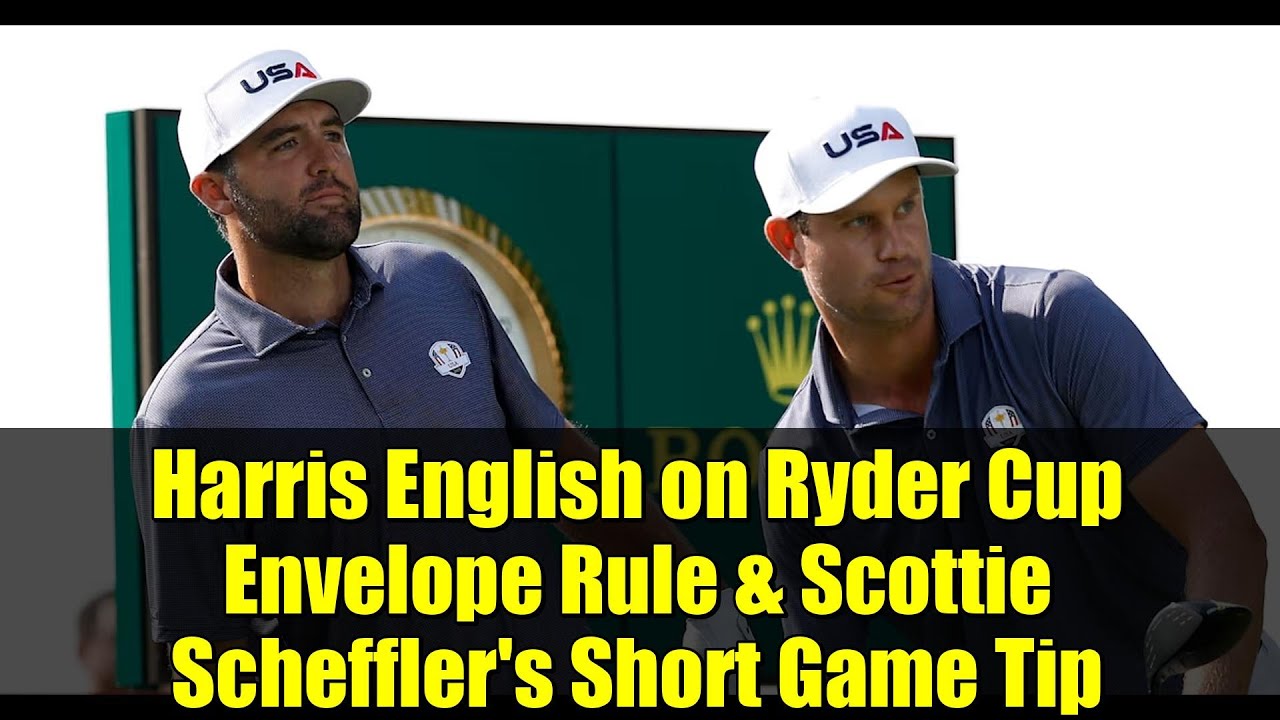
Harris English opens up about the controversial Ryder Cup envelope rule that kept him from playing Singles, calling it ‘a real bummer.’ He also shares a game-changing short game tip he learned from Scottie Scheffler during a practice round. Discover how Scheffler’s simple approach to tricky lies can improve your own short game!
This video dives into:
* The Ryder Cup envelope rule and its impact on Harris English
* English’s candid reaction to being sidelined
* Scottie Scheffler’s genius short game technique for into-the-grain lies
* Insights from English’s experience at the Ryder Cup
* Plus, highlights from the thrilling Ryder Cup comeback attempt!
Picture this. You’re pumped up, ready to dive into the ultimate showdown of your professional life, only to get yanked out by a quirky rule that leaves you on the sidelines. That’s the raw emotion Harris English poured out about his RDER Cup experience, where a little known regulation turned his dream day into a major disappointment. But here’s where it gets controversial. Was this rule fair or does it need a serious overhaul? Stick around because this story dives into the drama, the disappointment, and even a game-changing tip from golf’s top star that might just revolutionize your short game. Harris English, a talented golfer from Georgia, was all set to contribute to a thrilling American comeback in the RDER Cup’s final singles matches. The Ryder Cup, for those new to the sport, is that intense bianial showdown between top American and European golfers. Think of it as golf’s version of a highstakes international soccer rivalry where teamwork and individual brilliance collide. English had been dreaming of this moment, aiming to shine in what he called one of his top goals for the year. But fate, or rather an unfortunate injury to European player Victor Hovland, threw a wrench into the works. Havland, battling a persistent neck issue, aggravated it during a Saturday team event called fourball, a format where pairs compete, one golfer per team hitting each shot. Unable to continue, Havland had to sit out the crucial Sunday singles matches, triggering the envelope rule. This rule established way back in 1971 and agreed upon by both teams before the tournament is designed to handle such injuries fairly. It works like this. When a player withdraws due to injury, their singles match is automatically halved, meaning both teams get half a point and a pre-selected opponent from the other side whose name is in a sealed envelope to keep things impartial, also misses out. English was that unlucky draw, marking only the fourth time this rule has kicked in since its creation, and the first since 1993. Neither player got to compete, and the match was declared a tie, awarding each side 0.5 points. In a candid chat on SiriusXM, English didn’t hold back. He was pretty pissed about missing out. I was all geared up, excited to tackle a Sunday singles match at the Ryder Cup. Making the team was one of my biggest goals this year, so losing that chance to play felt awful, he shared. Havland, feeling the guilt, echoed those sentiments. I felt really bad for Harris, who didn’t get to play despite being perfectly fine. He was understandably upset about it. At first, this seemed like a minor blip in Europe’s dominant victory at Beth Page State Park, where they led by a massive seven points. But as the Americans mounted an epic rally, nearly erasing that deficit in one of the wildest comebacks in Ryder Cup history, that half point became a hot topic. Europe ultimately won 15 to13. But imagine if Havland had been forced to play injured or forfeited the point. It could have shifted the entire momentum of the afternoon. And this is the part most people miss. The rule sparked heated debates. US Captain Keegan Bradley pushed for reform, declaring it obvious that changes are needed. While European captain Luke Donald stuck to tradition, the rule is the rule, and it’s been around forever. It’s easy to see both sides. On one hand, it protects injured players from risking further harm. On the other, it denies fit players like English their moment in the spotlight. This controversy highlights a broader question in sports. Should rules prioritize player safety or should they always reward preparation and ability? English staying positive amidst the drama raved about his teammates and captain Bradley and expressed hope to qualify for the next RDER Cup in 2027 at a Dare Manner in Ireland. Shifting gears to something more inspiring, English opened up about a practice round at the Ryder Cup with fellow American star Scotty Sheffller. Sheffller, often called the world’s best golfer, shared a simple yet brilliant tip for handling tricky short game shots, specifically those pesky lies into the grain on greens where the grass resists the ball’s roll. English had always struggled with these, trying to draw the ball to make it curve right. But Sheffller kept it straight forward. Square your club face, adjust your stance slightly, and chip it like a standard shot. He hits it with a square face and tweaks his stance a bit, English explained. I used to think drawing it was the way, but this comes off the club the same every time. No guesswork. For beginners, think of it as choosing a reliable routine over fancy tricks. Sheffller’s method ensures consistency, turning a frustrating shot into a confidence booster. It’s a reminder of his magician-like touch around the greens. And English, a fellow field player, loved how it clicked for him right away. This interaction deepened English appreciation for Sheffller, whom he described as a genuinely nice guy despite his elite status. They bonded over practice rounds and English also connected with players like Bryson Deambo. Sheffller leading the PGA Tour in scrambling percentage this year, bouncing back from tough lies to save par is a master at this with English not far behind in the rankings. It’s a great example of how top players share knowledge to elevate the game. And English, now competing at the RSM Classic in his local Sea Island area, might channel that Shefflla magic as the field’s top ranked player. As he steps back into competitive action for the first time post Ryder Cup, fans are eager to see if that short game wisdom pays off. What do you think? Is the envelope rule a fair way to handle injuries in high stakes events like the Ryder Cup? or does it unfairly punish players who are ready to roll? Should sports prioritize tradition or adapt for excitement? And how about Sheffller’s tip? Could it help your game around the greens? Drop your opinions in the comments below. Let’s debate this and share our takes.