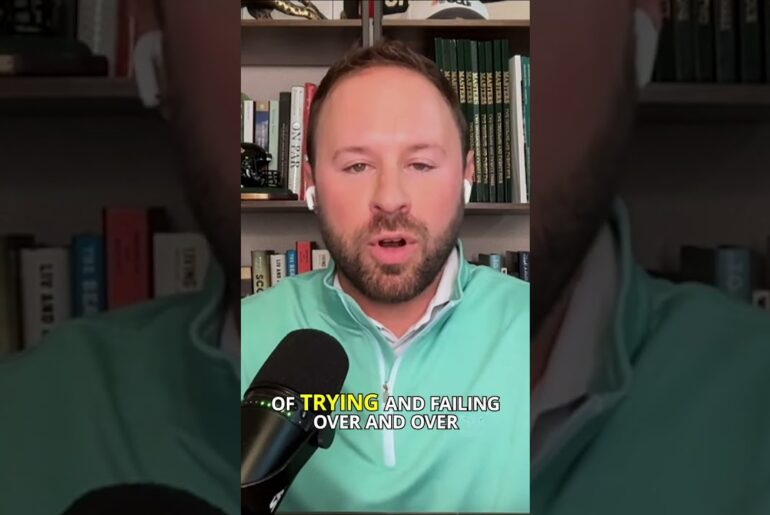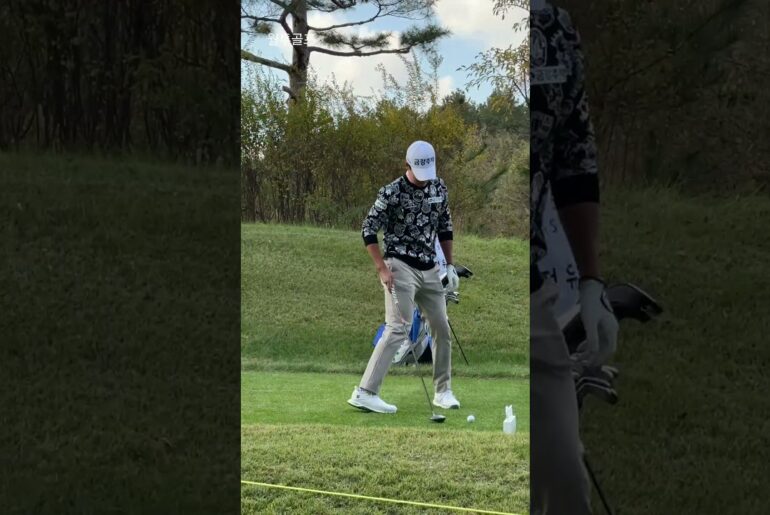

Want to hit tough wedge shots like a PGA TOUR pro? Cameron Young joined @meandmygolf to break down his step-by-step approach to these tricky situations. Learn how different lie conditions impact launch, spin, strike location, and trajectory, and see the adjustments Cameron makes to stay consistent under pressure.
Check out Cameron’s full setup: https://www.youtube.com/watch?v=nPzXKHI7SuE
» Subscribe to Titleist: https://www.youtube.com/@titleist?sub_confirmation=1
Okay, so we’re here at the Titus Performance Institute. What a place this is. And we have Cameron Young and we’re doing tough spots and we’re going to kick off with a It is pretty tough actually. We’ve got a down slope to a tight pin. We’ve got about maybe 20 yards here. We’d love to get your thoughts on how you make these look so easy for the amateur golfers at home. And just your approach to to a few shots. Let’s let’s kick off with this one and just talk us through what are you thinking when you get to this shot? Oh man. Um, I’ve probably made a course management error to get here. Um, the cut sucked. Yeah, I’m Yeah, that’s that’s my probably my first instinct. Um, but yeah, I mean, anytime you’ve got down slope like this to me and you’re trying to stop it, the the thing you’re going to find the most difficult is creating height. Um, because you can you can create spin with strike. Um, but something like this, spin is probably not enough just because of being on a down slope. you’re landing on a pretty flat green. Um, so kind of height is your friend. And for me, uh, one of the ways I do it is is introducing just a little bit more rotation in the back swing for me. Uh, seems to help me create some height. And then I can also do, you know, a little steeper attack angle. So, kind of I’ll choose either one or both to help me create a little bit of height. And you say rotation of the face in the back swing. Yeah. For me, because usually I’m I’m pretty I don’t break my wrist much. Uh, I feel like I don’t really rotate the club much. And when I start to feel like I roll it just a little bit, I think it just helps me keep the face more open through the ball and creates a little bit of height for me. What would you say in this scenario here? Let’s say you’re in a tournament. What would be a realistic expectation for you? Like what would you be happy with? Um, I mean, we’ve got a bit of breeze which is definitely helping. Yeah, the breeze is helping me. Uh, I think anything where I feel like a really good putt goes in. So like anything inside of six or seven feet where if I hit a putt how I mean to that goes in I feel like it’s a pretty good shot here. Okay. Cuz that’s a big part of it, isn’t it? I think and you played in plenty of proams and expectations of what an amateur golfer would have in this situation. 20 ft is fine if you’re on the green. On the green. Yeah. Um yeah, for for your average golfer, it’s just you can’t you can’t leave it in that bunker or something like that. It’s just get it on the green. So, our standards are a little higher, but there is an element of that to it. I mean, there’s, you know, it’s shot selection, I think, is important just in terms of limiting your risk with the potential to hit it close. I think one of the hardest things for amateur golfers in this scenario is is contact. It is the the priority in this. How would you how do you figure out your stance here to give yourself the best chance possible based on this slope? uh based on the slope. I mean I I think um a lot of a lot of contact to me is just how you kind of maintain relationship between my whole left side and the club face. Uh like the more tension I can create there where all all the club face and club head motion is dictated really by all this stuff is is how I do it. Um, so for this one, I’d be obviously I’d be probably leaned a little bit with the slope. Not too much because I want to still get it up in the air. Yeah. And, um, not that I’m going to be doing anything like this, but, you know, I don’t want to be driving it into the ground either. Y um, so this one I probably would I probably would try to hit my shot with a little bit more rotation. Um, to me it kind of feels like I take it up and almost like lay it off a little bit. That just helps me. In real life, it’s not that, but that’s what it feels like to me. Um, and that should create a little bit of height. So, we’ll see. Got a little bit of wind helping me. Face a little open address just to help with a with a bounce. Yep. Face a bit open. Um, kind of just opening the face and then gripping it. I don’t not going to do anything like that. Um, but yeah, just a little bit of rotation in the back swing for me and then just kind of trying to trying to slide it under the ball. I’m not going to, you know, take a big divot or anything. It should be pretty shallow. I love the practice swings. The practice swing is that you, you know, so important for anyone watching this that they get used to understanding where the ground is and getting that feel of what you’re after when you hit the shot. Yeah. And getting getting used to a speed that feels appropriate that you’re not like you might get in there and take a practice swing and decide, oo, that feels like a really inappropriate length swing for this shot. Like it’s, you know, it’s not big enough for I feel like I could hit it 100 yards. So, I’m trying to pick a shot where I feel like the misit is somewhere acceptable. Yeah. Love that. I love that. So good. Such great information. This is now that the wind has died and it’s gotten harder. 15 ft now is good. 15t. Anything over the bunker is good. Okay. And this is 60. Yeah, this is this is 62 actually. 62. Okay. Oh, I’ve just left it short. So nipple. It was a really good It was a good strike. Yeah, it was really good. I was really happy with the strike. It’s a tricky one. I mean, look, we see this all the time, Andy. A golfer in this situation be trying to lift it forward on their back foot. Yeah, it’s it’s all contact like you guys said. That was my first chip of the day. It’s not fair. There we go. Loaded as well. That is Yeah. Beautiful. I mean, look at that foot. What would you do, Cam, if if if the wind was the other way around? The other way around. You’d have to just be a little bit more accepting that you’ve made a mistake here. Would you ever go like left or right of the flag? I mean, you haven’t got a lot of difference, I suppose. Yeah. I mean, I think it would depend just on, you know, this specific shot, I don’t think you really gain much going one way or the other. But if you do get in a really tough spot, sometimes you’ll have a slope like here. I mean, if it was really bad going left, the green does eventually kind of just go up a little bit and going right it could get away from you. So, I I probably would would hedge that way. Especially with a face this open, it’s kind of going to be going this way. Well, that that was superb. Should we go to this one here? Should we go into this? I don’t want to try that again. I’m done. Let’s leave that one. Thank you guys for that. Um, I’ll bring some other wedges just in case. But let’s Andy, let’s go to this black and white flag over there, shall we? So, we actually need to actually Do you need to know how far that is, actually? Uh, 47. It’s fine. 47. There we go. He’s tuned in. He’s got his inbuilt right inbuilt GPS. Yeah. I like what you’re saying about the left shoulder, though. You got to point. It’s almost like that’s driving the motion, isn’t it, for you? Yeah. For me, that that’s that’s where I I can avoid throwing it with my hands or if I feel like if I manipulate it with this, the mistakes are just smaller. Whereas, if you’re trying to use your hands and stuff, the mistakes can get bigger. You can hit some more spectacular shots with your hands. But I think the mistakes get smaller. Yeah. The more I kind of try to simplify the motion. And throughout a season, that makes a big difference, doesn’t it? Yeah. Yeah, for sure. I mean, if you you make a you never know like when when a bogey is fine and a double is awful throughout the course of a season. And if you know, you make a small mistake and you happen to make a bogey, you’re probably better off, you know, playing that shot more than the really risky one. For sure. Well, this one’s an amateur’s dream to play this shot, so I’m sure it’s the same for you. So, it’s eight on from that side, seven from the right. So, obviously you got seven yards past the flag and then probably seven yards left of it. Okay. And I would say it slopes towards it and obviously got wind off the left as well. Yep. Um Yep. All right. I’ve got a couple What have you brought? I’ve got 52 and 56. Okay. I probably would go with the 50. This is 57. Okay. Um yeah, the the biggest thing here is just getting comfortable with with hitting a different club out of the bunker. Um they just they do react differently. I mean, with different soles like that 62, if I really need to, I can go right under something. Whereas a 57 or 52, it’s just not going to dig the same way. Everything’s gonna come out a lot flatter. So, this is Kstar in the 60, correct? Which is which is we know for a fact this is really good in bunker shots. Great. I’ve loved it. Um, yeah, that was a change we made last year that I think drastically I was in a super low bounce which was really really fun sometimes and other times not so much. which we were talking actually off camera earlier saying how you are renowned as a phenomenal ball striker but your when we looked at your short game stats and wedge stats last year made some big improvements that’s obviously something you said was a conscious effort but was the equipment important for you as well yeah absolutely changing out some things we we moved we moved that a degree of loft we moved this a degree of loft um and then changed that grind y so it’s been it’s just little tweaks nothing major um But just giving myself I I’ve learned to pitch with the 57 a lot. Uh we’ve kind of found that certain weeks kind of we week to week we find which club on a simple pitch just rolls like a putt. And some weeks it’s this, some weeks it’s 52 uh when it’s a little softer. Yeah. But having that option and being comfortable with it has made a lot of the simple ones that I used to just hit 62 Okay. a little simpler. Yeah. And I feel like all of a sudden my distance control has gotten a lot better and I have a lot more tapins as opposed to three-footers or four-footers. There we go. Beautiful. Which has been really nice. But back to the 50 yard bunkers. So key thing on this again, it’s all strike. How do you, you know, what are you thinking? Is there an intention? How do you play the shot so you can again give yourself the best chance possible of taking this clean? I presume you’re taking this relatively clean. Um, from there I probably won’t. Um, I would I would play some kind of explosion shot, I think. I’m I’m lucky to have a good bit of speed and I also naturally have a lot of lean. So for me, these I think aren’t quite as hard um just because naturally I want to really go after it that way and take some loft off of it. Um so I really will kind of just put it like a little back of middle in my stance. Okay. And deloft it and hit an explosion shot all the way there. Well, I’m excited to see this. I’m excited to see this now because this is different. This is different. I don’t know if that’s what what other people do, but that’s my all left of it cuz I know it’s going to come out kind of fading a little bit. Oh, I’ve hit it too far. Oh, you know what? Loaded with spin would have had so much because it’s coming back off that bank for sure. Oh, yeah. This sand is actually quite firm. Makes it a little easier. That sounded so good. Now it’s just got a spin. Oh, it should. Yes. Beautiful. It’s interesting. You just said then you you felt the sand was firmer. Yeah. I thought I based off my feet, I didn’t really dig in much. Okay. And I felt like it was going to be a little bit more powdery, but there’s a bottom to it underneath which actually makes it a little easier. So So how did you adjust for that then in the second? Uh just a little just a little bit softer, a little more open face. There we go. Beautiful. Um yeah, I hit one a little more. hitting just a little bit before the ball on these shots. Just a bit. Yeah, it’s it’s close to it obviously, but not extreme where I feel like I’m going to actually pick one clean ever. Yeah. Yeah. Um and obviously it depends. Like this one, you know, if I miss it, there’s a little back stop. So, if I miss it eight long, it’s going to end up back on the green where short is you’re left with another bunker shot. So, it’s again protecting against kind of a secondary miss because this is another one where your caddy has failed you. He’s in a lot of trouble today. you. Yeah, he’s having a tough a tough go today. His math machine is broken. There you go. Throw a little. That will just release a little bit more maybe. Yeah, it won’t spin back. It’s close. Yeah. Again, tough shot up from here. You know, the expectations of getting it close is hard, isn’t it? It’s like, yeah, give yourself a chance of a put on this. Yeah, exactly. I mean, I would that that second one I think was pretty deep. I don’t know how close it ended up. Maybe 20 ft. But that would be a reasonable shot from here. Realistically, it’s good. That was That was hard. That was hard. Got one over here. Bit of divots. And we generally see this that when you see someone who’s really good long game that maybe short game there’s like as you say bit more of this in long game is great for short game maybe it’s not so good. Yeah, I’d say in some cases it is, in some cases it’s not. And when you get playing really firm fast greens, there’s probably more cases where it’s not helping. It’s not. It’s Yeah. Okay. So, this isn’t the caddy’s this one’s not the caddy’s fault. This is just a good drive and you just got a little unlucky. Um, okay. Divot here. Now, we’ll go to the red flag actually. So, you’ve got a little bit of green to work with. So, the situation here isn’t too bad, but we’ve just got to deal with obviously this lie. Um, just talk us through what your thoughts are here based on obviously you’ve got plenty of green to work with as well. Um, I probably would go I probably would reach for the 62. Um, just because that’s my that’s what I practice with the most. So, that’s kind of where I’m most comfortable with strike. Um, but something like this, I just I I probably would go to playing a a bit of a lower shot. Um, all my all my focus would be strike. So, it would be trying to be a little bit steeper, a little bit more right on top of the back of the ball. Um, especially given that I do have green to work with. I don’t need to, you know, get it up in the air and stop it at all. Um, so I’d be, you know, the shot that I feel that I can most confidently strike is a little bit back in my stance, hitting down on it pretty good. Um, and like almost feeling like a little bit of a draw. Um, just to make sure the face keeps up and closes on the ball. Um, because the more I doing this, I think it just gets harder and harder to strike it. It’s It’s interesting that you said that the club selection is more dependent on what you practice most, what club you use most. Yeah. It’s not like because you could hit your gap, you could pitching almost, couldn’t you? Yeah. No, I mean that’s when if I ever do a clinic or anything like that. The one thing I I say to amateur golfers is, you know, if you have a shot, it kind of doesn’t matter what it is, whether it’s pitching wedge or sand wedge or what, if if you can just strike it consistently and play that shot, you know, 90% of the time, you can make it work and get it to reasonable par putts a lot. Um, so you don’t have to know every shot to be able to get a lot of things up and down. Even if it’s a 53 or 52 degree wedge or whatever it is, um, if you can just strike it consistently and you know what you’re going to get, you can play it around this bunker to 12 ft. And that’s better than trying to hit a club you’re not comfortable with. Yeah. And getting it wrong. It’s nice to master one club, isn’t it really? So you just know how it’s going to react and you’ve got that confidence to just go, “Oh, I can pull it out.” Right. And not all of us have time to master two or three or whatever it is. Especially the guys watching this at home. Okay. I mean, yardage wise here, what have we got? Maybe 45 yards. Yeah, probably about 45 yards. Something like that. Um, yeah, I just would I just be hitting a little bit. Kind of feels like a little flighted draw. Um, just really focused on strike. Little low draw. Look at that one. So good. It’ll fall down now. Let’s just have a look. It’s I think it’s tight. I can’t see. It’s like we can’t see foot away. We can say it’s close. Yeah, it went in. That’s amazing. That was so good. But as you could see, you could you purposely looking where you struck the the the ground. Yeah. And it was beautiful. That’s Yeah, that that’s the the key there. I mean that you’re just given so little room for error with any bit of sand in a divot. Um the biggest thing is just making sure you get ball on club first and you can deal with a little too hard, a little too soft. Yeah. As long as the contact is good. Yeah, that’s the main thing. And for me, just that little feeling of making sure everything keeps going through the ball is helps me with that. We say all the time to our students that for for every shot there’s a different lie. Sorry, there’s a different technique and maybe even a different club. And you can see we’re literally here to here and then slightly different in the flags and you’re playing a totally different shot. You know, rotating the face open to shutting the face down and driving it. That’s just so important that we understand that. But I like the fact you’ve done them with the same club. Yeah. And you’ve been able to do it that way, so I like it. Um, are we gonna go this one here, Andy? We gonna get this one. I think so. Let’s go. Yeah. That’s kind of an awkward stance over this one. Yeah. All right. I’m disappointed in my long bunker play. Usually I I feel like usually I do well at that. And I I feel like you like that one. Yeah. You I did. I was excited. I was excited about it. But I think that second one actually I underperformed. I think that second one that second good distance just a little right. 16 ft. We’re going to go here. Yeah. Okay. I’ll let you choose the light there. Pierce, where do you want to Where where where would you say on this one, Cam? is a is a challenging shot cuz it’s quite grainy this stuff is as well. Probably this short one. Anything shorts side just gets harder. That that one is kind of straight to it. This one’s a little awkward. Let’s Should we do one to each? Should we go one to this checkered one and one to the red one? So maybe go to the red one first. Sure. And give us your uh give us your thoughts on that one. Yeah. Um so this is not too dissimilar to the one we hit over here earlier. Um but I don’t think it’s as extreme. I don’t have to work quite as hard at stopping it. Yeah. Um just cuz I have there’s a little bit of grass under it um being in a little longer grass and I have a bit more green to work with. Um so I I probably would I I would open the face again and I’d be leaning down the hill just a bit. Um but I wouldn’t really be doing um any extra rotation in the back swing. I think it kind of is with a little wind into me. It’s a relatively normal pitch just with an open face. Yeah. Um, it’ll it’ll come out pretty low, but it should have a little bit of spin, but it’s almost like it’s a little bit of a fade. It’s like you’re like almost like cutting up and holding against the breeze. Yeah, for sure. It’s It’s a good way of putting it. It’s It’s nothing crazy, but it’s just favoring kind of that Yeah. open little bit of cuy. Let’s see. It’s come out too soft. A little just one yard. It just caught up in the uh It came out a bit honestly a bit better than I thought I thought it would come out. There you go. And still you got so much spin on that shot even. Yeah. Just the the li I mean this it helps that this place is in pretty unbelievable condition. Yeah. So you can you can do a lot more than some places. You’re expecting worse. Should we have a go this checkered one here? Yeah. And then maybe let’s um Yeah. Let’s let’s Yeah. play a normal a normal line. Then maybe we’ll find one where we can just sit it down just a little Yeah, for sure. Um, this one, yeah, this one you have less green to work with. The more especially as a righthander, the more the ball gets above your feet, it’s actually easier to get it to come out softer. Um, I I don’t know the technical reason why, but just that’s kind of how it works. So, this one I think is not too bad. Again, um, based on my prior performances, I’d have to focus on getting it there rather than stopping it. Um, but yeah, I just I would be kind of choking up on the club to where I feel like I’m able to put my chest in a normal position because the ball’s closer to me than if it were flat ground. Um, so I’d be choking up a little bit. And then very similar to the last one, I don’t think it needs anything special. Um, it’s just a matter of a little open face and a good strike. Very nice. Yeah, beautiful. Thank you. I think a good thing with something like this is that we know that when we stand on a slope like this with a short iron that the loft is always going to point a long way left. You’re automatically getting that face open. Yeah. Essentially squaring it to the the hole, not not the leading edge or anything, but when you kind of get in if if you could see it better. I’m sure you can’t on camera, but to me that face looks like the loft is pointed at the hole. It’s just at the hole, isn’t it? Yeah. So that’s just coming like you say that’s just coming out kind of like that. Whereas the leading edge is going the more you go this way, it’s going to be way over there. Yeah, exactly. Yeah. Yeah. Yeah. That’s kind of I love that. It looks to me like it just is square to the square to the hole and kind of just ride it through a little bit open. Okay. Should we go one more way? Sitting down a little bit. Should we try something a little bit different? We got something. Yeah. Okay. Here we go. Let’s go. Something It’s too It’s too immaculate here. We can’t find a bad one. That’s what I was trying to say. Much less eloquently. I mean, we haven’t got really enough rough here, but it’s not enough. Why don’t we do a step on Can we do a Okay. Let’s go in here. There you go. There we go. Well, that’s a bit extreme, but that’s okay. That’s okay. It happens. Okay. Um, so now we’re going to need a bit of speed. Now we need a bit of speed. Bit of speed. Bit of attack angle. Um, this I I Yeah, it’s it’s essentially a bunker shot at this point. Um, one, if you actually got one this bad, uh, you I probably would be trying to chunk it a little bit. Yeah. Uh, and I’ I’d be trying to guess at how much speed I need for it to get over the bunker, even if I hit it shorter than I mean to. So, I’d be aiming like a good ways over the bunker, trying to chunk it a little bit. Um, wide open face, just trying to get it up in the air and keep it from running away from me too much. It’s almost This is like a calculated douff. Yeah, it’s it’s like a it’s a calculated poor shot. Yeah. Is basically what I’m what I’m going for. What I like about this is when you’re setting up there, just hold there set cam. Yeah. The whole back of the club is laid flat on the ground almost. Exactly. Yeah. I mean, and that’s just it’s we talk about using the bounce. That’s literally so that I can hit the ground as hard as I want and the club’s going to come out the other side. Pop up. Yeah. Yeah. And because that’s the other thing that you do need in this, you need speed. As Andy said earlier, you need to be aggressive to get that ball there. Yeah. So, it’s it’s just a it’s a big old chop into the ground and let the club kind of bounce up into the ball and see where it goes. Oh, it’s so good. I mean, that’s it’s such a hard That was a good one. Yeah. You don’t want to play that one again, do you? Yeah. I’ve practiced that more than I’d like to admit. You hit that in a tournament and you’re very happy. Yeah. I tried to convince my caddy once and he said no, but Oh, we’re going to play that back to him and you’ll be all over it now. Fair enough. Yeah. I’m glad that was calm and not us playing that. Absolutely. Absolutely. Calm guys. Thank you guys. I appreciate it. Fantastic. Awesome. I would have liked to see you guys hit a couple, but Oh. Oh, that’s Oh, we don’t do that. I get to step on it now. Yeah, you get to step on it now. You use mine. I don’t care. Got a ball. Oh, that same shot’s going to be a nasty one, isn’t it? Which one? That what the Yeah, you guys get I call it the purpose chunk. That’s what we call it. Yeah, I’d say that’s like that’s like a thing you do in college with your your college teammates and you just like hit a hundred of them in a day. Wow. I mean, some uh I was too nice there. I didn’t step on that. Yeah, that’s that’s that’s that’s pretty tough. There you go. Now, Andy’s normally really good at these shots, so I’m like I’m backing him. But the fact that you trotting it the way you did, I like the I think the speed of what you had to hit it, I was surprised. I’m like hit it really hard. Actually, I thought it would come out harder than it did. The club didn’t come back up. And there’s a lot of turf there. So, I’m I’m going to have to go hard on this. Oh, yeah. Are you thinking anything about angle of the club on the way back? you going out a bit more or anything like that? Not really. It’s It’s to me it’s just I just feel like I’m trying to get the club coming straight down. Yeah. To where it’s just like that bouncing back. You can see when you’re playing the the fuller harder shots, you get you sort of pause at the top a little bit. Yeah. Oh man, that’s so good. I mean, so he hit mine. That was mine. Your ball. One more. I think that’s that’s like I’m done. I’m never hitting a shot on camera again. No, you now you’ve just you patent teaching that shot. That’s it. Put that gone cam. I’ll let you stand on it. Yeah. No, go ahead. There you go. Jeez. That’s too easy. That is Pierce. Come on. Hasn’t even broken the ground. Come on. That’s it. I get it in there. There we go. Right. Come on. You’re getting inside those two. Pierce, I feel like I feel that’s a really close match. Whole high is usually closer than you think. Yeah, I know. I think I think you’ve done in there, Cam. I feel like I really got to go high on this. You just got to go hard and trust that soul. Feel like it’s got to be well out. Go. Totally acceptable on the green though. You’re there. Come on. Get on there. We’ll take it. We’ll take it. Absolutely. Could be a lot worse. The average of those three you’d take for sure. We’ll take those. We’ll take those. Nice work. Yeah, that was fun. Thank you. Enjoy meeting you guys. Have a great week. Thank you. Appreciate that.