Iona Stephen’s desire towards the game of golf hasn’t followed the script she once imagined, but it has gone onto shape her into one of golf’s most engaging modern storytellers.
The Scots’ early trips to the Middle East helped fuel her playing ambitions, but after a career-altering injury, the tour hopeful then found her transitioning to on-course broadcaster which has brought Iona a new chapter to her golfing path, one filled to the brim with the games biggest names.
In this exclusive Q&A with Golf Digest Middle East, at last month’s season-ending DP World Tour Championship at Jumeirah Golf Estates on the DP World Tour, Iona delves into how her relationship with golf has managed to stand the test of time, so far.
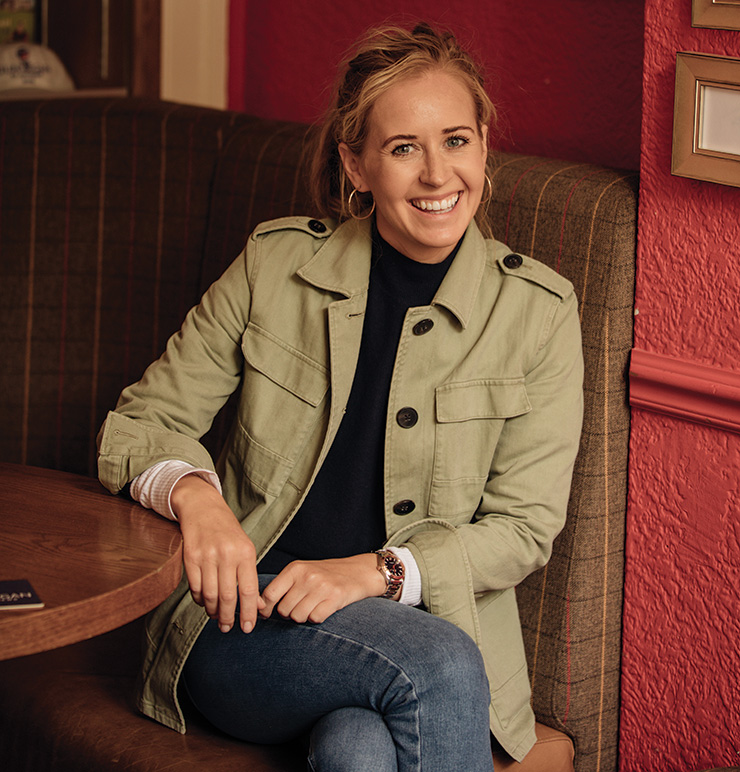
Jonathan Daniel Pryce
Iona, welcome to Dubai and a sunny Earth course, how long has it now that you’ve been visiting the Middle East for?
I think I first came to the Middle East to practise when I was still playing golf full-time, early on in my career, so that must’ve been back in 2015 or 2016?
I still remember getting in the taxi from the airport and driving into Dubai for the first time – my jaw was on the floor. I couldn’t believe the size and scale of the buildings, and the way everything lights up at night. It’s breathtaking. I felt like a kid abroad for the first time. Dubai made a huge impression on me – I couldn’t have anticipated how vibrant and energetic it feels as a city.
It’s well documented that I had some struggles with my wrist, and it didn’t like the cold. I needed some sunshine – reliable sunshine – and at the time I was practising at the Centurion Club in the UK and they kindly brought me out on a trip with them to Dubai. I stayed at Arabian Ranches and did a lot of practice there. It was a wonderful place to work on my game. My wrist absolutely loved it, and so did the rest of my body. Being able to swing in the heat and the warmth was a game-changer, especially through those cold winter months in the UK.
A few people I knew were already out here. Zane Scotland was a friend, and there were a few other pros based here too. There were always people to meet up with and get a game in, so all in all it was a great place to come and work on my game.
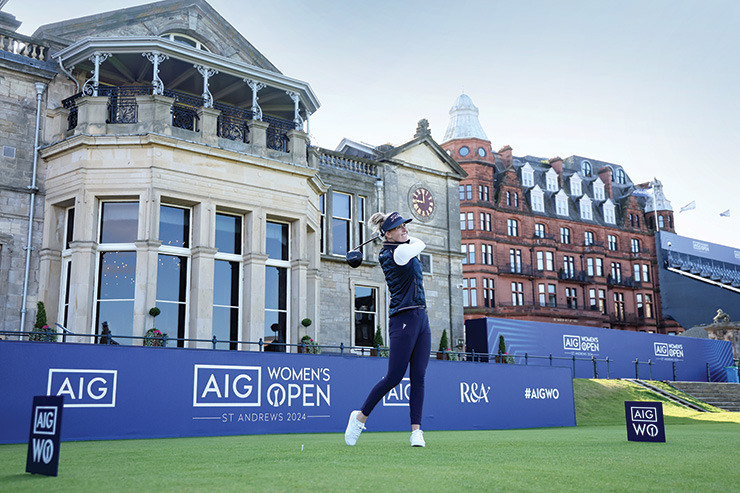
Oisin Keniry/R&A/Getty Images
You’ve spoken about it before, but could you give us a brief rundown of your golfing career – where did the love begin?
I’ve got serious big love for the game of golf – deeply, madly in love in fact, even though it’s broken my heart many times. It’s a relationship that’s stood the test of time so far.
I came to golf a little later than most. I started playing when I was 19. I’d played every sport growing up – lots of racket sports – and I had two big brothers, so I was always pushed to my limits. I was playing international field hockey at the time and got involved in a sport transfer scheme that looked to move athletes into individual pursuits. Golf wasn’t one of the sports on offer, but around that time I went to watch the AIG Women’s Open at Carnoustie. I remember watching Paula Creamer, Kylie Walker and Michelle Wie and thinking, these women are amazing – I want to play this game.
It appealed to my strengths: hand-eye coordination and the mental challenge I was yet to discover. I was given the opportunity to go on a golf scholarship at Wentworth. I’d been studying at St Andrews University, playing lots of golf there, and within 15 months of taking up the game I was playing county golf. I’d started at Glasgow University but quickly transferred to St Andrews – I knew that was where I needed to be if I wanted to get better.
It was a stroke of luck, really. Transferring to such a prestigious university isn’t easy, but I managed it. In my application letter I was very persuasive about how much I wanted to play golf – it was my main motivation. At St Andrews I had an amazing time. My golf kept improving, and when I was invited down to Wentworth, I was playing off four, then within a year I was down to plus four.
I had a fantastic coach, Kristian Baker, and eventually joined the Surrey County team with players like Annabel Dimmock, who’s gone on to a great career on the LET. Everything was heading in the right direction.
Then looking back, I was so eager to turn professional. I never really played to play amateur golf – my only goal was to reach the pro ranks and play in the AIG Women’s Open, where I’d first been inspired.
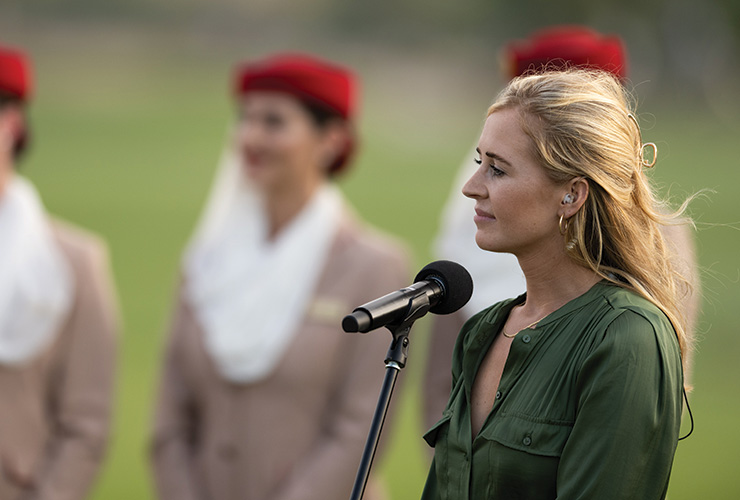
Matthew Harris
Where do you think that drive of wanting to succeed at golf comes from?
It’s funny – I was thinking about that recently. When you’re a kid, people always ask what you want to be when you grow up. Some people know right away. I remember a friend of mine in primary school saying she wanted to be a surgeon – she’s now one of the best young surgeons in London. I didn’t know what I wanted for a long time, but my love was always sport.
When I was at school, women’s sport wasn’t what it is now. There weren’t many professional paths, but I desperately wanted to be an athlete. When I discovered golf and saw the professional game up close, that was it. I thought, this is my chance to become a professional athlete, and I might actually be good at it.
I became completely focused. It was an amazing time in my life, but then I started to feel pain in my wrist. The wrist is a complex joint, and it ends more golfing careers than people realise. It’s the number one injury for golfers, ahead of the shoulder and back. So I’m not alone, but it hit just as I was preparing to turn professional.
I did turn pro and went to Q School, earning a partial card for the LET. I got a few starts, played on the LET Access Series and the Santander Tour, but about six or seven months in, I needed my first wrist operation. One operation became two, then three, and eventually there was no way back. It was absolutely heartbreaking – all I wanted was to play.
I’d never had another injury in my life, so to have this one end my dream was devastating. But thankfully, as people know now, that led me somewhere new. I took a break, tried other sports like running and cycling, and eventually got a call inviting me into the media world. That changed everything.
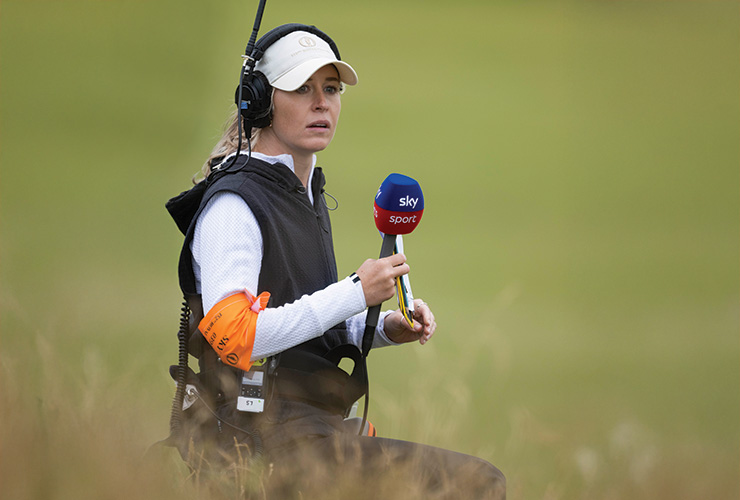
Matthew Harris
Transitioning from playing to broadcasting must’ve been a tough period?
Yes, it really was. When I was first invited to screen test for Golfing World, I actually said no – I wasn’t interested. Everything was all just too raw still.
Thankfully, they persuaded me to give it a go. I never thought I’d get the job, but I think my background helped. I guess I wasn’t just a presenter; I had a deep love and knowledge of golf, which appealed to them.
They sent me to Mexico for one of my first jobs, and to be honest, I dragged my feet a little because I was scared to be around the game. I wasn’t sure how I’d handle it emotionally because I still wanted to play. I felt frustrated – I’d never had the chance to show what I was capable of.
At the start it was hard, and even now it still is sometimes. But what the game’s given me in return is something I could never have predicted, and I’m incredibly grateful. That’s life.
It hurt deeply because golf was my passion, but I’ve managed to re-establish a new relationship with it and now it’s totally different to what I imagined, but in many ways even more special. I appreciate it more now, and I’m in awe of the players who take it to the top level. I still love the game – I just experience it in a different way.
And how much do you enjoy covering golf now in a broadcasting aspect?
I love it. I’m completely obsessed. Over the past five or six years I’ve worn different hats – on-course commentator, presenter, interviewer. I’ve covered the Ryder Cup, I was anchoring when Robert MacIntyre won for the first time on the PGA Tour, I’ve anchored shows for Sky Sports Golf, I’ve worked for CBS and I’ve interviewed pretty much everyone in the world’s top 20, both male and female!
Each role has taught me something new, and I’m still learning every day. I feel like I’ve just completed the foundation level of a media degree and there’s still so much more to come. I’m very grateful for this job and never take it for granted.
With all those experiences, you must have a best round or moment you’ve witnessed while commentating?
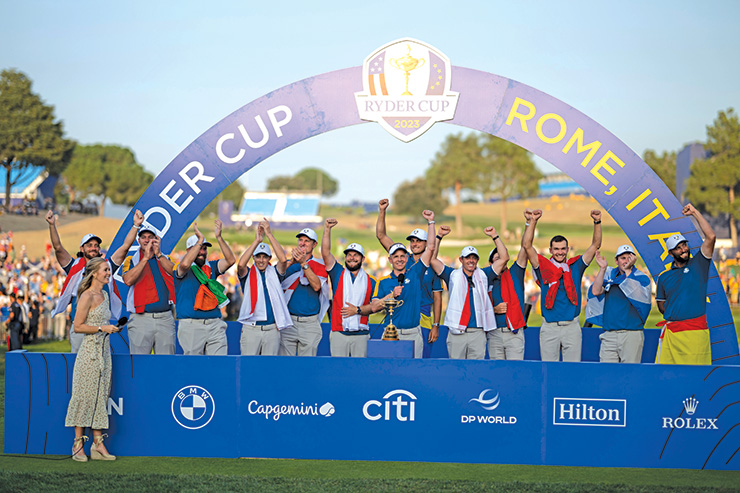
Being part of two Ryder Cups is right up there. Marco Simone was probably the greatest week of my career so far. I was on-course commentating, right in the cauldron of noise, chants and singing – it was incredible.
Matthew Harris
Then being given the honour of presenting the Ryder Cup to Luke Donald and his winning team on the final day – in front of millions – that’s something I’ll never forget. I remember standing there thinking, how on earth did my life lead me here? All the injuries, all the lows – it all came flooding back, and I just felt so grateful.
This year at Bethpage was a completely different experience, but equally special. Being part of an away Ryder Cup brought a different kind of intensity, which I really enjoyed. I was on the ground for Sky covering Shane Lowry as he holed the putt to retain the Cup, and then was sent to Tyrrell Hatton’s match, which clinched it. To be there for both moments was amazing.
And then this year I was covering the Masters for CBS when Rory won the Grand Slam. I was on holes 15 and 16 – both crucial for him – and it was incredible to see it unfold. I even managed to get up to the green to watch him win in the playoff. Seeing him collapse on the green afterwards gave me incredible chills, such an out pouring of emotion.
Is it hard not to get emotional in those moments?
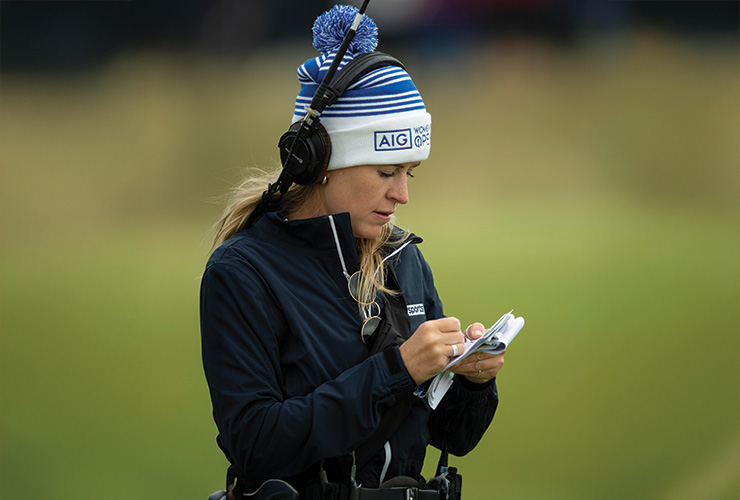
Oh always. Some of the winners’ interviews I’ve done, you can hear a lump in my throat. I remember telling my boss at Sky once, “I can’t do this job – I keep crying when people win.”
I’ve always been emotional watching sport – Wimbledon, football, anything. But he told me, “That’s exactly why you are right for this job – because you feel it.”
He was right. I’ve learned ways to manage it now, but that emotional connection is something I wouldn’t trade.
Matthew Harris
Is there such a thing as commentary idols?
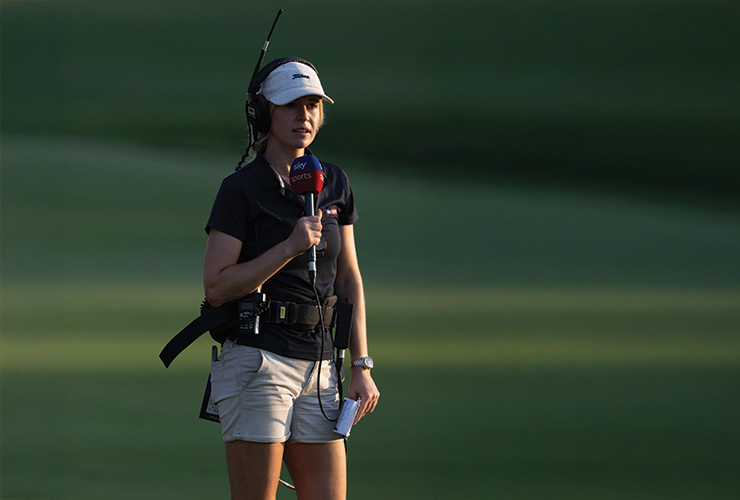
Definitely, Ken Brown is my absolute pin-up. I’m very lucky to call him a friend and mentor. For on-course commentary, he’s been my guide. His tone, his respect for the game, his subtle humour, his vocabulary – he can make even the most mundane detail sound magical.
That’s what commentary is all about: describing things vividly so the viewer can feel what it’s like – the sounds, the atmosphere, everything. Ken’s brilliant at that. Peter Alliss, of course, is one of the greats. I never got to work with him, but I’ve listened to so much of his commentary. Dottie Pepper is someone I look up to, she’s just incredible, obviously being female and what’s she’s done in her career is a real inspiration.
Also at Sky, Ewen Murray is outstanding. His tone and delivery are spot on every time. Right now, he’s someone who really sets the bar.
You’ve added another string to your bow with your YouTube channel – how do you find the time?
Yes, so On the Road with Iona is my YouTube channel I started about two and a half years ago. I missed a lot of the long-form, sit-down pieces I used to do, and I wanted to create a space for deeper conversations about golf.
It’s not just with professional players but golfers of all levels – talking about what the game’s taught them, and the parallels between golf and life. It’s a passion project. We’ve had some amazing guests: Butch Harmon, Adam Scott, Sam Torrance, Dame Laura Davies, Niall Horan, Jamie Dornan – a wonderful mix.
I feel like the audience has been allowed to get to know me a little bit more and we’ve been able to take time to offer a space that I hope is very rewarding for viewers that watch it. It ultimately offers them hope and maybe gives them something like a little chink or a little shimmer of something they can relate to in their own life that maybe they’re struggling with or maybe they needed some inspiration for, and they can take it into their own life and say, you know what, I’m really glad I watched that because now it’s made me think about something a little bit differently.
I’m quite a creative person and it’s also a very creative outlet and I love the way we pull the pieces together and how we set it to music to evoke a bit of emotion. It scratches another itch for me, which is amazing. I love shaping each episode with the whole team – from the interviews to the music and editing – to find the right tone and emotion. It’s been such a rewarding project.
Follow Golf Digest Middle East on social media
Instagram
X
Facebook
YouTube
Main Image: Matthew Harris
This article was featured in the December 2025 issue of Golf Digest Middle East. Click here for a digital issue of the full magazine

Iona Stephen’s desire towards the game of golf hasn’t followed the script she once imagined, but it has gone onto shape her into one of golf’s most engaging modern storytellers.
The Scots’ early trips to the Middle East helped fuel her playing ambitions, but after a career-altering injury, the tour hopeful then found her transitioning to on-course broadcaster which has brought Iona a new chapter to her golfing path, one filled to the brim with the games biggest names.
In this exclusive Q&A with Golf Digest Middle East, at last month’s season-ending DP World Tour Championship at Jumeirah Golf Estates on the DP World Tour, Iona delves into how her relationship with golf has managed to stand the test of time, so far.
Jonathan Daniel Pryce
Iona, welcome to Dubai and a sunny Earth course, how long has it now that you’ve been visiting the Middle East for?
I think I first came to the Middle East to practise when I was still playing golf full-time, early on in my career, so that must’ve been back in 2015 or 2016?
I still remember getting in the taxi from the airport and driving into Dubai for the first time – my jaw was on the floor. I couldn’t believe the size and scale of the buildings, and the way everything lights up at night. It’s breathtaking. I felt like a kid abroad for the first time. Dubai made a huge impression on me – I couldn’t have anticipated how vibrant and energetic it feels as a city.
It’s well documented that I had some struggles with my wrist, and it didn’t like the cold. I needed some sunshine – reliable sunshine – and at the time I was practising at the Centurion Club in the UK and they kindly brought me out on a trip with them to Dubai. I stayed at Arabian Ranches and did a lot of practice there. It was a wonderful place to work on my game. My wrist absolutely loved it, and so did the rest of my body. Being able to swing in the heat and the warmth was a game-changer, especially through those cold winter months in the UK.
A few people I knew were already out here. Zane Scotland was a friend, and there were a few other pros based here too. There were always people to meet up with and get a game in, so all in all it was a great place to come and work on my game.
Oisin Keniry/R&A/Getty Images
You’ve spoken about it before, but could you give us a brief rundown of your golfing career – where did the love begin?
I’ve got serious big love for the game of golf – deeply, madly in love in fact, even though it’s broken my heart many times. It’s a relationship that’s stood the test of time so far.
I came to golf a little later than most. I started playing when I was 19. I’d played every sport growing up – lots of racket sports – and I had two big brothers, so I was always pushed to my limits. I was playing international field hockey at the time and got involved in a sport transfer scheme that looked to move athletes into individual pursuits. Golf wasn’t one of the sports on offer, but around that time I went to watch the AIG Women’s Open at Carnoustie. I remember watching Paula Creamer, Kylie Walker and Michelle Wie and thinking, these women are amazing – I want to play this game.
It appealed to my strengths: hand-eye coordination and the mental challenge I was yet to discover. I was given the opportunity to go on a golf scholarship at Wentworth. I’d been studying at St Andrews University, playing lots of golf there, and within 15 months of taking up the game I was playing county golf. I’d started at Glasgow University but quickly transferred to St Andrews – I knew that was where I needed to be if I wanted to get better.
It was a stroke of luck, really. Transferring to such a prestigious university isn’t easy, but I managed it. In my application letter I was very persuasive about how much I wanted to play golf – it was my main motivation. At St Andrews I had an amazing time. My golf kept improving, and when I was invited down to Wentworth, I was playing off four, then within a year I was down to plus four.
I had a fantastic coach, Kristian Baker, and eventually joined the Surrey County team with players like Annabel Dimmock, who’s gone on to a great career on the LET. Everything was heading in the right direction.
Then looking back, I was so eager to turn professional. I never really played to play amateur golf – my only goal was to reach the pro ranks and play in the AIG Women’s Open, where I’d first been inspired.
Matthew Harris
Where do you think that drive of wanting to succeed at golf comes from?
It’s funny – I was thinking about that recently. When you’re a kid, people always ask what you want to be when you grow up. Some people know right away. I remember a friend of mine in primary school saying she wanted to be a surgeon – she’s now one of the best young surgeons in London. I didn’t know what I wanted for a long time, but my love was always sport.
When I was at school, women’s sport wasn’t what it is now. There weren’t many professional paths, but I desperately wanted to be an athlete. When I discovered golf and saw the professional game up close, that was it. I thought, this is my chance to become a professional athlete, and I might actually be good at it.
I became completely focused. It was an amazing time in my life, but then I started to feel pain in my wrist. The wrist is a complex joint, and it ends more golfing careers than people realise. It’s the number one injury for golfers, ahead of the shoulder and back. So I’m not alone, but it hit just as I was preparing to turn professional.
I did turn pro and went to Q School, earning a partial card for the LET. I got a few starts, played on the LET Access Series and the Santander Tour, but about six or seven months in, I needed my first wrist operation. One operation became two, then three, and eventually there was no way back. It was absolutely heartbreaking – all I wanted was to play.
I’d never had another injury in my life, so to have this one end my dream was devastating. But thankfully, as people know now, that led me somewhere new. I took a break, tried other sports like running and cycling, and eventually got a call inviting me into the media world. That changed everything.
Matthew Harris
Transitioning from playing to broadcasting must’ve been a tough period?
Yes, it really was. When I was first invited to screen test for Golfing World, I actually said no – I wasn’t interested. Everything was all just too raw still.
Thankfully, they persuaded me to give it a go. I never thought I’d get the job, but I think my background helped. I guess I wasn’t just a presenter; I had a deep love and knowledge of golf, which appealed to them.
They sent me to Mexico for one of my first jobs, and to be honest, I dragged my feet a little because I was scared to be around the game. I wasn’t sure how I’d handle it emotionally because I still wanted to play. I felt frustrated – I’d never had the chance to show what I was capable of.
At the start it was hard, and even now it still is sometimes. But what the game’s given me in return is something I could never have predicted, and I’m incredibly grateful. That’s life.
It hurt deeply because golf was my passion, but I’ve managed to re-establish a new relationship with it and now it’s totally different to what I imagined, but in many ways even more special. I appreciate it more now, and I’m in awe of the players who take it to the top level. I still love the game – I just experience it in a different way.
And how much do you enjoy covering golf now in a broadcasting aspect?
I love it. I’m completely obsessed. Over the past five or six years I’ve worn different hats – on-course commentator, presenter, interviewer. I’ve covered the Ryder Cup, I was anchoring when Robert MacIntyre won for the first time on the PGA Tour, I’ve anchored shows for Sky Sports Golf, I’ve worked for CBS and I’ve interviewed pretty much everyone in the world’s top 20, both male and female!
Each role has taught me something new, and I’m still learning every day. I feel like I’ve just completed the foundation level of a media degree and there’s still so much more to come. I’m very grateful for this job and never take it for granted.
With all those experiences, you must have a best round or moment you’ve witnessed while commentating?
Being part of two Ryder Cups is right up there. Marco Simone was probably the greatest week of my career so far. I was on-course commentating, right in the cauldron of noise, chants and singing – it was incredible.
Matthew Harris
Then being given the honour of presenting the Ryder Cup to Luke Donald and his winning team on the final day – in front of millions – that’s something I’ll never forget. I remember standing there thinking, how on earth did my life lead me here? All the injuries, all the lows – it all came flooding back, and I just felt so grateful.
This year at Bethpage was a completely different experience, but equally special. Being part of an away Ryder Cup brought a different kind of intensity, which I really enjoyed. I was on the ground for Sky covering Shane Lowry as he holed the putt to retain the Cup, and then was sent to Tyrrell Hatton’s match, which clinched it. To be there for both moments was amazing.
And then this year I was covering the Masters for CBS when Rory won the Grand Slam. I was on holes 15 and 16 – both crucial for him – and it was incredible to see it unfold. I even managed to get up to the green to watch him win in the playoff. Seeing him collapse on the green afterwards gave me incredible chills, such an out pouring of emotion.
Is it hard not to get emotional in those moments?
Oh always. Some of the winners’ interviews I’ve done, you can hear a lump in my throat. I remember telling my boss at Sky once, “I can’t do this job – I keep crying when people win.”
I’ve always been emotional watching sport – Wimbledon, football, anything. But he told me, “That’s exactly why you are right for this job – because you feel it.”
He was right. I’ve learned ways to manage it now, but that emotional connection is something I wouldn’t trade.
Matthew Harris
Is there such a thing as commentary idols?
Definitely, Ken Brown is my absolute pin-up. I’m very lucky to call him a friend and mentor. For on-course commentary, he’s been my guide. His tone, his respect for the game, his subtle humour, his vocabulary – he can make even the most mundane detail sound magical.
That’s what commentary is all about: describing things vividly so the viewer can feel what it’s like – the sounds, the atmosphere, everything. Ken’s brilliant at that. Peter Alliss, of course, is one of the greats. I never got to work with him, but I’ve listened to so much of his commentary. Dottie Pepper is someone I look up to, she’s just incredible, obviously being female and what’s she’s done in her career is a real inspiration.
Also at Sky, Ewen Murray is outstanding. His tone and delivery are spot on every time. Right now, he’s someone who really sets the bar.
You’ve added another string to your bow with your YouTube channel – how do you find the time?
Yes, so On the Road with Iona is my YouTube channel I started about two and a half years ago. I missed a lot of the long-form, sit-down pieces I used to do, and I wanted to create a space for deeper conversations about golf.
It’s not just with professional players but golfers of all levels – talking about what the game’s taught them, and the parallels between golf and life. It’s a passion project. We’ve had some amazing guests: Butch Harmon, Adam Scott, Sam Torrance, Dame Laura Davies, Niall Horan, Jamie Dornan – a wonderful mix.
I feel like the audience has been allowed to get to know me a little bit more and we’ve been able to take time to offer a space that I hope is very rewarding for viewers that watch it. It ultimately offers them hope and maybe gives them something like a little chink or a little shimmer of something they can relate to in their own life that maybe they’re struggling with or maybe they needed some inspiration for, and they can take it into their own life and say, you know what, I’m really glad I watched that because now it’s made me think about something a little bit differently.
I’m quite a creative person and it’s also a very creative outlet and I love the way we pull the pieces together and how we set it to music to evoke a bit of emotion. It scratches another itch for me, which is amazing. I love shaping each episode with the whole team – from the interviews to the music and editing – to find the right tone and emotion. It’s been such a rewarding project.
Follow Golf Digest Middle East on social media
Instagram
X
Facebook
YouTube
Main Image: Matthew Harris
This article was featured in the December 2025 issue of Golf Digest Middle East. Click here for a digital issue of the full magazine
Related Posts
Retired NYC restaurant owner charged with DUI in Florida golf cart crash that killed his wife
Golfbet recap: Hideki Matsuyama takes playoff victory at Hero World Challenge – PGA Tour
Successful annual Christmas Fair held at Richmond Golf Club
RASMUS NEERGAARD-PETERSEN WINS IN UA CLONE
Cathedral Golf Club aims to lure Rory McIlroy and stamp itself as Australia’s Augusta
Cathedral Golf Club aims to lure Rory McIlroy and stamp itself as Australia’s Augusta