

💻 Create your Account and Get Access To Elite Golf Lessons:
🏌🏻 Fix Your Slice Permanently – Lessons (Sign up first on the 1st link above)
https://scratchgolfacademy.customerhub.com/fix-your-slice-permanently
⛳️ Get your FREE 14 -day membership (link above) to get access on these:
https://app.customerhub.com/scratchgolfacademy/products
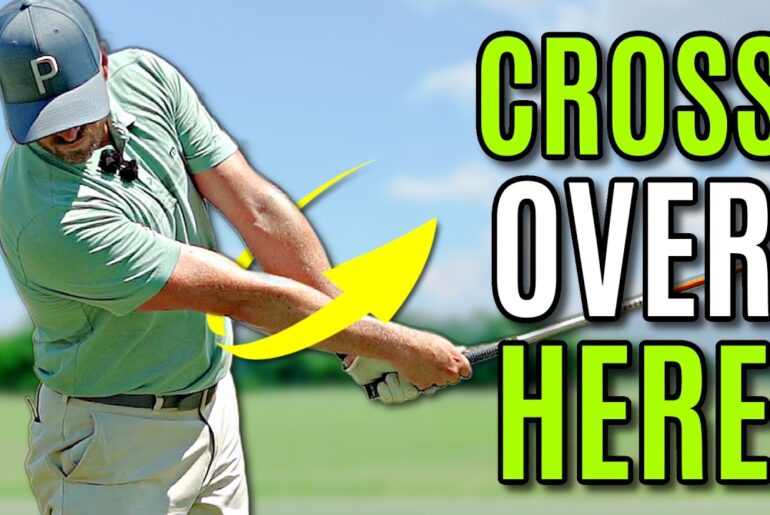
In this video, Adam shows you what your arms should actually be doing in the golf swing so you can swing smoother and hit more consistent shots. These simple drills will help your arms stay connected, move with your body, and deliver the club with way more control.
Whether you’re new to golf or fine-tuning your mechanics, these tips will instantly make your swing feel easier and more powerful. Let’s get those arms working the right way!
ADAM BAZALGETTE’S COACHING BACKGROUND:
✅ 4-Time SW Florida PGA teacher of the year winner!
✅ 36 year Class A PGA Member
✅ Former director at David Leadbetter Golf Academy for 13 years
✅ Hosted corporate outings worldwide
✅ Regular Golf Channel appearances
✅ Coached players on PGA, LPGA, PGA Champions Tour, and Canadian Tour
➡️ VISIT OUR WEBSITE: https://scratchgolfacademy.com
➡️ INSTAGRAM: https://instagram.com/scratchgolfacademy
➡️ FACEBOOK: https://facebook.com/scratchgolfacademy
➡️ TWITTER: https://twitter.com/scratch_golf2
➡️ TIKTOK: https://www.tiktok.com/@scratchgolfacademy
#golf #golftips #scratchgolfacademy #golfswing
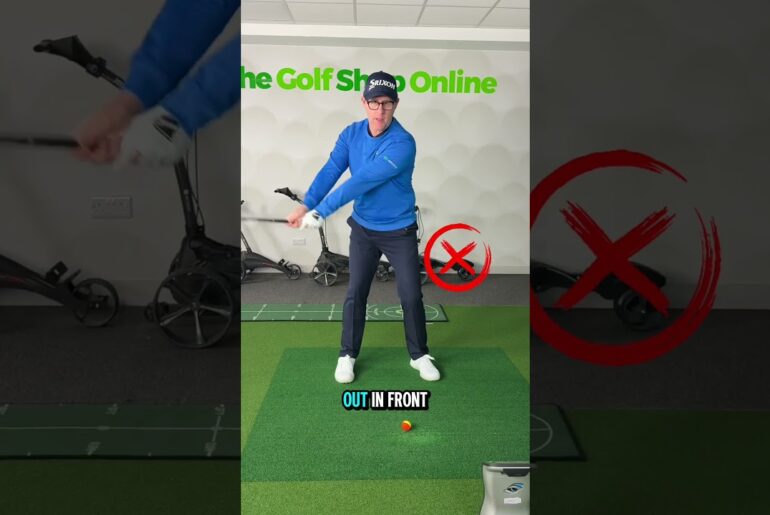
Adam Basiljette here, founder of Scratch Golf Academy. Today, a good subject, what your arms should be doing in the golf swing for consistent ball striking. Very, very important. They’re the radius of your swing. We’ll look at what they should be doing in the back swing and a little bit of what they should be doing through impact. Hope these are helpful. So, three things we could touch on at the outset. As we just said, the arms are the radius of the golf swing. They’re the width of your golf swing. If that’s fluctuating a lot, hey, there’s been a few players with slightly soft arms at the top. But if it’s fluctuating significantly, you will have problems. Secondly, when the arms are reasonably stable and firm, it forces the body to work a little bit more. You can do a lot with just your arms if they’re soft and free. Too soft and free. You don’t want that. You want to encourage your body to work. And finally, it helps you compress the ball down around impact. You can apply pressure much better when your arms are stable than when they’re soggy and breaking apart. You ever seen a great baseball player hit a ball like that? All right, let’s tackle it. So, I would put this lead arm, turn it under a little bit, not the hand under, the hands over here a bit, but turn that under slightly, as much as is reasonable for you with your physical tendencies with your arms. And right arm slightly under, not as much as the left. This bonds these arms together and keeps them like this. Remember, if the space between your arms stays the same, your radius is staying the same. Once that widens, you have an unstable radius. Okay, left arm connected and stable there. This left arm, the for the right-handed golfer, is going to slide on the body. It’s not in an absolutely fixed state there. And the right arm, although certainly it folds, shouldn’t fold much at the very beginning. And again, I’m forcing my pivot to work. And by getting these arms more together and more stable, it’s really creating consistency of width. Now, later in the back swing, certainly this turn of the body, your shoulders can extend, I think it is, and retract pretty independently of your rib cage. You’re going to want to feel some retraction of that right shoulder. You’re going to want to feel it pull back off your rib cage as I’ll show you in a moment. That helps the left arm plane. We don’t want to pull the right arm behind us. So, that should be more stable. So, back we go. Little retraction of the right shoulder and we’re in good shape. We’ll check it from here. I just want to say very briefly, had a lot of problems at Scratcholf Academy. It’s been around for years. Anyway, legal problems, etc. I’m finally in control of it. Would love you to take a 14-day trial. Free. It’s below. The link is below. No credit card going in, nothing like that, no tricks. And if you did join, you decide to cancel, hit support and there’s a cancel place right below it. So, love you to give it a free 14-day trial. Okay, keeping this left arm more under. Again, it can slide on your short shirt, but closer to you really helps keep the club head out and create a good takeaway. Almost always when someone’s lead arm comes out, club head goes in, club starts to get flat, all sorts of problems. So keep that in, keep it under, as I say, the right arm’s going to fold, but not too much right at the beginning. See, so many people pull that in, the elbows start to get away. Practice this move. It’s a great look. The retraction of the shoulder we just talked about, a little bit of that will add depth and inward potential to your back swing, which is a power dimension. If you get too steep, unless you can really drop it under, not much power, consistency is what’s going to show up. You’ll have a consistent radius, a consistent takeaway, a nice depth to your back swing at the top. Now, for the down swing, let’s tackle the impact and talk about compressing the ball. So, just a quick look here in slow motion. You can see the consistency of the takeaway. Club doesn’t get behind me. Right arm is folding very slightly, but not a lot. And we just go right back to a nice slot. That helps me get in the slot. You’ll notice also the space between the arms is pretty consistent and ready to go through. Well, obviously speed is a primary, if not the primary component to distance, but solid hit is as well. In fact, without that, you’re not going to hit it very far. And the ability to compress the ball to really apply pressure, get that ball to squash a little bit flatter. So, let’s have a look at a pro in slow motion for just a moment, then we’ll work on this. So, Tiger Woods there coming into impact. Look how those arms stay nicely squeezed together. You don’t see any widening. Look how stable the arms look as he goes through. You can see the club is tilting onto the golf ball this way. And yet, his right arm is very much underneath. We’ll get into that in just a moment. Outside. So, right wrist bent, face tilted forward, but right arm in a powerful position, very stable and solid. Well, if I was to hit the back of a couch or the back of a chair or something with my trail hand here, obviously I’m not hitting it body and hand together. I’m hitting it, but there’s still that sense of engagement here, that tightening, that supporting of the hit. I’m not just doing that. Let’s have a look close up at some of the components. Then we’ll work on it after that. So, find something firm and stable. A golf bucket like this, a tea marker, could be a door jam if you’re at home. Without making a swing, just apply pressure. Don’t put your hands way forward. just forward a little bit and start to feel that sense of engagement here and how you can feel bend in the club shaft. You’ll feel as well this trail arm needs to be under to apply pressure. If it starts wobbling and getting out here, it weakens it. So arm is under, wrist is tilted in so the face is square. That’s going to really help with solid contact and start to mark that in pressure. Right wrist tilted forward, pressure in the abs and that lead leg. If you’re going to work on stuff like this, which is what we’re going to do, have the discipline. Get a short arm. This is an eight. And make some smaller swings where you can feel it. So, here we go. I’ve got that sense now of what I should feel in that right arm and the abs there a little bit. First, a little tiny little swing. I feel really tight. I feel in control there. Firmness in the arm. Support from here. Once I’ve done that a little bit, we’ll jump ahead here a bit. Now I’m starting to try to add still on a fairly small scale a bit of that speed component. So as I said, you know, hitting the imaginary couch, it’s not just together, it’s just the support. So now we’ll get the same sort of move. I’ll feel a bit of energy in the club, but that same feeling at the bottom. That ball popped off there with some juice on it. And I can feel I’m starting to apply pressure and the stable arms and the tilt of the right wrist there. They’re helping me with solid contact. Work through these things. If you can master how your arms are working, you can get a consistent radius, use your body a little bit more, and start to compress the ball, I know you’ll be hitting the ball better and enjoying it more. [Applause] [Music] [Applause]

1 Comment