The Man Who Won’t Stop Building
I’ve been in this game for nearly three decades, and I’ve watched Tiger Woods do things that seemed impossible. Winning 15 majors. Coming back from multiple back surgeries. That 2019 Masters win that had grown men crying in sports bars across America.
Advertisement
But here’s what strikes me most about Tiger right now: He’s not done building.
As he approaches his 50th birthday, just weeks removed from disc replacement surgery, Woods isn’t sitting on a beach somewhere counting his money and reliving past glories. He’s chairing the Future Competitions Committee. He’s in daily meetings about the 2027 and 2028 PGA Tour schedules. He’s interviewing CMOs, tournament directors and media partners to figure out how to make professional golf better for everyone.
And I can’t help but wonder: Is this the most important thing Tiger Woods will ever do for golf?
Advertisement
The Blank Slate Approach
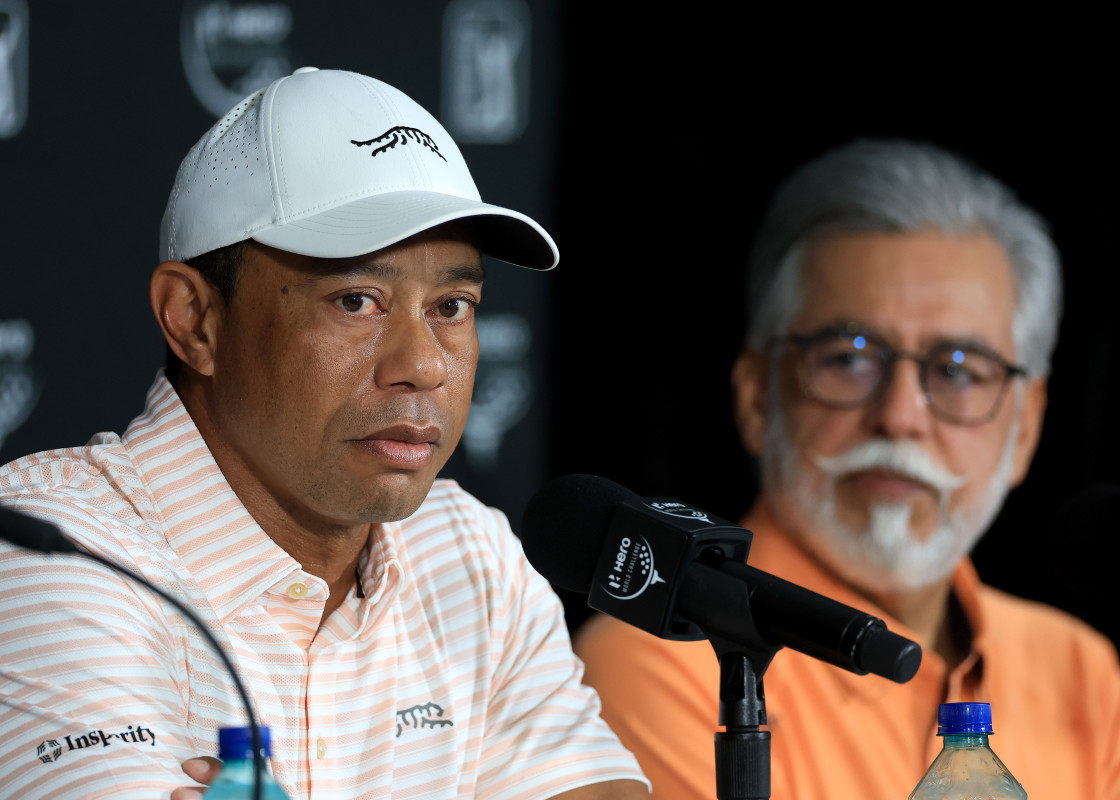
What fascinates me about the Future Competitions Committee is how they’re approaching this. Woods said something in his press conference at the Hero World Challenge that really stuck with me: “We started with a blank slate. What would the best product we can possibly create, what would it look like?”
A blank slate. Think about that for a second.
The PGA Tour has been around since 1929. It has traditions, legacy events and sponsor relationships that go back decades. And here’s Woods saying they took a white sheet of paper and started throwing ideas up on a board. A thousand ideas, he said. Then they added input from everyone they interviewed about what they’d like to see.
Advertisement
That takes guts. Real guts.
Because, as Woods acknowledged, “there’s going to be some eggs that are spilled and crushed and broken.” Translation: Some people aren’t going to like what’s coming. Some tournaments might lose their spots. Some traditions might end. Some players might find themselves on the outside looking in.
But Woods seems convinced it’s worth it. “In the end, we’re going to have a product that is far better than what we have now for everyone involved.”
Advertisement
Three Words That Matter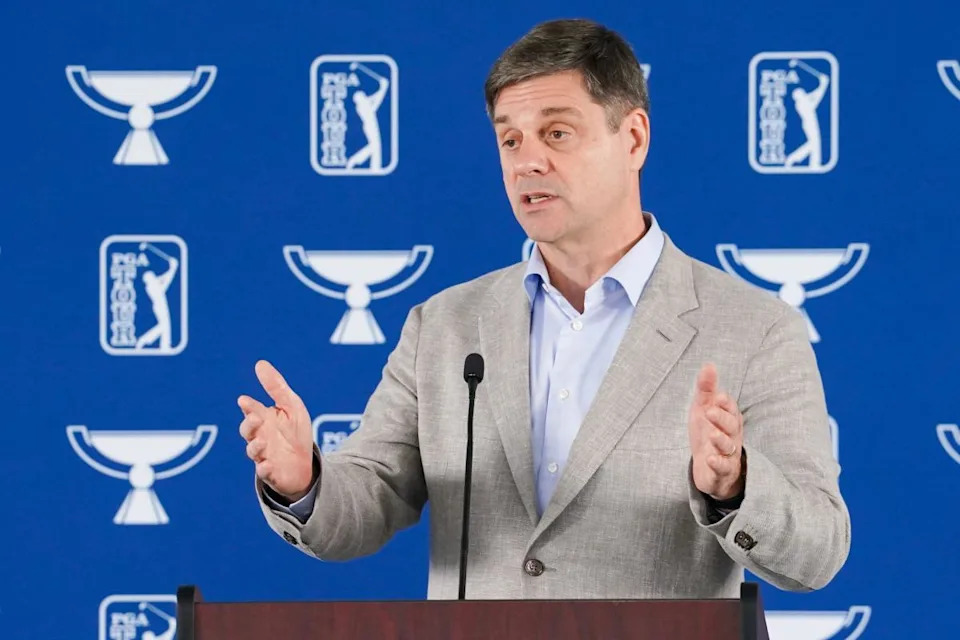
Brian Rolapp, CEO of the PGA Tour, speaks to the media ahead of the Tour Championship at East Lake Golf Club in Atlanta on Aug. 20, 2025.Debby Wong/ZUMA Press Wire
Brian Rolapp, the new PGA Tour CEO, gave the committee three guiding principles: parity, scarcity and simplicity.
Woods’ take on parity was interesting. He basically said it’s already there because golf is inherently meritocratic. Every week, everyone starts at zero. I agree with him, but I also think there’s more to unpack there. When we talk about parity in the context of this committee’s work, we’re really talking about opportunity. Who gets to play? How do you earn your way in? How do you stay there?
Advertisement
Simplicity is the easy one. Anyone who’s tried to explain the FedEx Cup points system to a casual fan knows we need help there. If the players don’t fully understand it, how can we expect fans to follow along?
But scarcity? That’s the one that makes people nervous.
Tiger acknowledged this directly: “I know [it] scares a lot of people.” But he also made a compelling case. If you have scarcity at a certain level, it drives more eyes because there’s less time to see it. And here’s the part people might be missing: the golfing year is long. There are other opportunities, other places to play.
Advertisement
What if scarcity at the top level actually creates more opportunities elsewhere? What if a tighter, more compelling PGA Tour schedule opens doors for other tours to thrive?
The 2027 Question
They’re trying to roll this out for 2027. That’s just over a year away.
Woods was careful not to make any promises. “I don’t know if we can get there, I don’t know if we will get there, but that’s what we’re trying to do,” he said.
He mentioned they’re looking at different approaches: Rip the Band-Aid off and create a whole new product all at once, or do a staged rollout.
Advertisement
My gut? They go big. They rip the Band-Aid off.
Why? Because Woods doesn’t do anything halfway. And because the tour needs a jolt of energy, a reason for fans to pay attention again. Incremental change won’t cut it. Woods himself said: “The goal is not incremental change. The goal is significant change.”
What This Means For Tiger’s Legacy
Tiger Woods plays his shot from the 10th tee as the sun sets during the second round of the Masters Tournament at Augusta National Golf Club on Nov. 13, 2020.Rob Schumacher / USA TODAY NETWORK via Imagn Images
Here’s what I keep coming back to: Tiger said the PGA Tour gave him a chance to chase a childhood dream. A kid from Cypress, California, playing on a par-3 course, got to become world No. 1.
Advertisement
Now he’s trying to pay that forward, but not just for the current generation. For future generations. For some 16-year-old kid who doesn’t even know he wants to be a professional golfer yet.
Woods made his impact with golf clubs. He made putts. He won tournaments. He changed the game with his athleticism, mental toughness and sheer will to win.
But this? This could be bigger.
Suppose Woods and his committee can create a PGA Tour that’s more compelling for fans, more lucrative for players, more attractive to sponsors and more accessible to the next generation of talent. In that case, that might be the most lasting thing he ever does.
Advertisement
The Honest Truth
Will Woods’ back hold up enough for him to play again? Maybe. He just started chipping and putting last week. He’s a long way from competing.
Will he play the Champions Tour? He doesn’t know. And honestly, I don’t think he cares that much right now.
Because Tiger is focused on something bigger than his own comeback, he’s focused on the comeback of the PGA Tour itself.
And after watching this man for three decades, I’ve learned one thing: Never bet against Tiger Woods when he’s committed to something.
Advertisement
The future of the PGA Tour might be uncertain, but with Tiger at the helm of this committee, it’s in pretty good hands.
Related: Still Golf’s Needle Mover: What We Learned From Tiger Woods’ Hero Press Conference
Related: Tiger Woods Not Ready for the Rocking Chair: Why Woods Will Skip the PGA Tour Champions (for Now)
Related: The PGA Tour’s Bold New Chapter: Why Brian Rolapp’s Vision Could Change Everything
This story was originally published by Athlon Sports on Dec 5, 2025, where it first appeared in the Golf section. Add Athlon Sports as a Preferred Source by clicking here.