Key Points and Summary – Donald Trump’s anniversary proclamation for the Monroe Doctrine adds a “Trump Corollary,” vowing that only Americans will shape their hemisphere’s destiny.
-Dr. Michael Rubin argues this “Donroe Doctrine” misunderstands Monroe’s intent and today’s reality.
-Monroe paired Western-hemisphere vigilance with noninterference elsewhere.
-Trump, by contrast, flirts with 21st-century isolationism just as China entrenches itself across Latin America and the Caribbean.
-Rubin contends that U.S. global engagement since FDR created the prosperous system Trump benefits from—and that pulling back now would hand Europe to Russia, the Gulf to Iran, and the wider world to Beijing, inviting threats far closer to home.
President Trump’s “Donroe” Doctrine Insults Monroe’s Legacy
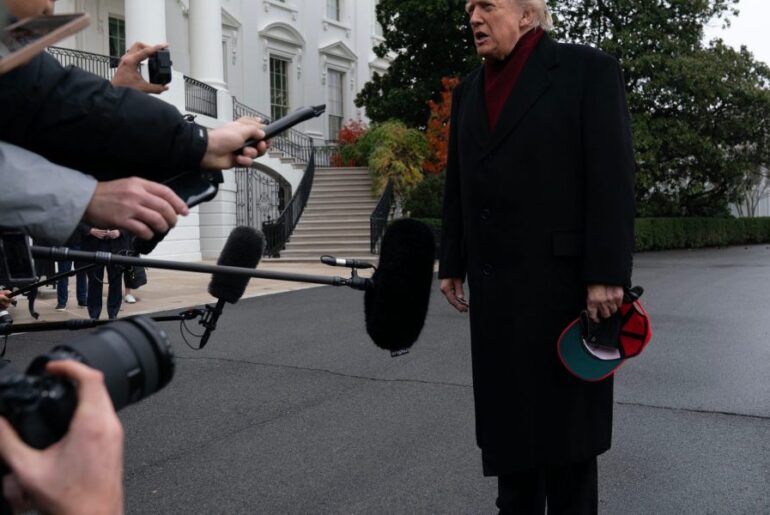
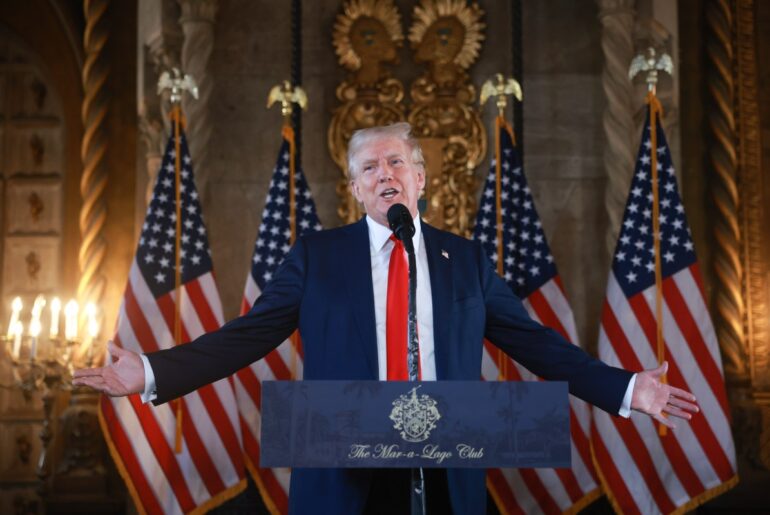
On December 2, 2025, President Donald Trump issued a proclamation commemorating the 203rd anniversary of the Monroe Doctrine, part of a series of pronouncements celebrating America’s semiquincentennial.
He promised “a new ‘Trump Corollary’ to the Monroe Doctrine: That the American people—not foreign nations nor globalist institutions—will always control their own destiny in our hemisphere.”
There is something to Trump’s logic. President James Monroe, the fifth president of the United States, issued his doctrine at a time of geopolitical uncertainty. European powers threatened to regain control over the newly independent Latin American states, and he worried that European powers could ultimately threaten the United States as well; the British army had burned the White House less than a decade before.
While Monroe sought to transform the Western hemisphere into a de facto sphere of influence, it was not a cynical power grab. The corollary to Monroe’s logic was that the United States would not interfere in Europe or, for that matter, Asia.
And, indeed, that sense prevailed in U.S. foreign policy circles for nearly a century. The United States annexed Hawaii on July 7, 1898. It then formally acquired the Philippines and Guam as a result of the Treaty of Paris, which ended the Spanish-American War five months later, thereby positioning the United States as a Pacific power as well.
But the Monroe Doctrine loomed large in U.S. reluctance to enter World War I.
There has long been an intellectual undercurrent in U.S. geopolitical thought that embraced the height of the Monroe Doctrine as a golden age.
True, the United States fought a Civil War, but then the country recovered and flourished. It industrialized while Europe repeatedly hobbled itself with war.
Trump’s lionization of the Monroe Doctrine is not all bad. It is past due for the White House to recognize the danger that the People’s Republic of China poses on America’s doorstep. Reclaiming the Panama Canal is a non-starter, and not simply because the Panamanians themselves have since built a larger canal.
But Trump could do far more to support those countries that resist Chinese pressure and continue to recognize Taiwan. Trump should demonstrate to Belize, St. Lucia, St. Kitts, Guatemala, and Paraguay that siding with Washington over Beijing will bring them the prosperity they never imagined; they should be examples to neighboring countries now quietly questioning if towing Beijing’s line really brings anything more than crippling debt. If President John F. Kennedy put the United States into a state of emergency over Soviet efforts to station nuclear missiles in Cuba, and President Ronald Reagan invaded Grenada to deny Cuba and the Soviet Union another base, then Trump, alongside Presidents Clinton, George W. Bush, Obama, and Biden are negligent for how they allowed China to transform many regional countries into their equivalents.
The problem with Trump’s lionization and resurrection of the Monroe Doctrine, however, is two-fold. First, he fails to recognize that U.S. global involvement, especially in the 20th century, shaped the international system in a way that brought great wealth and power to the United States. Indeed, had it not been for Presidents Franklin Roosevelt, Harry Truman, Dwight Eisenhower, and their successors through at least Clinton if not the younger Bush, Trump would never have been able to acquire the wealth which he enjoys; Trump is a product of the system he now holds in disdain. Those in Russia who harbor Trump-like ambitions are more likely to tumble out of a high-story window than jet around to their own golf resorts or hotels; Trump should be grateful his predecessors sought to spread American philosophy rather than limit it.
Second, Trump fails to understand that globalization moots the Monroe Doctrine; what once was a defensive strategy to protect the United States now cedes the strategic depth upon which proper security rests. Those seeking a “Donroe Doctrine” seek to revitalize 19th-century arguments to justify the negligence of 21st-century isolation.
To follow Trump’s logic to its natural conclusion would be to withdraw carrier strike groups to the Atlantic, Caribbean, and Eastern Pacific and allow China to fill the vacuum. It would cede Europe to Russia and the Persian Gulf to Iran.
In short, Donroe would spark a free-for-all, the winners of which would then threaten America across a distance that takes hypersonic missiles minutes to cross rather than the weeks or months it took great powers during Monroe’s tenure.
Monroe sought to protect the United States; he never could have imagined a future president would cite his legacy and twist its logic to undercut the United States and its security.
About the Author: Dr. Michael Rubin
Michael Rubin is a senior fellow at the American Enterprise Institute and director of policy analysis at the Middle East Forum. The opinions and views expressed are his own. A former Pentagon official, Dr. Rubin has lived in post-revolution Iran, Yemen, and both pre- and postwar Iraq. He also spent time with the Taliban before 9/11. For more than a decade, he taught classes at sea on the Horn of Africa and the Middle East, covering conflicts, culture, and terrorism to deployed US Navy and Marine units. The views expressed are the author’s own.