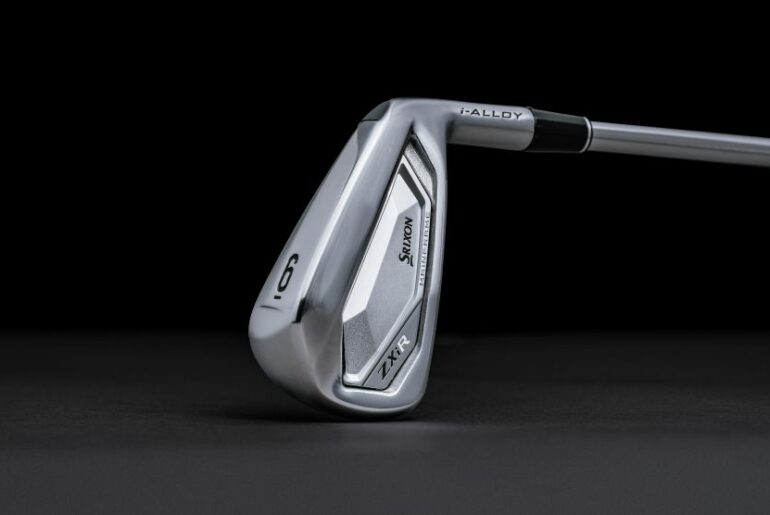
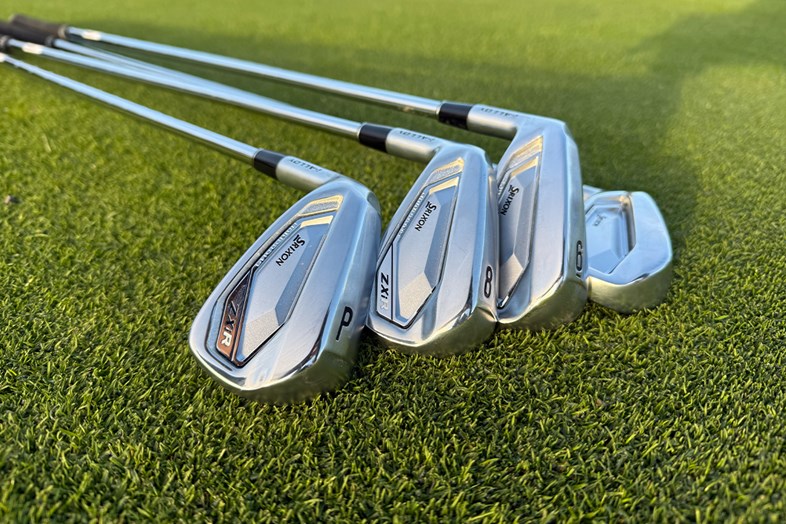
The Srixon ZXiR irons are a bucking of the company’s normal trend, when it comes to releases. So what’s made the breaking of their two-year cycle worth it, and does it justify a place in your bag?
Total time tested: 11 hours – 8 hours on-course, 3 hours range
When I covered Srixon’s most recent iron release with the ZXi models, I genuinely didn’t think I would be back talking about the company again until at least late 2026. That’s not to be dismissive of the company by any stretch, their irons are easily some of the best in the industry, but with a normally-rigid two-year release cycle, the Srixon ZXiR irons are an unexpected addition to their current generational line up.
It’s not just that the ZXiR, and the HL model, being released a year on from the ZXi that has caught me off-guard, it’s also that, at least from my initial thoughts, I can’t really place these irons in the Srixon family.
We already have the ZXi4 irons, which fit neatly into the game-improvement irons category. And they’re even a forged iron, so who could these new clubs really be meant for?
Turns out, the ZXiR might have more to them, and be a more interesting consideration, than I had originally thought.
Patented new i-Alloy material brings powerful performance
Pros & Cons Ratings Specs Features
Pros Powerful ball flightSurprisingly soft feedback from this style of constructionTour V.T. Sole provides better turf interaction than other Game Improver ironsZXiR HL is an outstanding companion release Cons Slower swing speeds may struggle for height (but should try ZXiR HL)
Looks and Design
Technology
Performance
Overall
RRP $????/£959 (6-piece set), $???/£160 per iron Availability – ZXiR 4 – PW, AW (RH/LH), SW (SW is RH Only) Availability – ZXiR HL 5 – PW, AW (RH/LH), SW (SW is RH Only) Stock Shaft – ZXiR KBS Tour Lite (Steel) / KBS PGI 60g (Graphite) Stock Shaft – ZXiR HL KBS 80HL (Steel) / KBS MAX 55g (Graphite) Stock Grip Golf Pride Tour Velvet 360 7-iron Loft ZXiR – 28.5° / ZXiR HL – 32.5º Category Game Improver Construction i-Alloy steel (Body – 4-SW, Face – 8i-SW) / HT1770 (Face – 4-7i) All-New i-Alloy construction for softer but still strong performanceMainframe technology saves weight while increasing MOISignature Srixon Shaping brings renowned design aesthetics to the Game Improver categoryZXiR irons come with Tour V.T. Sole for smooth and clean turf interactionZXiR HL provides an easier launching option with the same powerful design
Looks and Design – 4/5
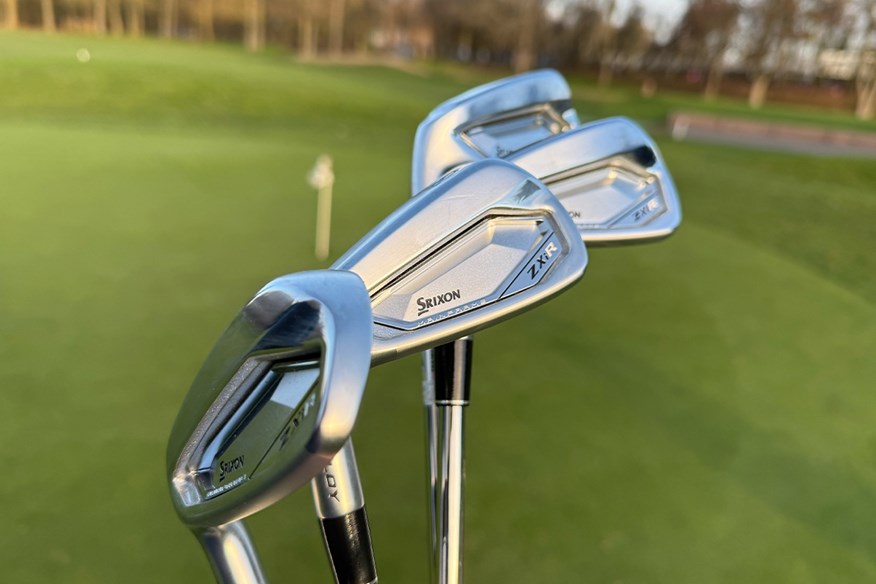
How you feel about the Srixon ZXiR irons will largely depend on your club history. If you grew up with an iron like the Ping Eye2 being your first club-to-ground interaction, or a modern-day players’ iron if you’re a bit younger, then the ZXiR is obviously going to look chunky.
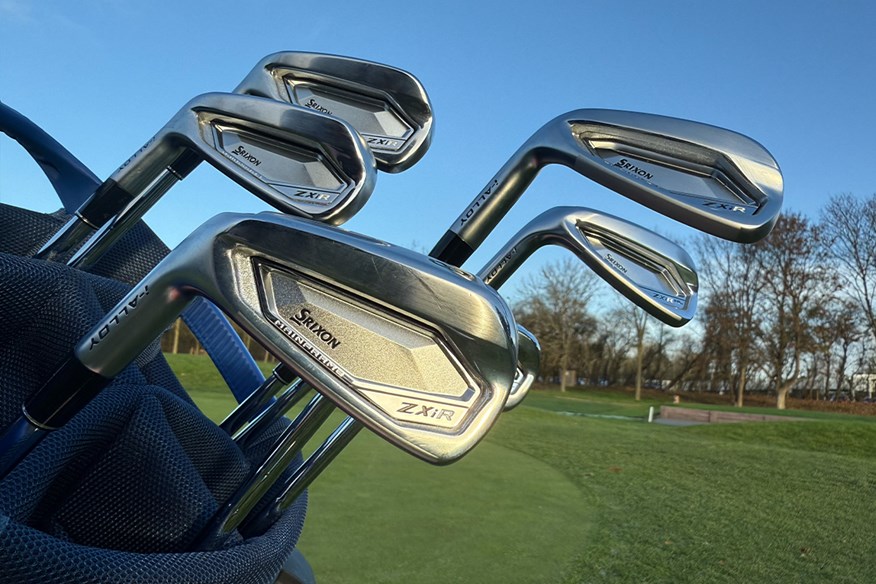
If you’ve only been exposed to the game improvers of the last 20-years, then you’ll see nothing wrong with size of the product here, and, for what it’s worth, Srixon have done a lot of work to make this set blend in as best as it can with the rest of the ZXi aesthetic.
Holding up a ZXi7 against the latest addition, I’d struggle to pick one out from the other from the badging on the rear. You’ve got the same raised satin finish across both, with the hints of the technology from the logos featured on the frames.
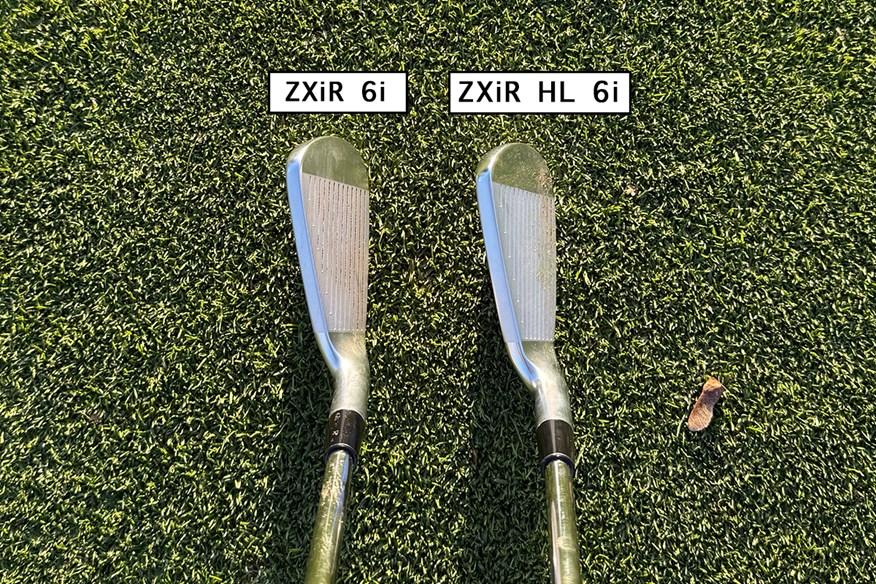
The ZXiR irons do appear to be a little longer heel-to-toe than the rest of their family members, but there’s no squatness that you do sometimes see in this category of iron – a tactic often used to bring Center of Gravity further down for improved launch.
Overall, I don’t have many complaints with the ZXiR in the looks and design department, I actually quite like it for a game-improvement iron.
The signature style is there, with only minimal tweaks made to match the profile of golfer these are aimed at. The VT sole does something to offset the wider base of the iron, and, speaking of offset, the face isn’t so closed as to be offputting.
Technology – 4.5/5
As we’re on the subject of the Tour VT sole, now is probably the best time to talk through the differences and similarities that you’ll find in the Srixon ZXiR irons in comparison to the other ZXi models.
First, the similarities.
While there is a continuation of VT sole, the sharp edge that splits the center of the club’s base, the design isn’t as strong in its camber as some of the thinner heads in the family. The wider sole means engineers have more room to apply the geometry at play, so you’ll find leading and trailing edge bounces to be less aggressive because of that.
This isn’t a bad thing for this iron style though, as many golfers looking at the category aren’t as steep in their delivery – taking deeper divots, as an example – so reduced camber is a benefit.
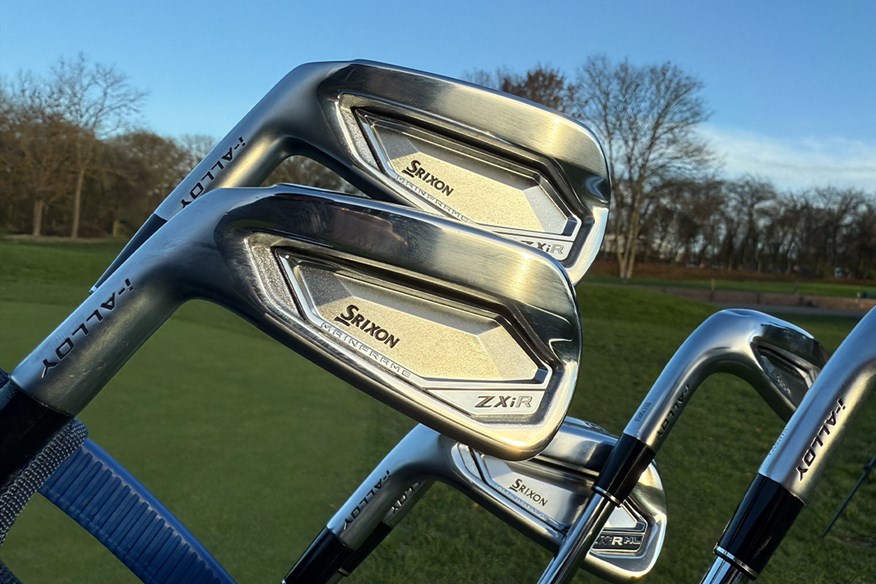
The other piece of technology that’s migrated over to the ZXiR is Srixon’s Mainframe structure. It’s the most obvious part of Srixon’s signature design as it sits in the center of the backplate in every iron, and is built to reinforce a softer feeling from middled strikes while also reducing excess mass so it can be redistributed further to the perimeter for enhanced forgiveness.
This is why, despite the scale increase, there’s still heavy familial resemblance.
When it comes to what makes the ZXiR different then, we’re going to focus on material. One of the main selling points of the ZXi was the i-Forged creation using 1015 Carbon Steel, or at least a combination of that metal in the more forgiving ZXi4 heads.
It worked in tandem with the Mainframe structure, providing superior feel while also allowing Srixon to stabilize more of the face for every level of golfer.
ZXiR doesn’t feature i-Forged tech, but in it’s place the company is implementing a new metal – the i-Alloy.
On a deeper level, i-Alloy has been created for the same purpose as it’s older brother: it’s been designed as a less dense, softer option than what you’d typically find used in Game Improvement irons, and I love Srixon for that.
Often we see brands taking a non-golfing material, like the 431 Steel, chosen for it’s talent for resisting corrosion, and applying it to golf equipment. Srixon has made their new alloy with purpose, and it shows their commitment to crafting every release with genuine care.
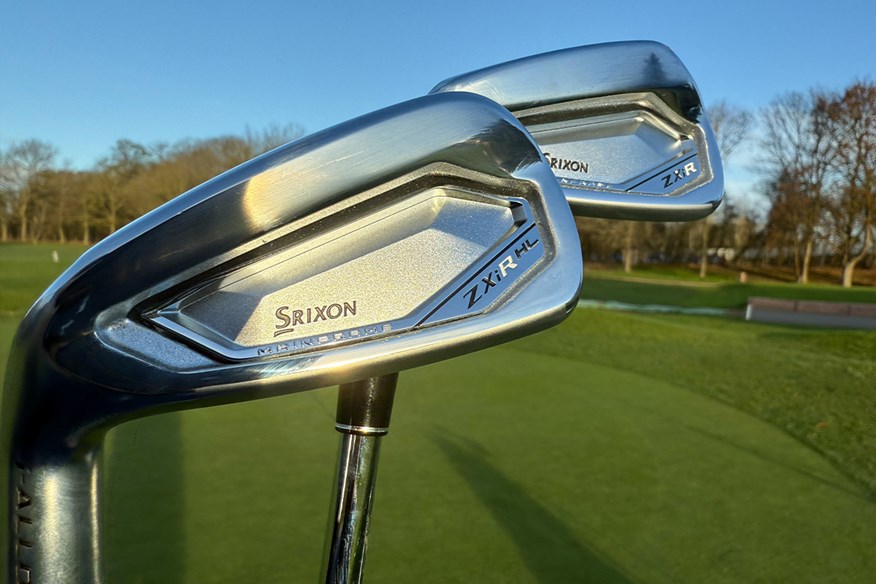
Finally, I’m keen to note that ZXiR comes with a twin, the ZXiR HL, that offers lighter stock shafts and weaker lofts to help launch the ball in a better window for lower speed golfers (although I think it will be far more popular than just those players – you’ll see why further down).
From reading that, I feel most of you will be coming away with the same thought: ‘So this is just a non-forged version of the ZXi4?’
Well… yes. But also no.
Performance – 4/5
Testing these clubs has reinforced one of my main concerns with the whole category of modern GI irons, but we’ll come back to that as part of my thoughts. Our first discussion needs to be on that lingering question of comparison.
From a feedback perspective, the Srixon ZXiR irons do feel a little more jumpy over the ZXi4 during impact. For most, I think that will be a benefit, as the feeling is across the whole face not just the center, giving a sense of forgiveness and power, as you’d no doubt hope to see.
That same feedback is also little sharper than the noise you get from the softer-metal cousin, likely a reflection of material, but I’d still say the sound is quieter than other game-improver irons I’ve tousled with, so don’t expect anything overly loud.
Linking further into the sensations of impact, the feeling of club against ground is something I’d struggle to tell any real difference with other ZXi models, even up to and including the ZXi5. The VT sole does its job well, stopping the head from laboring its way through the soil, particularly in the moist conditions I’ve been playing in these past few weeks.
Where I might have some reservations with this width of sole is taking the ZXiR for a round in the middle of summer where the ground won’t give at all, but that being said, I also have a tendency to exaggerate the shallowness of my swing when using bigger heads so that could well be a ‘me’ problem more than anything.
Based on my testimony then, the ZXiR and ZXi4 perform in extremely similar fashion and this is going to come down to your perception of feel. But where I believe there’s a difference, is in the strategy that Srixon have applied.
Without assuming anything on the company’s part, ZXi4 felt like something of a tacked on addition to the ZXi5 and ZXi7, a club they made almost because they needed to ‘complete the set,’ with stronger lofts and a wider body being the only distinction.
ZXiR seems to have more thought put behind its options, and this is where I feel it will improve upon ZXi4, while also retiring it, in my mind, for the foreseeable future.
Hitting the standard version of the Srixon ZXiR has been both enjoyable and something of a chore.
I’m not one to have a particularly low flight, but in comparison to my Titleist T100, these new models make bullets of the golf ball. I had to laugh during my first session, because my word do they provide speed to my shots but the trajectory is one of the flattest I think I’ve ever seen!
I don’t care who you are, it is always fun to see an 8-iron come off like a 6-iron when you’re knocking shots out at the driving range, and I could – and have – spent hours trying to send the ZXiR as far and high as possible.
Spending time with the 4-iron alone has been particularly notable, as I can genuinely hit my driver to go higher from off the deck. This is where the problem lies.
When I attack greens, even at my (90-ish mph 7-iron) swing, I’m getting far too much release from an iron because of the lack of height, and when I take it down to an average-to-slow speed, hitting 6-iron roughly 140 yards, you can forget about it.
I just don’t think this is playable for anyone who isn’t coming down on the ball like Homer Simpson would do on a donut, and its exemplary of many irons in the category.
At 28.5º of loft in the 7-iron, something closer to a 5-iron for classic sets, the spin isn’t high enough to stabilize the flight at lower club head speeds.
Before this turns into (anymore of) a rant, though, this is also where I’m grateful to Srixon. ZXiR comes with a sister model, the ZXiR HL. While many brands do offer this, the HL in other models will typically be 2º weaker, whereas ZXiR HL is up-to four whole degrees weaker (32.5º 7-iron) than the standard head.
This is what I mean by strategy. It’s an incredibly smart play by Srixon to make them that much weaker, because it guarantees better launch conditions while also giving players without natural speed the same access to a powerful face and more distance.
Given the option, I’d take the ZXiR HL every single time, and at any speed. They’re powerful, they reach a better trajectory, feel smooth through the ground, and, most importantly, I actually feel like I can get the ball to stop on the green.
Overall – 4/5
Had the HL not been an option, I might have been upset in my review time. The choice gives Srixon a model that is now fit-able for so many golfers who want the help or distance benefits, without having to compromise the playability of the iron in some way.
The Srixon ZXiR stands up as a great iron in it’s category, an addition to the ZXi family that makes sense, and, hopefully, will be the first step towards better awareness of the needs of golfers who fit this style of head.
If I were buying a game-improvement iron today, or advising a friend on what they should consider, the ZXiR would certainly be amongst the models I would have at the very top of the list.