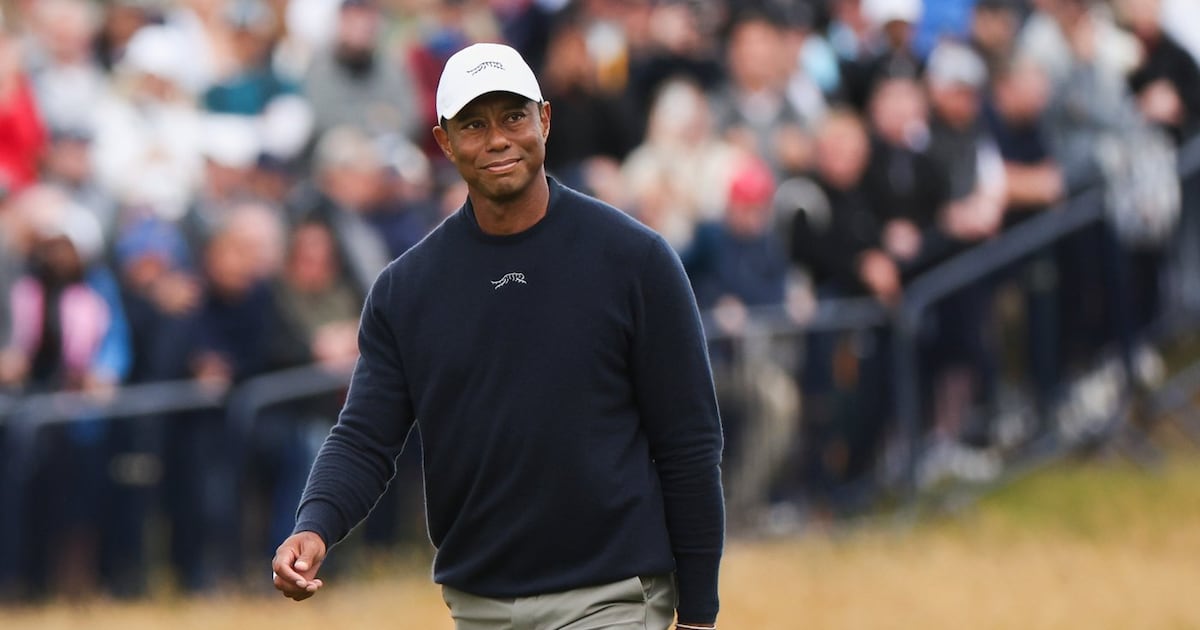
So much about the future of Tiger Woods is uncertain.
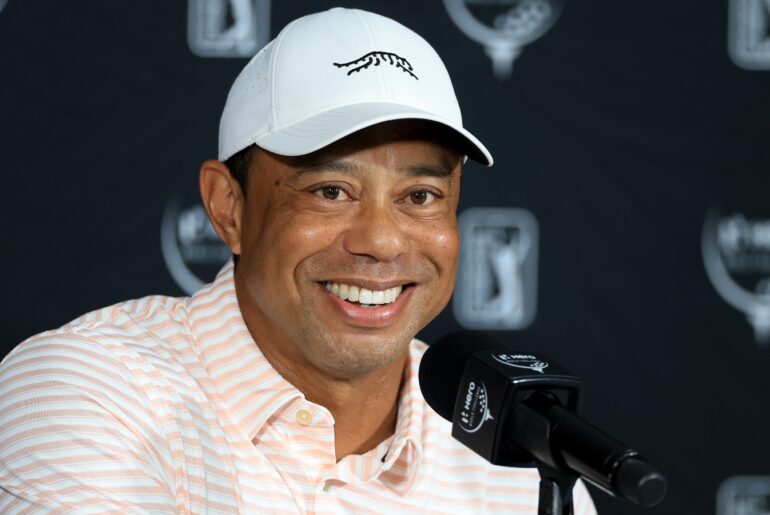
Woods said Tuesday in the Bahamas he has just been cleared to chip and putt since a seventh back surgery on Oct. 10. He is not playing in his Hero World Challenge and said he won’t be playing in the PNC Championship in two weeks with his son. Even the indoor TGL League will have to wait.
“Unfortunately, I’ve been through this rehab process before,” Woods said. “It’s just step by step. Once I get a feel for practicing, exploding, playing, the recovery process, then I can assess where I’m going to play and how much I’ll play.”
As for the Ryder Cup, he turned down the captaincy for this year and was thought to be the logical choice for Adare Manor in Ireland in 2027.
“No one’s asked me about it,” Woods said and then repeated it for effect.
That’s not to say there hasn’t been plenty of discussions between the PGA of America and Woods’ manager. Woods can say a lot with few words. Translation: He’s not ready to talk about that yet.
What’s consuming his time is the one area that doesn’t involve birdies and bogeys, and it might be far more important than whether he tees it up at the Masters or joins the 50-and-older circuit on the PGA Tour Champions a few times next year.
Woods is chair of the Future Competitions Committee, which new CEO Brian Rolapp commissioned to make significant change to the PGA Tour. Woods said the committee has met three times and taken input from everyone from title sponsors to television to tournament directors.
What began as a blank sheet of paper now has a thousand ideas. The hope is to have a new model by the start of the 2027 season. What emerges is unclear except it will be uncomfortable. Change isn’t easily accepted.
“Yes, there’s going to be some eggs that are spilled and crushed and broken,” Woods said. “But I think that in the end, we’re going to have a product that is far better than what we have now for everyone involved.”
The three principles driving Rolapp’s vision are parity, simplicity and scarcity.
It’s the scarcity that has so many players nervous — fewer tournaments, shorter fields, slimmer odds for players who can’t just show up and expect to contend the way Woods once did, and the way Scottie Scheffler does now.
“But don’t forget, the golfing year is long,” Woods said. “So there’s other opportunities and other places around the world or other places to play that can be created and have events. So there’s a scarcity side of it that’s not as scary as people might think.”
Rolapp also soothed some concerns about a star-driven tour when he said on the CNBC “CEO Council Forum” last week, “Every sport has stars. What really makes sports work is the middle class. … You cannot build a lifelong sport that outlives the stars if you don’t build a system that works beyond your stars.”
There was nothing middle class about Woods.
His legacy will be 82 titles on the PGA Tour, his 15 majors, the only player to hold all four major championships at the same time, the player who went more than seven years without missing a cut. And now, his leadership on a committee to reshape the PGA Tour could add to that.
Woods is motivated to play again because he simply loves golf. That chapter is not over.
This will be the first year without competing in a PGA Tour-sanctioned tournament since he made his debut in 1992 at age 16 in the Los Angeles Open (he played the PNC Championship in 2021 after missing the entire season after his car crash in Los Angeles).
Woods lost his mother in February. He ruptured his Achilles tendon in March. And then came another back surgery in October. So when he was asked why he wanted to stage yet another comeback, Woods smiled and replied, “Come back to what point?”
“I’d like to come back to just playing golf again,” Woods said. His last documented round was Feb. 9 with President Donald Trump. “I’ve had a lot of things happen on and off the golf course that’s been tough. And so my passion to just play, I haven’t done that in a long time. Just play.”
Age and injuries have left him on the verge of being a ceremonial player when he is healthy.
Woods has played only 11 times in nearly five years since his 2021 car crash. The four tournaments where he completed 72 holes, the closest he has been to the winning score was 16 shots behind. He has played 29 rounds and broken par six times. His scoring average is 74.14.
Come back to what point?
Age and experience have put Woods in a unique role to modernize golf without ruining it. This is important to him, too. He thought back to his roots in public golf, to that first PGA Tour tee shot at Riviera at age 16, to winning the Masters at 21 and reaching No. 1 in the world longer than anyone.
“The PGA Tour gave me an opportunity to chase after a childhood dream,” he said. “This is a different opportunity to make an impact on the tour. I did it with my golf clubs. Now I am able to make an impact in a different way for generations to come — not just generations that I played against, but for future generations like a 16-year-old looking for a place to play and maybe in hopes of playing the PGA Tour.”
At the moment, that’s his biggest challenge.
___
On The Fringe analyzes the biggest topics in golf during the season.. AP golf: https://apnews.com/hub/golf
Doug Ferguson, The Associated Press