
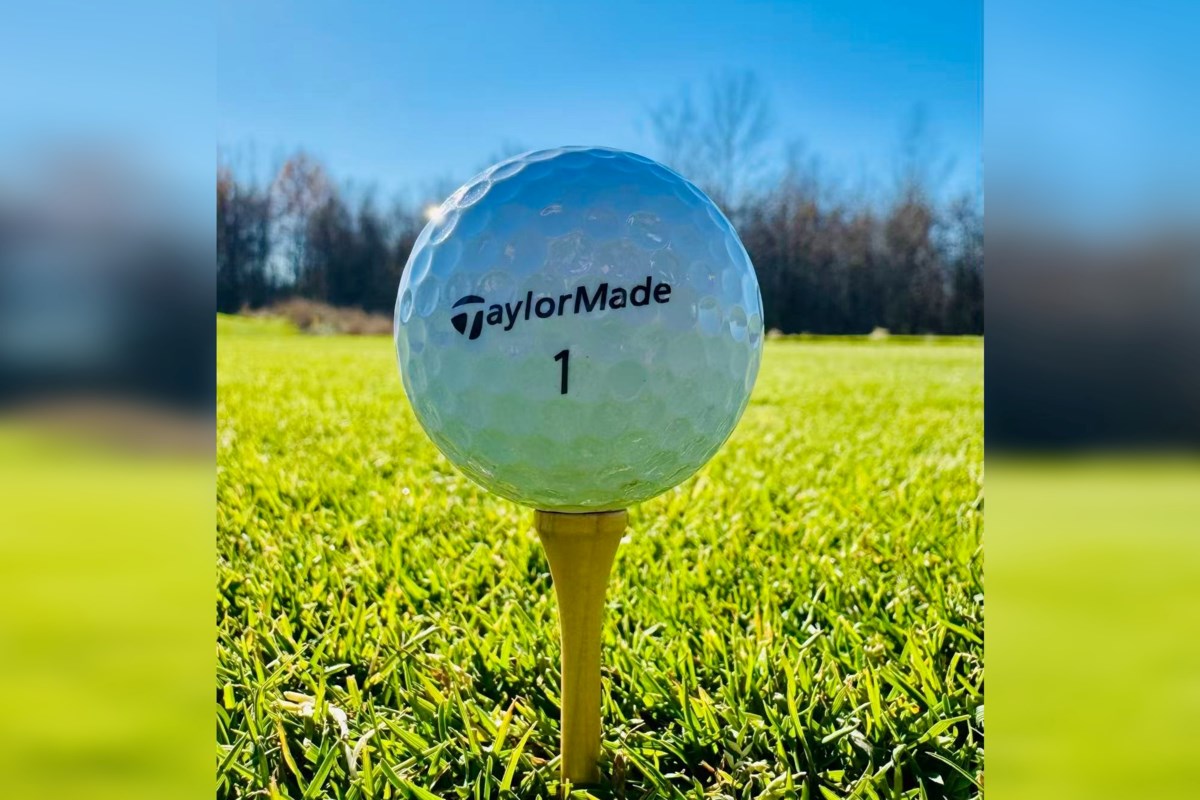
In China, golf is out of reach for all but the wealthiest people, so now that they’re living in Canada Ying Wang and Alice Zhou decided to satisfy their curiosity and give the sport a try with a little help from the Indoor Golf Centre
For many newcomers, golf still feels like a distant sport that is expensive and not easily accessible.
When we first came to Sudbury, we shared that same impression. But one quiet afternoon, a simple encounter changed our view completely. That was the beginning of our unexpected journey into Canada’s golf culture.
Our golf journey began with simple curiosity
One sunny afternoon, while walking along Marley Street, we passed a local golf shop, Pro Liquidators and Indoor Golf Centre. Out of curiosity, we stepped inside and asked if there was a trial lesson. A friendly staff member kindly invited us to try a few swings on the simulator.
He patiently introduced us to the basics — the club, the ball and the bag. When he found out we were newcomers, he encouraged us not to give up and to be brave enough to try. That simple act of kindness stayed with us; it felt like our first welcome card from Canada’s golf community.

. Image: Ying Wang and Alice Zhou
That brief experience sparked our interest and changed how we saw the sport. For a moment, it didn’t feel distant or out of reach — what once seemed exclusive suddenly felt open and welcoming.
As our curiosity grew, we wanted to learn more about the game. That’s when we met Nick Yawney, former CPGA golf professional and the manager of Pro Golf Liquidators, who guided us to Timberwolf Golf Club.
Stepping onto the real grass at Timberwolf Golf Club felt like entering a whole new world of golf.

Timberwolf Golf Club. Image: Ying Wang and Alice Zhou
Timberwolf Golf Club, well known for its 18-hole championship layout. It covers an area nearly three times the size of any other local course.
Nick took us to play nine holes, which is perfect for beginners. As we moved from one hole to the next, the natural scenery took our breath away. The expansive fairways flowed gracefully through forests and wetlands, where trees and lakes weave together in perfect harmony.
Although we had practiced on the simulator, walking onto the real course felt completely different.
Nick took the first swing as a demonstration. With a crisp and powerful strike, the ball flew off his club and disappeared into the distance like it had wings.
When it was our turn, we did all the preparations, placed the tee, gripped the driver, took our stance, and swung. Yet, the ball went off target.

Nick Yawney demonstrates how to swing a golf club for Alice Zhou and Ying Wang, students from China who are studying at Laurentian University. Image: Ying Wang and Alice Zhou
Nick taught us how to choose the right landing spot. “The goal isn’t to hit as far as possible,” he said, “but to decide where you want the ball to land.” He encouraged us to focus on the target and avoid hazards around the fairway, such as bunkers and water.
Later that day, we also learned a small lesson in golf etiquette. We couldn’t remember which hole it was, but we hit the ball into a bunker.
Nick pointed to the rake beside the bunker, reminding us to smooth the sand after playing so the next golfer would have a fair surface.
Approaching the green was the most exciting moment for us. It meant we were finally close to the goal. The putter seemed simple; the hole looked so near. We gave the ball a gentle push and watched it roll slowly toward the flag. It didn’t go in, but the joy of that moment was real.
As Nick said, golf mimics life. Don’t dwell on the mistake from the last hole, and don’t worry about the uncertainty of the next. Live in the moment. This game requires mindset, patience and self-discipline. Golf is challenging but rewarding. Its challenge lies not in the swing itself, but in managing one’s mindset and thoughts.
Through exploring and growing comes acceptance of imperfection. That’s why, like life, golf is never perfect, but it is full of meaning.
Cultural Contrast: An Elite Sport vs. A Sport for Everyone
Looking back, our experience in Canada revealed a story very different from what we once knew in China.
There, golf symbolizes social status and serves as a passport into elite social circles. It is often associated with luxury and most clubs are private and operate under a strict membership system.
For example, Beijing has around 50 golf clubs. The initiation fees often reach several hundred thousand Canadian dollars, and for top private clubs, they can approach CAD $200,000. Even a regular course in Changping can cost CAD $25,000 just to join, and the annual fee is additional.
The high cost has clear reasons behind it. Golf re-emerged after China’s economic reform in the 1980s and was mainly played by business elites. Moreover, new course construction is now restricted by government policy due to limited land resources and environmental protection concerns. As a result, there are only about 600 courses nationwide. In addition, because of high land prices and costly maintenance, each course becomes a major investment.
In Canada, golf tells a very different story.
Golf here is meant to be enjoyed by everyone. Across cities and small towns, public courses and driving ranges are easy to find. Most importantly, they’re affordable.
“Most courses are public and affordable,” Nick told us. “You can simply call, book a tee time, and play. It’s actually one of the most played sports in Canada.”
Openness is only part of the story. There is something more that makes it special. Nick highlighted what makes it truly special: Its ability to connect people across generations.
“It’s a lifelong sport,” he noted. “You can play from the age of five to 80. You rarely see a father and son sharing the ice in hockey, but in golf, three generations can share the same fairway.”
Surrounded by lakes and forests, Sudbury offers ideal conditions for golf. Playing golf here means spending time in nature, not just playing a sport. Nick explained that Timberwolf Golf Club is located in conservation areas. The land was originally marshland and floodplain connected to Junction Creek.
In its design, the course emphasizes the natural landscape, making it look and feel more organic. He also pointed out that Canada’s vast land and open public attitude make it easier for golf and the environment to coexist in harmony.
Alongside its connection with nature, golf in Canada is also about social inclusiveness. Nick said the club welcomes players from all walks of life, including many newcomers.
“In the past few years, we’ve seen more newcomers from places like Nigeria and India
trying golf in Sudbury,” he said. “Golf has always been strong here. We have many courses for a city of this size. I’d love to see continued community support, especially for
youth and women’s golf programs.”
As golf evolves, technology is reshaping how people experience the game. Simulators, now popular in both China and Canada, offer a flexible way to play year-round.
In China, limited living space makes indoor golf less accessible, while in Canada, simulators thrive during the long winters and are easy to find in sports centres, golf shops and even private homes.
In Sudbury, Pro Golf Liquidators offers one of the best indoor golf experiences. The difference speaks for itself — here, golf is no longer a distant or unattainable sport.
It’s a game that welcomes everyone, a way of life that brings people outdoors, connects them with nature, and encourages a slower, more mindful pace.
As newcomers, we’ve learned not only the techniques of golf, but also the mindset of embracing nature and living more slowly and intentionally — something that feels especially natural here in Sudbury, surrounded by lakes and forests.
A Little Golf Quiz—Can you guess what these pictures mean?

Image: Ying Wang and Alice Zhou
What’s inside a beginner’s golf bag?
A simple package set with about nine or ten clubs is enough to start. It usually includes a driver, a hybrid, a few irons, a wedge, and a putter.

Image: Ying Wang and Alice Zhou
Do you know how many smiles on a ball?
Most golf balls have around 350 dimples, some models even exactly 365, just like days in a year.

Image: Ying Wang and Alice Zhou
What is this tool used for?
It’s a divot mix bottle, used to repair the turf after a golf shot.
Ying (Vivian) Wang and Jie (Alice) Zhou are MBA students at Laurentian University. As newcomers to Canada and mothers, they are deeply interested in education, cultural transition and the immigrant experience. By listening and storytelling, they hope to build understanding across cultures.