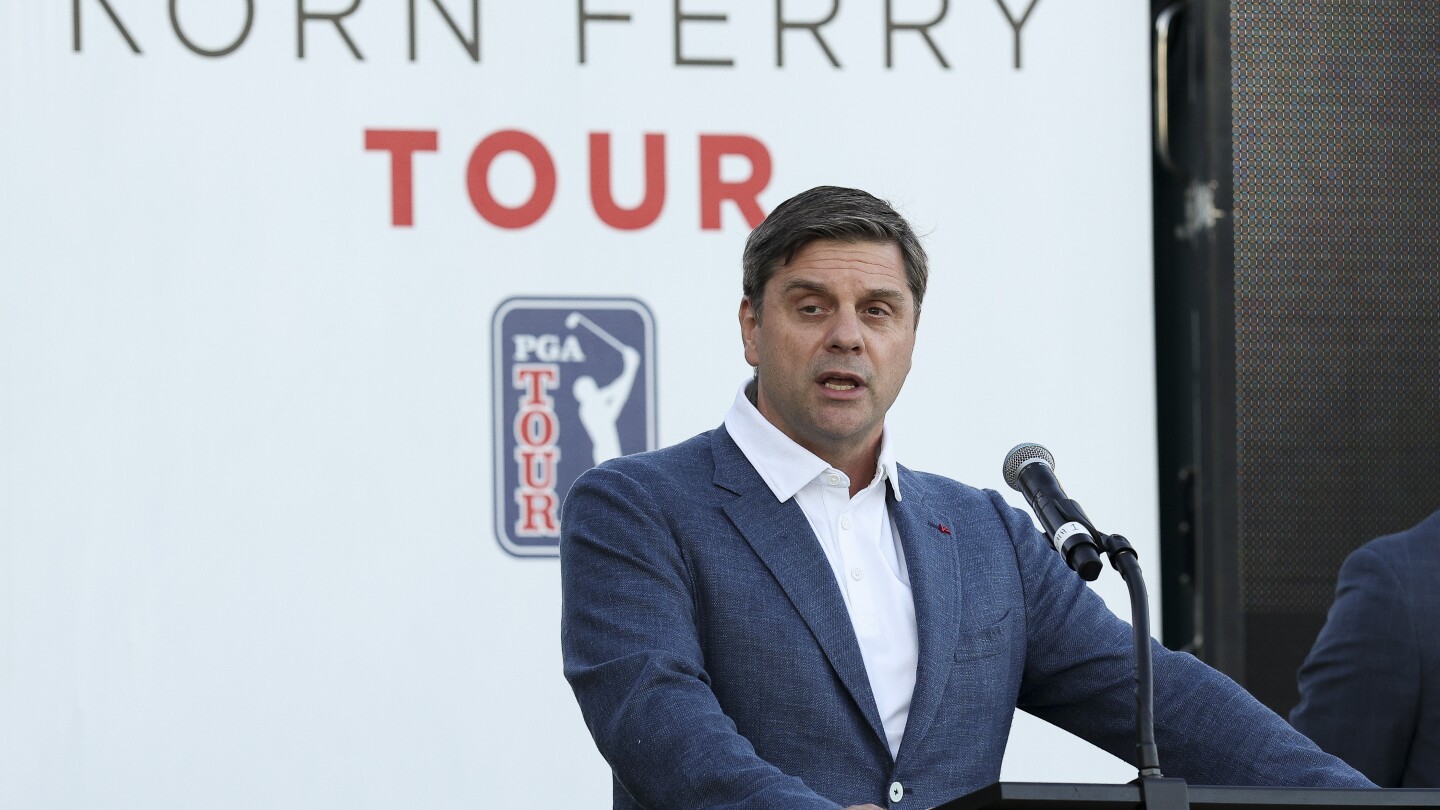
Brian Rolapp is interested in strength, not spectacle.
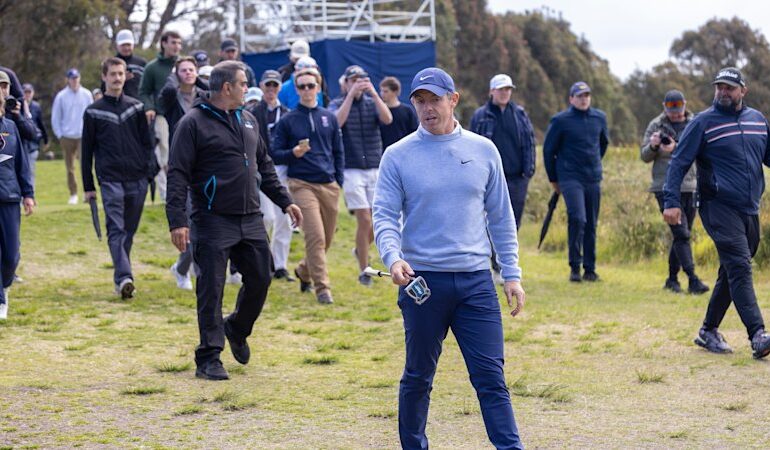
Such strength, Rolapp believes, comes from a PGA Tour that is not overly reliant on a handful of star players, whether they’re already on his tour, like Rory McIlroy, or on another tour, like Bryson DeChambeau.
“Any sport worth its salt says, if this competition only works if there are a couple people in it, it’s not a sport, it’s a circus,” Rolapp said last month during CNBC’s CEO Council Forum in Palm Beach Gardens, Florida, where the PGA Tour CEO addressed several topics related to his new league’s future.
Rolapp’s comment came after interviewer Scott Wapner asked Rolapp about LIV Golf, specifically DeChambeau, whom Wapner called the “most popular” American golfer in the world, and a potential reunification at the top of the sport, an idea that has fizzled since the start of the year. Rolapp, who officially started his new role in July, said he’s had conversations with representatives of the Saudi-backed tour, though he’d only favor a deal if the terms made the PGA Tour stronger.
While DeChambeau’s return to the PGA Tour would undoubtedly be a boon, Rolapp seems more concerned with building up the many ancillary players and potential stars at the PGA Tour’s disposal, or as he called them, the tour’s “middle class.”
Rolapp noted that there is no data to support that golf fans only care about watching a select few stars compete. To back up his point, Rolapp used this year’s FedEx St. Jude Championship in Memphis, the first playoff event, which Rory McIlroy skipped but where Justin Rose and J.J. Spaun battled in extra holes as nearly 6 million people watched on television. That’s why he confidently exclaimed that he’s “not worried” about the theory that Tiger Woods would take away viewers from the main tour should he decide to compete next year on the PGA Tour Champions.
“Every sport has stars, but what really makes sports work is really the middle class,” Rolapp said. “So, in my old job, sure, we put the Kansas City Chiefs on primetime as much as we can, but that’s not why the NFL was so successful; it was because when the Bengals are good, you watch, and when the Lions are good, you watch. The middle class matters. You cannot build a lifelong sport that outlives your stars if you don’t build a system that works beyond your stars.”
Such a notion would imply that the PGA Tour will eventually move away from the signature-event model that it rolled out a couple years ago. Those no-cut, limited-field events have not only deprived much of the tour’s middle class from playing opportunities, but they’ve also curtailed the parity that Rolapp lauds. Rolapp’s comments also support what Golf Channel has heard in recent months, that the CEO favors bolstering the PGA Tour’s pathways, including the Korn Ferry Tour, to help create new stars, which figures to be more crucial if the PGA Tour sticks with fewer fully exempt members.
Rolapp’s vision for the PGA Tour starts with the competitive product and stems from three principles: scarcity, simplicity and, of course, parity. That competitive parity, Rolapp adds, is the hardest one to achieve but also the only one that the PGA Tour currently possesses. The other two tenants are still works in progress, though Harris English revealed during the RSM Classic that the start of the PGA Tour calendar could be pushed back to after the Super Bowl while also being limited to around 20 tournaments outside of the majors.
Rolapp confirmed English’s statements are reflective of what’s been discussed by the PGA Tour’s Future Competition Committee, which includes Woods, who has been quoted in the past as saying the season should end around Labor Day, before football starts.
“If you dig deeper into what he said, it’s not that complicated,” Rolapp said. “Competing with football in this country for media dollars and attention is a really hard thing to do. … The majority of golf is played in the summer and gets people’s attention, so looking at schedules that optimize that calendar is certainly something we talk about.”
Rolapp went on to add, “Part of professional golf’s issue is it has grown up as a series of events that happen to be on television, as opposed to, how do you actually take those events, make them meaningful in their own right, but cobble them together in a competitive model, including with a postseason that you would all understand whether you’re a golf fan or a sports fan.”
Perhaps Rolapp’s most telling line during the 17-minute long interview was this:
“I will do whatever makes the PGA Tour stronger.”