
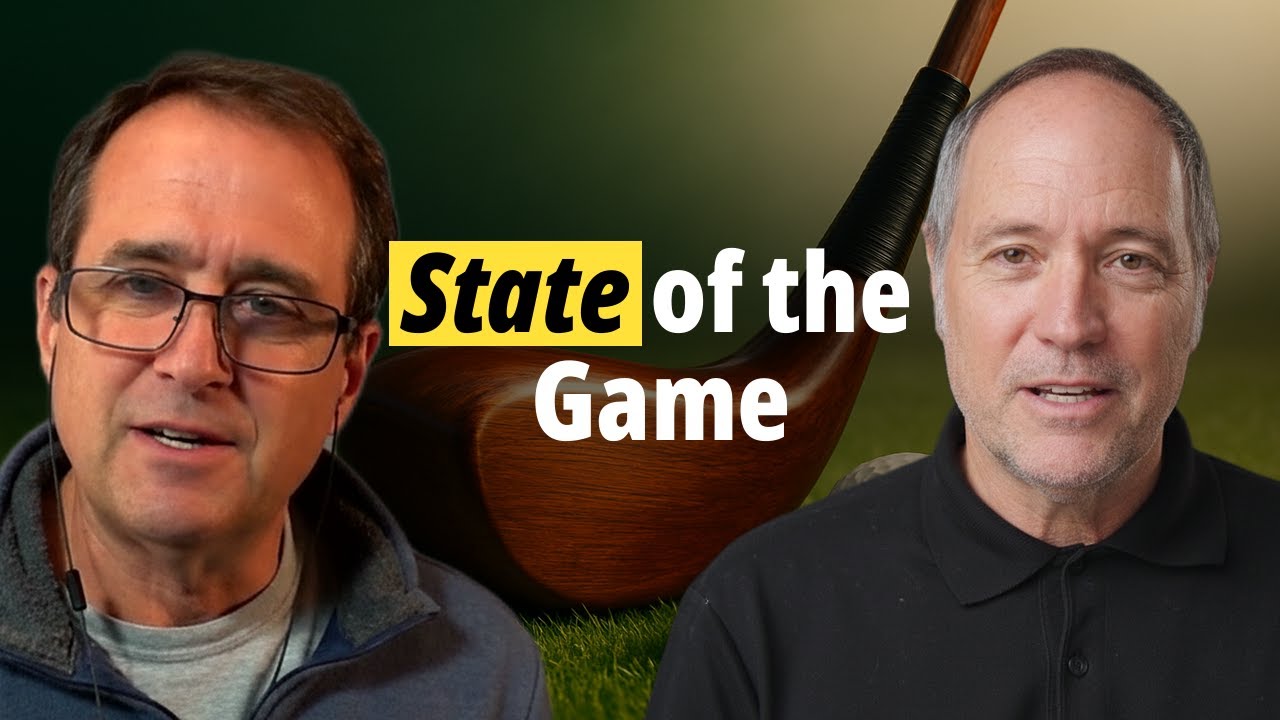
In this conversation, Mike Maves, John Lag Erickson, and Ralph Perez discuss the evolution of golf, focusing on the changes in equipment, the impact of technology, and the need for bifurcation in the sport. They reflect on how modern golf has shifted from traditional techniques and strategies to a game dominated by distance and power, often at the expense of skill and creativity. The discussion also touches on the importance of classic clubs and the players who have shaped the game over the years.
Takeaways
Golf swings and ball strikers were better in the past.
The game has changed significantly, focusing on distance.
Modern golf courses need to accommodate the new game.
Bifurcation of golf equipment and rules is a valid discussion.
The new golf balls have reduced spin, affecting play.
The PGA Tour’s adoption of metal woods changed the game.
Classic courses are not designed for modern equipment.
Players used to have to learn to hit long irons effectively.
The skill set required for golf has diminished with technology.
Reflections on classic clubs highlight their importance in golf history.
one. There we go. So, here we have Mike Mavs and John Lag Erikson. The usual. Been a while. Yeah. Everyone seems to be just a tad older. John and I haven’t talked in years. Years. Yeah. It’s been quite a while. It’s been quite a while. I’ve always been a big fan of yours, Mike. I feel like you and I kind of came from the same peepod, you know. Yeah. Well, vintage golf and Hogan and all that stuff. I think we’re both kind of aligned with uh the belief that, you know, golf swings and ball strikers are actually better in the past than they are now. I I do believe that. Yeah. I Well, I I think they had to be. The games changed so much, right? I mean, it just everybody’s uh uh the the the sort of creativity in the game is is really just uh from in inside 100 yards. I mean, there’s not a lot other than hitting it far everywhere else in the golf course into the modern game, you know. Yeah. So, I’m I’m kind of thinking that golf now is in, you know, three we have three stages. you know, you have the hickory era, the kind of pimonan blade, you know, batada ball that we all played. And then I call it kind of like super golf, you know, where it’s just, you know, smash it a mile and, right? Um, you know, because the um any game is really defined by the parameters, right? I mean, a basketball court, it’s a certain size, the hoop’s a certain size, the ball’s a certain size, right? Tennis, you know, baseball, football, all the games that people love. But golf for some reason has decided to change the parameters of the game. So now the courses are having to get longer to accommodate the ball going farther and the drivers, you know, hitting the, you know, Sam Randolph told me that the the ball’s going 15% farther than it used to. So the 6900 yard US Open course add 15% now you’re at 8,000. So the courses are not really long enough. I feel like the golf 3.0 should be playing on 3.0. 0 courses, you know, in other words, just if this is what they want to do, then they need to have golf courses that accommodate, you know, the modern game and the ball going so far and all that. I I don’t feel good when I see the modern clubs being played on uh the classic courses that are not appropriately designed for that. Like, it’s not, you know, we just watch the Walker Cup and uh Cypress Point. I I I get to play there fairly often. I’ll be playing there again soon. And for instance, the tenth hole is a par five. And for me, it’s a pimmen. I’m still a pursim player. So a driver and a twowood or three-wood into a greenside bunker and get up and down, that kind of thing. And the kids in the Walker Cup were hitting driver gap wedge. Think about that. Yeah, I know. I mean, it’s not only is it a par4, it’s a it’s a extremely short par4. Yeah. So, it’s it it feels disrespectful to me to see that um you know, Alistister McKenzie designing this course, positioning the bunk where the bunkers are going to be based upon 250 yard drives, but there wasn’t much of that much of a difference between the Hickory era and the PCmen, the early PCImmen and Steel era where the ball was going an average of a 250 for, you know, your good players and good amateur players, right? Therefore, the bunkering and the angles and the uh the trajectories of the shots coming into the greens with long irons. Typically, you would see uh long iron approaches with maybe more narrow but deeper greens to ex accept a lower trajectory shot. You can think of like 10 and 11 at Augusta were designed for long irons coming in there. You kind of skip them in and the parfs on the back at Augusta because people know those holes would be wider but but not so deep and protected in the front. So, it’s really is a a real risk and reward when you’re coming in there with a low trajectory shot, right? Right. You know, you kind of like, oh my gosh, he’s here’s Sebie back there with a two iron coming into 15, you know, and it’s like he’s got to hit this just right. But, I mean, it it’s not very dramatic when they’re hit chipping an eight iron in there. It’s just kind of like, you know, it doesn’t You know what? there isn’t or I can’t think of another sport where like you say those parameters have been uh compromised. I mean, you could say baseball, but you know, but you got the aluminum bat, but when you get to the, you know, like like big legs, you’re not you’re steel using a wooden bat. And well, that’s the case for bifurcation of golf, right? I mean, I I think that there’s nothing wrong with with uh having uh uh two two sets of uh equipment and rules. Um because I mean we it’s also a bit of an ecological disaster too. I mean uh committing uh all of the uh land and water and everything else to stretch these golf courses out to uh match up with how far the the the golf ball is going. And I mean I mean we’ve been talking about this for quite a few years, but it it’s it really is a a very different game than than the the game that uh uh we learned there. It’s it’s just night and day. And uh it’s it’s I don’t know what uh the other issue that you have too also with the driver is uh is that uh once you’re swinging at over 11 uh 10 miles an hour guys are swinging 120 miles an hour now now the driver is given a guy who can swing that fast also a huge uh uh uh advantage. over guys that don’t quite quite get it up to that speed because you got that that trampolining that that that happens. Yeah. Yeah. Yeah. Yeah. So So the So that so that makes it a little bit uh uh uh un unfair. Um I mean great a guy can can swing that fast, but um that’s a that’s a that’s that’s a skill. I get it. That’s a skill. But but it shouldn’t eliminate everybody else from having an opportunity to compete. I mean, yeah, but it was more interesting when guys could win all kinds of different ways, right? But but what you’re missing I think what you’re missing out there is that there was a compromise. So if you were going to swing that hard likely you’re hitting it on the screws just not as high as somebody who’s swinging under control. Right? So if you had guys right. So if you had to hit it you know that pinpoint and you’re going to swing swing out of your shoes and jump up and twist and shout and do all this. You might, you know, the ball staying anywhere on the golf course is probably slim to none. So, yeah. Well, everything’s engineered to go straight and far, right? So, that’s what’s built in. Well, well, one of the things that I was talking to Larry Bob was a old school designer is that the new ball, they took a lot of spin out of it, right? Yeah. So when you watch Nicholas hit the the one iron at Baltus roll for example to the elevated green. Right. Right. He couldn’t do that today with a prov. No it wouldn’t it wouldn’t behave that way. He wouldn’t get the rise. It wouldn’t get the check. It wouldn’t do you know what I mean? Right. It would just go further, right? you know, so it’s a it’s a it is a completely kind of a completely different game in the sense that yeah, even strategically say auto auto racing. If you look at auto racing, you know, you’ve got NASCAR, you’ve got indie, you’ve got drag racing. You know, you can pick and choose which version of it you want. I don’t really have a problem with the modern game itself if that’s what people want to do. I mean, sure, you want to go play 8,000 yard courses or 75 7600 yard courses with frying pan drivers and plastic golf balls, you know, have fun. I mean, it’s not my thing, but I don’t have a problem with people that want to do that. I think u the USGA probably made uh a a calculated mistake when they allowed metalwoods in the first place. back in the 80s, the early 80s, you know, baseball still using wood, cricket still using wood. Those are the stick and ball games that are bigger games than golf. Okay. Baseball, you know, stayed with wood at the show in the big leagues. Now, college, they have metal. Yeah. If if you go down to I mean, amateur baseball is basically softball, right? Now, if you play amateur baseball, you probably won’t have you’re only going to get to a certain point like little leagues, pony leagues. You get like single a ball where guys are like, you know, there’s no like I think I think the minor leagues are still using wood. Is that what you know? Minor leagues use wood. Oh, the minor leagues have major league baseball like like the the farm teams. The Cape Cod League, which is pretty much an amateur circuit. It’s it’s all wood. There’s no aluminum bats. Yeah, I think the USGA probably missed missed that. They didn’t see it coming. I mean, it Now, the other thing would be the PJ tour. The PJ tour could have said would at the in the show, you know, the USJ can allow anything that they want for amateur play, that sort of thing, right? I mean, if your weekend golfer wants to go out there with forgiving clubs and all, that’s fine. But when you go to the pro level like the PGA Tour probably should have departed with the USGA and said at the show this is what we do you know would stay with the tradition if the if the PGA tour didn’t do it maybe the RNA should have done it or in Australia or something and and kept the parameters of the game correct so that the classic courses which we should all be so thankful for that they built these courses because I mean try and get land permits to build a golf course at Pebble beach or something. Now, I mean, not going to happen, you know? Right. So, they they designed these great courses for us to enjoy to be played properly with appropriate gear like any other sport. I mean, you could play basketball with a volleyball. I mean, you could, right? I mean, theoretically, I want to be able to palm it, you know? Hey, make it smaller so I can palm it so I can maybe lower it down a little bit because I’m a weekend guy and I want to be able to dunk like the guys in the NBA, right? make it fair for me too because it’s all equality or whatever. I I just think that um the the pro game, you know, I’m a professional player, so I represent that, you know, mindset and ideology of the pro golf. But when I watch TV now, if I watch golf, I feel like I’m watching like Major League Baseball players playing softball. Yeah. Like it’s a mismatch. You know, you’ve got really skilled people. they’re playing softball and it’s like it’s still a game. The best team’s going to win. The best players are going to do well, but the game that it does wouldn’t quite fit right, you know, and I think that that’s what’s sort of happening. And that, you know, bifurcation conversation probably needs to happen more at this point because I think it’s really gotten just carried away, you know, at this point. Well, well, the thing is I think when they they uh uh you know uh let the horse out of the barn with with this, they just don’t know where the appropriate point is to to to stop it because I don’t I don’t know that they imagine that the game would get this far uh out of hand when it comes to distance and and and so on. But the other thing is too is is I mean it’s the I mean the ball is one thing. They can roll that back a bit, but the the giant uh giant driver heads that’s a that’s uh and and the trampoline effect. If you got if you reduced the size of the driver head and and you you uh eliminated the uh thin faces and just said, “Look, the the the we got to go back to zero uh uh trampoline uh effect at at least in the achievable swing speed range. Right. So, if you did that, you you would definitely uh add skill back. When the when the metal drivers first came out, they weren’t they weren’t uh uh uh that much uh different than wood. They hit it the same. Here I’ve got uh here here I’ve still got my my old that’s a Pittsburgh Pimmen, isn’t it? No, that’s that’s that’s my Langert my Langert uh tour to force. Remember those? Yeah. See his thing though? like 98 99 they went after that uh core which is a coefficient of restitution. Right. Oh right right. Right now you’re only getting 83 you’re only getting 83% of what of what you could possibly get. And there’s still right you’re not getting a one for one rebound right now. Right. Limited 8.83. Remember these grips John? Yeah, the classic cord. I won’t take it off. Yeah, the Oh my god, I just wish they still made that. Isn’t that funny? Best grip. These are the best grips ever made. No doubt. George Nudson used them, right? It was so on his clubs. I mean, oh, I tried to. But it I mean if I could find someone with some new old stock of that, I’ i’d be uh hauling up the Yeah. But again, yeah, I’ve got them all on my all my playing set. If you say, “Okay, we’re going to roll the ball back, right?” So, you’re addressing that one variable, right? But nowadays, it’s all geared to how much further, how much more distance you can squeeze out of whatever. Yeah. So, it’s physical fitness, it’s this, it’s, you know, swing technique, it’s everything else and you scale, you roll it back and the guys that are going to benefit are the guys that are long already, right? Well, I mean, it’s not going to affect the guy like Rory. Well, I I think I think there’s something else like like if I if I actually think about about the game right now, I’m going back and I’m I’m looking when I’m out there playing golf courses that I used to play when I was a kid and or when I was let’s say I was 30 and now I’m I’m 58. I’ll be 59 in April. And I’m sitting there and I’m going, uh, I could probably give my 30-year-old self uh uh uh a run for my money if I was my 30-year-old self was using the old equipment. So, I’m sitting there going, the only thing that’s really done is for an old guy like me is it it I play this the courses I was playing when I was 30 from the same TE’s in the same way. and uh you know just I’m a little older and I can’t swing it uh as hard. So part of the game I’m sitting there going well I can still enjoy the the uh courses and play them almost the same way I did even though I’m uh older and and slower. But it just tells you how crazy it is uh how different the whole thing is. like a couple of times this this summer uh the course that I play uh all the time I got out I used the old irons a lot I didn’t play the I played better with the old stuff but with the driver honestly I’m thinking I had my titleless tour models I had to be at least 35 yards shorter 35 yards that’s a long long way yeah clubs yeah uh And uh I’m going this is really and of and and there’s two things going on there. There’s all the technology in the head, but the other thing is too to really whail at it the way you do with a new uh uh driver, you’re taking a hell of a chance because uh uh it could go anywhere. Whereas you can get away with so much with the with the with the new one. Like I’m like, you know, it’s it’s easier to keep it on the golf course, that’s for sure. Right. Well, you know, talking about equipment. So, the the new thing, and it’s really not quite that new. I mean, when I was in the industry, like the King Cobra made a killing, right, by simply making a a 44 degree pitching wedge, basically a nine with a P on it. Right. Oh, right. So, yeah. You come out, man, I’m killing these things. They didn’t realize it. Right. And they’re selling like hotcakes. Right. Right. Well, one couple of things is by juicing up the loft, right? Right. The new ball, you’re really a lot of these people aren’t generating enough spin, right? To play the golf course properly. Well, I I would when they get to like a seven iron, the ball’s going knee high, you know? Oh, I mean I I I’m not talking about the average guy. I’m not talking about pros are going to play a traditional loss, right? and and and I’m playing uh with the o older gear, say say like a uh early ‘7s, the the first Apex. I was playing those for a little while and uh you know, my buddies are are playing with with their gear and uh they’re trying, “Oh, what’d you hit?” I’m like, “Uh well, I hit uh five iron.” And they’re, “Oh, five iron.” And they’re hitting eight. And I’m going, well, my five iron, you know, I’m I’m uh hitting it like a buck 60. And uh but the thing is that uh you you’ve you’ve still got loft you can use when you get into the two iron. So they’ve just they’ve just notched the whole thing down and eliminated a part of the bag so you have to carry four wedges, right? You know, that’s another thing. I mean that maybe maybe it was better when uh there was uh uh you didn’t have 60° wedges. I forget who was saying it. Was it was it FAO was saying that that it would game would be better if they uh stopped at 56 degrees with the with the wedge? I would agree with that. Yeah, I would agree with that. I everybody learned I I mean you learned if you’re coming from the the era before there was a 60 you could do you could work miracles with a 56 you can make it a 60 you can make it a 62 you learn how to do these things because you didn’t have a choice well we used to open the face up right you know use bounce I mean that was part of the skill set of right you would do you just grab a 60 just Yeah, if you look at golf, if you look at how courses were designed, let’s say the a par 72 and you have the 10 par4. I mean, you can have a 10 par4s, right? Yeah. And those should be divided up typically between, say, three long iron approaches, three mid-ir approaches and three short iron approaches. Yeah. Right. And one, you know, the one extra would either make it a long course if you had four long iron approaches, you know, it was Baltus roll or something. And if it was, you know, three, I mean, four short iron approaches it was drivable, you know. Yeah. So you would buy a set of clubs and it would have two iron through pitching wedge and you knew that you know as you developed your skill and you could get it out there 240 50 yards you were going to have to learn to hit long irons meaning two three and four iron and then mids five six and seven and the short 8 n and wedge and you would have to equally learn those skill sets short irons and and long irons and of course the acid test of a golf swing is really the long iron. irons, right? And when a driver, you have it on a TE and, you know, woods are, you know, easier to hit than irons. And the ultimate acid test is a one iron. You know, can you hit a one iron off the ground and, you know, get that on a green? To do that, you have to have a great golf swing to do that. And I think that that was a real badge of honor to be able to be a player that would carry a one iron and be able to use it effectively. I mean, if you could do that, you know, you’re you’re in a different conversation now. You know, you’re you’re a real a real golfer, a real player that can, you know, strike a one iron. I’m sure Mike, you can hit a one iron. You know, I’ve seen your swing. It’s good, you know. Well, I never I I never carried one. I had I stopped at the two iron. I did have I had remember the Acuifor uh blades? They were just like a slab. I had a one iron acform one iron. And I didn’t hit it off the off of the uh uh fairway very often, but it wasn’t in the bag very long. I I stopped at a two iron most of the time. And then I and then I I carried uh I carried a fivewood uh and u and uh my five iron went a little longer than a than a than or my fivewood went a little bit longer than my two iron. Yeah. And so that was kind of like what I there’s I wasn’t getting any more out of out of a out of a one iron. Yeah, you could get the fivewood or fourwood up in the air more, you know, and it higher. And so it would be like a one iron to me. I I always carried a one iron because I used it off the tea a lot. Yeah. That was if I needed to, you know, I could put it on a T. I I couldn’t hook a one iron, period. Just No. So what I would do is I aim down the left side of the fairway. Yeah. Yeah. And just hit a bullet. And if it leaked a little bit, I’m in the middle. And if it leaked a lot, I’m on the right side of the fairway. But very rarely would I ever, you know, miss a fair with the one iron. When I was on tour, you know, in the age that I played, especially in Canada, the courses were tight. And I just did a video recently about uh Wolf Creek where we’d play the Alberta Open and Yeah. I mean, yeah. You know, just super narrow courses. And one iron was a great tool to have on those kind of courses because I could still get it out there 220 yards. Yeah. You know, very playable in play and hit that little fade out there. So, I used that all through college, uh, all through my pro career and sometimes I would skip the two iron. I’d carry a one and I carry three iron and a one iron. But like when I won uh at the Windsor Charity Classic, uh I carried driver, two-wood, one iron. Wow. Nice. So I would use a two-wood as basically a strong 3-wood, right? And get it off the fairway. Yeah. But I would also use the two-wood because I could I could work it right to left off the T. So it was kind of like two drivers. So I Yeah. I could draw it and I I put a shaft in that was just slightly looser, a little bit looser than my driver. So I could turn it right to left. The driver was always straight or a fade low. Yeah. Down. And that was just the shot that I would hit. And if I had to work it right to left, hit the two off the T. Yeah. And then the one iron if it was narrow, boom. Because, you know, like Hogan talked about, you know, the most important shot is the the T-OT, right? Because that sets the sets everything up. sets everything up. And in the era that I played, you had to hit it in the fairways. Especially on the Canadian tour, if you were missing fairways, you were missing putts. I mean, you weren’t in contention. I mean, this whole idea of hitting 50% of your fairways and being in the leader group on Sunday, I mean, that just didn’t exist. There was no such thing as that happening. I think the other thing is too on the on the Canadian tour uh the golf courses that were hosted those uh those events uh they wanted to protect the course like they they didn’t want you guys showing up there and uh and shooting 62 I think. So I think that they uh uh you know with the on the on the big tour the PGA tour um the way they they manage uh manicure the golf courses these guys are getting similar uh type of uh golf course similar green speed similar length of rough similar everything. uh because the tour has such control over that when you’re uh the tour that you were playing. Uh the golf course wants to wants to put a beautiful product to look at out there, but they don’t really want you guys uh going low there. So, so growing the rough and everything else, um, uh, I think you you were dealing with, uh, um, just other other forces were deciding how how tough they were going to make those golf courses for you guys. Yeah. I mean, the Canadian Tour was great in that, you know, anybody could win out there. You know, had Jerry Anderson was really the best player that went through the Canadian Tour that I saw. I mean, people don’t talk about Jerry, but I mean, incredible, incredible golfer and short hitter, you know, a 240 guy, you know. I had a I I played a money game against Jerry. He was long. I’m sure he took your money. No, he didn’t. But it was No, he he he was after he was off of the tour. Okay. And uh and um the uh it was a it was it wasn’t me and him straight up. I had a partner and it was me. My partner was Dan Greenwood who was uh he was um he was an assistant pro at that time at at uh uh Heron Point. That’s where we played. And it was Dan and I uh against Jerry and Jerry’s Caddy. And I think Jerry’s Caddy played better than Jerry that day. But Jerry Jerry had a um uh he got in a car accident uh and that was the end of his career. Um he played he so he when I was that when we played that match um he he would have been uh uh sort of a fraction of of his former self. But I mean he was still great. But um yeah, that that that’s a whole different thing. A guy that that was able to to go as low as he went in Europe. Yeah, he had the European tour record for the lowest ever shot. I think was the Swiss Open or something. He’s 28 under or something crazy like that. I have might have been the European Masters or something. European Masters. Okay. Yeah, it was the European M. Yeah, it was the European Masters. I think L’s El L’s finally beat his record. I think Ernie L’s I think was was the one, but it was o over 20 years. I think the point I was making though is that on the Canadian tour, you could have someone like Jerry that could win playing against Kelly Murray who was the longest hitter in the world. And I just, you know, had a conversation with Kelly recently on my my channel. Wow. and and Kelly was, you know, talking about Jerry, you know, and how he had, you know, he couldn’t beat Jerry very often. You know, Kelly won twice up there in the Canadian tour, but Jerry would just won so many tournaments up there. And I remember going down to the Australian tour and knowing about Jerry from the Canadian tour because I’d never heard of him. I was American, never heard of Jerry Anderson. I go up to Canada, this guy’s just, you know, on the leaderboard every week. He’s just the same. He’s in the top five every single week. if he’s not winning, he’s finishing second or third or whatever. I go down to Australia. I’m playing in the Australian Open. And I look up on the leaderboard on Saturday and there’s Greg Norman, Jerry Anderson, you know, and then Jerry’s paired with Greg Norman, the final round of the Australian Open at Royal Melbourne. Yeah. It’s like this is a guy that nobody’s heard of and here, you know, he’s just that good of a player and Norman was number one in the world at the time and he’s got to deal with Jerry Anderson. Yeah. Yeah. So, um, but that kind of golf where somebody’s short and straight and precision golf, doesn’t make mistakes, calculated, Jerry Anderson and Kelly Murray, they could just bomb it, you know, 50 yards by Jerry. Jerry’s just going to pick your pockets, you know, on those kind of courses because, you know, typically very tight. We we played at Bmpton a lot that a lot of the tournaments were there like the tournament players championship. Yeah. You know, TPC was always at Bmpton. Yeah, they played the uh I played a couple years in the uh uh Ontario Senior Better Bowl. That golf course hosts it uh has hosted it for for a bunch of years, but it’s um uh I think this this year they didn’t host it. It’s it’s moved somewhere, but that golf course is uh is a lot of fun to play. Yeah, good good golf course there. Did you know Paul Paul Henrik? No. or or John, his father, I think, was the pro at at Bmpton. No. Okay. No. You might have run into them up there. No, I’d get into Toronto. I played mostly in Niagara. Okay. Uh and then I would get into Toronto um and play some of the privates. Uh usually, uh they had a a tournament. It was called the George S Lions. all the uh golf golf courses would send their their four uh top amateurs to represent the club. So that you always got to play great golf courses. So St. George’s, Islington, Lampton, Weston, uh those golf courses I I played, but I only ever played golf in Toronto really in tournaments. Uh, so I didn’t know members or know a lot of people there, you know. So what about Hamilton? Was that that’s between Toronto and Niagara? Yeah. Yeah. Hamilton’s 45 minutes from me. So I’ve I’ve like uh Hamilton Golf and Country Club is is uh amazing. Yeah. Uh in Ancaster. Ancaster is sort of a a suburb of Hamilton, right? So it’s Hamilton, but so many so many great courses. I I loved playing Toronto National. Got to play there. Well, there’s there’s there’s the the National, this one, and then there’s the Toronto Golf Club. The Toronto Golf Club. They’re both they’re both diff incredible, but very different. Toronto Golf Club is Nationals where I where I played. Yeah. Yeah, I remember it. Yeah. Toronto Golf Club is is phenomenal. I’ve played there a few times because I now uh several of my uh good friends are members there, so they they uh get me out there once in a while. It’s an amazing golf course. A lot of the a lot of the guys would come to the uh uh play the Canadian Open when it they play it all the time at Glenn Abbey and they were more excited about uh sneaking out to Toronto Golf than they were playing Glenn Abbey. Right. A lot of those guys. Sounds familiar. Yeah, David Frost used to be uh hanging out at Toronto Golf Club all the time. He didn’t I don’t think he even probably hit 20 balls before he went up to play. Spent all his time at Toronto. Yeah, they were they were doing that this year at the at Beth Paige. Yeah. Everybody was heading to Deep Tail. Anybody who had a hook, anybody who had a hook would go play deep just for the the prestige, you know, just to say the day the day that uh we had the match with uh Jerry Anderson, uh we we were we were doing well, Dan and I, and we got kind of lucky. I hit hit a really uh lucky shot. But it was a funny story because we were we were winning. I hit a ball into a bunker and uh there was like a a hazard and and uh and bull rushes like complete jail and I had a just a horrible lie out of this bunker like I’m swinging down at it and everything else and uh this is this is a it’s going to come out like an absolute rocket but we’re playing we’re playing uh baseball so I can I can take a chance. Well, Jerry parks himself right where I’m trying to hit, like right be past the flag. He’s standing right there. And uh and I’m looking and I’m getting ready to hit this shot and uh and uh I’m going I finally I said, “Jerry, I said this thing is coming out like a rocket and it’s either it’s either going to hit the flag or it’s going to hit you. So get out of the way.” So, so anyway, it hit the flag and it went in. I hit the flag about two feet off of the ground right in the thing and it went anyway. So, that that that was the but a complete fluke, but it was so funny because he he was uh I mean, we had a great day and he was a nice guy, but this he really really had every intention to distract me there. It was just like I’m looking and he just right there and he knew he knew that go that shot had to come out in uh there was just no way to to to uh uh get it out of the bunker and have it stop anywhere. So anyway, that was funny. So just real quick, a little nerdy side thing. Now you you’ve hit a lot of different Hogan irons, different sets, have you? Yeah. So, what are your thoughts on some of the different Hogan sets? Like, I mean, I’ I’ve pretty much hit about every of the the known ones from the sunbursts and the precisions to the um uh the power thrusts, you know. Very I love I love the power thrust. Uh you know what? Uh there’s only a few of the better like I mean Hogan Hogan made some mid-tier uh golf clubs too for for regular uh golfers more affordable sets but excluding those. Um I there’s only a few sets that I didn’t like. I didn’t like the medallion. I don’t know why I didn’t like that club. Uh I liked all of the uh uh Apex models. the the the the bounce soul. Uh uh the the OnePlus uh uh I loved that was my favorite. That’s that’s by by far my favorite. But right after that, there was also a balanced sole that looked like the first apex, but the but how the how the weight was distributed was almost opposite. And I didn’t like that iron. But but I mean the the I like the power thrust. I like the precision. I like the the um uh Yeah. No, they’re great. They’re great. And uh and uh well that those that’s the uh best mazuno blades were knocking knocking that blade design off, right? I think you know what what was a knockoff of the power thrust was Spalding the bird on the ball kind of had the shaved off toe. So that you know they and the power thrust you know the weight’s taken off the toe right with that shaved toe. Yeah. Kind of centered a little bit more. I mean that’s a real players club right the power thrust. I mean you’re you know you got to be a good striker to be hitting that thing right. That’s a the the the videos the the club that I was using uh on all those uh uh videos by the lake, the one I was using the most of the time was a power thrust sixiron. Was it a Was it a Power Thrust? Yeah. Yeah. Yeah. But it’s a it’s a it’s pretty um I mean it really feels sort of clunky. You know what I mean? It’s really just a beefy beefy piece of steel. But I I like I like that. Uh I don’t even know what what was great about it, but I I was on talking to Bradley Hughes about my learning golf and everything else. And until I was about 19, my my golf clubs uh uh my lie angles were all uh wrong, just not flat enough. So, so I got really good at full swing because the the clubs that I hit the best were the clubs that had the least amount of loft on them. So, I would go out the window practicing with my four, my three, and my two uh iron because I could get those to go on target and and I was missing left and I I didn’t have anybody to say, “Hey, you know what? You keep you’re hitting your your your hooking your wedges and pulling your wedges and all that’s because your lies wrong.” Yeah, I just, you know, so this is this is just uh just the way I wake I I came up, you know, and I was I was saying to Bradley, I was trying to ape a guy uh who uh was an old gentleman, great great pro who practiced on the on the practice fairway at um uh at uh Whirlpool in Niagara Falls. So I’m patterning. I’m watching him hit it. Great. So, I’m going, “Well, that’s how he do it, right?” And he’s swinging like Hogan. And so, I was aping that, but my shot, the only shots that came off really the way his came off were when I got into the long irons. And it and I, it wasn’t until I was pretty well an adult that uh I got into a a set of irons that that really uh fit properly with the with the lies. So, it’s it’s just a fluke of of how I came up and learned the game, you know. Did you did you did you meet George Nudson at all or get to see him play? No. Um he was It’s interesting. Uh he was um coach or not coaching, he was teaching golf in the winters right in my neck of the woods. um he would come down from Toronto and teach in the basement of Brock Golf Land. John White was a a head pro and he ran a golf school and George Nudson uh uh came in as well. So it was years later that I was s one of the guys that I play golf with all the time. His name was Chris Wilson. He was a pro. He’s he’s not a pro anymore. He’s still a very very good golfer. and uh he and I would play on the range and and uh you know show each other shots and everything else and and we were constantly agreeing on just about everything. Well, I had been reading Nudson’s book and I’d been out the window on Hogan and everything else. And it turns out that Chris was had been helping Nen run his uh his uh winter golf school in the basement of Brock Golf Lawn. I played golf with with Chris for for 10 years before I even knew that at all. So, we’re agreeing on everything because we’re we’re we’re uh uh playing from the same playbook. Right. Right. But uh but no, I I never I never uh met him. I my sort of uh encounters were just all with Mo Nororman. Yeah. So So that was that. And it it’s interesting you mentioned Kelly Murray. I never saw Kelly do clinics with Mo and he did a ton of them apparently that like they it was I I remember it was it it was the longest and the straightest was sort of a novelty thing that they had going right. Yeah. And I think uh you know I’ve seen film of those clinics but only of the Mo part of it. Yeah. Kelly Kelly learned a lot from Mo. And you know, people say, “Oh, you know, Mo was a short hitter and all this.” I mean, the longest hitter in the world was was working with Mo. So, you know, Mo was not short. Mo was not. No, he wasn’t. Even when he was older, he wasn’t. And he looks he looks short, though. Yeah. Well, I mean that the the the the most people’s exposure to Mo was at the tail end of his uh you know, so the him at at the height of his power was was uh No, I’ve seen wasn’t on film. I’ve seen the swing, but I have a I have a swing of young Mo Norman and it’s not what I it’s not what natural like when he was playing at the Masters and all that. Yeah. when he was down there with Sneeed and those guys. Not the same swing that that you see.

9 Comments
Thanks! Interesting stuff. I just turned 60 and hitting it 50-70 past my 21 year old self. I’m in great shape but come on.
Love listening to john and mike
Just got the notification thanks for doing this Ralph can't wait to listen
I caddie at a classic course in Central NJ; The 2027 NJ State Open Championship will be held at this course; it’s defense will be 20 stimp green speeds; tucked pin placements; and hopefully 12” rough. Otherwise; the scores will be 30+ under. You Gents are on point for sure. HL
This channel is like a culmination of all the rabbit holes i go through in golf 😂
John the lawsuit between the USGA and Ping over grooves may have been a contributing factor to the wide open attitude twoward clubs being unlimited and not restricted. Just a thought! ??
I could listen to this on repeat ; great content!
Gotta look at more "skill based sports" to get more meaningful comparisons. Looking at racquet sports. The table tennis world was shaken up by the ball change as well where "spin skills" matter less and power matters more.
That Moe Norman clip at the end is awesome!!!!!!! Wow z