
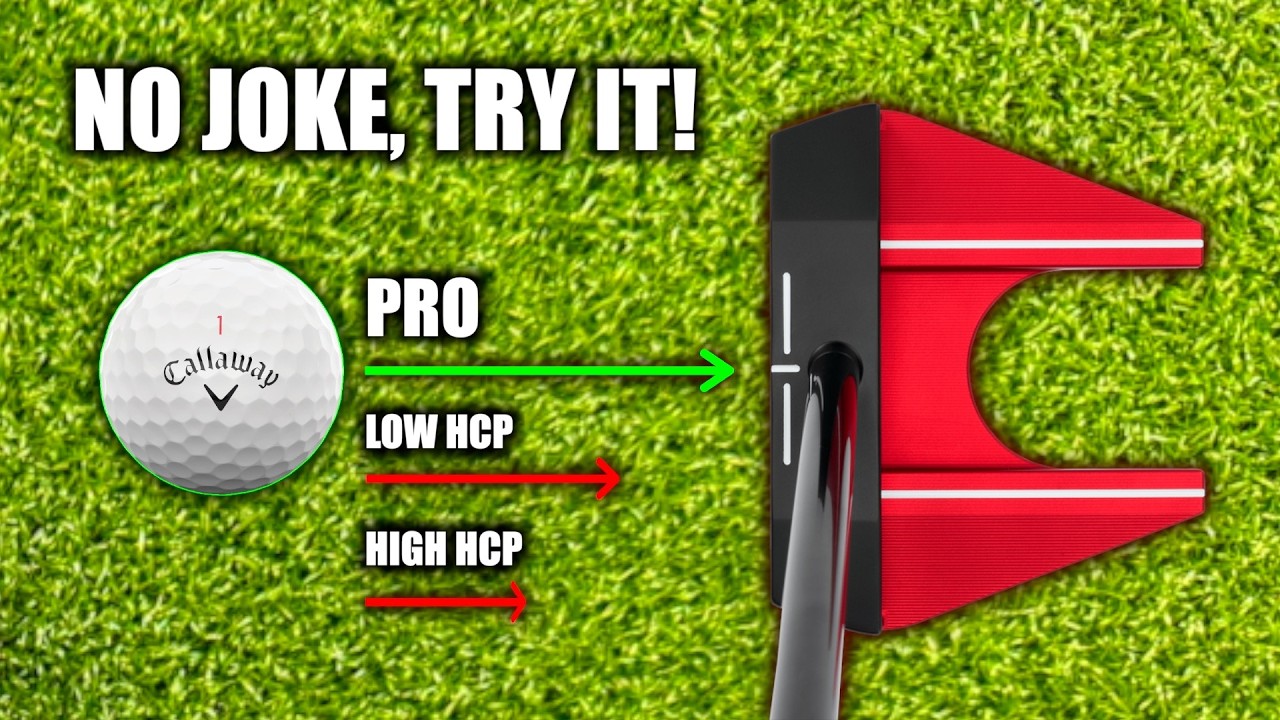
Watch this and YOU’ll NEVER NEED a putting lesson again! (SO GOOD)
In this golf lesson video, I’m going to give you a simple golf tip to help you learn how to stop three putting. Please stop three putting. This golf lesson tip is going to help you create a consistent putting stroke, a smooth putting stroke, and a repeatable putting stroke, reducing those three putts, and hopefully getting you hauling some more putts. I’ve built a little station here. So, this is a tee where I’m going to hit all of my putts from level with this tee. I’ve got a 10 foot hole, a 20 foot hole, and a 30 foot hole all the way back there. So, what this simple putting tip is going to teach you is about stroke length, the tempo of your stroke, and the speed that you need to be creating to hit each distance. Now, first up, you want a few spare T’s for this as well. I’ve got three spare T’s. You want to hit your first putt to this 10 ft hole. And you don’t have to have special holes like I have. Put a coin down, put TE’s down, whatever it is, just to give you a target. And I want you to hit your first 10T putt. And if you get good distance, so that’s pretty much spot on the hole. I took my putter back to around here. So I want to make note of that. I’m going to put a tee in the ground where I feel like I took my putter back to. And I’m just going to again hit another putt just to confirm. So, I want the face of my putter to go back to that tee. And then I’m going to swing through. Similar rhythm, similar pace and see where it goes. Identical. Now, you’ve got your 10ft marker of how far back you’re taking it in your back swing. Really simple math. To get to that 30ft hole, you need to double the length of your back swing. So, this is where one of your spare tea comes in. Again, mark it with the your putter. I am now going to take my back swing back to this point here. And that is my 30 foot length part. And then really simply again in between this two T’s is your 20 foot backstroke length. That is how simple it is to get a system to help you with your distance control and eliminate those three putts. Please stop three putting. So now I’m going to put my ball in line with this first te. I’m going to take my putter back to my first T marker and I’m going to hit a putt to that first hole. Nice distance control slightly past the hole and I’m making note of what my speed and my tempo is. So now I’m going to go to my 20T hole which is now swing length is simple. I’m getting my face of my putter back to this T. It might look on camera that I’m slightly short but it’s from where I’m looking. Then same rhythm, same tempo, same speeds applied throughout my swing. Taking it back to that T length and that should be spot on for my 20footer. Now 30 ft all the way back there. And I’m taking my putter to that back tea or where it looks like that back tee for me. Again, it might look a little bit short from camera angles from where you guys are, but I’m taking it back to here. Similar tempos. And there is three very solid distance controlled putts. Great putters are working on about a 10% ratio. So, if you’re 10T away, you want to get your putt within 10T of that distance. So, one foot, 20 foot, two foot, 30 foot, three foot. If you’re getting your putts inside those distances, you are doing exceptionally well. Anything outside of that, we want to start getting better. Let me know in the comments down below if this simple putting system helps you control your distance control better and start eliminating those three putts. Look at this distance control. It’s literally a joke how good this is. every putt right next to each other. This is the big one though. Again, just a little tester of how far back I want to take it. That rhythm, that speed again. Oh, a little bit too pacey on that one, but probably within my 10% range. I hope this simple putting system helps your putting. Again, little reminder for you all before I go. If you’re not subscribed to the channel, hit that big red subscribe button. If this video helps and you’re enjoying all the content, hit the thumbs up as it helps the channel out and turn your bell on so you get notified of when I upload all my new videos. Thanks all for watching. I’ll see you in the next one.
Mastering distance control is the fastest way to eliminate those frustrating 3-putts and start saving strokes on the green. In today’s golf lesson video, we break down the essentials of putting, from refining your putting stroke to building a reliable feel that holds up under pressure.
You’ll learn:
✔️ A simple putting drill to dial in your speed
✔️ Key fundamentals every golfer should know from top-level putting lessons golf pros
✔️ A smart putting tip that instantly improves consistency
Whether you’re a beginner or a seasoned player looking to shave strokes, these strategies will help you develop touch, confidence, and accuracy on every green.
⛳ Ready to roll more putts close — and avoid 3-putts for good? Let’s dive in.
► Become a FREE SUBSCRIBER to COACH LOCKEY review channel now https://www.youtube.com/@CoachLockey
► SUPPORT MY CHANNEL by donating here – https://tiptopjar.com/coachlockey
► Hit #Subscribe & #HitTheBell so you don’t miss out on any new videos!
► My Links:
Instagram ► https://www.instagram.com/coachlockey
Facebook ► https://www.facebook.com/coachlockeygolf/
TikTok ► https://www.tiktok.com/@coachlockey?
Twitter ► https://twitter.com/CoachLockey
► Golf Lessons Available Here:
Snead ► https://www.snead.app/coach/matt-lockey
Skillest ► https://skillest.com/app/profile/coach-lockey
Hi I’m Matt Lockey, welcome to my Coach Lockey YouTube Channel. This YouTube channel is designed to help you play better golf, and to help you enjoy your golf more!
I specialise in golf course vlogs, golf challenges, golf tips, golf lessons, golf club reviews and the odd golf club unboxing. So pretty much everything golf!
I want to help you play better golf by providing coaching videos on all topics about golf. How to fix your slice, fix your hook, help you drive the golf ball longer, hit your irons more pure, hit your irons closer to the hole and help you draw and fade your golf shots.
As well as helping you produce the best long game you can have, I will help you lower your scores by chipping better, stopping duff and thin chips, pitching the ball closer and creating backspin like the tour pros. Finally, I will provide you help to putt better and hole more putts too!
If you enjoy the channel make sure you hit subscribe and also tap the notification bell so that you are always notified when I release a new video.




14 Comments
Likey. Will try this for sure as my putting is revolting!
Can you explain your “simple maths” that doubling the distance for a 10 footer will deliver the correct putter head distance for a 30 footer (accepting rhythm tempo etc stays the same). Tx
It’s more about feel in the long run.
uphill puts? down hill puts? different green speeds? its only a rough guide
What are your thoughts on controlling the speed with acceleration, on the same arc?
That's what my instructor asked me to do.
Great tip thanks mate,
Keep them coming
Actually, that's a really good idea as a practice drill and, of course, will work on the practice putting green on any course, whatever the speed of the greens. I'll try that! Thanks Matt
Can't wait to try this next time I'm practicing. Thanks for the advice.
I spent quite a bit of time trying this method out and came to the conclusion that it wasn't beneficial at all. I found that I was spending so much effort trying to get the right amplitude that I was killing my feel. Also in a typical round there are very few, if any, putts that are flat and without a break that a swing of (say) 6 inches swing per 10 feet distance would make sense.
Worse I think my dedication to this method led to me getting the yips which took and exasperating 18 months to get rid of. I could write a book about that journey.
Still the best lag putt system for me this Lockey one, love it!
I've become much better at is since I adopted it. Taking the length of the takeaway as a reference works really well with my LAB putter as it doesn't r require any acceleration (except gravity) on the way down. Bad reads and too many 6 foot misses prevented my strokes gained putting from getting down to a proper 15 hcp level last year.
So Matt, I'll do one better than just put in a subjective comment. Here's the stats from this 12hcp golf nut: It shaved 0.9 strokes off my yearly average putting score since I started using it at the start of this season according to Shot Scope. Number of holes without a 3-putt went up by almost 1. And that's even while my make% for 1-3m putts regrettably dropped by >5%… but the 0-1m went up by 5% to 98%. And the ratio between the 0-1m versus 1-2m category also went up, so relatively I face more shorter putts than before and I miss less of them. How's that for proof that the Lockey Lag system is great! (Except for a minute grip change in July, this is really the only change I applied to my putting this year)
This is a great way to practice but how do you transfer that onto the course when you are relying on 'seeing' the tees to help you get your backswing length correct. One way that I do distance control with my putter is to adjust my stance width and then use the outside of my right shoe as the limit for my backswing. So, just as you have tees in the ground for different distances, I adjust my stance width, for 10, 20, 30ft and beyond, and then take my putter back to the outside of my right foot.
Thanks!
Brilliant Lockey – love it. Thanks!
Amateur golfers have more trouble learning how to read a green than they do developing a consistent stroke. This is due to time and access to practice greens. Many SERIOUS amateurs spend time in there living room, office, where ever, learning how to make straight contact and hit to a certain point. We adjust this point and then learn how to judge this distance with tempo and stroke. That part is readily available and mostly requires repetition. Then we go to our local course weekend after weekend and practice the same puts on the same practice green until we can nail putts to within that "tire" from all over that green. This is done through trial and error, not learning to read a green. Then we go out on the course and we miss that tire 50% or more time because we are horribly low or we can't get the feel of the grass. What most of us need is a coach that can teach us how to interpret what we are seeing and feeling.