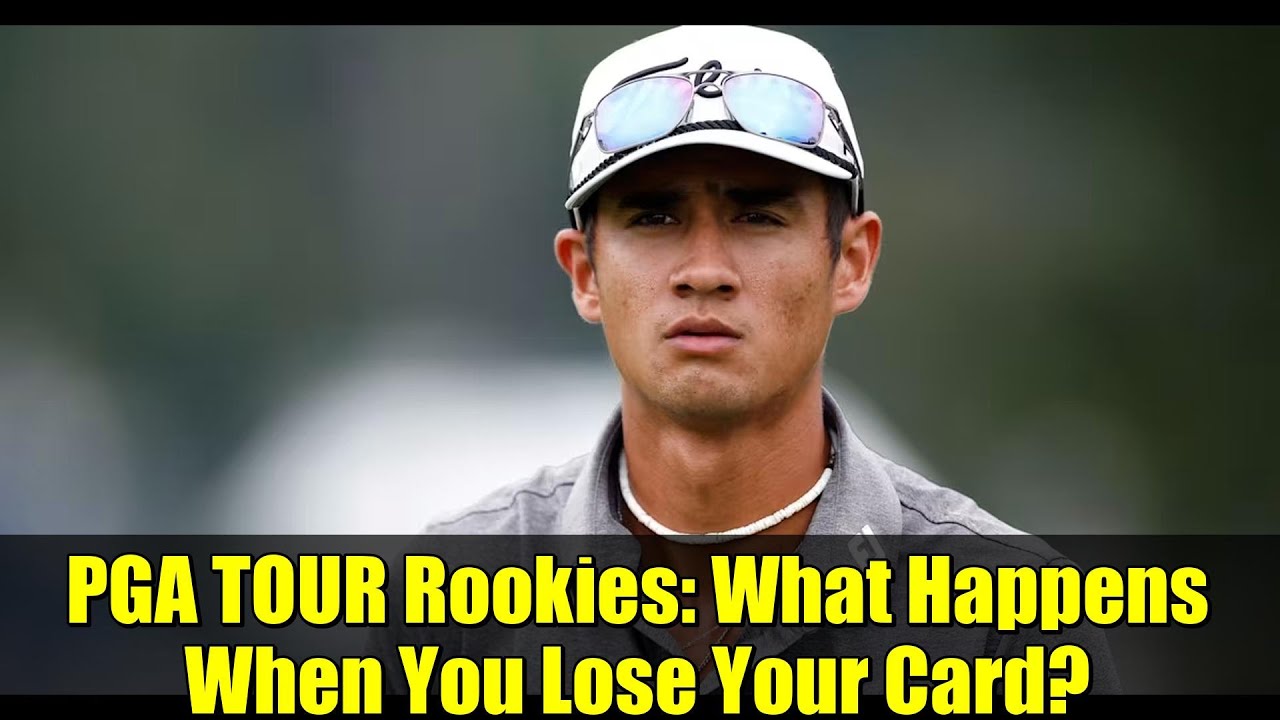
The PGA TOUR can be a tough place for rookies, and keeping your card is no easy feat. In this video, we explore the fate of PGA TOUR rookies who just missed the cut to keep their exempt status for the 2026 season.
We’ll dive into the stories of players like Ricky Castillo, who fell just one shot short of securing his card, and others who finished outside the top 150. What are their options now? We’ll explain the process of Q-School and the different paths these golfers can take to regain their TOUR status.
From emotional final rounds to the pressure of Q-School, join us as we uncover the next steps for these talented rookies and their journey to reclaim their place on the PGA TOUR.
Imagine the crushing disappointment of chasing a lifelong dream on the PGA Tour only to see it vanish by a mere single shot and a few leaderboard shifts. That’s the raw edge rookie face when fighting to retain their playing privileges. But here’s where it gets really interesting. What happens to those who fall just short of the Magic Top 100 in the FedEx Cup fall standings? And this is the part most people miss. The path forward isn’t just about talent. It’s a strategic game of cu school gambles and conditional statuses that can redefine careers overnight. Take Ricky Castillo for example. This rising star who honed his skills at the University of Florida and clenched his card through the 2024 Cornferry Tour arrived at the RSM Classic in St. Simon’s Island, Georgia. Sitting at a daunting number 135 in the FedEx Cup fall standings. He knew he needed to finish in the top two to crack the top 100 and seccure exempt PGA Tour status for the 2026 season. Despite stumbling with four missed cuts in a row, Castillo found his rhythm at Sea Island Golf Club. On Sunday, he unleashed an electrifying final round of 62, rocketing up the leaderboard with his signature Puka shell necklace, a heartfelt nod to his late grandmother, and his brother Derek catting for him. It looked like he might pull off a miracle, but alas, Max McGrevy’s dramatic 30-foot birdie on the 72nd hole claimed second place, relegating Castillo to a solo third. He ended up at number 102, earning conditional status that promises solid opportunities next year. But in the heat of the moment, he vowed to tackle the final stage of Q School presented by Kornferryy to bolster his standing even further. This journey highlights a classic adage among season PGA Tour professionals. You haven’t truly secured your tour card until you’ve held on to it for another year. Seven rookies did make the cut, finishing inside the top 100 after the RSM Classic wrapped on Sunday, locking an exempt status for 2026. But for those outside that elite group like Castillo, the road diverges into professional golf’s annual right of passage known as Qchool. Picture Q School as a multi-stage audition where golfers battle for a limited number of spots. It’s like the golfing equivalent of a highstakes talent show where only the most consistent performers advance. Here’s how it breaks down for clarity, especially for newcomers to the game. The top 100 in the FedEx Cup fall standings automatically secure their spots for the next season. Right after them, the next 40 highest ranked players from the 2025 FedEx Cup fall are exempt straight to the final stage. Anyone else has to grind through the second stage in early December to qualify for the finals. Exemptions can extend beyond number 140 because some golfers already have 2026 exemptions or opt out of the competition. And this is where things get controversial. Is Q school a fair equalizer, rewarding pure skill, or does it unfairly favor those with deeper pockets for travel and coaching? Some argue it levels the playing field by giving everyone a shot, while others see it as a grueling test that weeds out the less fortunate. For rookies landing between numbers 101 and 150, conditional tour status for 2026 kicks in with tiered cutoffs at 110, 125, and 150. This means they get a mix of starts on the PGA Tour depending on their exact ranking. Castillo and Isaiah Celinda at number 106 fell into the coveted 101 to 110 bracket, setting them up for plenty of action in 2026, no matter how Q school pans out. A step below, rookies like Jesper Spencson, number 111, and Jackson Suber, number 124, are in the next tier, likely to enjoy a decent schedule, but might supplement with cornfairy tour events if they want a full slate of play. Those in the 126 to 150 range, such as Frankie Kappen 3, number 127, Jeremy Paul, number 134, Noah Goodwin, number 142, and Paul Peterson number 143 will keep some PGA Tour access, but probably need to bulk up their calendars with more corn ferry tournaments to stay competitive. But here’s the kicker. For rookies outside the top 150, the message is stark. Either claw your way back by excelling at PGA Tour Q School presented by Cornferry or head back to the Cornferryy Tour grind for 2026. With only five tour cards up for grabs in the final stage, it’s particularly tough on those who missed the mark by a hair, like Thomas Rosen Müller, number 151, and John Pac, number 152. Think of it as a highwire act where one bad round can derail years of effort. Does this system truly reward perseverance? Or is it a harsh gatekeeper that punishes minor setbacks? On a brighter note, five of the seven rookies who secured their exempt cards have locked an even longer security through 2027 thanks to their 2025 victories. Aldrich Piider number 56, Rocket Classic. Steven Fisk number 73, Sanderson Farms Championship. William Mau number 89 ISCO Championship, Michael Brennan number 98, Bank of Utah Championship, and Carl Villips number 100, Puerto Rico Open. The other two, Raasmus Hodgeguard, number 84, and Danny Walker, number 97, made the cut without a win, but with impressive showings. Hodgegard’s runner-up finish at the Zurich Classic, teaming with Twin Nikolai and AT3 at Sanderson Farms, while Walker notched T3s at Sanderson Farms and a vital T6 at the Players Championship, sneaking in when Jason Day withdrew with illness. A quick note for context, by hitting the top 100, Michael Brennan qualifies as a 2025 PGA Tour rookie despite his background. He topped the 2025 PGA Tour America’s Fortnet Cup and capitalized on a sponsor exemption to win the Bank of Utah Championship this fall. In the end, the PGA Tour’s evolving landscape raises big questions. Should the system be more forgiving to rookies who come agonizingly close, or does the strict cutoff foster the elite competition we love? Do you think Qchool is a necessary challenge or an outdated barrier? Share your thoughts in the comments. Do you side with the traditionalists who value grit or the reformers pushing for more opportunities?