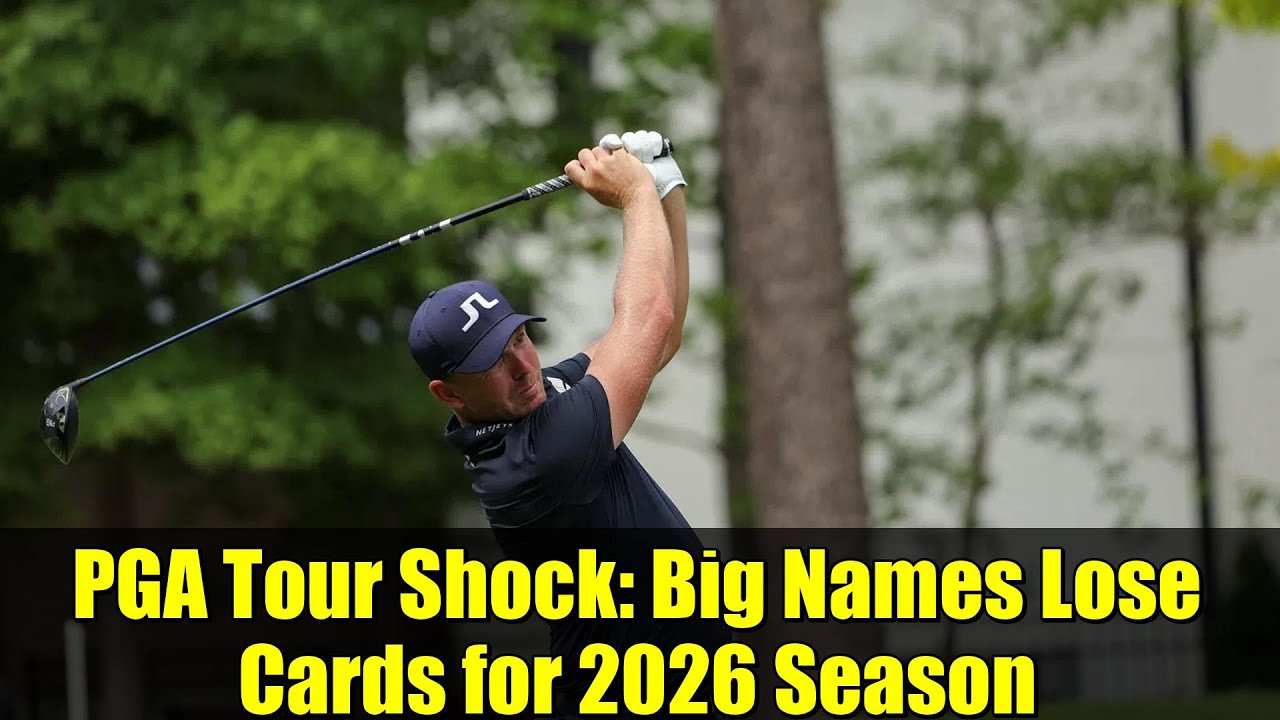
The 2025 PGA Tour season concluded with a major shake-up as the top 100 FedEx Cup requirement left several big-name golfers without full status for 2026. In this video, we break down the notable players who failed to secure their PGA Tour cards, including Matt Wallace, Matt Kuchar, Brandt Snedeker, and more. We’ll discuss their performances, exemptions, and what’s next for these golf stars. Whether it’s a return to the DP World Tour, reliance on career money exemptions, or a shift to the PGA Tour Champions, find out how these changes will impact the golf world. Don’t miss this in-depth analysis of the PGA Tour’s restructuring and its effects on some of the sport’s most recognizable names.
Key topics covered:
– PGA Tour membership tightening
– Notable players losing full status
– Exemptions and lifelines for some golfers
– Future plans for affected players
– Impact on the 2026 season and beyond
Imagine the thrill of victory, but then the gut-wrenching reality hits. Even elite golfers can lose their spot in the big leagues. As the 2025 PGA Tour season wrapped up at the RSM Classic on Sea Island, Finnish sensation Sari Velari claimed his historic first win on the circuit. Yet, for many players, the real drama unfolded off the leaderboard. They were battling to keep their PGA Tour privileges for 2026. But here’s where it gets controversial. This year’s shakeup was unprecedented, forcing a brutal cut that could redefine careers. Curious how the PGA Tours rules sent shock waves through the golf community? Let’s dive in and unpack the details, making sense of it all for beginners who might not know the ins and outs of FedEx Cup standings or player exemptions. This season’s RSM Classic wasn’t just another tournament. It marked a massive overhaul in how players secure their status. Remember, the PGA Tour tightened its membership requirements, meaning golfers now need to finish in the top 100 of the FedEx Cup. That’s a pointsbased ranking system that rewards performances throughout the year to keep full playing rights. Gone are the days of the old top 125 cutoff. Now, spots 101 through 125 grant only conditional status. For newcomers to golf, think of conditional status like a probationary period. You can play some events, but it’s not the full security it once was. This change stems from the tour’s big restructuring announced last year aimed at elevating the quality and competitiveness of the field. And this is the part most people miss. Even players who fell short might still hang on thanks to special exemptions which can spark heated debates about fairness in the sport. To clarify, for those just getting into professional golf, exemptions are like safety nets based on past achievements such as winning titles or overcoming injuries. For instance, Max Homer finishing at 105 and Billy Horchel at 116 kept their cards through previous winner exemptions. Will Zelator at 153 qualified for a major medical exemption due to multiple back surgeries, allowing him a chance to recover without losing everything. It’s these lifelines that make you wonder, are exemptions rewarding legacy over current form, or are they a necessary mercy for life’s unpredictabilities? Now, for the golfers who weren’t so lucky, here are 12 standout names who couldn’t secure full PGA Tour status for 2026. Note that one of them might still pull through with a career money exemption, a perk for those who’ve earned a certain amount over their career, like hitting a financial threshold that keeps them in the game. Starting with Matt Wallace, who landed at 103. This five-time DP World Tour champion had a modest 2025 with just one PGA Tour top 10 finish, a tie for third at the 3M Open. His 2-year exemption from a 2023 win expired, leaving him with conditional status. At 35, with Ryder Cup dreams still alive, he might pivot back to the DP World Tour, where most of his triumphs occurred. It’s a tough call. Does chasing international success outweigh sticking it out in America? Bo Hustler, finishing 104th, is one of America’s most promising talents without a PGA Tour win yet. His 2025 was rough with only a top 10 at the Barracuda Championship. He’ll navigate conditional status next year, raising questions about whether young stars need more leeway to build momentum. Matt Kachar at 118, a ninetime PGA Tour winner and 47year-old veteran, had won top 10 at the John Deere Classic, is likely to lean on a career many exemption for 2026 before eyeing the PGA Tour champions for over 50s in 2028. Is this the right path for aging pros or should the tour find ways to keep them competing longer? Joel Darmman coming in at 122 is a crowd favorite who missed 16 cuts despite three top 10s. He also parted ways with his longtime caddy. Facing conditional status, he’s got a winter to reflect and regroup. Perhaps a reminder that even fan favorites need balance off the course. Brandt Snedker at 126 and next year’s US President’s Cup captain will juggle captaincy duties without full status. His season had solid moments, but too many missed cuts. Controversially, is it fair for team leaders to prioritize roles over their own playing careers? Adam Hadwin, surprisingly at 139, missed 12 cuts and just snuck into the top 140. Despite a push at the Bermuda Championship, a weak finish cost him. This Canadian risks missing the 2027 International President’s Cup team after representing in 2017 and 2019. Does the tour’s rules unfairly penalize inconsistent performers? Zack Johnson, two-time major winner at 141, struggled with nine missed cuts in 17 starts, though he shawn with 88 at the Masters. He’ll probably use his career money exemption and turning 50 in February 2026 could lead him to the PGA Tour champions, maybe even alongside legends like Tiger Woods. But here’s where it gets interesting. Should age-based exemptions evolve, or do they perpetuate a divide between circuits? Cameron Champ, once a rising star with three early wins, finished 147th after a dismal 2025. Only one top 10 at the RBC Canadian Open couldn’t offset the missed cuts. Losing full status begs the question, a young talents being rushed into a cut-throat environment. Camilo Viegas at 155 and 43 years old won in 2023 after a 9-year drought, but couldn’t sustain it with two top 10s and a missed cut at the RSM. His year ended on a low note. How much does momentum play in these high stakes decisions? Tristan Lawrence, a shocking 163rd, earned his card via DP World Tour rankings and nearly won the Open in 2024. He won the Omega European Masters, beating Wallace, but struggled stateside and missed the DP World Tour spots needed. Returning to Europe full-time, he’ll likely thrive. Does this highlight a mismatch between circuits, or is it about adaptation? Danny Willlet, former Masters champ at 169, kept his card last year with a medical extension, but that might not renew. Injuries can derail even champions, sparking debates on athlete welfare. Finally, Franchesco Molinari, Open winner at 185, lost his card after a tough season. But with the 2027 RDER Cup captaincy possibly his potentially making Luke Donald the first three-time winner if chosen, this setback could be a hidden advantage. It’s almost poetic. Sometimes losing a card opens doors to leadership roles. For the complete FedEx Cup standings, check them out here. https colon/www.pgaour.com/fedexcup/fidexcup pgaour.com/videxcope/videxcup. So, what do you think? Are the PGA Tours new rules a fair shake for all players or do exemptions create an uneven playing field? Do you agree with how some veterans are handled or disagree? Share your thoughts in the comments. Would love to hear differing opinions and spark a conversation. Andy Roberts began his journey with Golf Magic as a month-long work experience in April 2011. He later took on the role of Golf Magic editor in 2015.