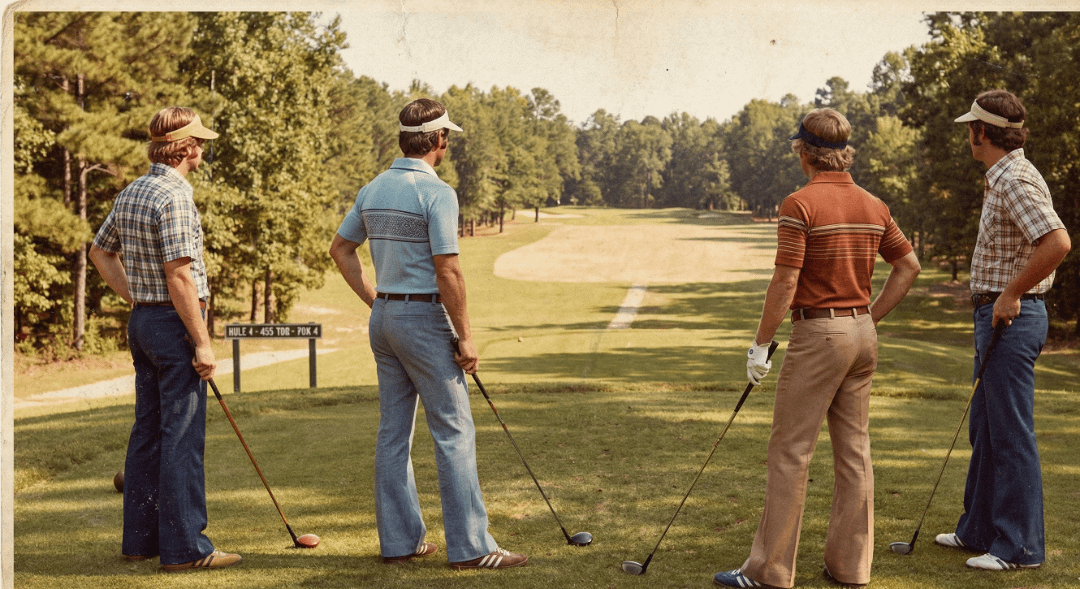
When it comes to hitting your driver, does being long matter? Shouldn't manufacturers look at dispersion versus distance. Should they sell shorter shafts vs longer shafts.
by FailedForwardLessons

When it comes to hitting your driver, does being long matter? Shouldn't manufacturers look at dispersion versus distance. Should they sell shorter shafts vs longer shafts.
by FailedForwardLessons
6 Comments
Of course long and straight
If you can control it, being a longer hitter is a big advantage. Statistically, every 10 yards you add to your drive is a reduction of 1 stroke per 18 holes. This is a result of you being able to hit a shorter/easier to hit club for your next shot. I usually account for roughly ~10 yards gapping per club, so hitting a 250 yard drive vs a 300 yard drive could be the difference between a pitching wedge for a second shot or a 5 iron.
The whole premise of your post is summed up with “skill issue”. Then of course there’s trade offs to be made in the margin, individual preference stuff like if you have noticeably better dispersion but 3-5yards shorter that’s up to you to make that trade off and get the shaft cut down.
Also also, pretty much all the R&D over the last 10-20 years with Driver HAS been to make it more forgiving on off-center shots. If you actually hit a driver from 10 or even 20 years ago they’re not THAT much shorter hitting than modern drivers. Less than 10-15 yards at the most.
They can’t control dispersion because it’s mostly swing related and there’s a limit to it.MOI. They can only bias the direction and hope it’s fit it good and opposite of the players natural shot shape which in turn gives you accuracy.
They can control speed though.
Of all the penalties on the golf course, its been proven by the USGA and everyone else’s analysis, and in its ratings and slope of courses, that the number one thing that penalizes amateur golfers is increased length of the course over all other hazards. IE; water, bunkers, OB, etc.
So manufac follow suit. Plus dustance is more rewarding when controlled than not.
Most amateurs miss hit balls a lot. You can hit a miss hit straight and a solid shot OB but all miss hits come off slow.
Controlling ball speed and keeping the ball airborne on miss hits is the literal definition, in club design, for the word “forgiving” they forgive you of losing those two. Accuracy is “face to path”. Operater influenced
Manufacturers do focus on dispersion *in addition to* distance. Since there are limits on shaft length and COR (the spring/trampoline effect of drivers) has been capped, much of modern driver design is centered around trying to help the ball stay in play.
As for *them* offering normal drivers with shorter shafts, what’s their incentive? They want to give players the opportunity to maximize distance and control direction. If a player feels they need a shorter shafts to help with dispersion, they have every opportunity to choke down on the shaft or have the shaft cut down or replaced with a shorter one.
Apparently it’s the ugly ass visor