
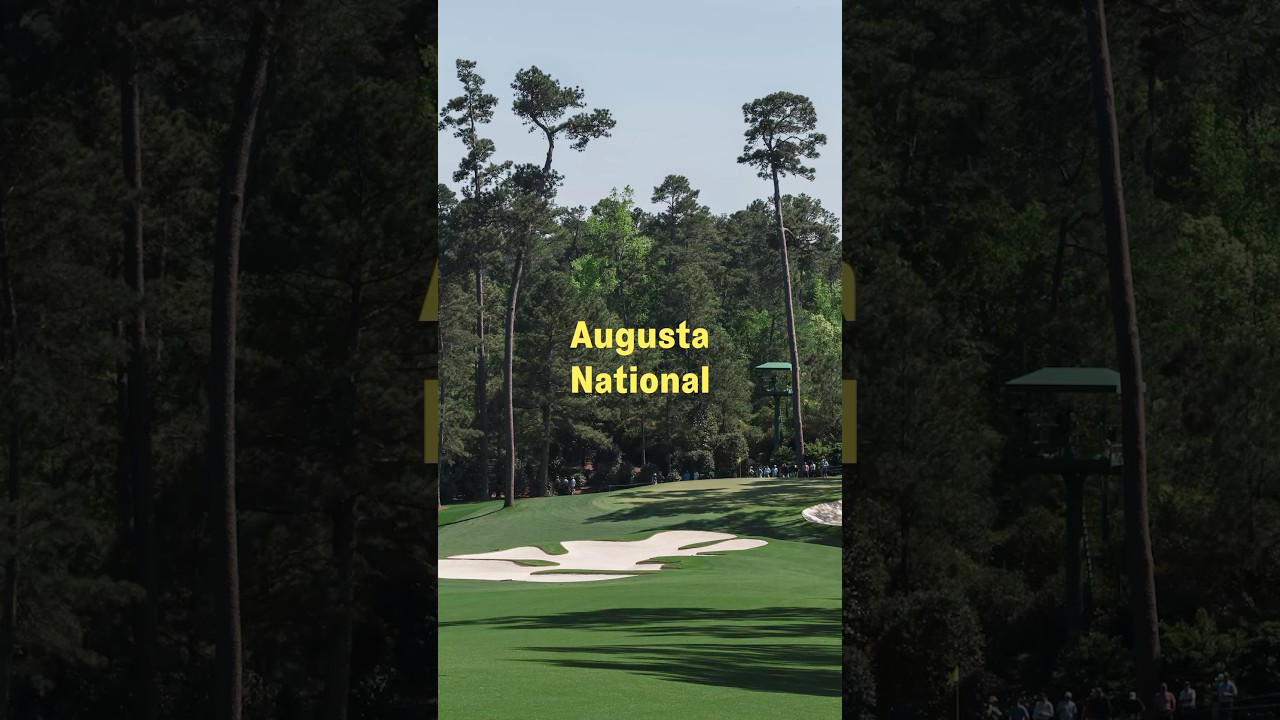
Augusta National has been in a constant state of evolution (for better or for worse), but it remains one of the greatest championship venues in the world. Brendan Porath shares the history behind the course, its designers and evolution.
[Music] It is the most famous golf course in the world. It is the best inland golf course in the world. Arguably, it is the collaborative effort of Alistair McKenzie and Bobby Jones to bring St. Andrew’s old course style strategic architecture to America. It is Augusta National. At Augusta, McKenzie and Jones sought to emphasize wide playing corridors with wall-to-all fairways and no rough. They wanted strategic design with a preferred line and a penalty for getting off of it. and neither may readily reveal themselves until heroic recovery or disaster ensues. We want to make bogeies easy if frankly sought. Pars readily attainable by standard good play and birdies except on par 5’s dearly bought. The McKenzie masterpiece opened for play in 1933 and the first Masters followed in 1934 shortly after his death. It was his last American design, but the course would go far from untouched since its earliest days. The only constant at Augusta National is change. Golf writer and Jones confidant Charles Price said the course was not the most revolutionary in America but the most evolutionary. Following McKenzie’s death, Perry Maxwell, an associate of his, would work on the golf course. In the post-war era, it was Robert Trent Jones. In recent years, it’s Tom Fazio. This evolution and its arrival on the main stage every April make it the most scrutinized golf course in the world. Read more about at Friday golf for a full profile and course rating.






2 Comments
BRENDAAAAAN!
If Pine Valley's greens rolled at "The Masters" green speed then GOOD LUCK!!!