
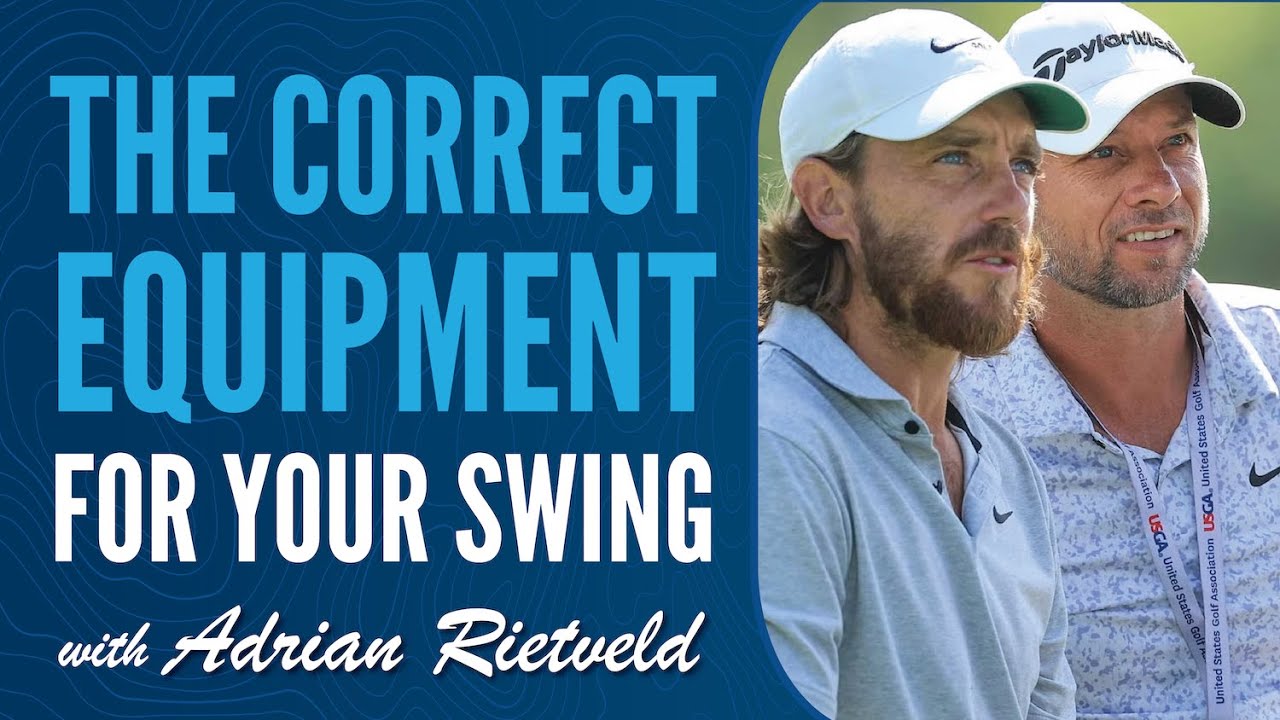
Adrian Rietveld is the Senior Manager for Global Tour Operations for TaylorMade Golf. He is also the Equipment Specialist for PGA TOUR stars such as Scottie Scheffler, Rory McIlroy, Tommy Fleetwood and Collin Morikawa.
Adrian joins Mark Immelman to discuss how using the appropriate Golf Equipment and engagin in personalized Club Fitting can help to improve ball-striking, trajectory control, power and consistency.
As he shares insights on golf equipment throughout the bag, he tells stories from the TaylorMade Tour Truck with anecdotes from Scottie Scheffler, Collin Morikawa, Tommy Fleetwood and Rory McIlroy.
He also dives into the following equipment and game improvement topics:
— Proper Club-fitting Practices
— The Performance Influence of Grips
— The Performance Influence of Shafts
— The Performance Influence of Clubheads
— Reconciling “Feel” vs Data Insights when selecting Equipment
— The Value of Aesthetics, Feel and Sound in Club selection
— What to Look for during a Club-fitting
— Lofts and Lies and their Influence on Trajectory and Control
— Managing Clubhead Speed and Rhythm, and
— Blending Power and Accuracy in Club Selection.
______________________
STREAMING: On the Mark is available on Apple Podcasts, Spotify, Stitcher, Google Podcasts and wherever else you listen to podcasts.
ABOUT ON THE MARK: Mark’s knowledge, insight and experience have made him a sought-after mind on the PGA and European tours. Through his career, he has taught and/or consulted to various Major Champions, PGA Tour winners and global Tour professionals such as: Larry Mize, Loren Roberts, Louis Oosthuizen, Patton Kizzire, Trevor Immelman, Charl Schwartzel, Scott Brown, Andrew Georgiou and Rourke can der Spuy. His golf teaching experience and anecdotal storytelling broadcasting style makes him a popular host for golf outings.
SOCIAL MEDIA
– Follow Mark on Twitter: https://twitter.com/mark_immelman
– Follow Mark on Instagram: https://www.instagram.com/mark_immelman/
– Follow Mark on Facebook:https://www.facebook.com/markimmelman…
– Follow On the Mark Podcast on Twitter: https://twitter.com/OntheMarkRadio
WEBSITE: Read top-notch golf content from Mark at https://markimmelman.com
______________________
#golf #MarkImmelman #PGA #PGATour #juniorgolf #golfpro #golftip #golfcoach
[Music] I love to bring my homies onto this uh on the podcast and it’s especially cool when one of my South African boys, not so much South African anymore, Adrian, but you guys are so smart and you’re turning out so good and you’re impacting the world of the golf like you are. I’m so excited to have you. How you doing? I’m doing great. Thanks. Thanks for having me on. I appreciate it, man. I I’ve followed you for a while now. Obviously knowing your brother and and you know, just just just enjoy your stuff, man. You speak about stuff that I like to listen to. That’s for sure. I appreciate you. For the folks who are watching on YouTube, his handsome mug is Adrien Ritfeld. And for the audio listeners, Adrian is I’m not sure your title were tailor made, but I know you’re expert club makers. So, what what do you do over there? What’s the title? I I I’m a senior manager for for the tour operations. Um that would be pretty much globally. What that means is, you know, I’m the equipment specialist for for for our staff players and any uh any elite player that chooses to use tailor made equipment. Um I’m a PGA professional. Yeah. Um and I essentially the roles developed for me where where I manage and run our Europe operations and then based in America I work predominantly on the PGA tour. So so so travelwise I’ll do 20 26 to 28 events in in America. I’ll do about eight international events and then uh another big part of my uh my job is what we would call home visits. the you know the the the quality of player that that that I find myself working with that you know they don’t tend to do a lot of stuff on site you know this will this will be you know going to Dallas to see Scotty or going to West Palm to see Rory yeah that that’s think that’s that’s the elevator pitch well I appreciate you and folks uh if you’ve been watching on social you will see that yours truly has turned to tailor made and it’s changed my life so I appreciate you viewing me an elite player. Um, you talk about Scotty, you know me, I’m a golf teacher deep down and I’m kind of like old school and that I’m big on fundamentals. And if there’s one thing that Scotty Sheffller is, he’s really pedantic about doing the basics correctly. You’ve been there. You’ve seen it. And you are in charge. When I saw the video, I actually giggled cuz I’ve watched him how much care he takes putting his hands on the golf club on the right on the grip handle. And you’re in charge of putting those molded grips on those golf clubs. Now, putting a grip on a club properly is hard, but putting something molded on there, Adrian, has got to be next to impossible. So, so share for us what that job is actually like, please. Oh, he’s um he’s he’s he’s got a he he’s he’s got a sixiron which is which is the same spec as his his irons and and and and on that sixiron he’s obviously this this molded grip which which he’s it’s a it’s a training aid and he he swears by it. Him and uh Randy, you know, they they’ve been using it, you know, forever. And if you had to I wish I had a picture to show you, but if you saw the wear and tear that this club goes through, it’s it’s phenomenal, right? So So So I I me me being the person that looks after Scotty’s equipment, um it I will source I’ll source these grips, you know, go go get them. They’re very easy to get. Um obviously a very popular thing. and he’ll change the script probably twice a year. Probably twice a year and then we’ll rebuild him a brand new what we would call call it a training aid club. All right. Maybe once a year. So, so, so, and he hits that club every single day, even before tournament rounds. I want people to know that without fail. Right. That club gets taken out of his bag before he goes to the tea. Mhm. though he doesn’t have 15 clubs in the bag. Um and and and and I’d say like like I’ve tell you my my one of my first experiences with him. So so in in in when he he used to play our 730 iron and then he moved to the TWW iron and at this time he was going through you know with Randy um really a whole spec change. You know he went shorter in length. He he he moved his lie angles but but but the constant was obviously this grip. Yeah. and and and and in figuring out. So So what he does is he plays a rib grip. So it’s a 58 rib grip with six six layers of of double-sided tape underneath that grip. Got that thing quite thick, right? Yeah. But you know, so how do you even get there? that I mean and I’ve asked him this question and he was like you know you wouldn’t believe the the experimenting and the the the the tedious time that they went through to decide that you know six layers with the rib grip is is the right grip for him. Mhm. And and and then you know to to go back to that to that training grip. So, so, so the first few times that that I did this for him, you know, I would say you you’re probably cutting the grip off twice because it’s not right. And and then and then eventually, you know, you start to understand what what what he likes to feel. So, fast forward to I was I was with Scotty, not last week, the the week before I went to Dallas. We we normally do we do like a kind of week. was just after the Ryder Cup, you know, couple of days we have our tour truck out there and, you know, I’m just kind of, you know, because he’s also, you know, he’s also very reluctant to change equipment. So, so his irons would be, you know, very much on their last legs and, you know, it’s it’s it’s it’s my job to make sure that that that that the new set of irons, the fresh set of irons, you know, are are zero tolerance and and and and of of perfect performance, you know, so so he can now feel comfortable to move into it. Yeah. So, at the same time, you know, I built him his his his fresh training grip club and we went through a full full kind of couple days uh days of work. He comes onto the truck. I’ve got the got the club in the gripping station, no grip on it because the grips on the side. He needs to be there when we do it. Mhm. And and we we start this process of of getting this uh getting this grip on there. about the pressure of that lot. But but I’ll tell you what happens though. Yeah. And again, it’s like it’s a great I’m just about to do it. I get the tape out. I put the tape on the club and he’s like he’s given me the weight. Like hold on, picks up his phone. He gets on his phone, calls Randy. Okay. Randy, I’m just about to do the grip. When? How much longer till you get onto this truck? So now there’s three of us. All right. Going going through this operation. I I’ll I’ll I’ll obviously hold his um his old one and just get get a benchmark of what it looks like. I’ll put the grip on. I’ll get it to a point where I feel I’m happy with it. Then give it to body then, you know, he he does his little bit tweaks in it and that’s where he’ll judge me, right? He’ll kind of he’ll go like that’s the best you’ve done so far. He’ll give me like some kind of He’s got an amazing sense of humor. Amazing sense of humor. And then and then and then obviously the the the the third and final check is Randy then coming in and Randy getting him to set up getting him to hold it, you know, kind of this way and that way. And um that’s and then once he’s set, he’s set. It’s incredible, Adrian. And and it’s it’s one of those things and I talked about fundamentals, but you know, Scotty doesn’t get all mixed up in like noise. Yeah. Going to do the the basics correct. And I’m fascinated at the precision that is required. If three people have to get their hands on that thing because for the folks who don’t know, when you’re putting a grip on until it sticks there, you can move it around a little bit. Yes. And you can sort of twist it in any direction if you wish. that you got three guys starting with you, then Sheffler, and then Randy checking that it’s lined up properly with the leading edge of the club face. I would expect um that that they all get their hands on to make sure that this thing is that precise. That precise. And then so so you know to to to even follow up on that, you talk about fundamentals. He um so he’s his new fresh set of irons is sitting there on the truck. Yeah. And ready to go. We you know, we’ve cross-cheed them. We’ve we’ve we’ve really done our our work on him and just before he leaves the truck, he asks he asks for 20 spare grips. Okay. So So now now he will take his whole set of irons with with these rib grips on and and he will go and and go and literally go through the process with every single one of his grips. W Okay. Okay. Well, it’s good we start here because this is what I wanted this podcast to be. I’ve got an expert in Adrian who works with the best of the very best folks and you can see how much care they take with their golf clubs where most of us we don’t. Um, and here’s Scotty that is, you know, his hands are his only way of communicating with a golf club head. And so the grip handle is just so important. And you talk about a ribbed grip. describe to folks what a rib grip entails versus a round grip for argument sakes and how grip weight and grip size and all this sort of thing can influence your ability to control the golf club. Please you would a rib grip is basically so so you would have different different kind of size grips. You know we would talk about like a a 60 rib which means that you know that that that grip that grip is thinner than a 58 rib then and you would and so on. So what what you what you then get is you would then move up to like a midsize grip and then and then everywhere in between is is where players then you know that they then they then toy around with how many takes they would put underneath the grip which again which it just just works on the radius of the grip. Mhm. Um, so a a rib grip, meaning that on the inside of the back of the grip is a small rib and know, so in the olden days in, you know, ages ago, you talk about Nick Price and these guys, I mean, they they would put a coat hanger or knitting needle or something down. Yeah. Nettle needle down the back of the grip. And what it does is it just gets gets your hands kind of set in a in a in a in a specific way, which is a nice checkpoint for somebody going through fundamentals, grip, stance, you know, alignment, whatever, however you approach your pre-shot routine, right? So there there are regulations around that, you know, conforming, you know, regulations. I mean, the the key thing on on a grip and a grip weight, you know, you got to remember the tape has weight as well. Mhm. So, so, so, so for example, with with somebody like like a Scotty Sheffller or, you know, I tell you somebody who’s who’s who’s probably just as particular with his grips would be Colin Maraua. Okay? I mean, he he and he would, you know, Scotty would have a uniform grip. When I say uniform grip, I mean he’s got six layers of tape, a 58 rib grip on every one of his clubs from his pitching wedge to his driver. Where’s Colin? Colin goes even step further where he’s got a different shape configuration from his irons to his woods because, you know, he he’s he’s he he’s feeling a different circumference in the in the in the shaft. Mhm. And and and over time his grips have evolved to a point where, you know, he’s got one one and a half tapes on his driver. He’s got, you know, the probably the same on his fairwaywood. He’s then got an extra masking tape on his on his irions and then when he gets down to his wedges it’s it’s it’s you know it’s it’s a different configuration. So you know it’s very cool. Sorry I want to interrupt you because the teacher in me I’m absolutely lapping up everything you’re giving us here because the one thing I know from my work with elite golfers I would say the last place they go and blame is their golf swing. If stuff’s going wrong, the first place they start looking is the golf club and someone like yourself. And so you got to know your stuff. You know, if if someone’s again like Marikawa varying the thickness of the grip throughout the bag, that speaks to a whole lot of care and expect experimentation. You know, stuff that club golfers would be probably well served trying. I know it’s expensive, but it’s worth trying. I think I think for sure. and and I you know the fortunate thing that I have going for me is that I I’ve worked with these players for years and years. So so your your relationship and the trust and what you do builds over a long period of time when when it comes to your your you know your your you know your weekend warrior you know I I think when they when they go into a a fitting center or a facility or even their club pro um you know the the the the time is is is is much smaller but much more intense. And the only bit of advice that I would probably give there is is be be specific. Be specific on what’s important to you. you know what you know what you know if if if it’s your driving that that you want to work on what about your driving you know you got you know just take it that extra little step you know you you you the more people know about you the more the more they can help you right and and and and sometimes I think that that that’s that that’s that’s lost in in this small intense fitting scenario where where it’s very much you know peel back the layers a little bit peel back the the layers of that onion on you know, what is it about your putting that that that would really make you happy when you turn up for those two rounds of golf? We can help you there. Well, folks, I need to say this and I’m going to commend Adrian. Um, when I went to the Tailor Made Clubs, we hadn’t met people. Um, we fellow South Africans from way back and he said he’d happily help me with golf clubs. So the you asked the questions and I gave the answers and I picked the head style and stuff and people Adrian put the right club in my hand cuz we measured it on a launch monitor in terms of performance without having seen me. So if you with an expert club fitter if the if you give all the information you can someone is going to put the right stuff in your hand. Now, it’s to that, Adrian, that I I I I want you to highlight the importance of having the proper golf clubs in your hand because here’s the elite of the elite with whom you work and these guys pick up any old club and just go and hit it, right? I mean, my my my sales pitch on that would would certain So, I’ve been I’ve been fitting golf clubs and watching ball flight for 20 years. Okay. Every every day, right? Every day. and and and and and in the beginning you’re you’re you’re cramming and you’re learning so much and then you get to like where I am now and I’m still learning but I’m I’m still I’m still trying to take but right now I I’ll like dismiss more than I take in because I feel like but I’m still trying to you know fill the bucket right and what I what I would say in that time doing what I’m doing people talk about the the advancement in in in in club technology you what what what is the biggest advancement in the last 15 years? You know, my honest answer to that is club fitting. The the abil the the ability to give somebody something that that fits their signature is is is more in line now than it’s ever been. And and and in terms of in terms of help, that’s also more in line now than it’s ever been. So, you know, I’ll give you a break it down into like a, you know, I would say that there was a time where there was you would walk into a golf shop and you would have option A, option B, or option C and and and and you had a, you know, a third of a chance of of getting what what would kind of be right for you and away you went. You know, right now there’s there’s there’s more chance of getting it wrong than getting it right because the options are so vast. Mhm. Yeah. Um and and and and and I and I just and so I would say without a doubt utilize what I believe is the biggest advancement in in in golf club technology, which is the the ability to be custom fit to what you do. Yeah. But it’s that’s brilliant and it’s so true. And if you have the means to be able to afford it, it’s worth your investment because golf clubs are not cheap. No. And that’s what I say to people all the time. I’m like, here’s my take as the teacher. I’m like, you’re going to make an investment in a car. You go and test drive various cars. You don’t just take the first one, you jump in and then you don’t maybe if it’s really a big investment, you’ll test drive it more than once. Like the the elite golfer, they get the club from Adrian and they go and fiddle around for a bit, then they come back to you. They don’t just go and go, okay, and then they’re out. And so I like go for the fitting a couple three times, you know, so you can get a like a baseline if you will from when you were good and maybe you were bad because those clubs when you guys do your job well, you don’t make our good better, you make our bad better. And that’s what I’ve noticed with the Iron For me. Well, that that said, it’s not it’s it’s the quality of your bad shots, right? That that that that’s that’s where you talk about, you know, I met a guy the other day. He was a a social media guy and I was asked to go and have a look at at him at the at the kingdom and I said to him, you know, what’s your handicap? What do you play off? He’s like, no, I play off plus two. And I and I said, so what, you know, what’s your goal, right? That’s pretty good. That’s pretty good. And and he said, well, I want to use equipment to get to a plus four. What should I do? Okay. Mhm. And so so so you know and and and and basically and I went just told him to you know when was you know Scotty Sheffer checks his lofts and lies every single week he plays a golf tournament. What for real? That’s so precise with calling the distances that he flies the golf ball. That’s that is phenomenal. And and and and you talk you know you talk about fundamentals you talk about simplicity. You know, Scotty Sheffller uses a Trackman pretty much all the time. Yeah. But Scotty Sheffler only uses three parameters on that Trackman. So, so it it it looks complex but but it’s so simplified due to what what what’s important to him, you know, and you know, so so so checking his lofts and lies is is, you know, he can he can he can work with these parameters on his track as he’s hitting irons and practicing and doing his stuff and he can call me up on the phone and say, “Hey, my seven iron my seven iron’s going three yards short. It’s it’s I’m pretty sure it’s the loft. Can you check it for me?” you know, like because he’s so dialed into the this the the you know, these little fundamentals that he’s created around him and and when you look at him and you look at the team around him, you look at the, you know, his family and and how closely knit that circle is, it’s it’s it’s very simple but very deep, you know, very much what a Yeah. What a human to get know get to know. Yeah. I want to say this too because you know as a teacher and someone who has a show like this I run the risk and it’s a big responsibility that I have to take very very seriously because as a purveyor of information someone could take something that could be good but misunderstand it or misapply it and in the end I’m the reason why they’re not playing very well. So I take that job of being a purveyor of information very important but the reality of what you’re saying here and is what I want to say to people whether you’re talking about hydration or nutrition or club fitting or lessons or whatever it’s not like anything’s a silver bullet but if you start to understand what where your sweet spot is and you back to that place every single time then you’ve got like a certain comfort level. Yeah. And and when they’re comfortable they play better. the elites. Oh yes. Yeah. And and and ex exactly that right. You talk and I I I’ll say this but hopefully it doesn’t get taken out of context here. But that that was the difference between Europe winning the Rder Cup and and America not these um I was fortunate enough to be asked to be you know obviously I’m a tailor mate. I work for Tailormade first and foremost and and the beginning part of my week was was doing my my my tailor made work, making sure that everybody’s in set. It’s not a busy week. If you’re there at the Ryder Cup, you’ve done a pretty good job and there’s not much uh there’s not much equipment work to do all but but you’re doing your checks, you do your thing. And then I I was um I was asked by Fleetwood to be a part of his his process, right? His his his process to performing at his highest level for that week. Uh it it made me part of the the the European team. I was um very much very close to to the detail and um what Luke Donald did did what impressed me the most was he he he he essentially took every player in his team and and and basically said to them, “What what do you need if you’re going to win if you’re going to Augusta National to win the Masters?” Mhm. Okay. What what what what is your perfect team or people? What is your perfect situation? And and and and you know, all of Tommy wrote down his list. You know, I was I’m I’m very close with him. You know, I’m I’m on his list. Mhm. But but but essentially that’s what he did. You know, he he took all these players and he and he created what would bring the best out of each of them individually. It was was very impressive to see. And you know, I I do I do feel like and it’s no it’s no fault on on Keegan or you know or anything that he that he did. I think I think he he done his best. But I I just think that knowing Scotty and knowing some of the players in in the US team, I know how Scotty prepares to win a major. Yeah. And and and I think that that that his performance would be better suited if he was put in those comfort zones, right? Yeah. Mhm. Absolutely. Yeah. It’s just just my opinion. I, you know, take it the way you take it. But, um, I appreciate I appreciate the insights because this is what I know for sure and maybe this is a part of the impetus for this show that I’ve been doing now for multiple seasons is that everybody wants to play better golf and and not everyone has access to somebody like you. And so for the young kid growing up in South Africa that’s learning out of magazines and stuff, I want to be able to say, “Hey, here’s Adrian.” So when you come and share the inside the ropes take like that and people go my gosh you know I get this and it’s now going to empower me to you know strive towards that or make better decisions or find a proper club fitter or whatever the case might be. So I I want to move on though. So we’ve we’ve talked about the grip handle where your hands talk to the club. Um I learned a lot the other day about weight of grip and how it can help the club release. I can’t tell you. Yeah. Yeah. So, I put thicker grips on the irons you build for me. And the ball’s off a little a little less to the right, which is my miss. Got a bit more punch behind it because the club’s getting around me faster. And I was like, “Holy cow, where’s this? Why wasn’t this around when I was playing golf in the ‘ 90s?” Okay, I’m moaning. I once heard from a noted club builder and he said he learned from Ben Hogan and he held the held the club in front of me and he said Hogan said that this pardon me hitting my uh microphone was 90% of the golf club and for the folks listening I’m showing what the shaft would be and he said and then the head is 10%. And the most important part is how the sole goes through the ground. And that sort of stuck with me and I understand club heads and the design nowadays and the materials and stuff like that. But the shaft is still very very important. So So I want you because this is what you guys do so well too because you can look at any golfer and I can say to you, Adrian, this thing I need a bit more to get in the air more or anything. You go, sure. You put a new shaft in there and off we go. as opposed to me like back in the day having to change something I did. So talk about the value of the shaft for the folks please. Now you talk about you talk about a minefield of options out there. Yeah. You know so so you know again again the the the old school regular stiff X flex is is out the window. Right. Um and I I respect the shaft. Look I work for Tailor Made. We’re a component company. you know, we we we we do extensive extensive R&D and testing on shafts and and what what what performance the shaft can add to to a player. And then you start to move that into fitting and and I think that’s you can’t there’s no one perfect shaft for everybody. Yeah. and and and you you can certainly get it right and you can certainly get it wrong. But but but for for me, if I’m if I’m giving somebody or if I’m giving your listener advice on the shaft and talking about the the the the shaft creates what I believe is the consistency. Okay. All right. So, you know, the the grip’s got to be connected to the head, but but you know, like and and I think that’s a good measure, right? So, so, so there’s there’s this some people just look at performance, they look at numbers, they look at launch angle, spin rates, um, and and that will give them, you know, validation that they’re using the right shaft. And then some people will will talk about feels, right? They talk about what does this feel like, you know, and and and they might get perfect numbers, but they hate the way it feels. Okay? You does that mean that the shaft’s right for you or not, you know? But I do believe that there’s so many options out there that you can get a combination of performance and and and feel that that that works for you. Now if if you start to see sentiness of strike move closer to the middle if you and more in the same or centerness of strike is just be consistent in the same spot you know be it could be a little toe a little heel a little low a little high but but but the the repetition of that consistency is now you know you’re in you’re moving towards now now if you’re talking about influencing launch angle and spin believe that that the club head geometry has a has a has a greater influence on those parameters if the player is in a shaft which is in his wheelhouse you know and that might be a collection of of a dozen shafts or half a dozen shafts right but but but most and most important at the end of all of this is you have to make sure you’re in the right eight shaft. Okay. Right. So, so this this would be so so you think about it, right? I always like to use the analogy of somebody going into the gym, goes into the gym and and he he walks up to the weight rack and you know what I mean? Yeah. Uhhuh. There’s going to be there’s going to be weights in there that’s going to help you and and help you with rhythm, help you with timing, strength, you know, I mean, all all these things. And and I think like once somebody gets into a SH’s profile that they they do like, I would very much encourage them to test something heavier and test something lighter in that same profile. Okay? And you know cuz cuz now and I think that’s where you optimize your speed. That’s where you optimize your you know your feels. Mhm. So, so yeah, tons of options out there and and and and look, it’s it’s not I don’t think it’s recommended that somebody go in and spend two, three hours testing shafts because that’ll, you know, it’ll tire them out. But, but I think if you if you if you find the right person with the right knowledge, you will find your wheelhouse pretty quickly. Um, and and then you kind of move on getting fitted from there. That would be my advice. Yeah, I love it. Uh it’s it’s a it’s simple but but very astute. Um I I quickly want to probe you though on you talk about the flex because when I came up as a kid it was like regular like you say RM or S or X or now there’s all sorts of options and the shaft torque which is the twisting of the shaft or or lack thereof and you’ve got where kick points and things are. Um, talk about the performance of those different elements, too, because I love the way you described how if you got the right shaft for you, you’ll start to notice the centerness of the strike become a little more consistent. Yes. So, so that’s and that that’s a good telltale sign because again, it’s it’s and and you you would know it’s it’s it’s much easier for you as as a golf coach um if you’ve got somebody who’s just hooking the golf ball. Mhm. It’s a much easier lesson than somebody who’s who’s hooking it and slicing it in highs and lows, right? So that’s what that’s why I talk about that sensus of strike because it’s in terms of fitting. If you can get some form of consistency, the guy’s hitting it out the middle, but the ball’s going dead right. Perfect. Now, now you’ve got you’ve got something to work with because you’ve got consistency in strike and you’ve got consistency in ball flight. Yeah. Now, now when you talk about shafts and you talk about the other, you know, you talk about the kick points, you talk about the torque in the shaft. Now, just you what you also have to remember is that especially in graphite, you know, you’ve got you’ve also got the ability to tip the shaft. So, you can create like half flexes and um you know, depending on on your head your head weight, you can you can kind of work that out. So if if you had if you had a 60 g, let’s say a 60 g, a 70 g, and an 80 g shaft in a tip stiff, you know, a a low launch, mid-launch, and high launch profile. Yeah. And each of these shafts have got, you know, you can I like to say I I wouldn’t like to tip a shaft more than two inches, but you can tip it in half a degree increments all the way up to 2 in. Right. I mean essentially with those three shafts in different weights you can fit anybody in the world. Crazy. That’s cool. Right. So so that’s so so that just shows you the the minefield in in in options that there are out there. And you know again like with with regards to like torque and and you know all these all these shaft manufacturers will have their own measuring bandits you know on how they would measure certain elements of the shaft. So, you know, I I think I think it’s important to understand that that that that happens and and and and then you have raw shafts and then you would have built clubs. Those those clubs would have again different different measurements. So, yeah, I love how you would describe that to say look the shaft just as it is as the shaft and it’s supposed to perform like this, but however the grip is and the head on the other sides of the things and it becomes a different animal. You know, that’s that’s stuff that people don’t consider but it’s vastly important too. I I want to say this and I know I’m being naughty now because you’ve just said that uh there’s it’s a minefield of information, but I would say largely for the club golfer, the weekend warrior watching this thing that a lighter shaft is probably a better idea. Is is is that is that safe to say or am I am I out of bounds here? I think it’ll end off a lighter shaft. I think I think the right weight shaft is is the better idea. But but but I think in in understanding you know I mean and you can even go down to like the simple you know the simple questions of how much do you play you know what’s your swing speed right that that that you know what how much do you play what’s your what’s your swing speed and what’s your shot pattern. If you can answer those questions, you know, in theory, you can you can start to, you know, figure out if if the shaft’s too heavy or too light for you, you know, and again, you know, he heavy heavy would create rhythm and heavy would create rhythm. Yeah. Light would create speed, [Laughter] right? You know what? You know what this guy’s doing to me right now, folks? Um, I’m you can if you’re watching on YouTube, you’ll see me smiling because if you watch my swing, Adrian, you’ve seen it now on social. It’s so graceful and so pretty and it’s like a it looks like a Ferrari, but it’s got a bad engine inside there because it just doesn’t create the reps that it should. All right. Yeah. As a kid, I loved a heavy feeling club head, right? So, weights, I never measured them, but I figured the swing weight was pretty heavy and the actual mass of the club was heavy. They had these old Bobby locks. It felt like they were like anvils I was picking up. So, I went slow. I wish as a kid I’d had something light so I could have gotten a little faster, you know. I do think I do think in those days it was an abundance of heavy, you know, you know, as as technologies moved on, you know, even down to the driver head technology, you know, the the ability to save weight and keep stability as has has been another kind of great advancement in technology. But yeah, and and and and look, this is so I would I would always talk to people about like think of like a speedometer on a car, right? Okay. So, so you could you can you can talk about rhythm versus speed. Where do you want that speedometer to fall? And then you can balance it out that way. Or you can talk about accuracy versus distance. We can you can fit these things. Yeah. You know, so so figuring out what’s important. If somebody comes in and says, “I just want to hit it past my friends this weekend.” do whatever you can to get, you know, that now that speedometer is all the way to to distance here, right? And and and you can and and you can do that. But but that and that potentially is a happier customer walking out the door. Okay. Then then then you know somebody who you’ve gone, “Oh my word, you hit it. You just, you know, we need to help you hit it straighter from an assumption.” Right? So, so, so, so, so, so that’s why I like to say like think about the the speedometer thing because there’s it’s like a gauge. It’s not one extreme versus the other. It’s, you know, I kind of want to hit it far, but but I’d like to back that up with a little bit of, you know, consistency or accuracy. Okay, let’s work towards that in the fitting and we can dial that in. Yeah. Yeah. And that’s where you talk that’s where you start talking about launch angles and spin rates and you know that’s what you that’s where you did such a nice job with mine because I fight this horrid spinny high right shot um with a club head way behind me and with that I have right now first off it sits so beautifully so it’s easy on my eye and the balls you know even when I’m off it’s not as dangerous so my my short balls are still in the fairway not short and crooked you know which is not a Beautiful. Yeah, I like that. We like fairways and stability. Yeah. Let’s let’s talk about the heads now because look, if I have to commend Tailor Made on one thing, every single club I’ve picked up of you guys, and I haven’t picked them up all of them. Um, they just look good. And I’ll never forget Nick Felo saying to me, who was a stickler for for equipment as well. He goes, “No, it had to look good down there.” So, just it didn’t matter how technically advanced it was, I couldn’t swing it. So, let’s talk first about aesthetics before we get into the uh the performance elements of the the the heads of the woods and the irons. So, yeah, great question. And I think I think that’s from from from a tailor made standpoint. I can I can certainly talk about us obsessing over, you know, those type of things. what what you hear, you know, what you hear, what you see, what you what you what you feel, you know, th those th those three things, you know, the key senses to to the to the human being that that can actually go a long way. But but but when you talk about the look, you know, it it really is an art of of and and I can like you kind of pick up different brands, clubs and and and you don’t like for me, you know, I don’t even have to look at what the brand is and I can I can kind of tell you know the what what kind of brand club this is and and and that’s what I love about Tailor Made. We we we we’ve always we’ve always had good-looking clubs and and and and and even when you call, you know, when you talk about your your your forgiving stuff, right? And that’s where you kind of you when when you’re moving to very forgiving equipment and very high performance equipment, you start to make sacrifices, right? So, so you know, because because you’re sacrificing performance for what, you know, whatever it takes, you know, whatever it takes. and and and and I feel like that something that we’ve been able to do over time is is blend the two together where we can create a real high performance club that that doesn’t, you know, even even a even a good player can use because it’s it’s it looks playable. It looks playable and and then and then we still get the performance out of it. So yeah, I I appreciate that and and I think especially in the in the driver category, which you know, we we very much pride ourselves on on that category within our company. You know, it’s carried us for for for so many years and and yeah, that that club will will not pass stage one unless unless it looks and looks and sounds tailor made. Well, you’ve Yeah. Um I mean, I I’m old enough to tell you about what the oldest old tailormaides look like. look like compared to um the you you talk about I’m gonna get to the irons in a minute and the wedges especially. Um but the driver is one thing and the driver sits nicely and they awfully forgiving. I was surprised at the sound of the head that I had. You know, it wasn’t as loud as other ones and it took a little getting used to but the ball comes off so much pop it became easy to but it looks good down there. It breeds confidence and confidence is key for any golfer. Now to that, I’ve always found that fairway medals and hybrids all tend to want to sit a little closed. Now, you would think for me who hits off the way right ball when I’m bad. That would be a good thing. But then my right ball turns into a hook shot because I’m, you know, it’s not of the hook, it’s the it’s not the hook shot, it’s the fear of the hook that causes the issue. But I’ll never forget Rory saying to me the one day and he hit the shot on the one hole and I was out there with his group and I was like gosh man it was like threewood that he hit like 200 like 310 yards. Yeah. I looked up at him and shook my head and kind of gave him the bicep thing and he goes he actually joged up to me. He goes I finally found a three-wood I can hit. All right. And then I looked at him quizzically and he said no it’s just the way it looks down there. The way it sits on the ground. Yeah. I’ve got these fairy medals you built for me that you put them down and they are like dead square. They don’t have that hooked look about them and and that look I understand faces being built closed for club golfers. Yeah. I’m I’m still of the opinion that most golfers can slam the door shut with a closed with a square looking club face and that’s where you guys are doing such a great job. When when would it have been the last time that that you that you would have maybe looked or looked at a tailor made three-wood? Uh it’s been well look to be honest with you because I was with another organization I hadn’t. So the first ones I got were these pro these these these maxized ones and they are freaking awesome. I cannot get over five wides I feel like an assassin with a thing in my hand. It’s it’s it’s it’s at the moment it’s it’s certainly our strongest car category that the fairways. Yeah. So we would, you know, you look at a a a tour event like a full field tour event where we would have maybe maybe 10 staff players in the field, we would have over a 100 fairway woods in play. Um, and you know, and it’s a lot of work, but but it’s it’s it’s certainly the performance of our fairway woods is is second to none. and and and what what what you’re seeing there when you put that that club down is the I believe you know many years ago or not even you know many years ago we came out with this face technology which we called twist face. All right. But basically so so it was an advancement on the roll and bulge of of of a face the traditional roll and bulge and and the face essentially turned into kind of like a pringle. So, so the the toe section would have would be more open and have more loft on it and the heel section would be um more well would have essentially less loft on it. Okay. So, what what was so so so the the theory behind it is that you know when when when you would normally hit a ball out of the toe, the ball would have no spin on it and it would hook. But in in order to correct that, you need more loft for spin and you need a more open club face to to correct the face to path. Right? So that’s a and then vice versa on on your heel section. I honestly believe that that this this in a fairway wood has created a a category for us. Now, now our fairway woods, they do they do they hold the spin very well and and they’re they’re known for being pretty fast off the face, but but but how hard is it to hit fairway wood consistently well and and when you start to throw these two variables into it? Mhm. Your like so so so I the the misit on a fairway wood the the punishment does not fit the crown. I’ll say so. Yeah, absolutely. Right. So, I I feel like, you know, we we’ve we’ve we’ve corrected that. So, we if you just miss it, the the the the tech gives you a result that that’s more more palatable, more, you know, it finally it’s it’s it’s it’s not bad and and and and it holds the spin rate. And that’s what I think with a fairway wood, you So, so you you you’ve seen that little toe section of the club maybe a little bit more open, a little bit more lofty is is probably what what’s what’s given you that visual, but I mean I honestly, you know, I’ve it’s now what is it now? It’s it’s it’s it’s nearly mid mid-occtober. If I told you how many fairway woods and and players are playing more and more of these things now, they’re not only playing a 3-wood, it’s a three-wood, a fivewood, a sevenwood, a ninewood. Phenomenal. Let’s camp here, please. Because I most club golfers I see in lessons, they’ve got a three iron in the bag. And then I’m like, gosh, man. If most pro bags are looking now, the longest iron is a four iron. Now, look, they are long. And then they’ve got some sort of seven or nine would mixed up in there and a fivewood. Even Rory’s carrying a fivewood. So, tell folks how they can ditch the long irons now for these cuz my tailor made fairway woods get in the air so freaking easy. And and that and and that is the reason, right? So, so in in days gone past, you know, putting so much loft on the fairway woods that the spin rates would get out of control. Yeah. Out of control. And and and and as as technology has advanced, we we we’ve figured out a way to to create really low spinning really low spinning um club head geometries. Okay. Right. And and what that means is you can you can then work with the factor that influences spin the most, which is loft. And you know that loft is your friend. You know that that that that that as long as it doesn’t hurt you in terms of the spin rate, you know, this ball’s going it’s going to be harder harder to tilt the spin axis, the ball’s going to fly straighter. Yeah. And and and and your miss hits are going to be better. And I promise you, you you give you watch Tommy Fleetwood hit hit a 7wood or a ninewood and and and this this I mean this thing is a 235 yard pitching wedge. Same dispersion. uh same flight and and you know I remember we were at Tory Pines’s one one year and and and we were on the 18th hole and and you know that that 18th hole is is it’s it’s a par five second shot carry water to a real front flag and I mean he literally had one yard to carry this water that that was what you know it was like 2 23 233 or whatever. Mhm. And and the way the way his caddy just gave him the club like no worries and and was just like, “Yeah, it’s this one.” Because it’s the player is so good and the club is so forgiving. Yeah. That it’s it’s it’s clockwork. Yeah. I would really I would really encourage people to to to to do that to to test high lofted fairway woods because you know when you’re in the first cut and when you’re in the rough and you know this they’re so versatile. They’re so versatile and and and and and and majority of of people out there, you know, really struggle getting the ball in the air. And I will come in on the back end of that saying the beauty, you’ve got a line of fairway medals that are bigger, the head because ordinarily is the fairway medal, the head would get smaller and smaller and smaller. These babies, I look down there and I’m like, man, I got a lot of clubs. You got so much room for error. Yeah. The best. Okay. Um We’ve got a different selections of irons obviously. Um, but I want to talk about wedges some because wedges are so important and I’m a big one for always crowing about if you’re good at shot number three, you’re going to make lots of threes and fours and so good get good with some sort of wedge. Um, I just want you to talk about groove management to people. Mhm. I want to because you know most of us we aren’t hitting balls like the pros are and most of us we’re hitting dirty golf balls and ruining driver and fairway metal faces and wedge faces especially too. So please advise folks there because the pros are you know they’re getting fresh grooves what every few months. Yeah. Well I mean everybody’s everybody’s different. Um Rory will change his 60 probably every couple weeks. All right. He went through a stage where where he would do it every week and he’s probably at about two two or three weeks now. Um depending on on where the player, you know, the course set up because what what you know, some of these real top end courses, you know, the the sand in the bunkers are it’s almost glassike though. So so so a real you know, a good practice session in in in in bunkers can can can really damage the wedge. So, you know, lucky enough for the pros when when they need it, they they they change it straight away. Yeah. But what what I would encourage, you know, what I would probably encourage doing is just understanding that your groove is your friction, you know, or your where your face, you know, frict everything is created through friction. and and and and and holding friction is is is where you will hold consistency and performance of a of a wedge shot, which is most of the time low launch and high spin and there’s your control. Right? Now, what you do if if I gave you a worn wedge and I gave you a brand new wedge and and I took and and there was zero outside agencies, no moisture, no no grass, no anything. and you hit those wedges, um those wedges are going to perform very similar. [Music] I can also tell you that in the game of golf, at least 70 to 80% of the shots that you hit will have an outside agency involved. Be it be it be it be Yeah. be it moisture, be it sand, whatever it is. Right. And and that’s where you that’s where you get the performance. you get the performance when when you you know you you’re playing early in the morning and and it’s dewy and and and you know all of a sudden you see in these red shots which are kind of popping up and not spinning that that’s a tellt tell sign that that that that new new grooves or a new tech groove technology which which which we work with would would certainly help you. Um, and another way to think about another another analogy or whatever, think about it is like if if you had a a race car with slick tires and and the road and the road was absolutely perfect and the car was going dead straight, that’s why you have slick tires. They need nothing on to grip. They need nothing on to go forward. But the second you throw in a little bit of turning or or or a little bit of more a little bit of something, those those those tires become useless and and and they change them up straight away. So So that that’s a nice way way to think about it. And you know that it’s it’s it’s amazing what what that that is the performance of of a of a wedge and and the groove of a wedge. It’s how good it performs in adverse conditions. Yeah. Well, I can tell you, look, I mean, I’d been using old wedges, and even with the new ones I got, even off perfect conditions, I was noticing the bowl spin and grip a whole lot more. And and because that happens, the control just improves, you know? So, all of a sudden, you’re having to gauge like flight and roll. You can go, okay, I can be a little aggressive and get some salt. Yeah. Yeah. Yeah. Which is which is great. Which is great. Um, you’ve been such an expert. I think I’ve covered it all, but I but I really listen to you like a fan. Um, if you had to leave for the folks with a parting shot, Adrian, in not saying, “Hey, go and check out Tailor Made. I’ll do that cuz you need to.” Um, what would the parting shot be for folks to just say, “Okay, get the right stuff in my hands so I can make my life a little easier.” Just share a nugget for us, please. Um I think I think there’s a you know and you talk about from South Africa and and and you know I think I think work ethic is a big thing you know I think I think there’s a lot to be said for for putting in the work right so so so for example if you give a golf lesson you give somebody a golf lesson you know that that golf lesson’s only worth so much if the next time that person hits a ball is is in is in your teaching bay again. Yeah. Yeah. Right. So, I think I think the same goes for for equipment and everything, you know. I would say don’t be scared to to put in the work by yourself and and and and and find it in the dirt and and and do your do your homework because then when you come back to the experts and you come back to the people that help you, you’re going to have you’re going to have real robust questions and and information to give them so that they can help you further. And I think that’s where you take your kind of leaps forward is is is, you know, owning it. Own own own your own own your game. Own own what what you want to do to to be better or or the standard you’d like to be. And I think that if you if you if you really look in the mirror and you put in the work, I think the game can really become fun. Now you sound like another tailor made staff guy. And Colin Marawa, he is that guy. He owns exactly what he’s doing. Absolutely. Yeah. Um, Adrian, tell the folks where they can find you, where they can go for tailor made clubs and such, please. Well, you know, Tailor Made are everywhere. We, you know, we’re we’re the, you know, we like to think we’re the number one performance brand in golf. Um, I’m I’m on Instagram. I’m not really active on social media. Uh, but but I do I do, you know, I have a Twitter account, Aiden Ridfeld, and I have an Instagram account, which is my name, Adrian Ritfeld, and kind of just just post our wins and our successes. But yeah. Yeah. Just just just you you’ll you’ll see me a bit on YouTube. I do a bunch of content with Tailor Made. We we we we have a really really active kind of drive to to to share our icon athletes and and and what makes them tick. And I’m normally the guy that’s that’s kind of, you know, next to them kind of getting getting all this all this juice out of them. So yeah. Yeah. Tailor made tailor made. Okay. I’m going to interrupt. You’re the guy I want people to think back to the RDER Cup in Rome. That was 23. Yes. Right. And on the second to last hole, it’s a par three, the 17th. Rory has missed the green on the left hand side. He’s playing alongside Matt Fitzpatrick and all the fans I was there. All the fans are around this green on the player’s right and behind the green. And Rory hits the spinning wedge. It jumps once, twice, and spins like a top right next to the hole. And they pan to the player’s green side and you could see Sep Striker going, “Holy cow.” Yes. Okay, folks. Go and watch that shot and then realize that the guy on this show was built that wedge and it’s Adrien Ritfeld. Unbelievable golf shot. Unbelievable golf shot. I’ve seen some shots in my day, bro. That’s what one of the best ones I think I might Yeah. phenomenal. Phenomenal. Thank you, Mark. Thanks for having me. Oh, my pleasure. You’re a superstar. Thanks for sharing all the insights. It’s really, really helpful. And I want to charge people to make sure you you get the right stuff in your hand. I know it’s a big investment, but it’ll be worth your while. That I can promise. Thank you. Great. And then let’s do this again soon. [Music] [Music]



3 Comments
looking forward to this!
So much good information in this interview! Thank you 🙏
This is my 2nd pod I have watched of yours. I am so glad I found you! Great info, and I greatly appreciate your "Old school" views!